
Your center pivot is leaning on a slope, or you notice one tire wearing out much faster than the others. You suspect a major mechanical issue, but the real culprit could be a simple, misunderstood measurement.
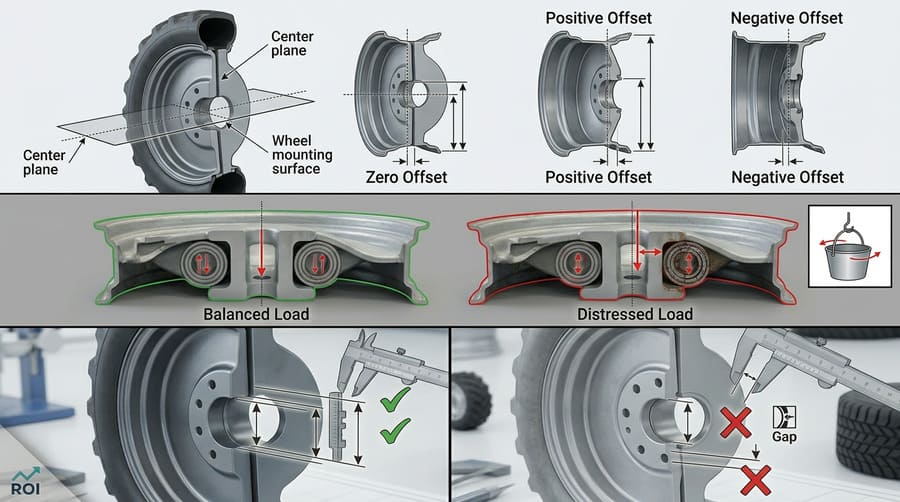
Irrigation rim offset1 is the distance from the wheel's mounting surface to its centerline. Its core function is to position the tire correctly to ensure machine stability2, balance the load on bearings, and maintain proper track alignment3.
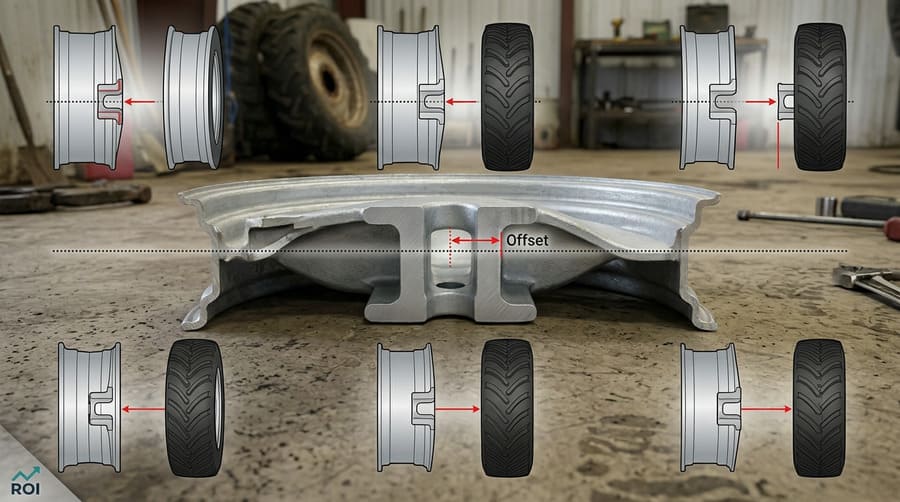
I remember a call from a frustrated farm manager a few years back. He had replaced a damaged rim on one of his pivots with a spare from a different machine. The bolt pattern4 matched, so he figured it was fine. A month later, the entire hub assembly5 on that wheel failed, causing a shutdown during a critical watering period. The problem wasn't a faulty bearing; it was the rim. The offset was wrong, putting a constant, uneven strain on the components until they broke. That expensive lesson highlights a simple truth: offset isn't a minor detail; it's fundamental to the health and safety of your equipment.
How Does Rim Offset Affect Your Machine's Lifespan?
You see uneven tire wear and face recurring bearing failures6 on your equipment. You keep replacing parts, but the problem comes back, costing you time and money.
A precise offset centers the tire's load perfectly on the hub and bearings. An incorrect offset creates unbalanced torque, leading to accelerated mechanical wear7 on bearings, seals, and even the drivetrain.
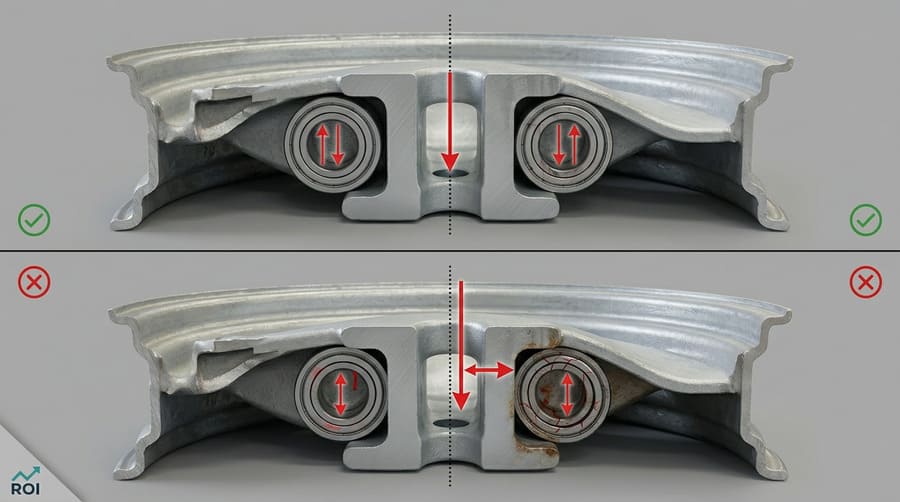
Think of it like carrying a heavy bucket of water. If you hold it close to your body, your arm is stable. If you hold it with your arm outstretched, your shoulder joint is under immense strain. A wheel hub works the same way. The rim offset determines where that "bucket"—the weight of the machine and the forces on the tire—is carried relative to the "shoulder joint," which is the bearing assembly. When the offset is correct, the forces are centered, and the bearings operate smoothly as designed. When the offset is wrong, the wheel is either pushed too far in or out, putting a constant twisting force on the bearings. This leverage multiplies the stress, causing them to wear out prematurely.
Understanding Offset Types
| Offset Type | Disc Position | Effect on Track Width |
|---|---|---|
| Zero Offset | Centerline of the rim. | Standard track width. |
| Positive Offset | Towards the outside face of the rim. | Narrows the track width. |
| Negative Offset | Towards the inside face of the rim. | Widens the track width. |
Can the Right Offset Prevent a Costly Rollover?
You're operating heavy irrigation equipment on hilly or uneven terrain. You worry constantly about the machine's stability, especially on slopes where a tip-over would be catastrophic.
Yes. On slopes of 15 degrees or more, using a rim with the correct negative offset8 widens the machine's track width. This lowers its center of gravity9 and significantly increases stability, preventing tipping.
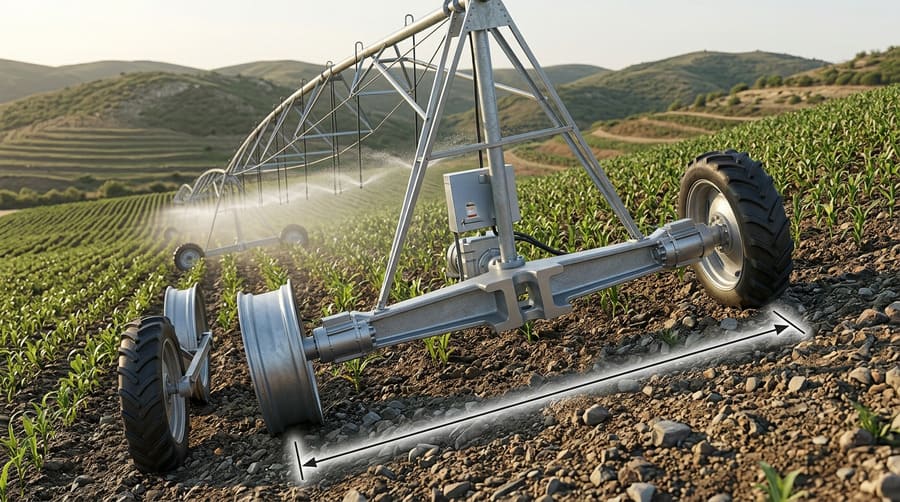
An irrigation machine's stability is all about its center of gravity9 (CG). The higher the CG, the easier it is to tip over. When a machine is on a slope, its CG effectively shifts downhill, moving closer to the edge of its wheelbase. The solution is to create a wider, more stable base. This is where offset becomes a critical safety feature. By choosing a rim with a specific negative offset8, you push the wheels further out from the hub, increasing the overall track width. It's like a person spreading their feet apart to brace for a push. This wider stance makes the machine much more resistant to rolling over. For any operation on uneven ground, calculating the right offset isn't just about performance; it's a non-negotiable part of ensuring safe operation.
Is Your Irrigation System Damaging Your Soil?
You notice deep, wide ruts forming along your pivot's path. These compacted channels hinder water absorption and can negatively affect crop growth, hurting your overall yield.
An incorrect offset can cause poor track alignment3, where wheels on the same tower don't follow the exact same path. This doubles the compacted area, damaging soil structure with each pass.
Healthy soil is your most valuable asset. Soil compaction reduces the space for air and water, which plant roots need to thrive. Ideally, your irrigation system's wheels should follow each other perfectly, creating a single, consistent track. This is called track alignment3. Rim offset is essential for achieving this. If you use a rim with the wrong offset on one side of a tower, that wheel will run slightly inside or outside the path of the other wheel. Instead of one rut, you get two parallel ruts or one very wide one. Over an entire season, this repetitive, misaligned pressure causes significant compaction damage across your fields. Ensuring every rim has the identical, correct offset is a simple mechanical check that protects your soil and, ultimately, your bottom line.
Why Can't You Just Mix and Match Rims?
You have a spare rim that fits the bolt pattern4 of a damaged one. Using it seems like a quick and cheap fix, but you're unsure if it's safe to mix brands.
You must always verify the center hole depth10 and disc thickness11 before mixing rims. Even with the same offset and bolt pattern4, different brands have unique dimensions that can prevent a secure fit.
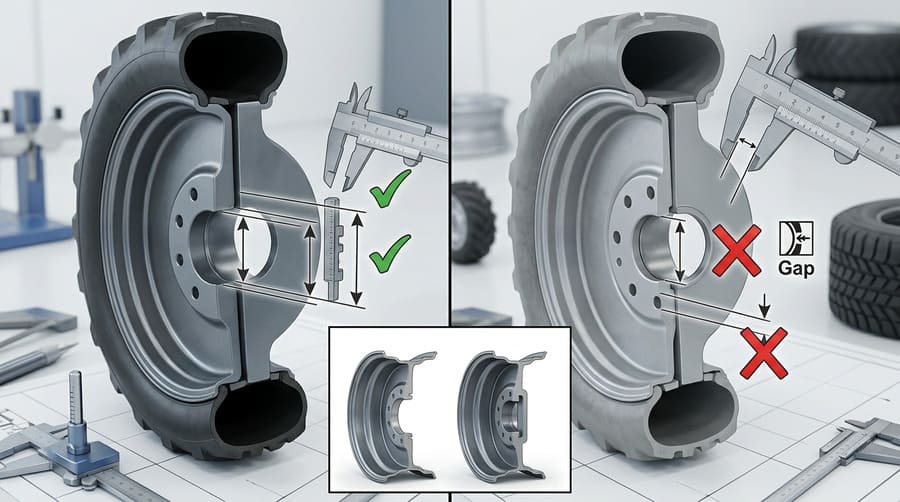
The anecdote I shared earlier about the failed hub assembly5 was caused by exactly this problem. While offset is a key measurement, it's not the only one that matters for compatibility. A rim must fit perfectly flush against the hub to be secure. Different manufacturers use different thicknesses for the mounting disc and have different depths for the center hole (the large hole in the middle). If you mount a rim where the center hole isn't deep enough, the rim will bottom out on the end of the axle hub before the mounting disc is tight against the hub face. Even if you torque the lug nuts down, there will be a tiny gap. This gap allows for flexing and movement, which will eventually lead to sheared bolts or a failed bearing.
Key Compatibility Checks
| Measurement | What to Check | Why It's Important |
|---|---|---|
| Offset | Ensures correct wheel positioning. | Affects stability, bearing load, and alignment. |
| Center Hole | Diameter and depth must match the hub. | Ensures a snug, centered fit and proper mounting. |
| Disc Thickness | Must be consistent with other rims. | Affects how lug nuts tighten and secure the wheel. |
Conclusion
Rim offset is not a minor specification; it is a critical parameter that dictates your irrigation system's stability, mechanical longevity, and its impact on your soil. Getting it right saves money.
Understanding irrigation rim offset is crucial for ensuring machine stability and preventing mechanical failures in your irrigation system. ↩
Exploring how rim offset impacts machine stability can help prevent costly rollovers, especially on uneven terrain. ↩
Proper track alignment prevents soil damage and ensures efficient irrigation, making it vital to understand rim offset's role. ↩
Bolt pattern matching alone doesn't ensure compatibility; understanding other dimensions is crucial for safety. ↩
Understanding hub assembly failures can prevent shutdowns during critical watering periods. ↩
Learning about the connection between rim offset and bearing failures can save time and money on repairs. ↩
Exploring the link between rim offset and mechanical wear can help extend the lifespan of your irrigation equipment. ↩
Negative offset can widen track width, enhancing stability on slopes, which is essential for safe operation. ↩
Rim offset influences the center of gravity, impacting stability and safety on slopes. ↩
Ensuring the correct center hole depth prevents mechanical failures and ensures a secure fit when mixing rims. ↩
Disc thickness is crucial for secure wheel mounting, preventing flexing and movement that can lead to failures. ↩