
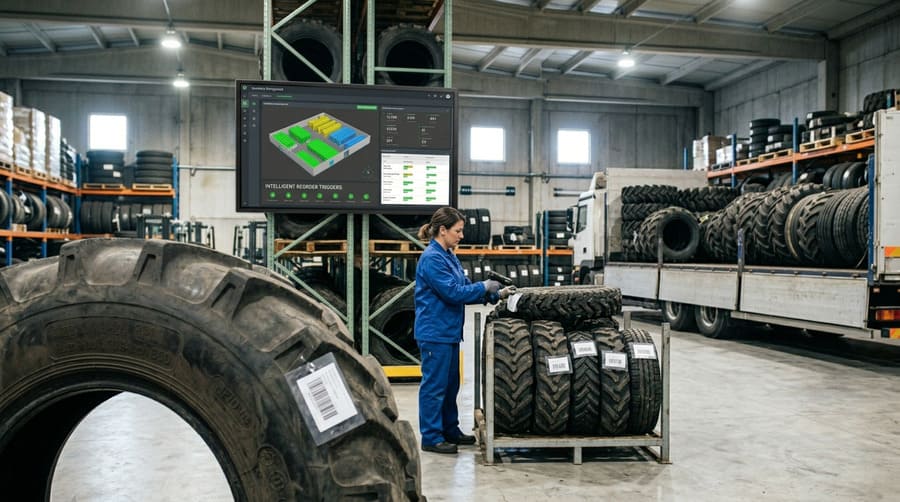
You have a warehouse full of irrigation tires, but when an urgent order comes, none of them fit. Your "safety" stock has become expensive, dead weight, tying up cash and space.
Avoid the trap by focusing on systems, not just quantity. Ensure correct specifications1, regularly update your stock based on market changes, and maintain proper storage conditions to preserve tire performance and value.

Early in my business, I made a classic mistake. I saw a chance to get a great price on a large batch of pivot tires. I thought, "These are common sizes, they'll sell easily." I filled a corner of my warehouse, proud of my "just-in-case" inventory. A few months later, a big client called with an emergency need. I walked into the warehouse confidently, only to realize the bolt pattern2 on my "great deal" irrigation tires didn't match his center pivot model. He had upgraded his equipment. My safety stock3 was useless, and I had to air-freight the right tires at a huge loss. That pile of tires sat there for two more years before I sold them for scrap. It taught me that inventory without intelligence is just a liability.
Is Having the Wrong Tire Worse Than Having No Irrigation Tire?
Your warehouse is full, but you still can't fulfill an order. The irrigation tires you have don't match your customer's new irrigator, making your expensive stock completely useless.
Yes, holding wrong-specification inventory is far worse. It actively consumes cash flow and space while providing zero solutions. Having no stock is a temporary problem; having the wrong stock is a sunk cost.
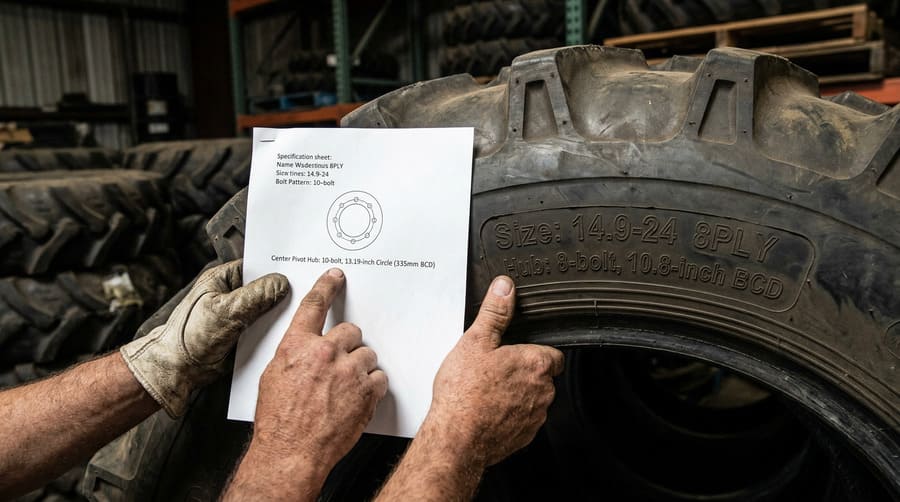
When you have no stock, you have a clear problem to solve: you need to order the correct irrigation tires. Your capital is still available. But when you have the wrong stock, your money is already gone. It's tied up in a product that cannot do its job. This creates a dangerous illusion of security. You look at your inventory report and see assets, but in reality, you are looking at dead weight. This is why "active specification management4" is so critical. Before you order stock for your warehouse, you must be in constant communication with your key customers about their current and future equipment. A five-minute call to confirm bolt pattern2s or load ratings5 can save you from a five-figure mistake. The goal is not just to have tires, but to have the right tires.
The True Cost: No Stock vs. Wrong Stock
| Factor | Scenario: No Stock | Scenario: Wrong Stock |
|---|---|---|
| Cash Flow | Liquid and available | Frozen in unsellable product |
| Storage Cost | Zero | Ongoing expense (rent, handling) |
| Problem Solving | Clear path: order correct item | Creates new problem: dispose of dead stock |
| Opportunity Cost | Can invest capital elsewhere | Capital is trapped, opportunities are missed |
| Customer Outcome | Delay while correct part is ordered | Delay AND loss of confidence in your supply |
Is Your Warehouse Accidentally a Irrigation Tire Museum?
Those irrigation tires you bought two years ago were a fantastic deal. Now they're covered in dust because the equipment models they fit are no longer popular in your market.
Your inventory becomes a museum when it doesn't evolve with the market. Static stock in a dynamic industry6 quickly becomes obsolete. Furthermore, poor storage can ruin a tire's integrity, destroying its value before it's even sold.

The agricultural machinery market moves fast. A manufacturer might change the standard rim size on their new pivot irrigators, or introduce a heavier model that requires a higher ply rating. If your inventory decisions are based on last year's data, you are buying future relics. But obsolescence isn't the only silent killer of inventory value. The way you store your tires matters just as much. I once visited a distributor who kept his tires outside, exposed to the sun and rain. He thought he was saving on warehouse space. But UV radiation7 and moisture were breaking down the rubber compounds, making the tires brittle. When he finally sold them, he faced a wave of warranty claims for premature cracking. Proper storage—indoors, away from direct sunlight, and in a stable temperature—is not an expense; it's an essential activity to preserve the asset you've already paid for.
Why Is a System Better Than a Stockpile?
You've invested heavily in safety stock3, believing a full warehouse equals security. Yet, you still face stockouts of key items while other products gather dust and expire.
Because a large stockpile creates the illusion of safety, but it's an unmanaged risk. True security comes from a system that monitors inventory, enforces rotation, and uses data to trigger intelligent reorders.

Simply having more irrigation tires is not the answer. True inventory control is a system, not a number. The first part of this system is visibility. You need to know exactly what you have, where it is, and how old it is. The second part is rotation. A strict "First-In, First-Out" (FIFO) policy ensures that older stock is sold before it can degrade or become obsolete. The third, and most important, part is intelligence. Your system should use sales data and market information to set dynamic reorder points8. Instead of blindly refilling a slot, the system should ask, "Is this SKU still relevant? Has the demand trend changed? Have our key clients changed their equipment?" This turns your inventory from a passive, costly asset into an active, responsive part of your business strategy. It's the difference between being a warehouse manager and being a supply chain partner9.
How Can You Make Your Inventory Work for You?
You're tired of inventory being a source of stress and financial drain. You want your stock to be a competitive advantage, not a warehouse full of problems waiting to happen.
You must treat your inventory as a dynamic asset. This requires a partnership with a supplier who understands your market and can offer flexible solutions10 like low MOQs and mixed container loading11.

The solution to the inventory trap12 is not to eliminate stock, but to make it smarter and more flexible. This is where your relationship with your supplier is key. A supplier who forces you to buy huge quantities of a single SKU is part of the problem. A true partner helps you solve it. At Gescomaxy, we built our business around this idea. We offer low Minimum Order Quantities (MOQs)13 and allow clients to mix different types of tires—agricultural, industrial, truck—in a single container. This allows you to carry a wider range of relevant SKUs without tying up massive amounts of cash in any single one. You can respond to market changes quickly, ordering small batches of new specifications to test demand. This approach transforms your inventory from a static, high-risk investment into a flexible, strategic tool that directly serves your customers' real-world needs.
Conclusion
Avoid the inventory trap12 by shifting your focus from quantity to intelligence. A system of smart, flexible ordering and proper management will always outperform a large, static stockpile of aging tires.
Ensuring correct specifications prevents costly mistakes and ensures that your inventory meets customer needs effectively. ↩
Knowing about bolt patterns ensures you select the right tires for specific equipment, avoiding mismatches and financial losses. ↩
Understanding safety stock helps you manage inventory efficiently, ensuring you have the right products available without overstocking. ↩
Active specification management helps you stay aligned with market demands, reducing the risk of holding obsolete stock. ↩
Understanding load ratings ensures that tires can handle the required weight, preventing safety issues and product failures. ↩
Adapting to a dynamic industry helps you keep your inventory relevant and competitive, avoiding obsolescence. ↩
Learning about UV radiation's impact on tires helps you store them properly, preserving their quality and lifespan. ↩
Dynamic reorder points help you adjust inventory levels based on demand, optimizing stock and reducing excess. ↩
A supply chain partner helps optimize inventory management, ensuring you have the right products at the right time. ↩
Flexible solutions help you adapt to market changes quickly, ensuring your inventory remains relevant and efficient. ↩
Mixed container loading offers flexibility in shipping, allowing you to carry diverse products without overstocking. ↩
Avoiding the inventory trap ensures your stock remains an asset rather than a liability, improving financial health. ↩
Understanding MOQs allows you to manage cash flow better by ordering only what you need, reducing excess inventory. ↩