
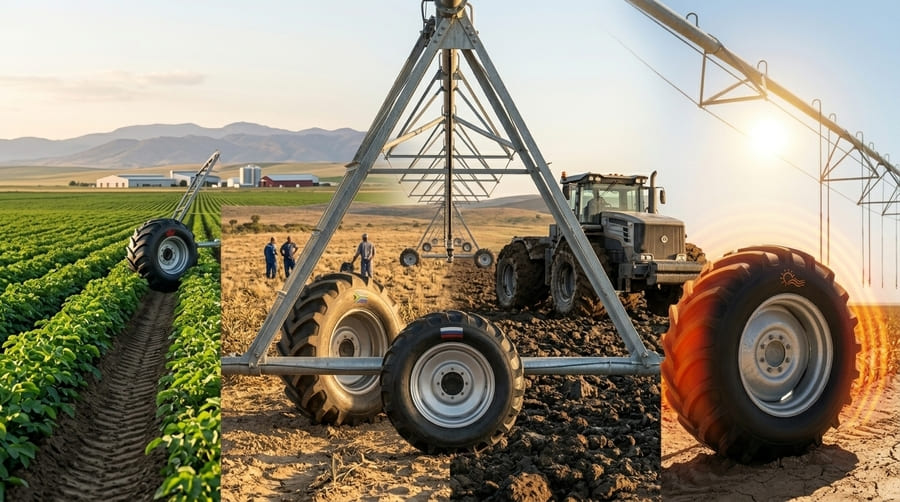
Selling irrigation tires globally is complex. You assume all buyers want the same thing, but regional needs vary1, risking lost sales and mismatched inventory for your business.
Irrigation tire buyers' needs vary significantly by region. Canadians prioritize performance2, South Africans balance cost with durability3, and Russians demand ruggedness4 for heavy soils. Understanding these differences is key to adapting your sales strategy.

I learned this lesson the hard way early in my career. We had a tire that was a bestseller in one market – durable, great value, a real workhorse. I was so confident that I pushed it hard to a distributor in a completely different region. The feedback was brutal. They told me, "This tire is okay, but it's not what we need. Our labor is expensive, our season is short, we can't afford downtime." I had focused on the tire's features instead of the customer's economic reality. That experience taught me that selling tires isn't about having one "best" product; it's about having the right product for the specific challenges and priorities of each market.
Why Do Canadian Buyers Prioritize Performance Over Price?
You offer a budget-friendly tire to a Canadian distributor, but they're not interested. You're confused about why a lower price isn't closing the deal in this competitive market.
Canadian buyers focus on the total cost of ownership5. They value long-term performance, durability, and radial construction because high labor costs and the critical need for uptime make reliability more important than initial price.
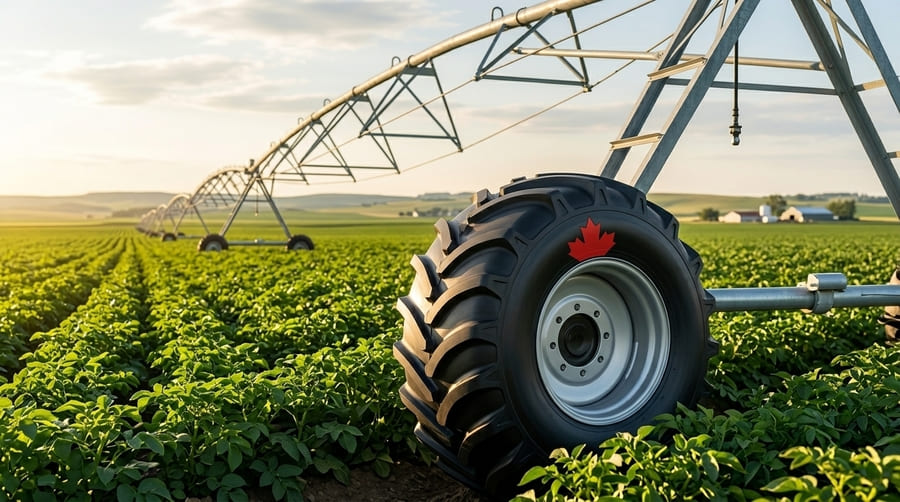
In Canada, the calculation is all about lifecycle value. The purchase price of a tire is just one small part of the equation. With high labor costs, a farm manager can't afford to have a crew constantly replacing cheap, failed tires. More importantly, the short and intense growing season means that any equipment downtime is catastrophic for profits. A pivot system that is out of commission for even a day during a dry spell can lead to significant yield loss. Because of this, buyers are willing to invest more upfront for a tire they know will last. They look for features like advanced radial construction6 that reduces soil compaction and improves fuel efficiency. They want a tire that is a reliable, long-term asset, not a short-term consumable. This focus on performance and quality is exactly why our internationally certified, high-performance products are a great fit for the Canadian market.
How Do South African Buyers Balance Cost and Durability?
Your high-performance tire is too expensive for the South African market. Your budget tire fails too quickly. Finding the right product for this region seems impossible.
South African buyers seek maximum value. They need durable tires with strong casings and long wear life to handle tough conditions, but they remain very price-sensitive. The ideal product is the toughest tire at the best possible price.
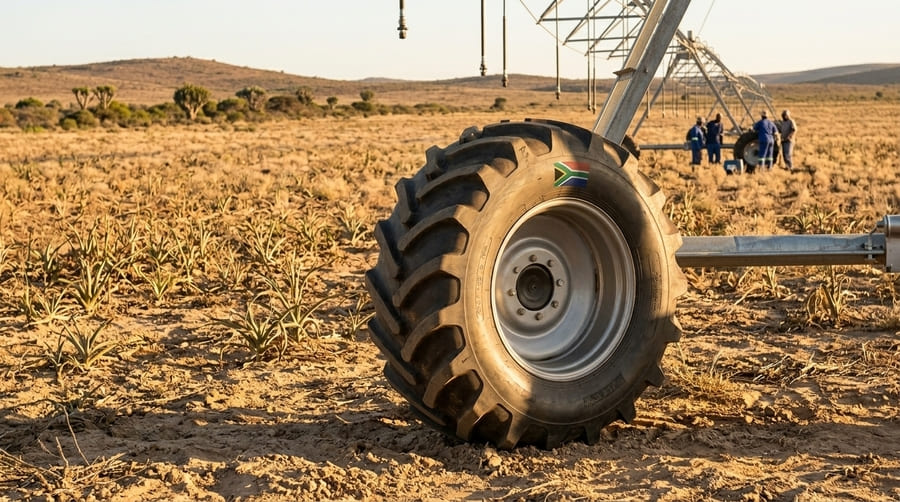
The South African market is a classic value-driven environment7. Buyers here are extremely practical. They face challenging agricultural conditions, from abrasive soils to long operating hours, so they need a tire that is fundamentally tough. A weak casing that is prone to cuts or a tread that wears down quickly is simply not an option. However, the economic pressures are different from those in Canada. Price is a major factor in the final decision. They aren't just looking for the cheapest tire, but they are absolutely looking for the best possible performance for their money. They will carefully weigh the expected lifespan and durability against the price tag. A tire that costs 20% more must deliver significantly more than 20% extra life to be considered. This is where a strong bias-ply tire8 with a robust compound and reinforced casing often hits the sweet spot, offering the needed durability without the premium price of a high-end radial.
Why Is Ruggedness the Main Focus in Russia?
Your standard irrigation tires are failing prematurely on Russian farms. Customers are complaining about sidewall damage and the tires not handling the weight of the equipment.
Russia's large-scale farms often have heavy, wet soils and vast, rugged terrain. This demands tires with the highest possible load capacity9 and exceptionally strong, reinforced sidewalls10 to prevent damage and costly failures.
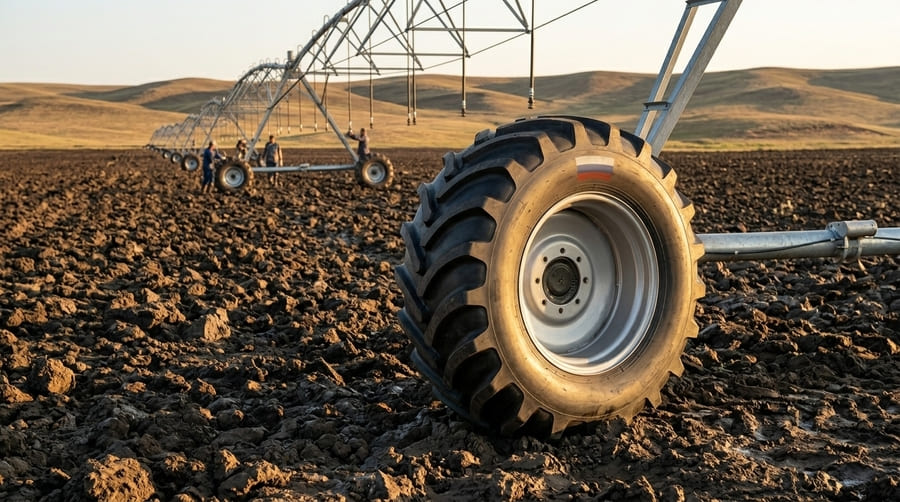
When you think about the Russian agricultural market, think "scale" and "strength." The farms are immense, and the irrigation systems they use are some of the largest and heaviest in the world. Compounding this is the soil itself, which is often dense, heavy, and wet. These conditions put enormous stress on tires. A standard tire simply can't handle the combination of extreme weight and rough, uneven ground. The primary concerns for a Russian buyer are load rating and structural integrity. They need to see a high load index on the sidewall to be confident the tire can support their heavy pivot systems without failing. They also need reinforced sidewalls10 to resist cuts, punctures, and the general abuse that comes from operating on challenging terrain. For this market, features like tread pattern or fuel efficiency are secondary to the raw ability to carry a heavy load, day in and day out, without breaking.
What Unique Challenge Does the Middle East Market Present?
You've sold tires to the Middle East that performed well elsewhere, but you're getting reports of rapid aging and unexpected blowouts. You don't understand why they are failing.
Extreme heat is the critical factor. The intense sun and high operating temperatures in the Middle East cause tire compounds to degrade quickly, leading to casing fatigue11 and failure. Heat-resistant compounds are essential.

In the Middle East, the sun is the enemy of rubber. The ambient temperatures can be incredibly high, and a black tire sitting in the direct sun can reach internal temperatures that severely compromise its structure. This constant, extreme heat12 accelerates the aging process of the rubber compound. It becomes brittle, loses its flexibility, and the risk of casing fatigue11—where the internal structure weakens and fails—increases dramatically. A tire that might last five or six years in a temperate climate could fail in two or three years in the Middle East. For this reason, buyers in this region must prioritize tires made with specialized, heat-resistant compounds13. The quality of the rubber is paramount. At Gescomaxy14, we address this by using premium raw materials and strict quality control, ensuring our tire compounds are formulated to withstand high temperatures and maintain their integrity even in the world's most demanding climates.
Conclusion
To succeed globally, you must adapt your tire offerings15 to each market's unique needs16—from Canada's performance focus to Russia's demand for ruggedness and the Middle East's need for heat resistance.
Understanding regional needs is crucial for tailoring your sales strategy and avoiding mismatched inventory. ↩
Exploring Canadian buyers' focus on performance helps in understanding their long-term investment strategy. ↩
Learn how South African buyers seek maximum value by balancing cost with durability in tough conditions. ↩
Discover why ruggedness is essential for Russian buyers dealing with heavy soils and large-scale farms. ↩
Understanding total cost of ownership helps in grasping why Canadian buyers focus on long-term performance. ↩
Explore how advanced radial construction reduces soil compaction and improves fuel efficiency. ↩
Learn about the practical approach of South African buyers in seeking the best performance for their money. ↩
Discover why bias-ply tires offer durability without the premium price of high-end radial tires. ↩
Understand the importance of high load capacity for handling heavy pivot systems in Russian farms. ↩
Learn how reinforced sidewalls prevent damage and costly failures in rugged Russian terrain. ↩
Learn about the factors leading to casing fatigue and failure due to high temperatures. ↩
Explore the impact of extreme heat on tire compounds and the need for heat-resistant materials. ↩
Understand the necessity of heat-resistant compounds to prevent rapid aging and blowouts in hot climates. ↩
Discover how Gescomaxy's quality control and premium materials ensure durability in diverse climates. ↩
Explore strategies for adapting tire offerings to meet the unique demands of different regions. ↩
Understanding unique regional needs is key to successful global sales and customer satisfaction. ↩