
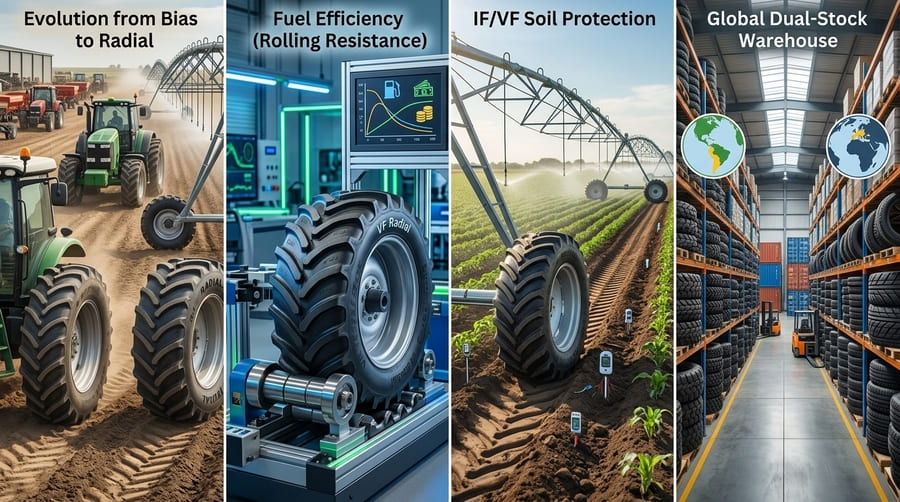
You’ve built your business on reliable bias-ply tires1. Now, customers are asking for radials, and you're unsure if this is a real trend or just a passing fad.
The shift to radial means suppliers must adapt to a divided market. Radials offer fuel efficiency and soil protection that mature markets demand, while bias tires remain essential for cost-sensitive regions. Your strategy must include both.
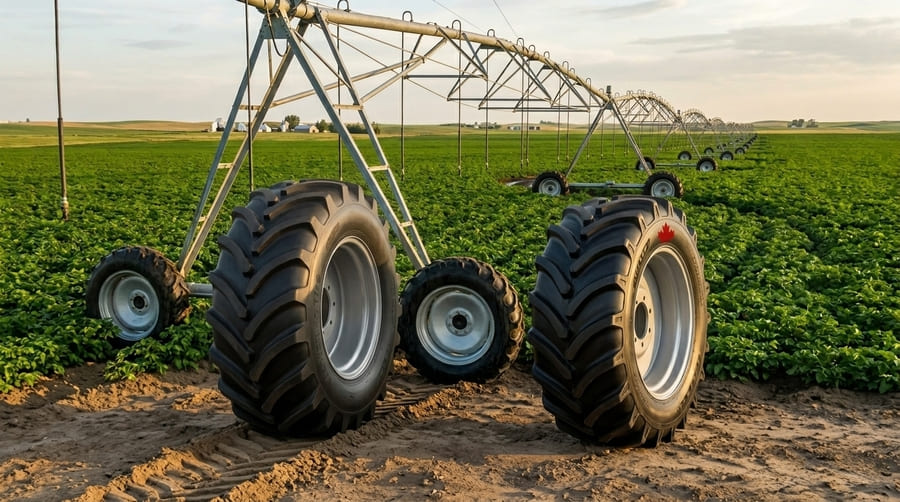
I remember the first time a major distributor from North America grilled me about our radial irrigation tire options2. This was maybe seven or eight years ago. At the time, we were mostly selling bias-ply, which were the industry standard—tough and affordable. He told me, "Your bias tires are fine, but my customers are talking about fuel savings3s and soil compaction](4n](https://arxiv.org/html/2509.25056v2)%%%FOOTNOTE_REF_5">https://arxiv.org/pdf/2110.05413)4n](https://arxiv.org/html/2509.25056v2)%%%FOOTNOTE_REF_5%%%. Radials aren't a luxury anymore; they're becoming a tool for farm profitability." That conversation was a wake-up call. It made me realize the market wasn't just about selling a round piece of rubber anymore. It was about selling a performance solution6, and as suppliers, we needed to evolve with it.
Can a Radial Tire Really Lower a Farm's Fuel Bill?
You hear claims that radial tires save fuel, but it sounds like a marketing trick. You wonder if there is a real, measurable difference that matters to your customers.
Yes, absolutely. Radial tires have more flexible sidewalls7 and a wider, flatter footprint. This design significantly reduces rolling resistance8, which means the irrigation system's motor uses less energy to move.
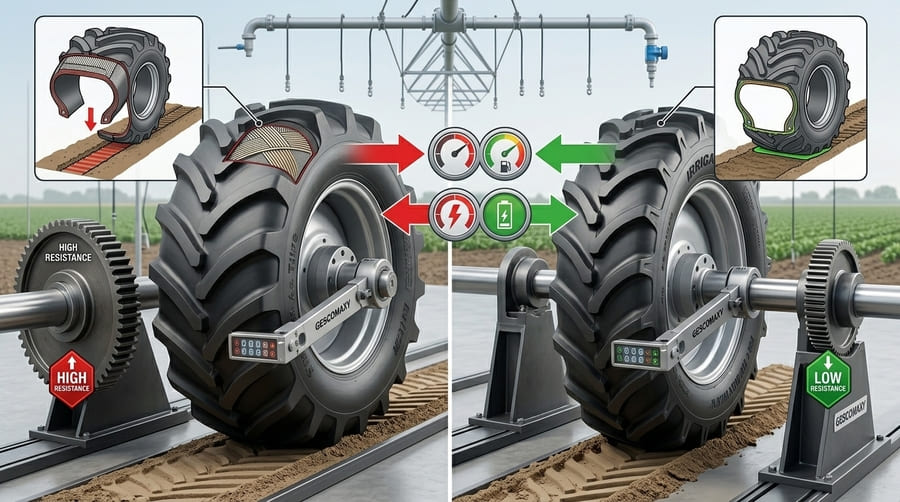
The science behind this is straightforward. A bias-ply tire is constructed with overlapping layers of material running at an angle. This makes the entire tire, including the sidewall and tread, very stiff. When it rolls, it resists flexing, which creates friction and wastes energy. Think of it like trying to push a cart with stiff, rigid wheels. A radial tire, on the other hand, is built differently. Its body cords run radially (straight across) from bead to bead, and the tread is stabilized by belts. This allows the sidewall to flex easily without affecting the tread. This flexibility dramatically lowers rolling resistance8. For a farmer, this isn't just a technical detail; it's a direct impact on their operational costs. Over the long season and across multiple pivot systems, the reduced energy consumption translates into real, significant savings on fuel or electricity bills.
| Feature | Bias-Ply Tire | Radial Tire |
|---|---|---|
| Construction | Stiff, overlapping plies | Flexible sidewalls, belted tread |
| Rolling Resistance | High | Low |
| Energy Use | Higher | Lower |
| Cost Impact | Higher long-term fuel costs | Lower long-term fuel costs |
What Do IF/VF Technologies Mean for Your Tire Inventory?
You see "IF" and "VF" on new radial tires. These new acronyms are confusing, and you're not sure why you should stock tires with these expensive technologies.
IF (Increased Flexion)9 and VF (Very High Flexion)10 are game-changers. They allow a tire to carry more weight at a lower air pressure, which reduces soil compaction5 and increases yield. You need them in your inventory for performance-focused customers.
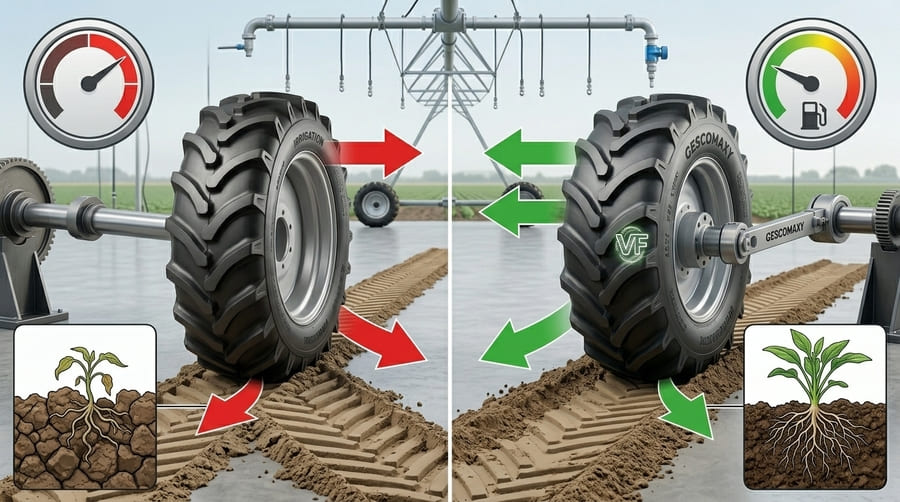
These technologies represent the peak of modern tire engineering and directly address one of the biggest problems in modern agriculture: soil compaction5. Here’s the simple breakdown:
- IF (Increased Flexion)9: An IF tire can carry 20% more load than a standard radial tire at the same air pressure. Or, it can carry the same load at 20% lower pressure.
- VF (Very High Flexion)10: A VF tire is even more advanced. It can carry 40% more load at the same pressure, or the same load at 40% lower pressure.
Why does this matter? Lower air pressure creates a longer, wider tire footprint. This distributes the heavy weight of the irrigation pivot over a larger area of soil, just like snowshoes help you walk on snow without sinking. For the farmer, this means less soil compaction5, healthier root growth, better water absorption, and ultimately, higher crop yields. For you as a supplier, stocking IF/VF tires positions you as a premium provider who understands the latest trends in precision agriculture. Your customers in mature markets aren't just buying tires; they're buying yield protection11.
Why Do Mature Markets Demand Premium Radial Tires?
You notice that buyers in markets like North America and Western Europe are willing to pay a premium for radials. You want to understand the business reason behind this trend.
In mature markets, labor is expensive and farm operations are highly optimized. Buyers prioritize long-term value, performance, and reliability over the initial purchase price. Radials deliver a better return on investment.
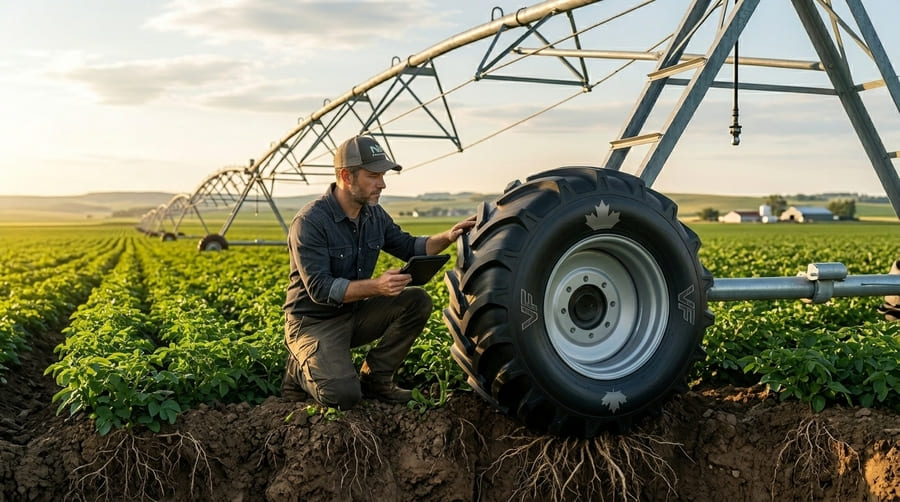
This trend is called "premiumization12." In developed agricultural economies, every input is measured for its return on investment (ROI). A farm manager in Canada or Germany knows that the cheapest tire is rarely the most profitable one in the long run. They calculate the total cost of ownership13, which includes factors beyond the initial price tag. For example, a radial tire's fuel savings3 can pay back its higher initial cost over its lifespan. More importantly, the yield protection11 from reduced soil compaction5 (especially with IF/VF tech) can add thousands of dollars to the farm's revenue. Finally, the reliability of a high-quality radial tire reduces the risk of costly downtime during critical growing periods. When you add up fuel savings3, increased yield, and improved uptime, the premium price of a radial tire makes perfect business sense. As suppliers, we must cater to this by offering certified, high-performance radial solutions.
Will Bias Tires Still Have a Place in the Market?
With all the advantages of radials, you're wondering if you should stop selling bias-ply tires1 altogether. You are concerned about being left with outdated stock.
Yes, bias tires will remain a huge part of the market for years. In many developing regions and for smaller-scale farms, the low initial purchase price is still the most important factor.
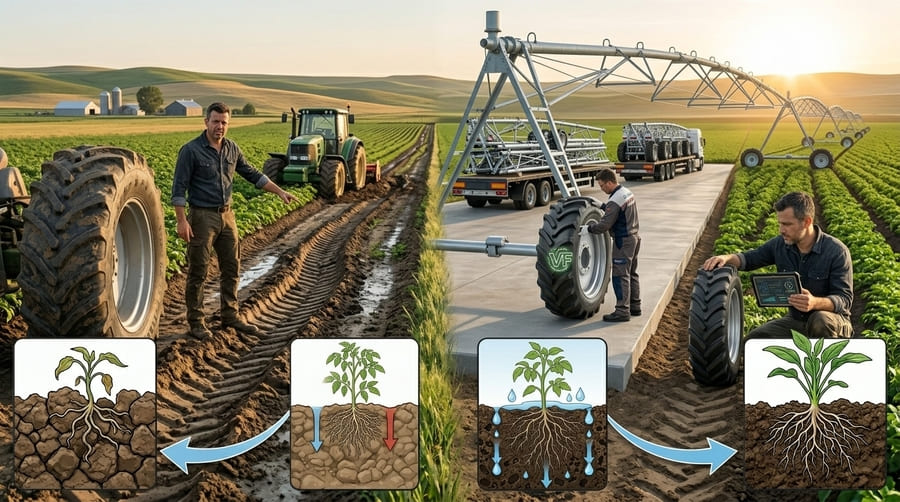
It's a mistake to think the whole world will switch to radials overnight. The global market14 is not uniform. In many parts of South America, Africa, and Southeast Asia, capital is limited, and the primary purchasing decision is driven by the upfront cost. For a smaller farm or a buyer in a price-sensitive market, a bias tire is the perfect solution. It’s tough, it’s reliable enough for their needs, and most importantly, it’s affordable. The long-term ROI calculations that drive decisions in mature markets are less critical when the immediate concern is getting the equipment running without a large capital outlay. Bias tires offer an unbeatable combination of durability and low cost for this segment. As a global supplier with over 12 years of experience, our strategy at Gescomaxy is clear: we must offer a complete portfolio. We provide high-performance radials for the premium market and high-quality, cost-effective bias tires15 for price-driven markets.
Conclusion
The shift to radials requires a dual strategy16. Offer premium radials for performance-focused markets and continue to provide cost-effective bias tires15 for price-sensitive regions to serve the entire global market14 effectively.
Understand the continued importance of bias-ply tires for cost-sensitive regions and smaller farms. ↩
Explore how radial irrigation tires can enhance farm profitability through fuel savings and soil compaction reduction. ↩
Find out how radial tires can reduce energy consumption, leading to significant fuel savings for farmers. ↩
Learn how radial tires can lower operational costs and improve soil health, impacting farm profitability. ↩
Discover the relationship between tire technology and soil health, crucial for maximizing crop yield. ↩
Discover how radial tires offer more than just durability, providing efficiency and cost savings for farmers. ↩
Find out how flexible sidewalls in radial tires reduce rolling resistance and enhance fuel efficiency. ↩
Understand the science behind rolling resistance and its impact on energy use and cost savings. ↩
Explore how IF technology allows tires to carry more weight at lower pressure, reducing soil compaction. ↩
Learn about VF technology and its benefits for carrying heavier loads with less soil impact. ↩
Understand how tire technology can protect crop yield by minimizing soil compaction and enhancing growth. ↩
Explore why mature markets prioritize high-quality radial tires for better ROI and farm efficiency. ↩
Learn how considering total cost of ownership can lead to smarter tire investments for long-term savings. ↩
Learn about the diverse needs of global markets and how suppliers can cater to both premium and cost-sensitive segments. ↩
Explore the affordability and reliability of bias tires for price-driven markets and smaller-scale farms. ↩
Discover the benefits of offering both premium radials and cost-effective bias tires to serve varied market needs. ↩