
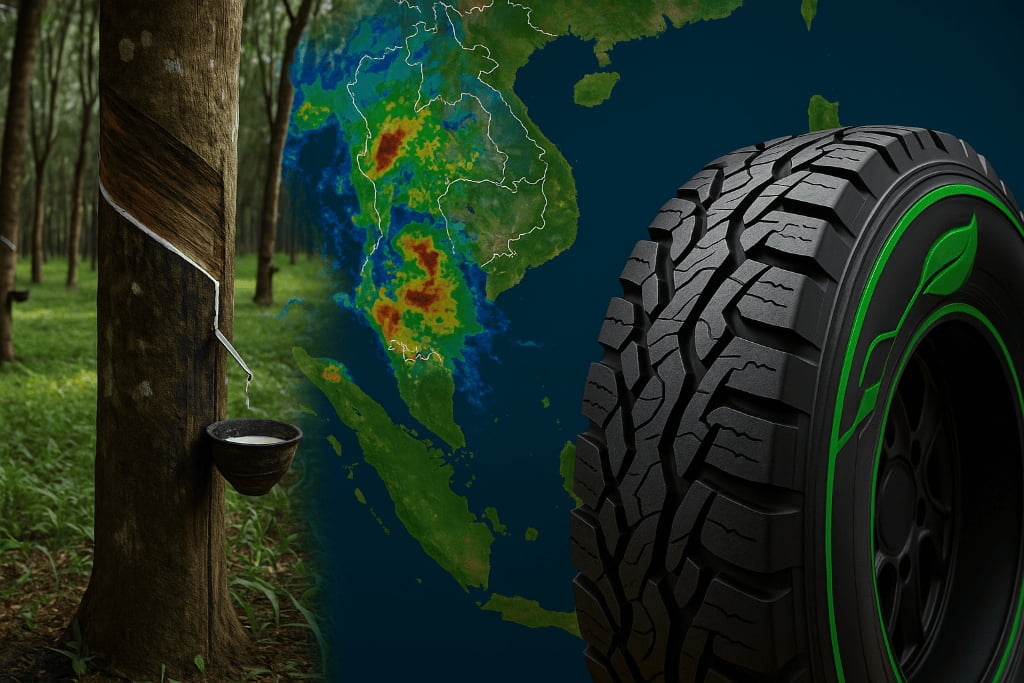
You need to budget for next season's expenses, but tire prices keep fluctuating wildly. It's frustrating when a key operational cost becomes so unpredictable. What's really driving these price spikes?
Yes, because climate instability1 in Southeast Asia, the source of 90% of natural rubber2, is disrupting the supply chain3. This leads to raw material shortages4 and price volatility5, directly increasing the cost of agricultural tires6, which are heavily dependent on this single commodity.
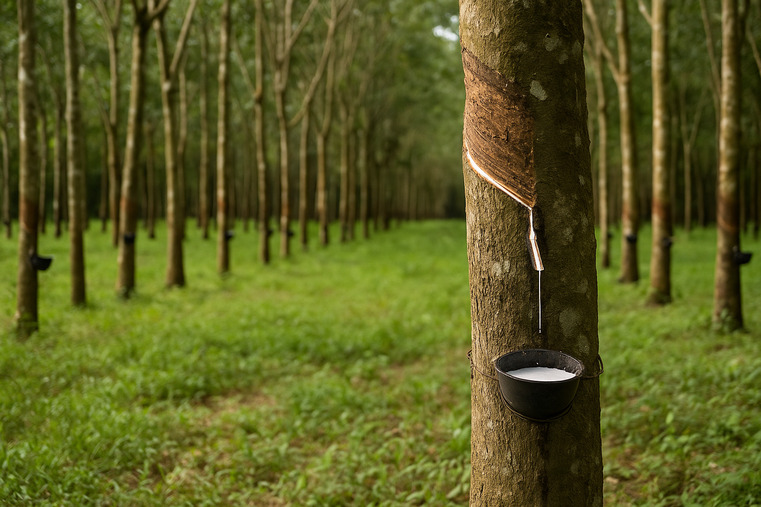
I remember looking at the raw material price charts a couple of years ago, and the line for natural rubber2 looked like a rollercoaster. A client, a large distributor in Europe, called me, completely baffled. "Our container prices for ag tires jumped 15% in a single quarter," he said. "What's going on?" It wasn't just simple inflation or shipping costs. The answer was thousands of miles away, in the weather patterns of Thailand and Indonesia. This is the new reality of our industry. We are no longer just tire traders; we have to be amateur meteorologists and commodity analysts to protect our clients.
Why Does a Drought in Thailand Make Your Tractor Tires More Expensive?
You see tire prices go up and just assume it's another case of corporate greed or general inflation. But the real cause is a complex chain reaction that starts with the weather.
Because over 90% of the world's natural rubber2 comes from climate-sensitive Southeast Asia. Extreme weather like droughts or floods disrupts rubber tapping, shrinking the global supply. This concentrated dependency means any local weather event creates immediate global price spikes for your tires.

For years, we treated weather as a minor, seasonal issue. A bad monsoon might delay some shipments, but the system would balance out. That's no longer true. Climate volatility has become a core, price-defining variable. The supply base is dangerously concentrated. Think about it: almost all the natural rubber2 for every tire in the world comes from a handful of countries like Thailand, Indonesia, and Vietnam. When these regions experience extreme rainfall, it washes the latex off the trees before it can be collected. When they suffer from drought, the trees produce less latex to conserve energy. On top of that, new fungal blights7, like leaf fall disease, are spreading, thriving in these unstable weather conditions and destroying entire plantations. This isn't a temporary problem. The price fluctuations are now systemic, not just seasonal.
The Shift in Risk Factors for Rubber Supply
| Old Reality (Pre-2020) | New Reality (Present Day) |
|---|---|
| Weather is a seasonal issue | Climate is a systemic, price-defining variable |
| Price changes are gradual | Price shocks are sudden and severe |
| Supply chain is stable | Supply chain is fragile and highly concentrated |
| Risk is manageable and cyclical | Risk is constant and unpredictable |
This constant disruption means we can no longer count on stable, predictable raw material costs.
Can't We Just Plant More Rubber Trees to Keep Prices Down?
It seems like a simple solution: if we are short on rubber, we should just plant more trees. But this logical step runs into a major roadblock that factories don't have.
No, because a rubber tree takes six to seven years to mature before it can be tapped for latex. This long growth cycle means we cannot quickly ramp up supply. This makes natural rubber2 a structural, long-term bottleneck in the tire supply chain3.

This is a point I often discuss with procurement managers. They are used to industrial timelines. If you need more tires, a factory can add a third shift, restart a dormant production line, or even build a new plant in 18-24 months. We can scale production. But we cannot scale time for biology. A rubber tree planted today will not produce any commercial-grade latex until nearly a decade from now. This creates a fundamental bottleneck. No amount of investment can fix a current supply shortage in the short term. This is why agricultural tires6 are hit so much harder by this issue than passenger car tires. An ag tire is a beast of a product. Its carcass is thicker, its treads are deeper, and its compounds are engineered for cut resistance. It simply uses a much higher volume of natural rubber2. As a result, raw material costs make up a larger slice of the total pie.
Raw Material Impact: Ag Tire vs. Passenger Tire
| Tire Type | Natural Rubber Usage | Raw Material % of Total Cost | Impact of Price Spike |
|---|---|---|---|
| Passenger Tire | Low-Medium | ~20-25% | Moderate |
| Agricultural Tire | High-Very High | ~40-50% | Severe |
When rubber prices spike, that cost passes through to agricultural tires6 much faster and more forcefully.
How Can We Protect Ourselves from Future Price Shocks?
You're a business owner, not a commodities trader. You can't control the weather in Asia, so it feels like you're powerless against these massive price swings.
The solution is to reduce dependency on natural rubber2. The future winners will be the brands and suppliers who invest in alternatives like bio-based compounds8, recycled materials9, and advanced synthetics as risk-management tools, not just for "green marketing."
For a long time, "eco-friendly" tires were seen as a niche marketing gimmick. But the current climate reality is transforming them into a strategic necessity. The goal is no longer just about being green; it's about building a resilient supply chain3. At Gescomaxy, we are actively working with our manufacturing partners who are exploring these alternatives. This includes things like dandelion rubber (taraxagum10), guayule, and advanced synthetic rubber11 formulations that can replicate the performance properties of natural rubber2 without the climate-based supply risk. It also means improving our use of high-quality recycled rubber from end-of-life tires. This isn't about replacing natural rubber2 overnight. It's about building a diversified portfolio of raw materials. The brands that can say, "We use 20% less natural rubber2 in our ag tires than our competitors," will not just have a green story to tell. They will have a more stable price structure and a more reliable supply chain3. This is the future of risk management in the tire industry.
Conclusion
Climate instability has permanently linked the weather in Asia to the price of your ag tires. The future belongs to those who reduce their dependence on the volatile natural rubber2 market.
Explore how climate instability impacts supply chains globally, providing insights into risk management strategies. ↩
Understanding the trends in natural rubber prices can help you anticipate future costs and make informed purchasing decisions. ↩
Discover the challenges faced in the rubber supply chain and how they affect pricing and availability. ↩
Understand the implications of raw material shortages on manufacturing processes and costs. ↩
Gain insights into the causes of price volatility in commodity markets, which can help you navigate pricing fluctuations. ↩
Learn about the various factors that affect agricultural tire pricing, helping you budget more effectively. ↩
Learn about the impact of fungal blights on rubber production and how they contribute to supply issues. ↩
Explore the role of bio-based compounds in tire manufacturing and their potential to reduce dependency on natural rubber. ↩
Discover how recycled materials are integrated into tire production, promoting sustainability and cost-effectiveness. ↩
Learn about taraxagum, a promising alternative to natural rubber, and its potential benefits in tire production. ↩
Understand the benefits of synthetic rubber, which can provide alternatives to natural rubber in tire manufacturing. ↩