
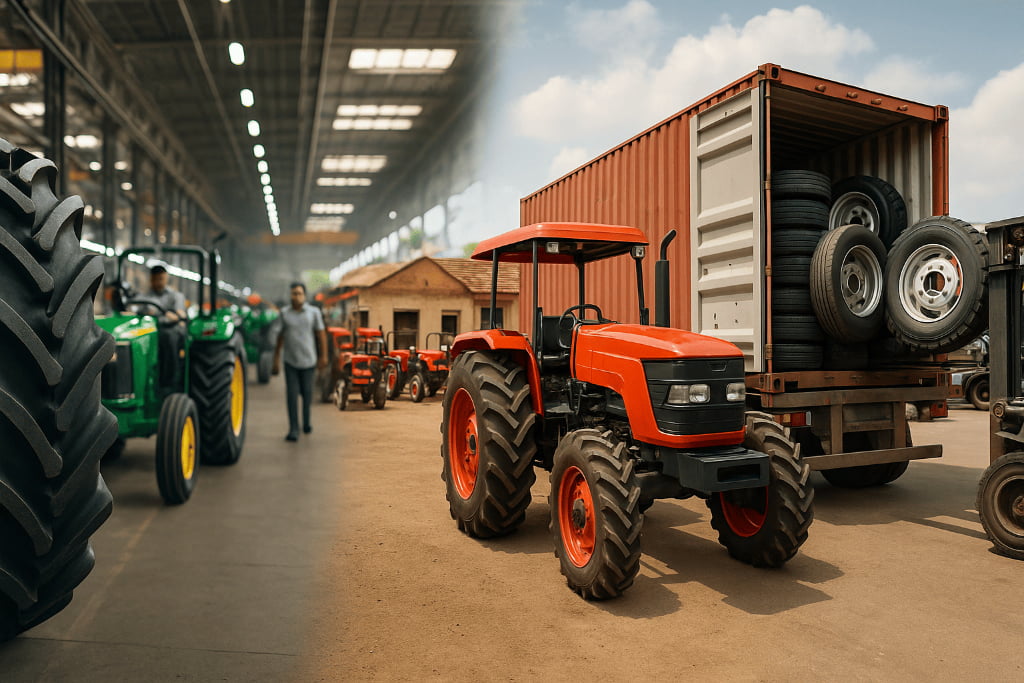
You're watching India's tractor market from a distance, seeing it as chaotic and purely price-driven. This perception makes you hesitant, causing you to miss clear signals of a massive opportunity.
India's October 2025 tractor sales surge1, driven by widespread rural prosperity, signals a market shift towards quality. For global suppliers, this means rising demand for high-horsepower tires2, reinforced rims3, and, most importantly, partners who can guarantee reliability and timely delivery over just low prices.
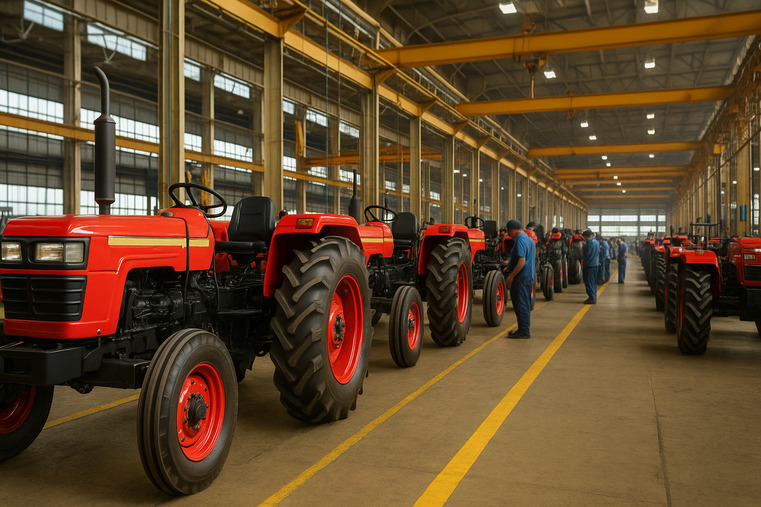
A few years ago, I was speaking with a procurement manager for a large parts distributor. He was frustrated with the Indian market, complaining that every conversation was a race to the bottom on price. I shared some early data with him showing that while the low-end market was crowded, a new segment of farmers was starting to demand better quality. They were buying more powerful tractors and needed tires that wouldn't fail. He was skeptical but agreed to test a small batch of our premium R1W tires4 with a dealer in Punjab. Today, that premium line is his fastest-growing category in India. He learned that looking beyond the surface-level noise reveals where the real, profitable demand is heading.
What Does the Dominance of Mahindra and Swaraj Tell Us About Tire Demand?
You see the massive sales numbers from market leaders5 and just think "volume." This narrow view makes you miss the specific product categories where the real growth is happening right now.
The huge growth of Mahindra (+23%) and Swaraj (+18%) is concentrated in higher-horsepower tractors6. This directly translates into a surging, immediate demand for larger, more durable R1/R1W tires, reinforced industrial-grade rims, and complete wheel assembly kits.
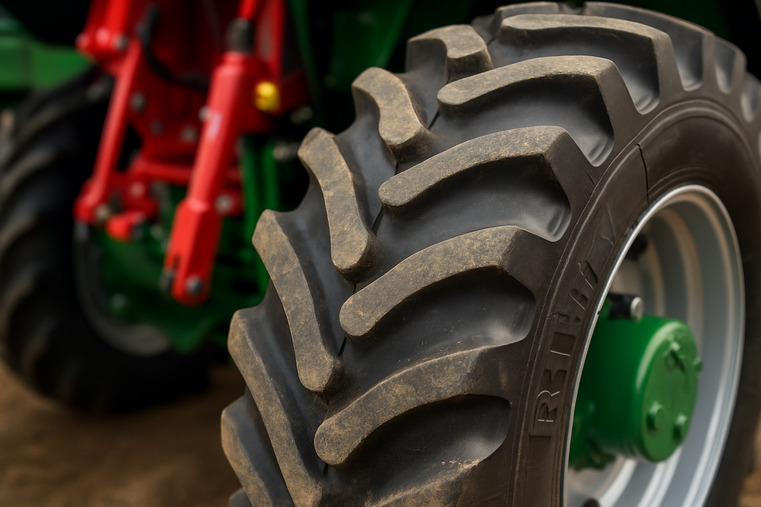
It's a mistake to treat all tractor sales as equal. When I see market leaders5 like Mahindra and Swaraj growing this fast, I don't just see numbers; I see a specific type of demand. These brands are dominating the segment where farmers are upgrading to more powerful machines for tougher jobs. These tractors don't use standard tires. They require products that can handle more torque, heavier loads, and more demanding soil conditions. For a supplier like me, this is a clear signal. It tells me to focus my clients' attention on our reinforced tire and wheel solutions. The growth isn't just in tractors; it's in the heavy-duty components7 they rely on. This is where the value and the opportunity are concentrated.
Translating OEM Sales into Component Demand
| OEM Growth Driver | Resulting Tractor Type | Immediate Component Demand |
|---|---|---|
| Mahindra & Swaraj | High-horsepower, heavy-duty models | Tires: R1/R1W patterns, larger sizes |
| Increased Power | Tractors for tougher applications | Rims: Reinforced steel rims with higher load capacity |
| Efficiency Focus | OEMs need ready-to-install parts | Services: Full assembly of tires and wheels |
Why Is Growth Beyond the Top Brands a Sign of a Healthy Market?
You might dismiss the growth of smaller OEMs as insignificant. You think only the top two brands matter, causing you to overlook the true depth and stability of the market's expansion.
When brands like TAFE, Sonalika, and Escorts all post double-digit growth, it proves the demand is widespread. This isn't a temporary spike for one company; it shows the entire agricultural ecosystem8—from OEMs to dealers to farmers—is confident and investing.
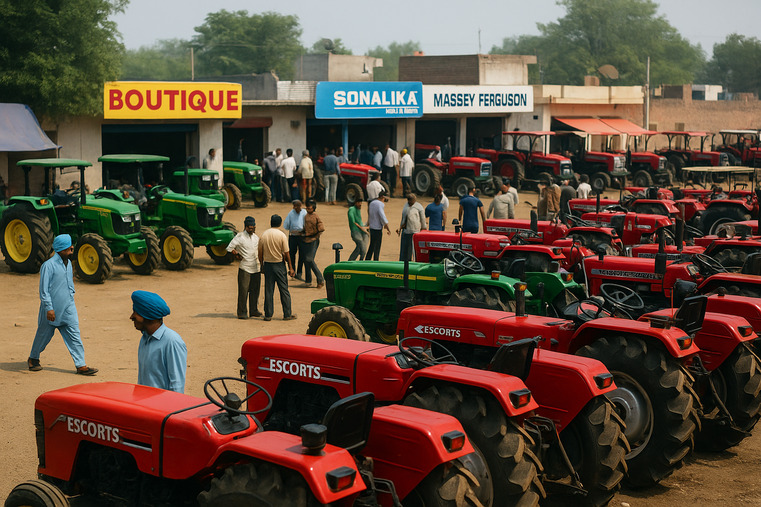
In my experience, the healthiest markets are the ones where everyone is growing, not just the leaders. The fact that five of the top OEMs saw significant gains tells a powerful story. It means rural cash flow is strong across different regions and farming segments. This broad-based momentum is a procurement manager's best friend. Why? Because it creates predictable, sustained demand. It's not just about OEMs placing big, one-off orders for a new model launch. It also signals that dealers are restocking aggressively and the replacement market9 is accelerating as farmers have the confidence to upgrade their existing equipment. This widespread health reduces risk and creates a stable demand pipeline for the entire supply chain, from raw materials to finished tires and wheels.
How Is the High-End Market Shifting Supplier Requirements?
You see the more moderate growth of John Deere and Eicher and might think it's less important. This makes you overlook the highly profitable, quality-focused customers these brands represent.
John Deere and Eicher's growth indicates a strategic shift towards higher-spec requirements. Their customers are less price-sensitive and demand superior quality, such as higher load ratings, steel-belted tire structures10, and precision-engineered rims11 with tight tolerances.
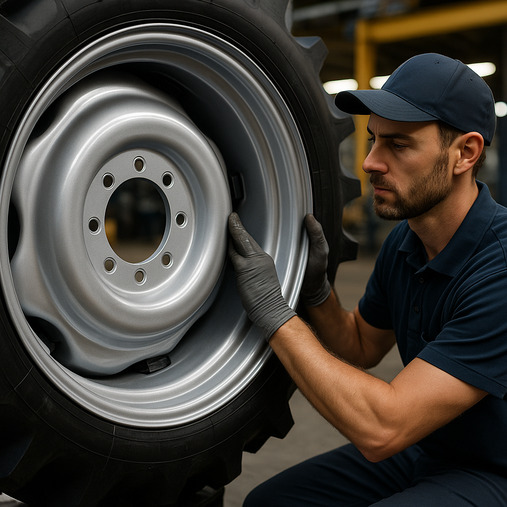
I always tell my clients to pay attention to the John Deere and Eicher customers. These aren't small-scale farmers; they are often commercial contractors12 and large-scale operators who use their equipment intensively. For them, downtime caused by a failed tire or a warped rim is far more costly than the price difference for a premium product. They are not just buying a tractor; they are investing in reliability. This is the segment of the market that actively looks for signs of quality—things like higher ply ratings (PR), advanced tire construction with steel belts, and perfectly balanced, precision-welded rims. This is a perfect match for exporters like us who have invested in OEM-grade quality control13. This niche is less crowded and offers better margins because the conversation is about stability and performance, not just price.
What Do Indian OEMs Now Demand from Their Global Suppliers?
You're still competing on price, believing it's the only thing Indian OEMs care about. This outdated strategy is making you lose bids to suppliers who understand the new reality of the market.
As sales surge, Indian OEMs are prioritizing reliable and timely delivery above all else. They need suppliers who can guarantee stable lead times, flexible logistics14 like mixed-container loading, and proven product consistency to keep their assembly lines moving without interruption.
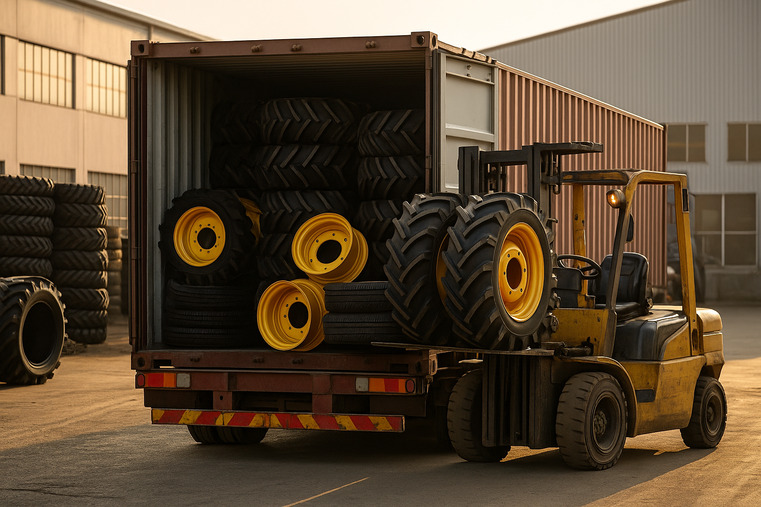
The biggest fear for any OEM procurement manager during a sales boom is a line-down situation. A stalled assembly line can cost millions. Right now, with demand so high, Indian OEMs are shifting their focus from "Who is the cheapest?" to "Who is the most reliable?" They need to know that their tire and wheel supplier has a stable supply of steel and rubber. They need partners who can deliver a container in 20-30 days, not 60. And they need flexibility. For example, we offer mixed loading, allowing an OEM to order a variety of tire and rim sizes in a single container to match their production schedule. This minimizes their inventory costs and maximizes their agility. Proving you have a robust supply chain and high-consistency manufacturing is now the most powerful way to win long-term OEM contracts in India.
The New OEM Procurement Checklist
| OEM Priority | Supplier Requirement | Why It Matters Now |
|---|---|---|
| 1. No Production Delays | Stable Lead-Times (20–30 Days) | A sales surge means any delay directly costs sales. |
| 2. Supply Chain Security | Control over Steel & Rubber Sources | Prevents sudden price shocks and material shortages. |
| 3. Inventory Agility | Flexible MOQ & Mixed Loading | Allows OEMs to match parts inventory to production needs. |
| 4. Zero-Defect Assembly | High Consistency (Run-out, Weld Integrity) | Ensures smooth, fast assembly without rework. |
Conclusion
India's tractor boom is a clear signal for a strategic shift. Success now depends on supplying high-quality components and, most critically, proving you are a reliable, flexible, and consistent supply chain partner.
Discover the key factors contributing to the surge in tractor sales in the Indian market. ↩
Explore this link to discover top-rated high-horsepower tires that meet the growing demand in India's tractor market. ↩
Learn about the benefits of reinforced rims and how they enhance tractor performance and durability. ↩
Find out why premium R1W tires are gaining popularity among farmers for their reliability and performance. ↩
Find out who the market leaders are and what strategies they employ to succeed. ↩
Discover the benefits of investing in higher-horsepower tractors for improved agricultural productivity. ↩
This resource will provide insights into essential heavy-duty components that support tractor efficiency. ↩
Gain insights into the agricultural ecosystem in India and its influence on tractor demand. ↩
Explore the dynamics of the replacement market for tractor parts and its growth potential. ↩
Learn how steel-belted tire structures improve tire durability and performance in demanding conditions. ↩
Explore the advantages of precision-engineered rims for enhanced tractor performance and safety. ↩
Learn about the significance of commercial contractors in driving demand for high-quality tractors. ↩
Understand the significance of OEM-grade quality control in ensuring high-quality tractor components. ↩
Explore flexible logistics solutions that can enhance supply chain efficiency for OEMs. ↩