
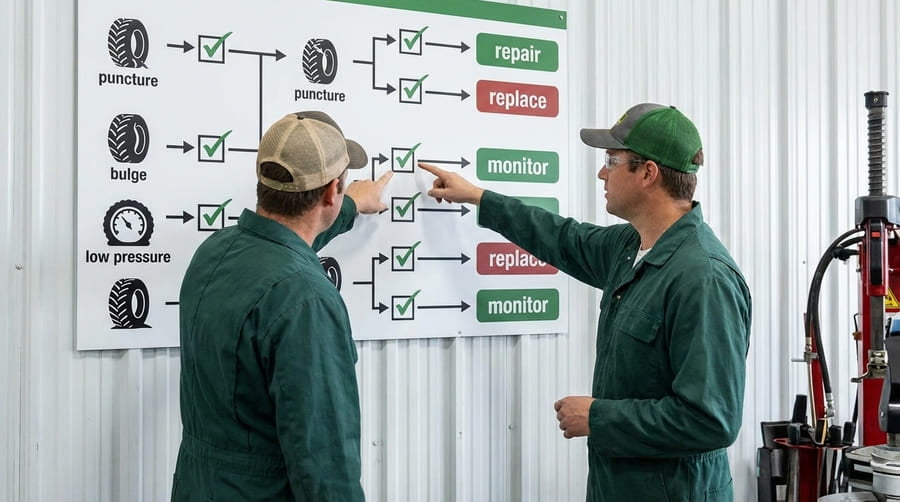
An irrigation tire shows a problem. You face a choice: a quick repair1, a costly replacement2, or just watching it. The wrong decision could shut down an entire field during a critical time.
The decision depends on a clear framework. Structural damage3 like bulges means immediate replacement. Simple punctures might be repairable, but only if the risk of downtime is low. If you're unsure, isolate the irrigation tire4 and monitor it5 before making a final call.
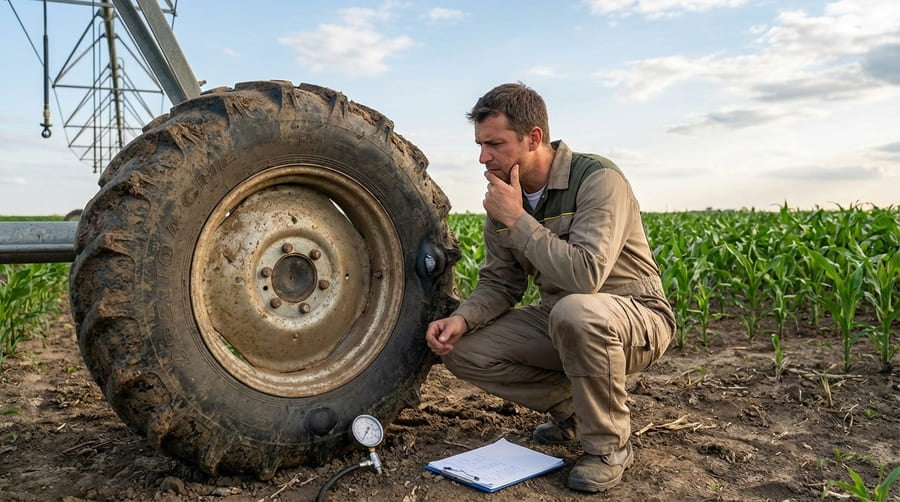
I'll never forget a call I got from a frantic dealer in the middle of a heatwave6. A farmer's pivot was down because of a irrigation tire issue. The dealer had made a quick puncture repair two days earlier to save the customer money. But the repair failed, the tire went flat, and now the pivot was stuck in deep mud, threatening a section of the crop. The cost of that second failure—in equipment recovery and potential crop loss7—was ten times the cost of a new irrigation tire. That day taught me a hard lesson: the cheapest option isn't always the smartest one. Making the right call requires more than just looking at the tire; it requires a process.
Is a Repairable Irrigation Tire Always Worth Repairing?
You find a simple puncture in an irrigation tire. A repair is cheap and technically easy, but doing it means sending a patched tire back into service during the most critical part of the season.
No. During peak season8, the enormous cost of potential downtime from a failed repair often outweighs the savings. A smart decision must factor in productivity loss, not just the cost of the patch.
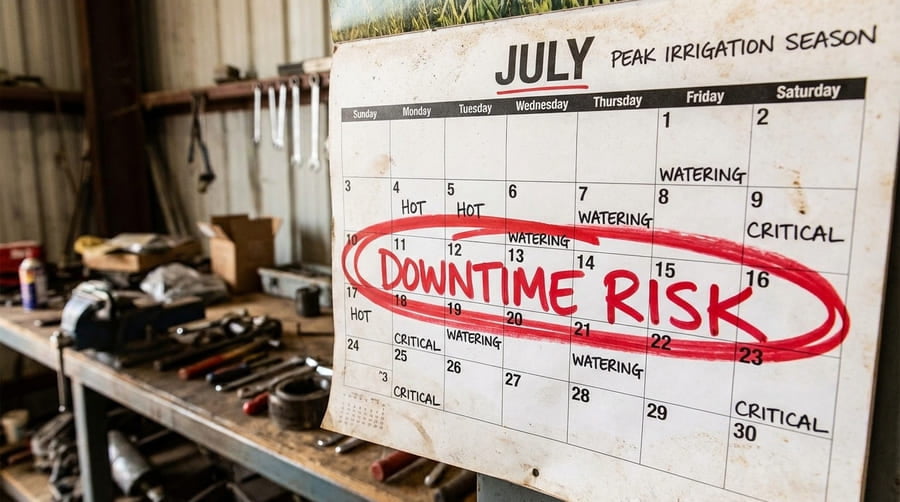
The math for a irrigation tire repair changes completely when the stakes are high. In the off-season, repairing a slow leak is a no-brainer. But during peak growing season, that calculation is different. The cost of a repair might be $50, while a new irrigation tire is $500. It seems like an easy choice. But what's the cost if that repaired tire fails again? You have labor costs for a second service call, potential damage to the pivot when it gets stuck, and—most importantly—the value of the crops that aren't getting watered. Suddenly, that $450 you "saved" by repairing the irrigation tire looks tiny compared to the thousands of dollars of risk you took on. The question isn't "Can it be repaired?" The real question is, "Can I afford the risk if the repair fails right now?" During peak season8, the answer is often no.
Repair vs. Replace: A Peak Season Calculation
| Decision Factor | Cost of Repair | Cost of Replacement |
|---|---|---|
| Upfront Cost | Low (e.g., $50) | High (e.g., $500) |
| Downtime Risk9 | Moderate to High (risk of re-failure) | Very Low |
| Potential Loss | High (crop damage, secondary repair) | Minimal |
| Peace of Mind | Low | High |
| Best Choice For: | Off-season, non-critical applications. | Peak season, critical operations. |
What Irrigation Tire Problems Are Non-Negotiable "Replace Immediately" Signals?
You notice a small bulge on a tire's sidewall. It’s holding air, so you might be tempted to "keep an eye on it." This hesitation is a gamble with safety and equipment.
Any sign of structural compromise is a non-negotiable signal for immediate replacement. This includes sidewall bulges10, casing deformation11, abnormal softness, or visible bead damage. These are not surface defects; they are signs of internal failure.
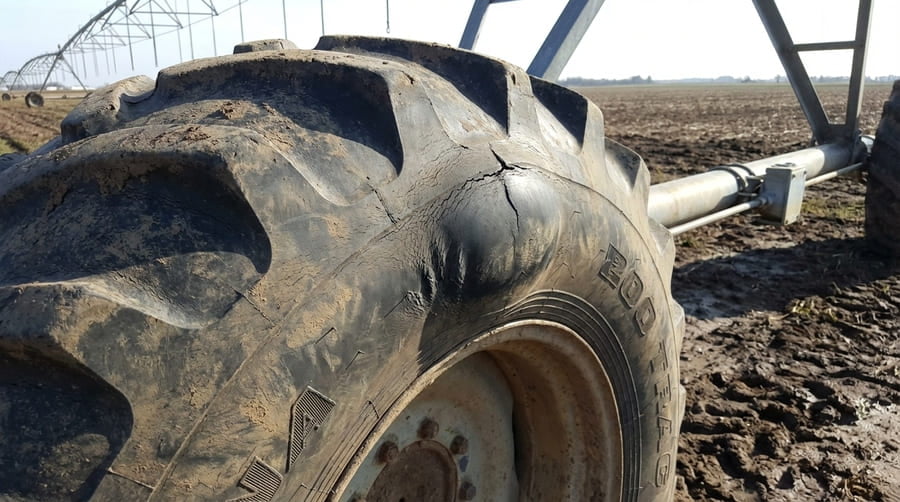
Some irrigation tire problems leave no room for debate. A bulge on the sidewall is like a hernia; it means the internal structure of the tire has broken, and the outer rubber is the only thing holding the air in. It is a ticking time bomb. The same goes for any irrigation tire that feels soft or spongy even when properly inflated—its internal framework is compromised. Damage to the bead area, where the tire seals to the rim, is another red flag because it can lead to a sudden and complete loss of air. Ignoring these signs is not just risking a flat tire; it's risking a catastrophic blowout that can damage the pivot's drivetrain or cause the tower to get stuck. I tell my partners to treat these symptoms with the same seriousness as a major engine problem. There is no "monitoring" structural failure; there is only replacing it before it causes a bigger disaster.
When the Cause Isn't Clear, What's the Safest First Step?
A irrigation tire is slowly losing pressure, but you can't find a puncture. Or maybe it just "looks funny." Making a snap judgment to replace it could be a waste of money, but ignoring it feels risky.
When in doubt, isolate the irrigation tire4 first. Remove it from active operation and conduct a controlled inspection. Check for pressure loss12 over 24 hours and watch for changes in shape. This observation prevents rushed, emotional decisions.
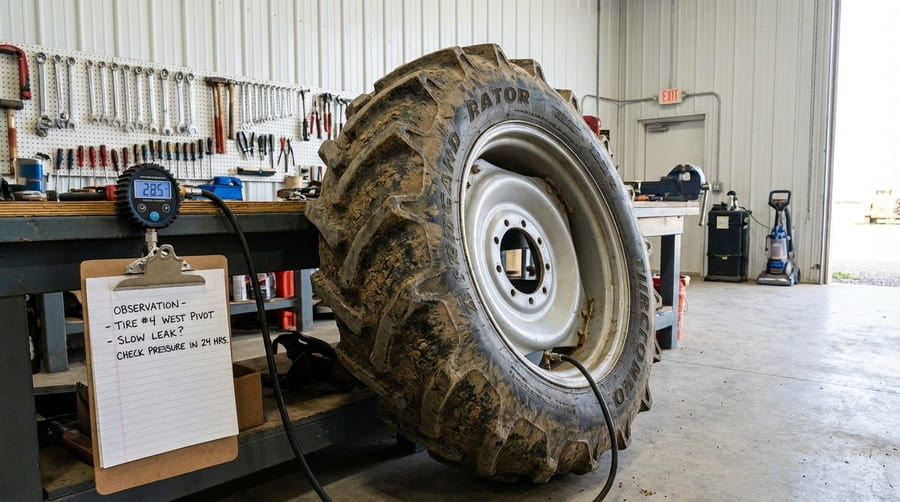
When you're faced with an unclear problem, the worst thing you can do is make a rushed decision under pressure. The safest and most professional first step is to take the mystery out of the equation. If you have a spare, swap out the questionable tire and bring it back to the shop. Inflate it to the correct pressure and let it sit for a day. If it loses a significant amount of air, you know there's a slow leak you need to find. If the pressure holds but the shape still seems odd, you can inspect it more closely without the pressure of a waiting customer. This "isolate and observe" method does two critical things. First, it keeps your customer's pivot running. Second, it gives you the time and space to make a logical, fact-based diagnosis instead of an expensive guess. It turns a moment of uncertainty into a controlled, professional process.
How Can a Simple Checklist Prevent Team Confusion?
Under pressure, one technician decides to repair a irrigation tire while another would have replaced it. This inconsistency creates arguments, confuses customers, and exposes your business to unnecessary risk.
A standardized, documented decision framework13 prevents this confusion. A simple, repeatable checklist or decision tree14 ensures every team member makes consistent calls, which strengthens accountability and reduces internal conflict.
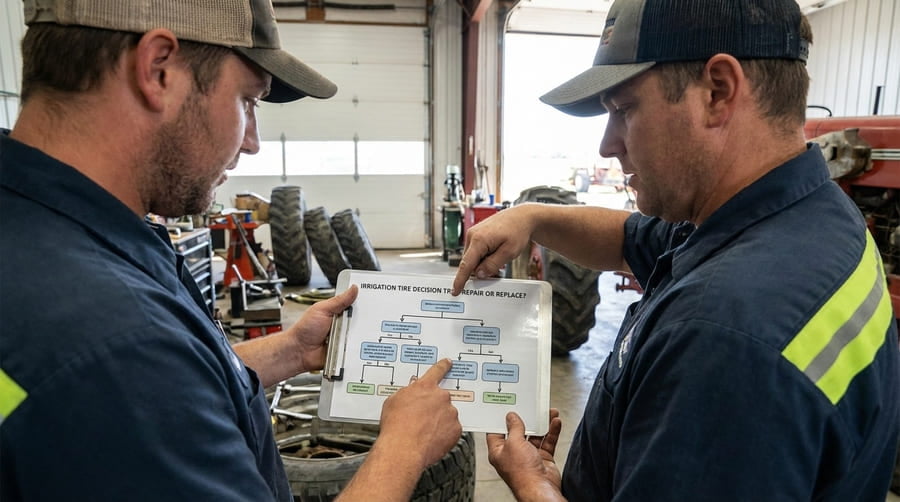
Your team's judgment is one of your biggest assets, but it needs to be consistent. Without a clear process, decisions can be influenced by mood, experience level, or pressure from the customer. This is why a simple, written-down decision tree14 is so valuable. It’s not about removing judgment; it’s about guiding it. The framework can be as simple as a series of questions: 1. Is there any sign of structural damage (bulge, deformation)? If yes, replace. 2. Is it peak season8? If yes, lean toward replacement for anything but the most minor repairs. 3. Is the cause unclear? If yes, isolate and monitor. By having every team member follow the same logic, you ensure that the decision made on Monday is the same one that would be made on Friday. This consistency builds trust with your customers and protects your business from the risks of random, individual judgment calls.
Conclusion
Deciding whether to repair, replace, or monitor an irrigation tire shouldn't be a guess. By using a clear framework, you can turn a moment of crisis into a demonstration of your expertise.
Explore the benefits and risks of quick repairs to make informed decisions during critical times. ↩
Understand when investing in a new tire is the best option to prevent downtime and crop loss. ↩
Identify signs of structural damage to ensure timely replacements and avoid catastrophic failures. ↩
Find out how isolating a tire can lead to better inspection and informed decisions. ↩
Learn how regular monitoring can help avoid unexpected failures and maintain productivity. ↩
Understand the effects of extreme weather on tire durability and irrigation efficiency. ↩
Explore the connection between tire issues and crop damage to mitigate risks effectively. ↩
Understand the importance of making strategic tire decisions during peak growing seasons. ↩
Assess the potential downtime risks to make informed repair or replacement choices. ↩
Learn why sidewall bulges indicate structural failure and require immediate attention. ↩
Understand the implications of casing deformation and the need for immediate replacement. ↩
Discover how monitoring pressure loss can reveal underlying issues in tire performance. ↩
Explore how a structured decision framework can lead to consistent and effective tire management. ↩
Learn how a decision tree can guide technicians in making consistent and informed choices. ↩