
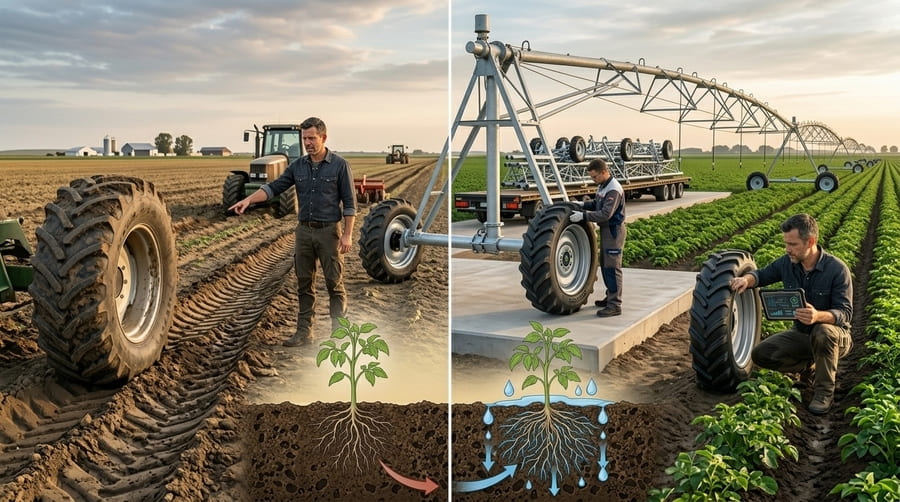
You see the agricultural tire market shifting, but the old rules don't seem to apply. This uncertainty makes it hard to predict what your customers will need next year.
Irrigation tire demand1 is reshaping the market because modern irrigation systems require specialized tires2. This shift is driving new product development, changing purchasing decisions from price to soil health, and creating structured replacement cycles3.
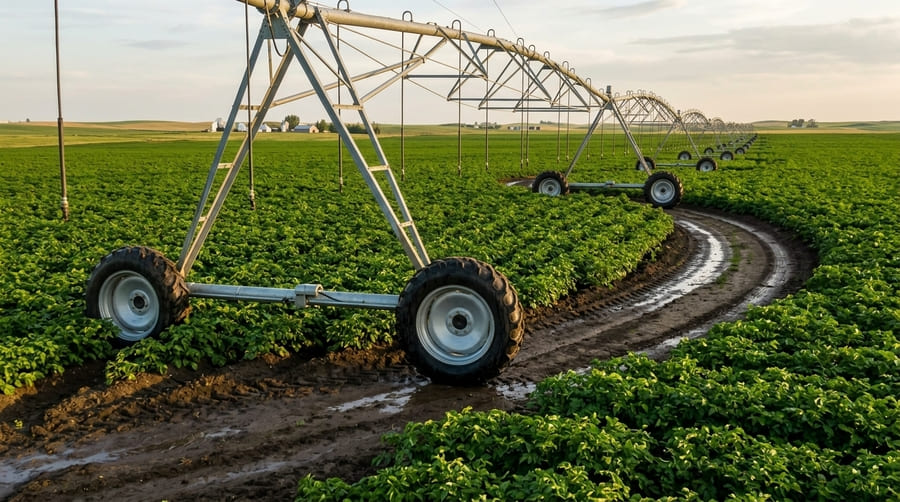
I remember a conversation a few years ago with a large farm manager in the Midwest. He was complaining that his standard tractor tires were creating deep ruts4 along his pivot lines, and he was losing yield in those areas. He said, "I spend a fortune on this precision irrigation5 system, but the tires are undoing all the benefits." That was a lightbulb moment for me. The focus was shifting from the machine to the entire system, and the tires were no longer an afterthought. They were becoming a core component of crop production strategy. This single conversation showed me that the demand wasn't just for a "tire that fits," but for a "tire that performs" in a very specific way.
Are Standard Tractor Tires No Longer Good Enough for Irrigation?
You've always used or sold standard ag tires for every machine. Now you're hearing that they are not suitable for modern center pivots, and you're wondering what has changed.
That's right. Modern irrigation systems are heavy and run on the same tracks repeatedly. Standard tractor tires are too wide and cause soil compaction6, so the market now demands specialized narrow tires.
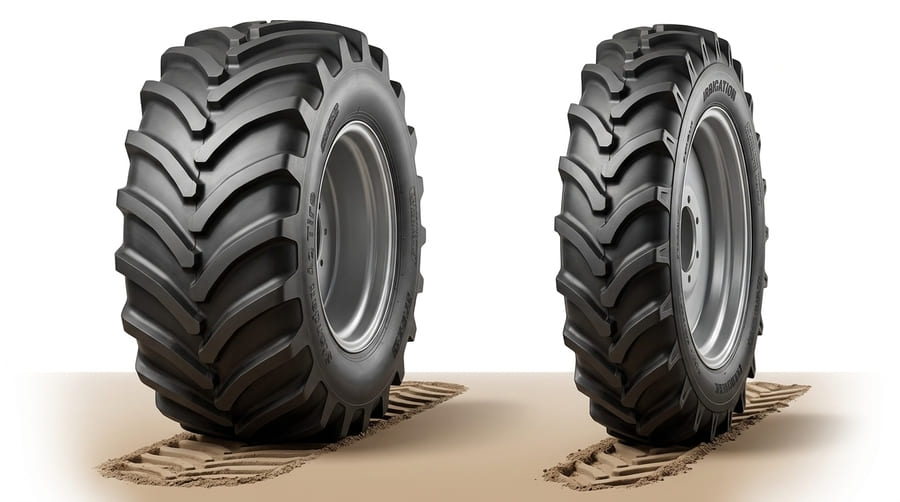
The game has changed because of precision irrigation5. In the past, irrigation was simpler, and any tire that could hold up the machine was good enough. Today’s center pivot and lateral move systems are engineering marvels. They are also incredibly heavy, especially when filled with water. A standard tractor tire, which is designed for traction and flotation across a wide field, is actually a poor choice here. It's often too wide for the narrow tracks between crop rows. More importantly, its design creates significant soil compaction6 when it runs over the same path hundreds of times a season. This compaction crushes the soil structure, prevents water absorption, and stunts root growth, ultimately reducing crop yield. So, we're seeing a huge demand for tires designed specifically for this job: narrow profiles to avoid crop damage, high load capacity7 to handle the weight, and advanced designs to minimize compaction.
Is Protecting Your Soil Now More Important Than a Tire's Price?
You're used to customers choosing the cheapest tire that fits. But now, more buyers are asking about soil compaction6, a factor you haven't focused on before.
Yes, for large-scale and professional farms, it is. They now calculate the long-term cost of lost yield from soil compaction6, which often outweighs the initial savings from a cheaper tire.
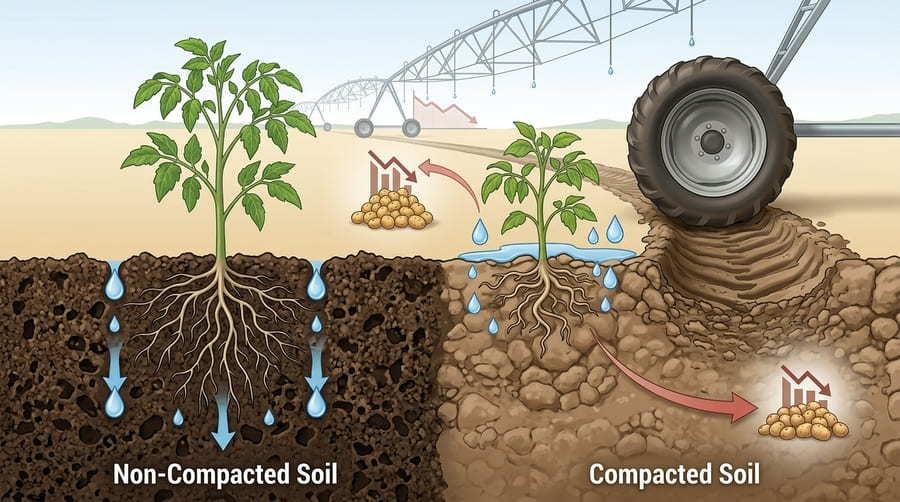
This is one of the biggest mindset shifts I've seen in my 12+ years in the business. The conversation is no longer just about the purchase price. It's about the total cost of ownership8, and that now includes the health of the soil. A smart farm manager understands that deep ruts4 are not just an inconvenience; they are a direct hit to the bottom line. Let's look at the numbers. A cheap, stiff tire might compact the soil and cause a 5-10% yield loss in its tracks. Across a large farm with dozens of pivots, that lost revenue is a massive figure, far greater than the few hundred dollars saved on a set of budget tires. This is why a tire's impact on the soil has become a commercial argument. Buyers are now evaluating tires based on their ability to protect the soil and, by extension, protect their profits. They are looking for a return on investment9, and tires that prevent compaction deliver just that.
How Are Professional Farms Changing Their Tire Replacement Strategy?
You’ve noticed that some of your biggest clients are no longer waiting for a tire to fail before they order a replacement. This change in buying behavior seems new and unpredictable.
They are moving from a reactive to a proactive strategy10. Farms now treat tire lifespan as a predictable operational expense11 and schedule replacements to avoid costly downtime during critical seasons.
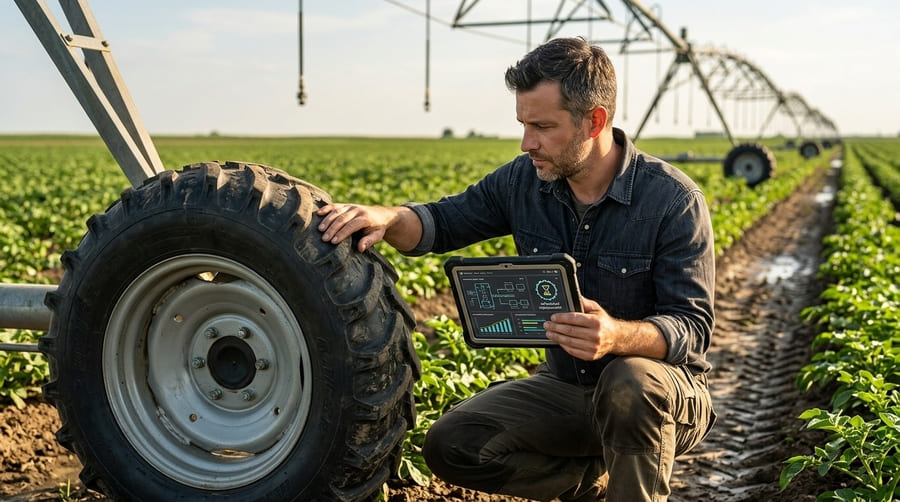
The days of running a tire until it blows out in the middle of a hot July day are ending for professional operations. A single day of unscheduled downtime for an irrigation system during a dry spell can cost a farm thousands in potential yield loss. It's a risk they are no longer willing to take. As a result, tire management has become a structured part of their operational planning. They are now tracking everything: installation dates, hours of operation, and visible wear patterns. Based on this data, they create predictable replacement cycles. For example, they might decide to replace all the tires on a specific pivot every five years, regardless of their apparent condition. This proactive approach turns an unpredictable emergency into a planned maintenance task. It allows them to budget accurately and schedule the work for the off-season, ensuring the entire system is 100% reliable when it matters most. This creates a more stable, predictable demand in the replacement market.
Why Are More Irrigation OEMs Selling Machines with Tires Already Mounted?
You used to sell replacement tires to farmers who just bought new irrigation equipment. Now, you see more machines arriving from the factory with high-quality tires already installed.
Because irrigation equipment manufacturers (OEMs) realize that tire performance directly affects their machine's performance and their brand's reputation. Offering certified, factory-mounted solutions12 ensures quality and simplifies the process for the customer.
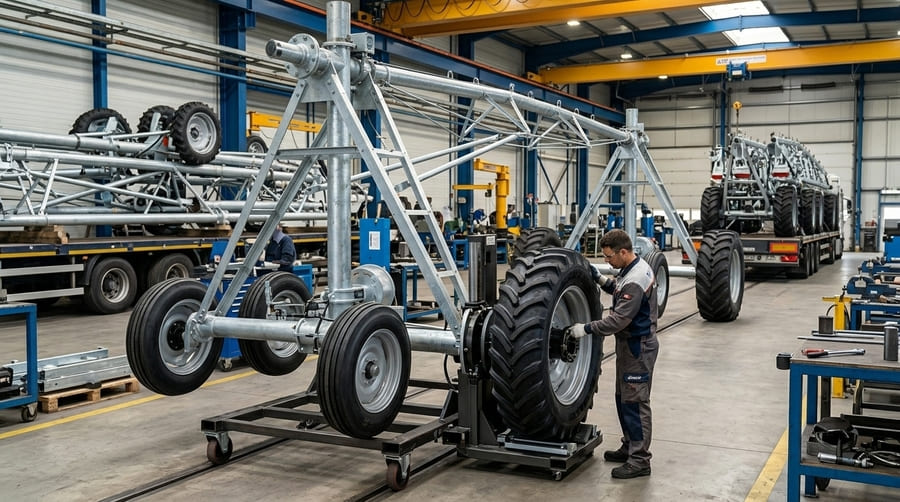
Equipment manufacturers have learned a hard lesson: a world-class irrigation system can be ruined by a poor set of tires. When a customer spends hundreds of thousands of dollars on a new pivot, and the tires cause deep ruts4 or fail prematurely, who do they blame? They blame the brand that sold them the pivot. To protect their brand reputation13 and ensure customer satisfaction, OEMs are taking control of this critical component. They work directly with tire manufacturers like us to specify and source tires that meet the exact performance requirements of their machines. By offering a complete, factory-integrated package with pre-mounted, high-quality tires, they provide a better customer experience. The farmer gets a machine that is ready to perform optimally from day one, and the OEM protects its brand from being associated with the problems caused by cheap, unsuitable tires. This integration is a sign that the entire industry now recognizes the tire as a key performance component14, not just an accessory.
Conclusion
The agricultural tire market is being reshaped by the specialized needs of modern irrigation, moving the focus from price to performance, soil health, and system reliability15 for both farmers and OEMs.
Understanding the demand for irrigation tires can help farmers optimize their equipment for better soil health and crop yield. ↩
Specialized tires are crucial for preventing soil compaction and ensuring efficient irrigation, leading to better crop production. ↩
Structured replacement cycles prevent costly downtime and ensure reliable performance during critical farming seasons. ↩
Exploring the impact of deep ruts can help farmers understand the importance of tire choice in maintaining soil health and maximizing yield. ↩
Precision irrigation requires specific tire designs to avoid soil damage and ensure optimal water distribution. ↩
Learning about soil compaction can guide farmers in choosing tires that protect soil structure and enhance water absorption. ↩
High load capacity ensures that tires can support heavy irrigation systems without causing soil damage. ↩
Understanding total cost of ownership helps farmers evaluate long-term benefits over initial savings when selecting tires. ↩
Tires that minimize soil compaction can lead to higher crop yields, providing a significant return on investment for farmers. ↩
A proactive strategy helps farms avoid unscheduled downtime and maintain consistent productivity during critical periods. ↩
Treating tire lifespan as a predictable expense allows farms to budget accurately and plan maintenance effectively. ↩
Certified solutions guarantee quality and simplify the purchasing process, ensuring reliable performance for farmers. ↩
Tire performance is crucial for maintaining an OEM's reputation, as poor tire choice can lead to customer dissatisfaction. ↩
Recognizing tires as a key component highlights their role in ensuring system reliability and optimal crop production. ↩
Specialized tires enhance system reliability by preventing soil damage and ensuring consistent irrigation performance. ↩