
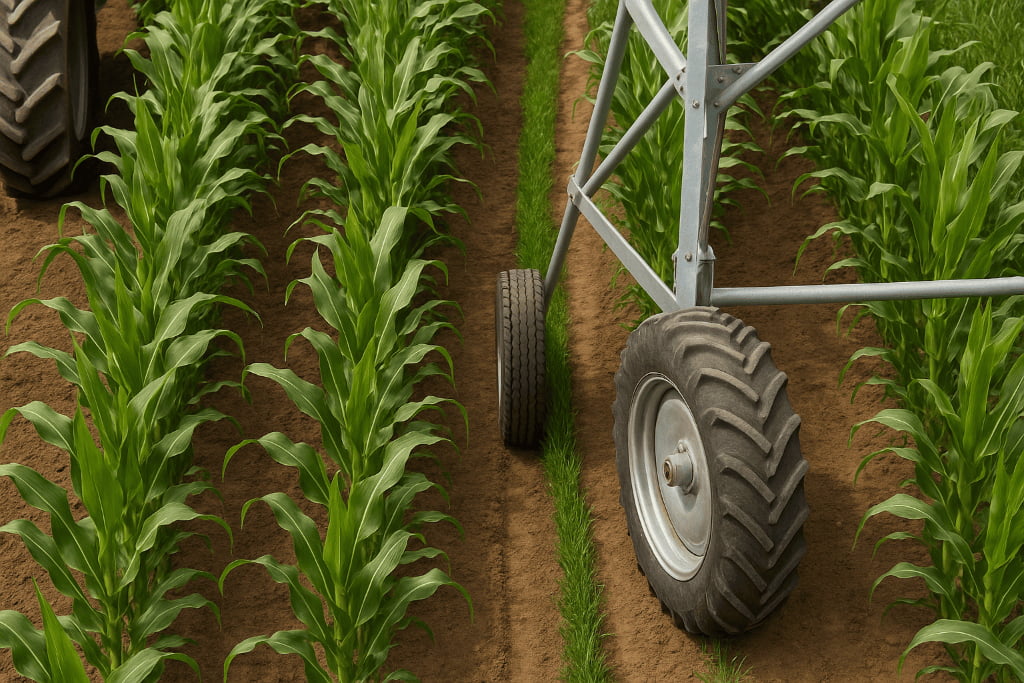
You assume a farm tire is a farm tire. Using a standard tractor tire1 on your irrigation system seems like a smart way to save money. But this common mistake can cause costly problems.
Irrigation tires2 are different because they are designed for constant, slow movement under light but continuous loads in wet soil. Their narrow profile3 and unique tread provide traction4 while minimizing the soil compaction5 and rutting caused by standard, heavy-duty farm tires.
I'll never forget visiting a farm where the owner had just installed a brand-new center pivot system. To save a little cash, he fitted it with used tractor tire1s he had lying around. A few weeks later, he called me in a panic. After a heavy rain, the aggressive tractor treads6 had dug deep trenches along the pivot's path. The system was bogged down in the mud, and the ruts had damaged the roots of his corn crop. He learned a tough lesson that day: the small "saving" on tires ended up costing him thousands in crop damage7 and repairs. The differences aren't just details; they are fundamental to protecting your land and your investment.
How Does Tread Design Impact Soil and Traction?
Your standard farm tires get stuck in the mud. They dig deep, messy ruts that damage your soil structure and your crop's roots. You feel frustrated by the constant damage and a stuck system.
The tread on an irrigation tire uses non-directional, closely spaced lugs. This design gives continuous grip in wet soil without aggressively digging in. It helps the tire "float" over the surface, preventing the deep ruts that standard tractor treads create.
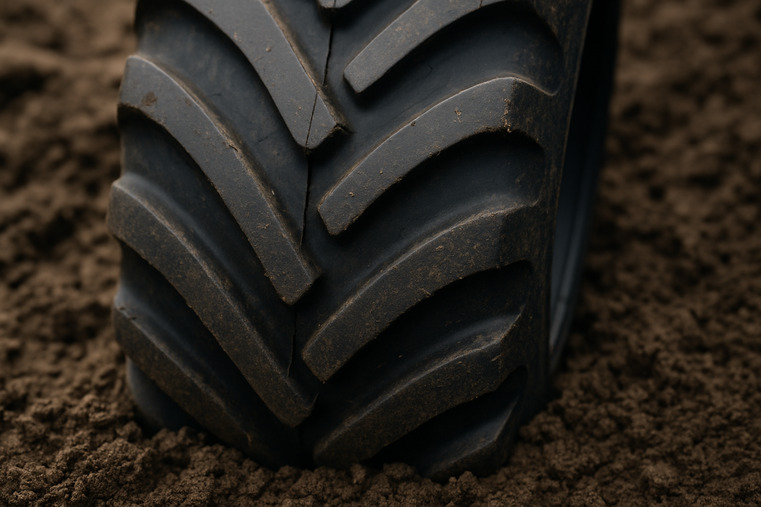
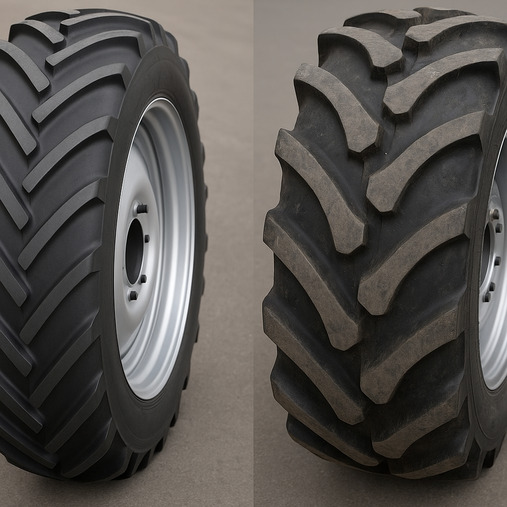
The core difference lies in the job each tire is designed to do. A tractor tire1 is all about converting engine power into massive forward force. Its deep, V-shaped lugs are made to dig into the earth and grab on for maximum pull. An irrigation tire has a completely different job. It doesn't need to pull a heavy implement; it needs to guide a multi-ton structure in a perfect circle, day after day, without wrecking the field. Its tread is designed for stability and minimal disturbance. Think of it like this: a tractor tire1 is like a shovel, designed to dig, while an irrigation tire is like a snowshoe, designed to stay on top of the surface. This design philosophy is what protects your soil from compaction and your system from getting stuck.
Tread Design Head-to-Head
| Feature | Standard Tractor Tire | Irrigation Tire |
|---|---|---|
| Tread Pattern | Deep, V-shaped, directional lugs | Shallow, non-directional lugs |
| Primary Goal | Maximum traction4 and pulling power | Minimal soil compaction5 and rutting |
| Action on Soil | Digs in for grip | Floats on top of the surface |
| Best Use Case | Plowing, planting, heavy field work | Guiding center-pivot irrigation systems |
Why Is Tire Structure Built for a Different Kind of Load?
You know tractor tire1s are tough, built for heavy loads. So you think they must be strong enough for a lighter irrigation system. But you’re thinking about the wrong kind of strength.
An irrigation tire's casing is built for constant flexing under a continuous, unchanging load. A tractor tire1 is built to handle sudden, high-impact loads and massive weight variations, making it too rigid and heavy for an irrigation system's needs.
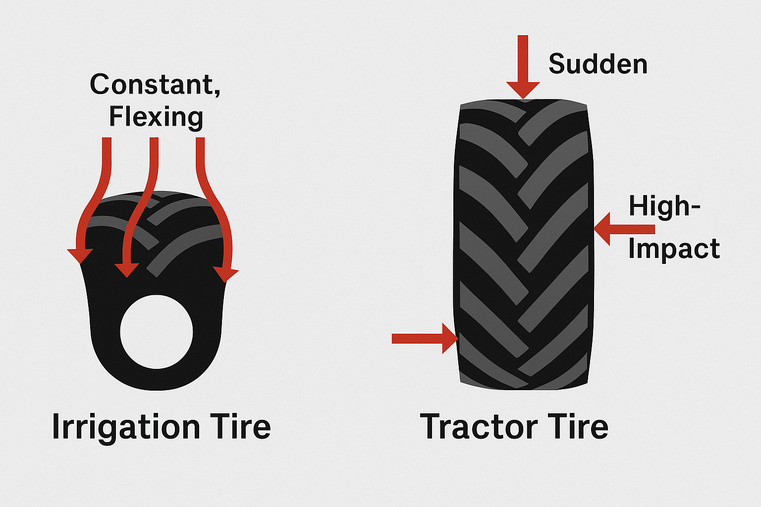
A tractor's life is one of extremes. One moment it's pulling a 10-ton plow, the next it's driving empty on the road. Its tires need thick, rigid sidewalls and a heavy-duty casing to handle these shock loads. An irrigation system, however, operates under a very consistent and predictable load. It moves slowly and carries the same weight all the time. Using an overly-built tractor tire1 is not just overkill; it's counterproductive. The extra weight and rigidity contribute directly to soil compaction5. An irrigation tire, on the other hand, is engineered with a more flexible casing8. It’s designed to absorb small surface imperfections and distribute the system's weight evenly. This flexibility is key to its performance, allowing it to maintain a consistent footprint and prevent the ground pressure that leads to deep ruts and yield loss9.
What Role Does Tire Size Play in Protecting Crops?
You see the wide, chunky tires on a tractor and think bigger is better. It seems logical that a wider tire would spread the weight out more. But for an irrigation system, this logic is backward.
Irrigation tires2 are designed with a narrow profile3. This allows them to move between rows of mature crops with minimal contact and damage. A wide tractor tire1 would crush plants, directly reducing your harvestable yield with every rotation.
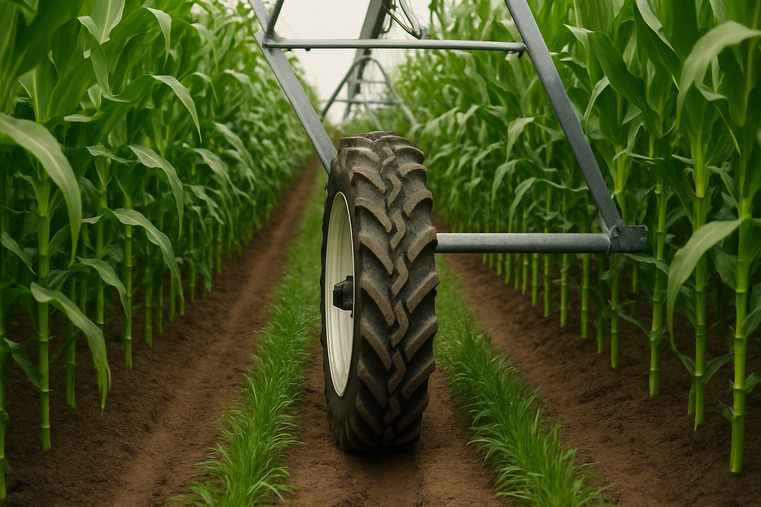
Early in the season, when the ground is bare, tire width might not seem like a big deal. But fast forward a few months when your corn is tall or your soybeans are full. A center pivot system has to move through that mature crop. This is where the narrow design of an irrigation tire proves its worth. We design these tires specifically to fit within the standard row spacing of major crops. I've walked fields where the only sign the pivot had passed was a thin, damp line on the soil. In contrast, using a wide flotation or tractor tire1 would create a wide path of destruction, snapping stems and crushing valuable plants. The goal isn't just to move the machine; it's to water the crop without harming it. The slim, efficient profile of a proper irrigation tire is essential for achieving that.
Sizing for Success
| Tire Type | Profile Width | Impact on Mature Crops | Primary Advantage |
|---|---|---|---|
| Standard Tractor Tire | Wide | High damage, crushes plants and stems. | Flotation on soft soil (for the tractor). |
| Irrigation Tire | Narrow | Minimal damage, fits between rows. | Crop protection and yield preservation. |
Conclusion
Irrigation tires2 are specialized tools, not just another farm tire. Their unique tread, structure, and narrow size are engineered to protect your soil, crops, and investment for maximum efficiency.
Learn about the key differences between tractor and irrigation tires to make informed decisions for your farm. ↩
Explore the advantages of irrigation tires to understand how they can protect your crops and soil. ↩
Find out why a narrow tire profile is crucial for minimizing crop damage during irrigation. ↩
Explore the significance of traction in agricultural tires and how it affects farming efficiency. ↩
Discover effective strategies to prevent soil compaction and maintain healthy soil for your crops. ↩
Explore the negative effects of aggressive tractor treads on soil health and crop growth. ↩
Discover methods to prevent crop damage during irrigation to ensure a healthy harvest. ↩
Learn about the advantages of flexible tire casings in maintaining soil integrity and tire performance. ↩
Learn about the factors leading to yield loss and strategies to mitigate them for better crop production. ↩