
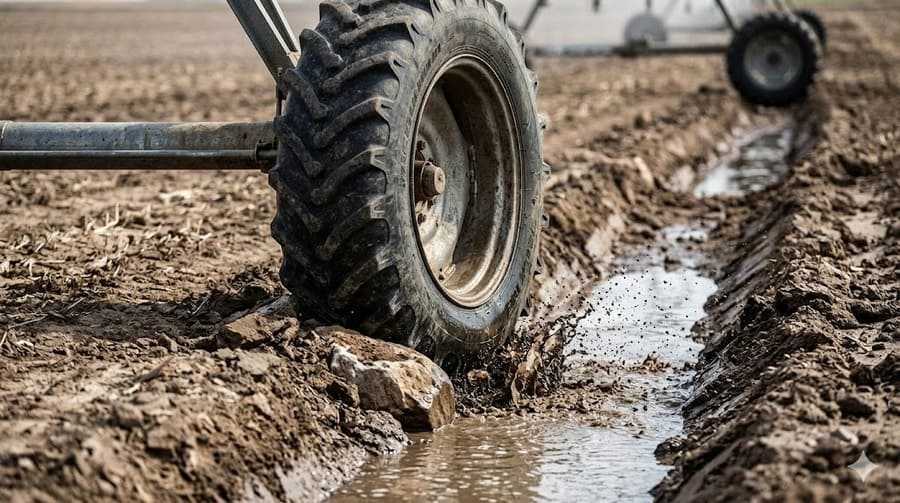
You want lighter rims to save energy, but you're worried about them failing under a heavy load. A bent rim could cause a catastrophic shutdown, costing you far more than any energy savings1.
The balance is not about choosing between thick or thin. It's about matching the right material thickness2 in critical areas, like the flange3, to the specific dynamic loads4 your equipment will face in the field, not just its static weight.
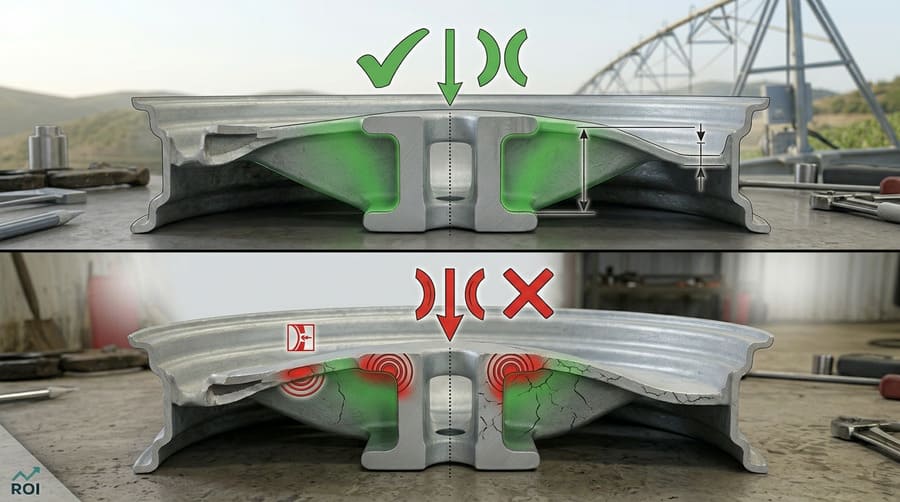
I once visited a large farm that was struggling with recurring gearbox failures5 on one of their center pivots. They had recently replaced the original rims with a much lighter, cheaper set, thinking they would reduce drivetrain strain. The new rims weren't cracked or bent, so they didn't suspect them. But when we watched the pivot run, fully loaded with water, we could see the thin rims visibly flexing with every tower movement. This constant deformation was creating a subtle wobble, sending vibrations6 straight back to the gearbox and destroying the bearings. They chased a small efficiency gain and created a massive reliability problem. This experience taught me that the balance between weight and strength is a science, not a guessing game.
Does Making a Rim Lighter Always Make it Weaker?
You're told that reducing the weight of your irrigation system will save on energy costs. But you've seen thin, lightweight rims deform and fail, leaving you skeptical of this advice.
No, but blindly thinning a rim does. This causes "elastic deformation7," where the rim flexes under load. This repeated flexing compromises alignment, stresses other parts, and eventually leads to fatigue failure.
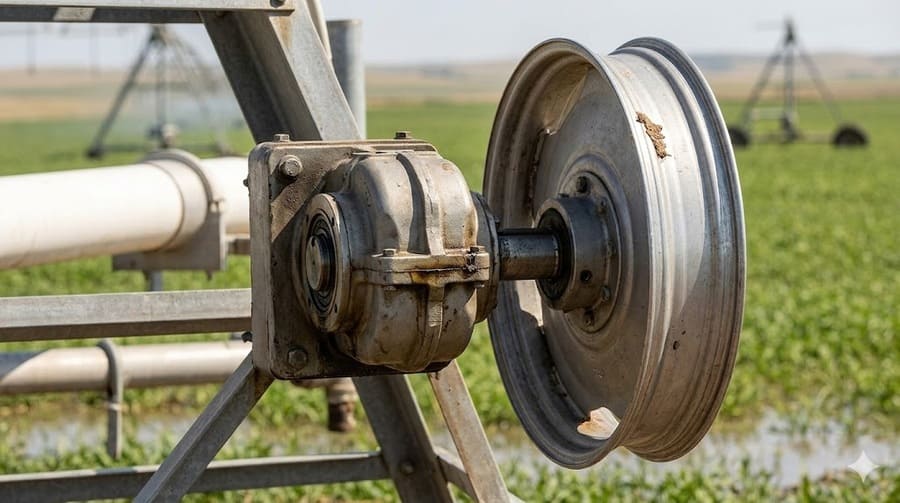
This is what I call the "lightweight paradox8." The idea that a lighter rim is better is a dangerous oversimplification. The issue is elastic deformation7. When a pivot is full of water, the load on the wheels is immense. An insufficiently thick rim will physically flex or bow under this weight. It may not break on the first use, and it might even spring back to its original shape when the load is removed. But this constant flexing is incredibly damaging. It's like bending a paperclip back and forth; it will eventually snap. In a wheel, this flexing action loosens the tire's grip on the bead, puts uneven stress on the hub and bearings, and sends damaging vibrations6 up the drivetrain. So while the rim itself might not fail immediately, it is actively destroying other, more expensive components. True engineering doesn't just cut weight; it places strength exactly where it is needed to prevent this deformation.
Where Does a Rim's Real Strength Come From?
You look at a steel rim and see a simple metal circle. You wonder why some rims can take a beating on rough ground while others buckle from a single bad impact.
A rim's true structural strength, especially against side impacts, comes from the thickness and design of its flange3. A robust flange3 is essential for resisting impacts and keeping the wheel's shape.
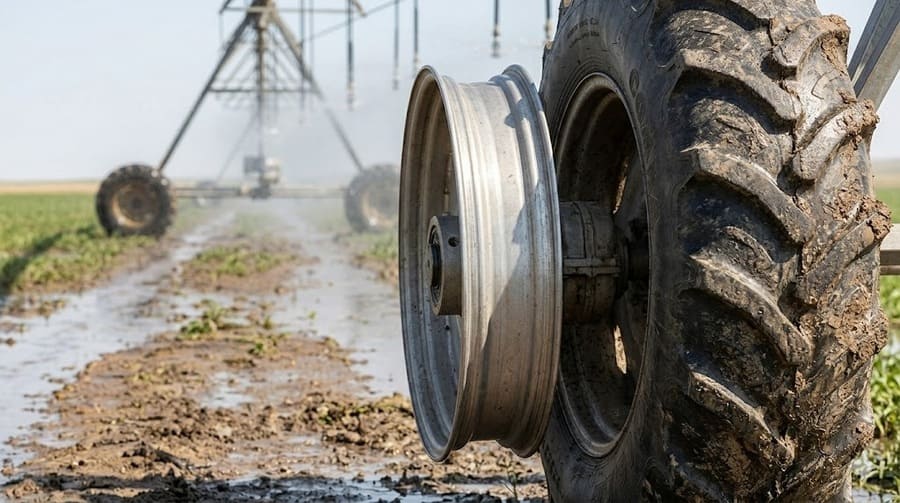
Think of the rim flange3 not just as a lip to hold the tire, but as the main structural beam of the entire wheel. When an irrigation wheel drops into a deep rut or hits a rock, the force isn't just vertical; it's lateral. This sideways impact tries to twist and bend the entire rim. A thin, weak flange3 will immediately deform, causing the tire to lose its seal and potentially bending the whole wheel out of true. A thick, well-designed flange3, however, acts as a powerful reinforcing ring. It provides the rigidity needed to absorb that lateral impact and transfer the force through the wheel structure without deforming. When I evaluate a rim for rough terrain, the first thing I inspect is the flange3. Its thickness and the quality of the steel are the best indicators of how that rim will perform when it inevitably encounters the harsh realities of a working field.
Key Strength Areas of a Rim
| Rim Component | Primary Function | Why Thickness Matters |
|---|---|---|
| Flange | Resists lateral impacts, holds tire bead. | Prevents bending, maintains wheel shape. |
| Well | Provides space for tire mounting. | Must resist pressure from tire bead. |
| Disc | Connects rim to the hub, transfers torque. | Must handle twisting forces from the motor. |
Can a Lighter Rim Really Save You Money on Energy?
You hear claims that lighter rims lead to significant operational savings. You're trying to determine if this is a real, measurable benefit or just a marketing talking point.
Yes, strategic weight reduction9 can lower energy consumption. For a typical 10-tower center pivot, reducing each rim's weight by just 5kg can decrease annual drive motor energy use by about 2%.
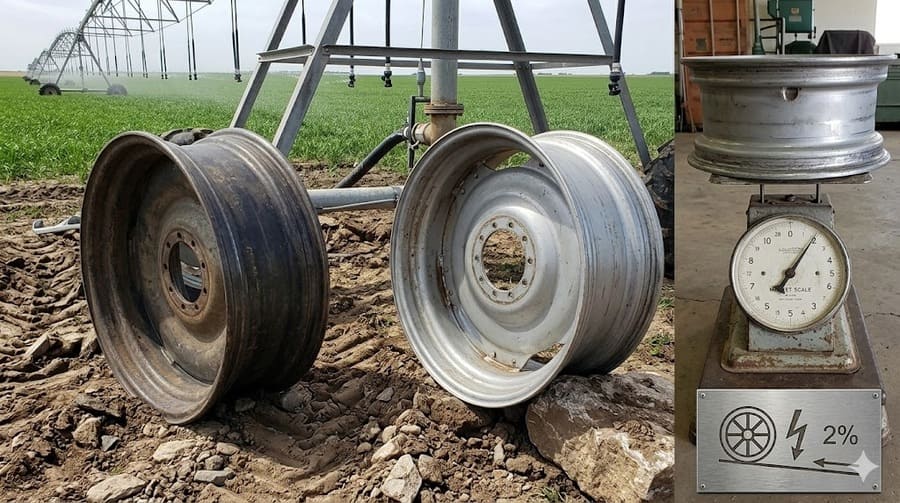
This is where the balance becomes so important. While blindly cutting weight is dangerous, strategic weight reduction9 is a key part of modern engineering. The goal isn't just to make the rim lighter, but to do so intelligently without compromising strength in critical areas like the flange3. This is achieved through better materials and advanced manufacturing, like using high-strength, low-alloy (HSLA) steel10 that offers more strength with less mass. The savings are real. Think about a 10-tower pivot with two wheels per tower. That's 20 wheels. A 5kg reduction per rim means the motors have 100kg less dead weight to move, stop, and start, thousands of times per season. Over the course of a year, that 2% reduction in energy consumption adds up to a noticeable saving on your electricity bill. The key is achieving this weight reduction without introducing the risk of elastic deformation7. It's about being smarter, not just thinner.
Why Are Static Load Ratings Not Enough for Field Use?
You check the spec sheet and see a rim has a high static load rating. You assume this means it's strong enough, but you still see failures in the field.
Static ratings only measure a wheel's capacity when standing still. They completely ignore dynamic impact loads11—the sudden, massive stresses from hitting ruts, rocks, and hills, which are the true cause of failure.
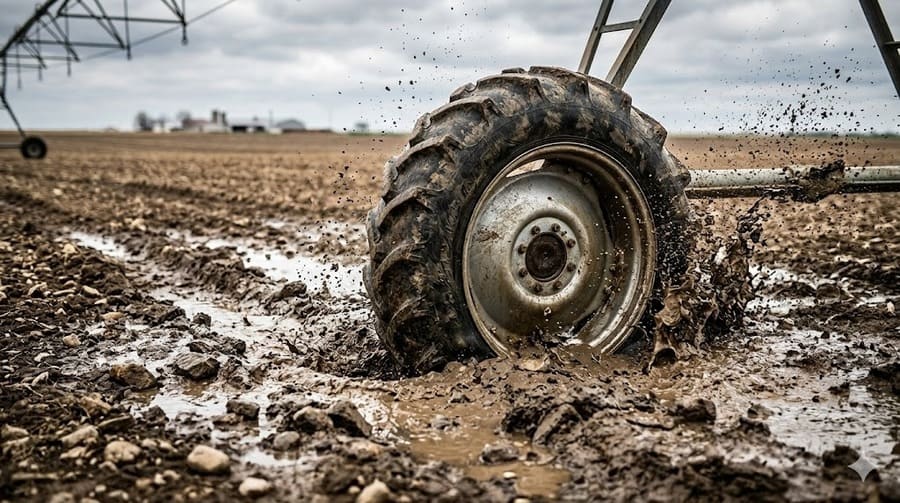
A static load rating is a nearly useless number for a real-world agricultural application. It tells you how much weight a rim can support if it's sitting perfectly still on a flat concrete floor. But your pivots don't operate in a warehouse. They operate in fields with ruts, bumps, rocks, and hills. The most dangerous force a rim faces is not the constant weight of the machine, but the sudden, sharp shock of a dynamic impact. When a wheel moving at operational speed drops into a six-inch rut, the force exerted on the rim for a split second can be many times greater than the machine's static weight. This is the moment a weak flange3 bends, a thin disc cracks, or a poorly made weld fails. Therefore, when we select rims, we must look past the simple static rating and consider the rim's ability to withstand dynamic loads4. This means prioritizing robust flange3s, quality welds12, and a design proven to handle the repeated impacts of life in the field.
Conclusion
The ideal irrigation rim isn't the thickest or the lightest. It is the one engineered with the right balance of material thickness2 to handle dynamic field loads without deforming.
Proper rim design reduces dead weight, leading to energy savings and improved efficiency in irrigation systems. ↩
Understanding material thickness helps ensure rims can handle dynamic loads without deforming, crucial for reliability and performance. ↩
The flange is crucial for resisting impacts and maintaining wheel shape, ensuring durability and performance in rough terrain. ↩
Dynamic loads are sudden stresses that rims face in the field, and knowing about them helps prevent failures and maintain system integrity. ↩
Improper rim design can cause vibrations that damage gearboxes, highlighting the importance of balanced rim engineering. ↩
Vibrations from rims can damage bearings and gearboxes, understanding this helps in preventing costly repairs. ↩
Elastic deformation can lead to rim failure and damage other components, understanding it helps in choosing the right rim design. ↩
The lightweight paradox highlights the risks of oversimplifying rim design, emphasizing the need for strategic weight reduction. ↩
Strategic weight reduction lowers energy consumption without compromising strength, leading to operational savings. ↩
HSLA steel offers more strength with less mass, enabling smarter weight reduction without risking elastic deformation. ↩
Dynamic impact loads exert sudden stresses on rims, understanding them helps in selecting rims that withstand field conditions. ↩
Quality welds ensure rims can withstand dynamic loads, preventing failures and maintaining structural integrity. ↩