
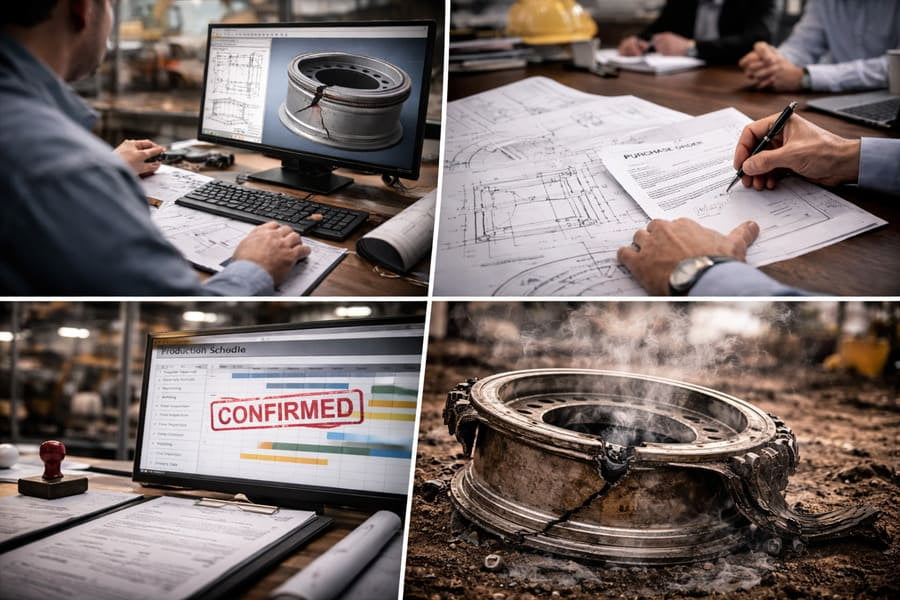
An OTR wheel1 fails, bringing your multi-million dollar machine to a halt. The immediate investigation focuses on the crack, but the real point of failure happened months ago, in an office.
The true moment of failure for an OTR wheel1 is not the physical accident. It's the point in the procurement process2 where a critical specification3 was overlooked, a doubt was ignored, or a risk was accepted on paper, effectively approving the future failure.
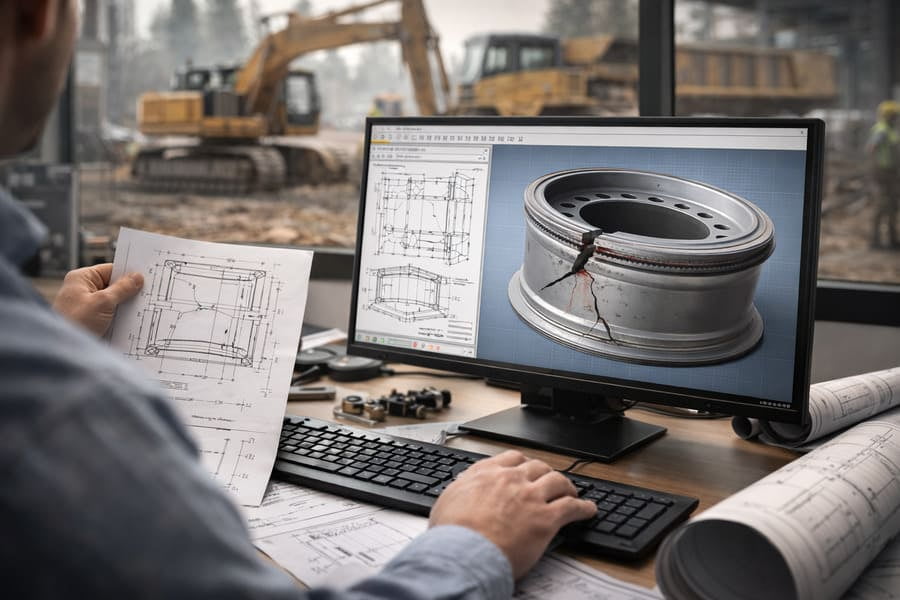
I've been in this business for over 12 years, and I've seen countless failure analyses. They are almost always focused on metallurgy and stress fractures. But that’s like performing an autopsy without asking what the person ate for the last ten years. The physical evidence only tells you how it broke, not why the path to that breakage was set in motion. The real story is always found by looking back at the decisions made long before the wheel was even forged. Let's trace the steps back to the real origin of the failure.
Was the Failure Caused by an Event or a Decision?
Your team is reviewing a failure report filled with technical jargon about metal fatigue4. But no one is asking about the procurement meeting where the wheel specification3s were originally approved.
OTR wheel1 failures are rarely "caused" by a single event; they are approved at a process checkpoint. The real risk is not the eventual crack, but the moment uncertainty was ignored and the project was pushed forward to meet a deadline or a budget.

I once worked with a client who had a series of wheel failures on their new fleet of loaders. The investigation blamed "unexpectedly harsh conditions." But I dug into their records. I found an email chain where a junior engineer questioned if the chosen wheel spec was robust enough for the high-torque application. The concern was dismissed to stay on schedule. The failure wasn't caused by the harsh conditions; it was approved in that email response. The accident scene was just the final, predictable outcome of that decision.
Tracing Failure to Its True Source
Understanding where failure originates changes how you manage risk. It's a shift from reactive analysis to proactive decision-making.
| Reactive View (Focus on the Accident) | Proactive View (Focus on the Process) | |
|---|---|---|
| Question | "What caused the metal to crack?" | "What process allowed this wheel to be selected?" |
| Blame | The operator, the terrain, the material. | The system, the specification3, the risk assessment5. |
| Solution | Replace the broken part. | Re-evaluate the procurement and validation process. |
| Point of Failure | The moment the wheel broke. | The moment a critical doubt was not addressed. |
Focusing on the accident scene means you'll just keep replacing broken parts. Focusing on the decision-making process is the only way to prevent the failure from ever happening again.
When Does the Window for Technical Review Actually Close?
Your engineers have some final technical questions, but the PO has been issued. Suddenly, the conversation shifts from "Is this right?" to "How do we make this work?".
Once the OTR wheel1 purchase order6, production schedule, or final sign-off is confirmed, the technical debate is effectively closed. The momentum of the supply chain takes over, and critical engineering concerns become secondary to logistical and financial commitments.
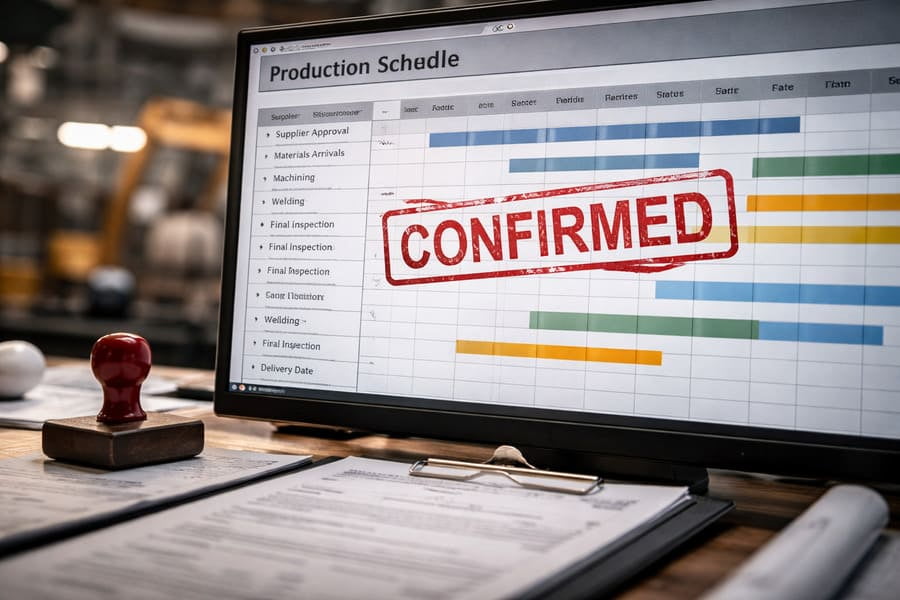
This is a powerful and dangerous force I see all the time. A PO is more than a document; it's a point of no return. Before it's signed, everything is debatable. After it's signed, any change introduces delays and costs that managers are heavily incentivized to avoid. The focus shifts from optimizing the technical solution to simply executing the commercial agreement. This means that if a flaw exists in the plan, the PO essentially locks it in. The time for due diligence is finite, and it ends the moment the order is confirmed.
The Finality of the Purchase Order
The PO is the most important checkpoint. It's where theoretical risk becomes committed reality.
- Before the PO: This is the "Zone of Influence." Technical teams, procurement, and suppliers can openly debate specification3s, materials, and testing protocols. Changes are relatively easy and cheap to make. This is the time to raise every possible concern.
- After the PO: This is the "Zone of Execution." The primary goal is to deliver the specified product on time and on budget. Questioning the original specification3 becomes disruptive and is often discouraged. The path is set.
Your last, best chance to prevent a field failure is before that PO is issued. Treat that document with the seriousness it deserves.
Does a Quality Certificate Guarantee the Right Choice Was Made?
The new OTR wheel1s arrive with all the right paperwork. They passed every quality inspection and have the ISO certificates7 to prove it. But are they the right wheels for your specific machine and application?
Passing quality inspections8 proves compliance, not the correctness of the original decision. A certificate confirms the wheel was manufactured according to the agreed-upon blueprint, but it cannot tell you if that blueprint was correct for the intended real-world application.
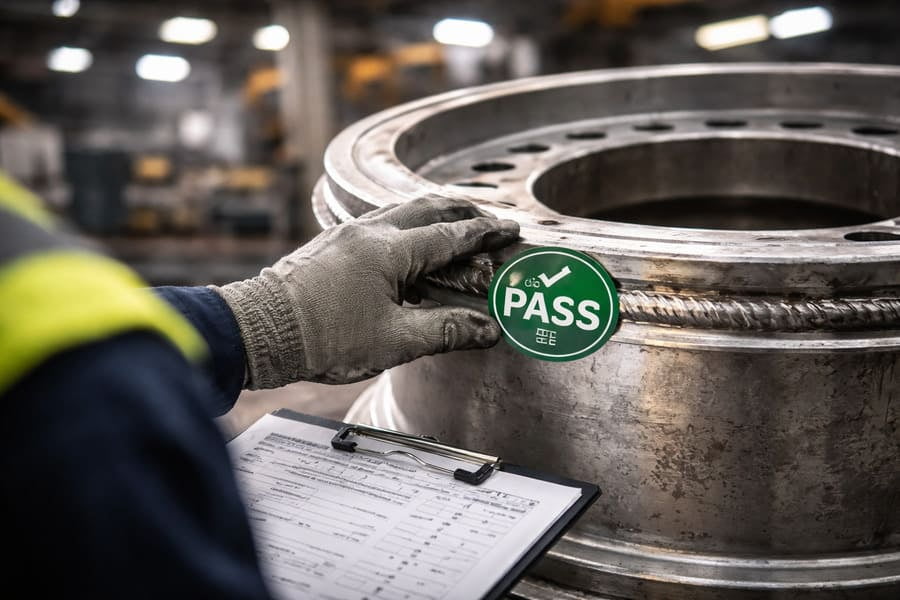
I've seen perfectly manufactured wheels fail catastrophically. Why? Because they were the wrong wheels for the job. The factory did its part perfectly; they built exactly what was ordered. The quality control team did its part; they confirmed the product matched the order. The failure happened because the initial order—the core decision—was flawed. A quality check is a check against a specification3, not a check against reality. It validates the process, but it can't validate the initial judgment that led to that process.
The Limits of Quality Control
QC is essential, but it's crucial to understand what it does and does not do.
| What Quality Control Confirms | What Quality Control Does NOT Confirm |
|---|---|
| Conformance to blueprint dimensions. | Suitability of the design for the application. |
| Correctness of the steel grade used. | The steel grade's adequacy for operational stress. |
| Quality of the weld according to standards. | The weld design9's resilience to dynamic loads10. |
| Absence of manufacturing defects. | Correctness of the initial engineering assumptions11. |
Never mistake a quality certificate for a guarantee of performance. The certificate means the supplier did their job. It's up to you to ensure you gave them the right job to do.
Conclusion
The physical failure of an OTR wheel1 is just a symptom. The real failure is a decision made in an office, approved on a purchase order6, and locked in long before the accident.
Understanding the causes of OTR wheel failures can help prevent future incidents and improve procurement processes. ↩
Exploring the procurement process can reveal critical insights into how decisions affect product outcomes. ↩
Specifications are foundational to project success; understanding their importance can enhance decision-making. ↩
Learning about metal fatigue can help in understanding material failures and improving design. ↩
A thorough risk assessment can prevent costly mistakes and ensure project integrity. ↩
Understanding the role of purchase orders can help in managing project risks effectively. ↩
ISO certificates are important for compliance; understanding their implications can improve procurement decisions. ↩
Quality inspections are vital for ensuring product reliability; knowing their process can enhance quality control. ↩
Proper weld design is essential for structural integrity; knowing the factors can improve safety. ↩
Understanding dynamic loads is crucial for designing resilient structures and components. ↩
Examining engineering assumptions can lead to better designs and fewer failures. ↩