
You're trying to protect your soft soil by lowering tire pressure, a common practice. But this seemingly smart move could be silently destroying your tires, leading to costly failures.
Lowering pressure for soft soil often damages irrigation tires by causing excessive sidewall flexing1. While it improves flotation, this severe deformation, combined with the pivot's constant load2, dramatically accelerates internal structural fatigue3 and leads to premature, catastrophic tire failure.
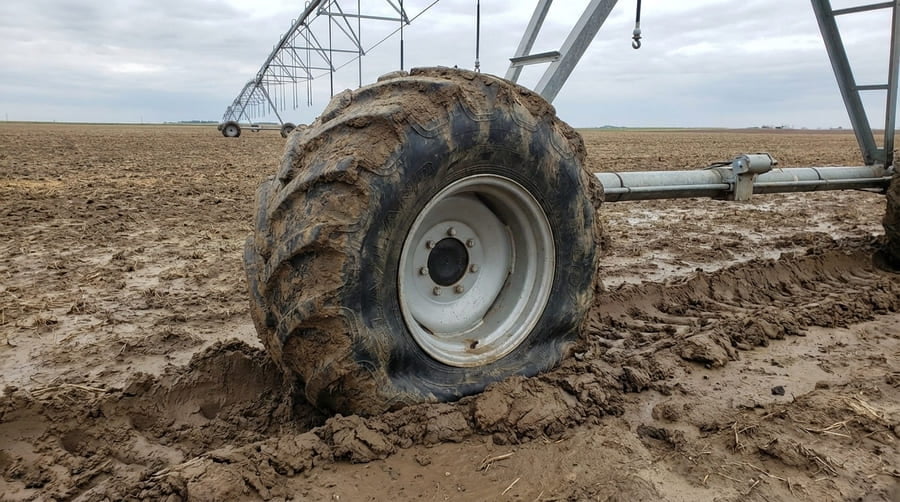
I remember visiting a large farm known for its delicate, loamy soil. The procurement manager was proud of how little compaction their pivots caused. He showed me his pressure gauge, explaining they ran everything low to float over the ground. But then he pointed to a pile of recently replaced tires, all with sidewall blowouts4. He thought he was doing everything right for his soil, but he was inadvertently killing his tires. It was a classic case of solving one problem while creating a bigger, more expensive one.
Does a Bigger Footprint Always Mean a Better Outcome?
You lower the pressure for a wider footprint, thinking it will help you float over soft soil. But what invisible damage is this "solution" causing to the tire's structure?
A larger contact patch5 from low pressure improves flotation but forces the tire to deform excessively. This increased sidewall flexing and carcass strain6 puts immense stress on the tire's internal components, starting a process of gradual degradation that is not immediately obvious.
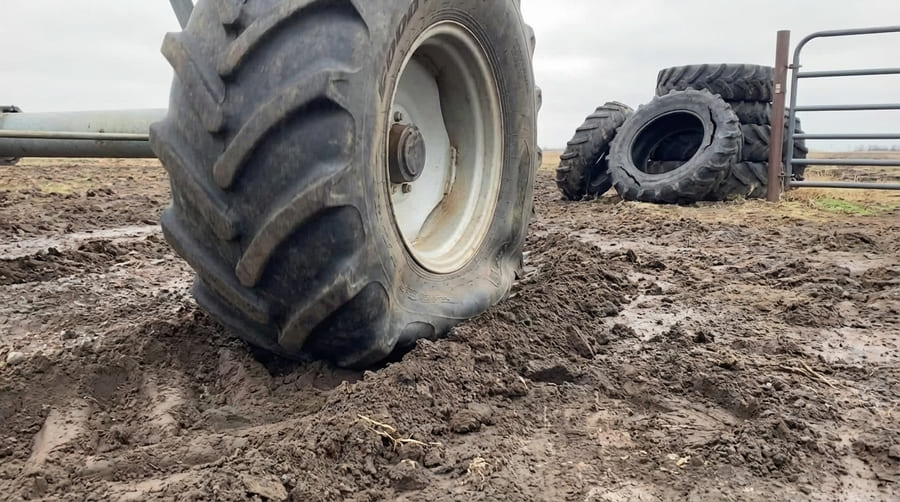
It's tempting to think of a tire as just a rubber balloon. Add less air, and it gets squishier and wider, which seems perfect for soft ground. But a high-quality irrigation tire is an engineered structure. The air pressure inside works with the internal cords and rubber7 layers to maintain a specific shape that can support a heavy load. When you lower the pressure too much, you compromise that structure. The tire's sidewall, which is meant to flex within a specific range, is forced to bulge and bend far beyond its design limits. You get the flotation you want, but at the cost of the tire's structural integrity. You've essentially turned a precisely engineered tool into a weak, over-stressed bag.
The Trade-Off of Lowering Pressure
| Benefit of Low Pressure | Hidden Consequence |
|---|---|
| Improved Flotation | Drastically increased sidewall flexing and stress. |
| Reduced Soil Compaction | Weakened internal structure (carcass). |
| Larger Footprint | Higher potential for heat buildup from flexing8. |
| Better Traction | Increased strain on the bead area and internal plies. |
How Does Constant Load Turn Flex into Fatigue?
Your pivot moves slowly, so you might think the stress on the tires is low. But this slow, constant pressure is a silent killer, turning simple flexing into catastrophic structural failure.
On an irrigation tire, the sustained load never lets up. When combined with the excessive flexing from low pressure, it creates a non-stop cycle of stress and heat buildup. This constant strain multiplies fatigue, rapidly breaking down the tire's internal cords and rubber7.
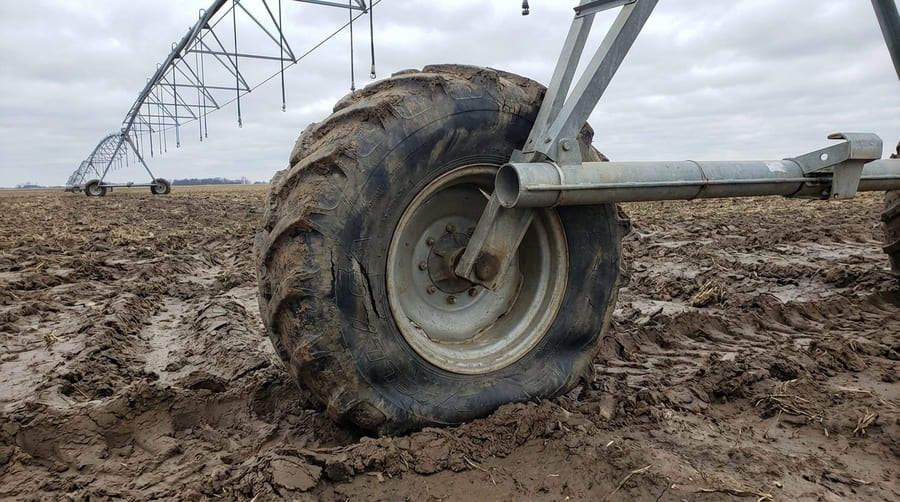
Think about bending a paper clip back and forth. The first few bends do nothing. But if you keep bending it in the same spot, it gets hot, weak, and eventually snaps. This is exactly what happens inside an underinflated irrigation tire. The pivot's weight provides the constant load2, and each rotation of the wheel is one "bend" for the sidewall. With correct pressure, the bend is small and manageable. But with low pressure, the bend is severe. The tire's internal cords and rubber7 are being over-stretched and compressed with every single rotation, 24/7. This constant flexing generates heat, which further degrades the rubber and weakens the bonds between the plies. It's a slow death from exhaustion, happening completely out of sight until the tire suddenly fails.
Why Do Ruts Make a Bad Situation Even Worse?
Your tires create ruts in soft soil, which seems unavoidable. But these ruts aren't just cosmetic; they introduce new, destructive forces that put your already-stressed tires at greater risk.
Soft soil leads to rutting. As the tire climbs in and out of these ruts, it experiences significant lateral (sideways) forces. This side-loading puts extra strain on the sidewalls, which are already weakened by low pressure, dramatically increasing the risk of failure.
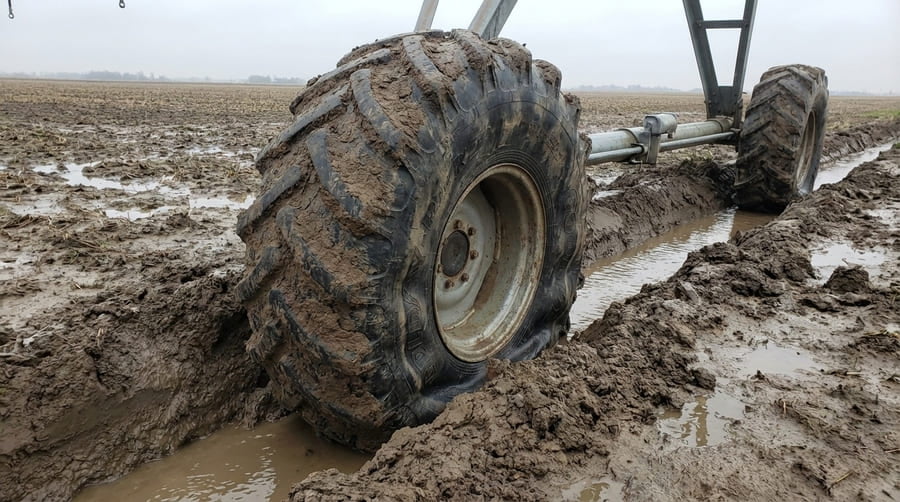
An underinflated tire in a rut is facing a perfect storm of destructive forces. First, you have the vertical load from the weight of the pivot. Second, you have the internal stress from the excessive sidewall flexing1 caused by low pressure. Now, you add a third layer of stress: lateral force. As the tire tries to drive along the rut or climb out of it, the edge of the rut pushes against the sidewall. A properly inflated tire has the structural stiffness to resist this side force. But an underinflated tire is soft and unstable. The lateral push can cause the bead to unseat from the rim or, even worse, cause the weakened sidewall to fold or tear. This "layered stress9" is why we often see the most catastrophic failures in soft, rutted conditions, even at low speeds.
So, What Is the Right Strategy for Soft Soil?
If simply lowering the pressure is a dangerous trap, what should you do? The answer isn't a single magic number, but a smarter, more active management strategy.
The best strategy for soft soil is not just lowering pressure. It's about operating within a controlled, safe pressure range10 and increasing the frequency of your tire inspections to catch problems early.
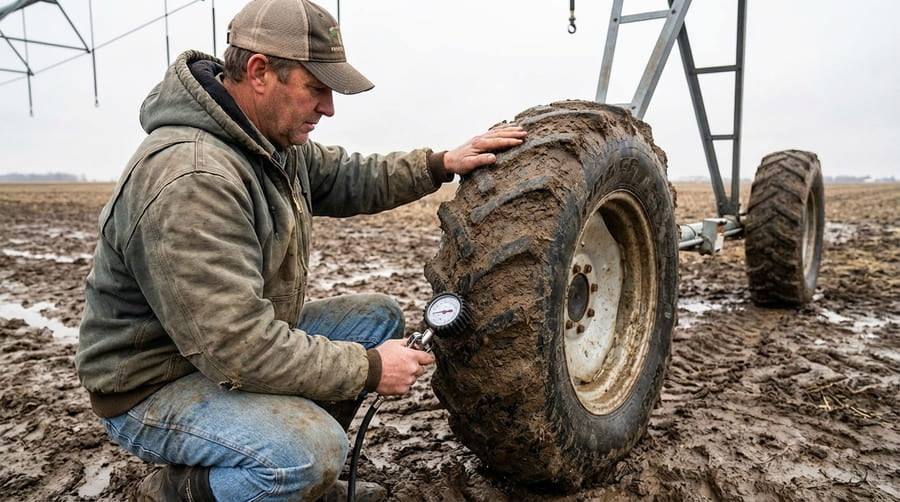
Instead of just deflating tires until they "look right," you need to find a balance. Consult your tire manufacturer's load and inflation tables11 to find the minimum safe pressure for the load your tires are carrying. This is your baseline. You might operate at or slightly above this minimum, but never below it. This provides a degree of flotation while maintaining essential structural integrity.
The second part of the strategy is vigilance. In soft conditions, you must check your tires more often. Don't just check the pressure; walk the pivot and visually inspect the sidewalls for unusual bulging, cracking, or any signs of distress. Look at the ruts. Are they getting deeper? Is one tire behaving differently from the others? By combining a safe, controlled pressure range12 with more frequent, detailed inspections, you move from a reactive approach (fixing blowouts) to a proactive one (preventing them).
Conclusion
Lowering pressure in soft soil is a dangerous trade-off. A better strategy involves using a safe pressure range and increasing inspections, protecting both your soil and your valuable tire assets.
Understanding the causes of excessive sidewall flexing can help prevent tire damage and extend the life of your tires. ↩
Find out how constant load affects tire fatigue and what can be done to mitigate its effects. ↩
Learn how internal structural fatigue can lead to tire failure and what measures can be taken to prevent it. ↩
Discover the factors leading to sidewall blowouts and how to avoid them to ensure tire safety and longevity. ↩
Explore the impact of a larger contact patch on tire performance and its potential drawbacks. ↩
Understanding carcass strain can help in identifying early signs of tire damage and prevent costly repairs. ↩
Understanding the role of internal cords and rubber can help in maintaining tire integrity and performance. ↩
Learn about the dangers of heat buildup from flexing and how it can lead to tire failure. ↩
Discover how layered stress can lead to tire failure and what strategies can be used to prevent it. ↩
Find out how maintaining a controlled, safe pressure range can enhance tire performance and longevity. ↩
Learn how to use load and inflation tables to ensure your tires are properly inflated for optimal performance. ↩
Understand the importance of a safe, controlled pressure range in preventing tire damage and ensuring safety. ↩