
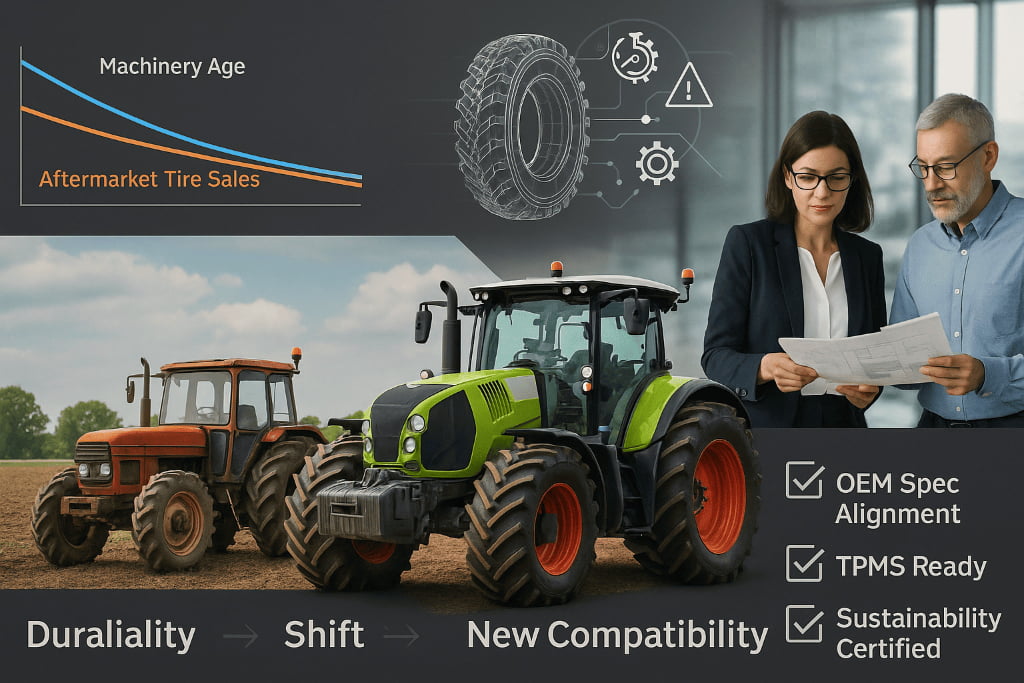
You believe long-lasting durability is the key to selling agricultural tires. But with farm machinery now being replaced every 4-6 years, that long-wear tire may never see the end of its tread life.
The agricultural machinery replacement cycle1 has shrunk from over 8 years to just 4-6 years due to rapid technological advances. This shifts the focus from aftermarket durability2 to OEM specifications3, making system compatibility4 and supply chain alignment5 more critical than ever for tire manufacturers.
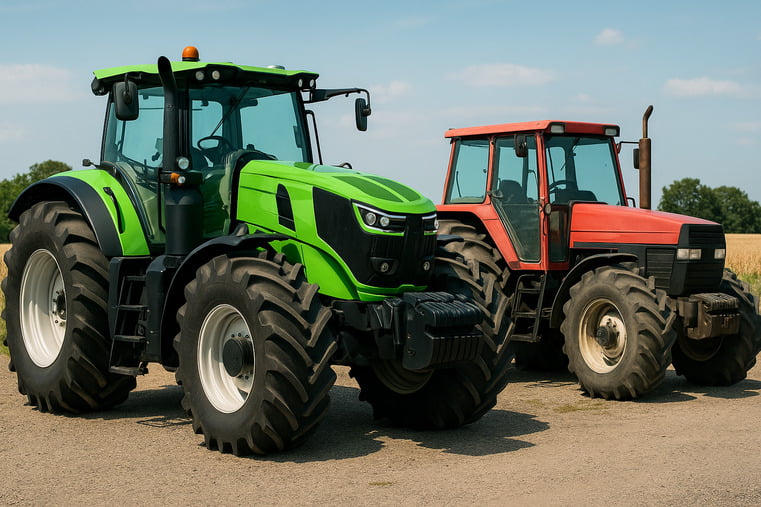
It hit me during a conversation with a large equipment dealer I've known for years. I asked him how his aftermarket tire business was doing. He shrugged and said, "It's changing. Farmers aren't running their tractors into the ground anymore. They're financing the new model with all the new tech before the first set of tires even wears out." That's when I knew the ground was shifting beneath our feet. The entire value proposition for agricultural tires is being rewritten, not by rubber compound engineers, but by software developers and OEM procurement6 managers.
How has the machinery lifecycle changed the tire replacement game?
You've always focused on the aftermarket, selling replacement tires directly to farmers. But that market is shrinking as tractors are traded in with their original, OEM-fitted tires still in good condition.
The shortened machinery cycle, down from 6-8 years to 4-6 years, means tire demand is shifting away from long-term aftermarket durability2. The primary sales opportunity is now winning the OEM fitment7, which drives more frequent, machine-driven replacement cycles.
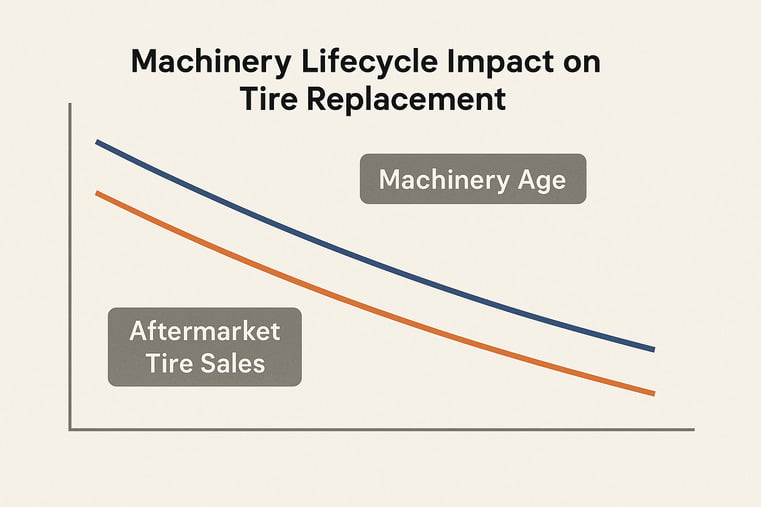
In the past, the model was simple. A farmer bought a tractor. After 5, 6, or 7 years, the original tires wore out, and they went to a dealer—your customer—to buy a new set. That was the game: build a durable aftermarket tire. But today, the tractor itself is becoming a tech product. A 5-year-old machine might lack the precision GPS, autonomous features, or fuel-efficiency software of a new one. The upgrade is so compelling that farmers trade in the whole machine. As a tire supplier, this means your moment to win the customer is no longer in the aftermarket; it's before the tractor even leaves the factory. The OEM-fitted tire is becoming the only tire that machine may ever have.
Why are modern tires more than just rubber?
You think of a tire as a marvel of rubber and steel, designed for grip and longevity. But OEMs now see it as a data point, an integrated component in a complex digital ecosystem8.
Modern tractors use sensors and software to manage traction, power, and soil compaction. Tires are now calibrated variables within these electronic systems. Their performance is no longer just mechanical; it's a critical input for the machine's control logic.
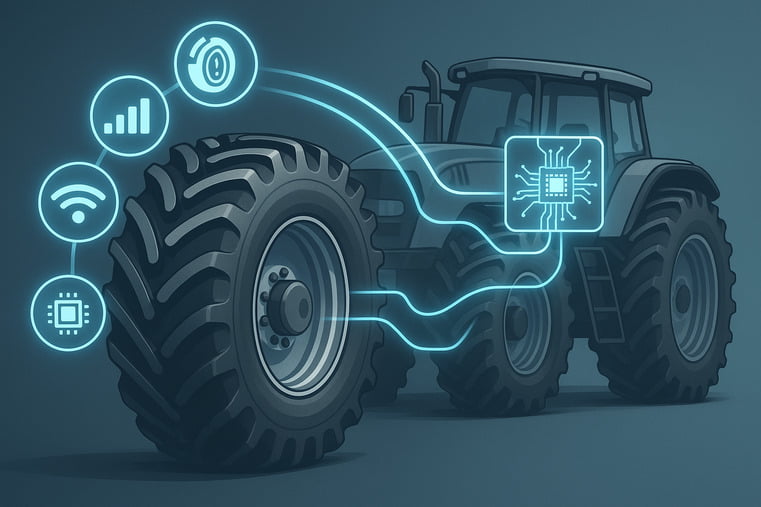
I was in a technical meeting with an OEM's engineering team, and we spent less time discussing tread compounds and more time on the tire's deflection characteristics under specific loads. Why? Because their traction control system9 needed that data to optimize engine power and prevent wheel slip. The tire is no longer a dumb piece of rubber. It's connected. It feeds information to the Tractor Power Management system. Its inflation level is monitored by TPMS10 to calculate the exact contact patch and model soil compaction. If your tire's software doesn't behave exactly as the machine's software expects, it can throw off the entire system, leading to lower efficiency or yield. The tire has become a calibrated sensor platform11 on wheels.
From Mechanical Grip to Digital Handshake
| Old Metric | New Metric | |
|---|---|---|
| Tread Depth | Deflection & Footprint Data | |
| Puncture Resistance | TPMS10 Sensor Compatibility | |
| Wear Life | Predictable Performance for Traction Logic | |
| Grip | Data Feed for Power Management | |
| Value | Physical Durability | System-Level Integration |
A tire that can't "talk" to the tractor's brain is just a liability.
Who really chooses the tires on a new tractor?
You've spent years building your brand's reputation with farmers and dealers. You believe end-user preference is what drives your sales. But what if the farmer no longer has a choice?
The decision has moved upstream. The OEM procurement6 and engineering teams are now the primary decision-makers. Once a tire brand is qualified and designed into a tractor platform, it can stay locked in that supply chain for the entire 3-5 year model run.
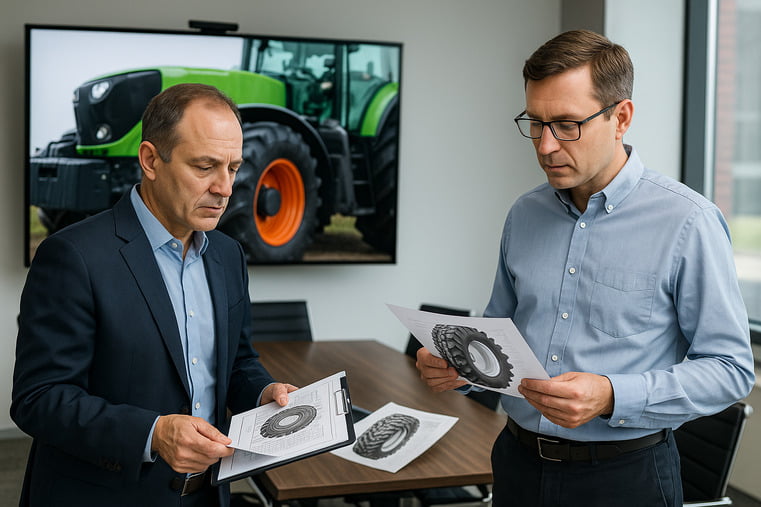
Marketing to the end-user is becoming less effective for first-fitment12. The real competition now happens years before the tractor is even built. It takes place in boardrooms and testing grounds. As a supplier, we have to prove to the OEM that our tires meet their exact performance specs13, that our supply chain is 100% reliable, and that our quality control can deliver thousands of identical units. If you win this upstream battle and become the specified tire for a new tractor series, you are guaranteed volume for years. The farmer gets the tires the OEM chose. This shifts the entire competitive focus from downstream marketing to upstream qualification and partnership. Your new customer isn't the person driving the tractor, but the person designing it.
Is a tougher tire still the best tire?
Your R&D department is focused on making your tire stronger, thicker, and last longer. You're competing on the traditional metrics of durability and toughness, believing that's what defines a premium tire.
The focus of competition has shifted from "stronger rubber" to "smarter compatibility." The best tire is no longer just the toughest; it's the one that best aligns with OEM specs, integrates seamlessly with electronic systems, and meets all compliance and sustainability standards14.
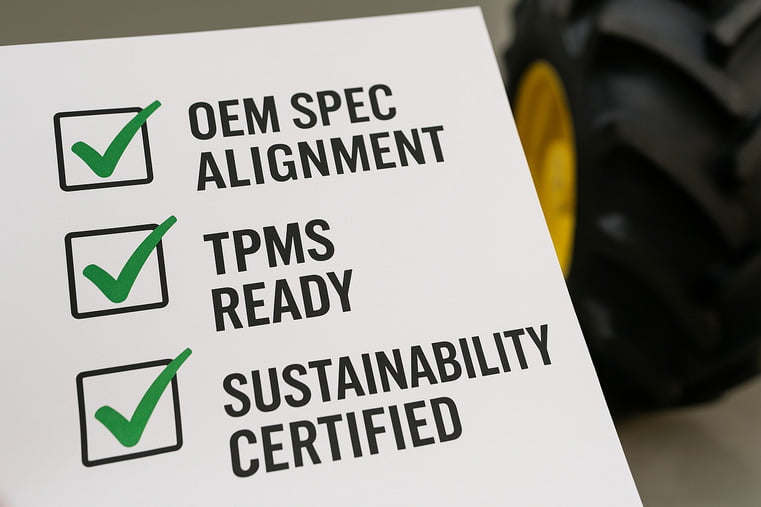
Of course, a tire still needs to be durable. But that's now the price of entry, not the differentiator. The winning brands of tomorrow are the ones that obsess over system compatibility4. Can your tire's physical properties be programmed into the tractor's software? Are you certified for the specific sustainability standards14 required for the European market? Can you deliver a pre-mounted tire-and-wheel assembly that fits perfectly into the OEM's just-in-time production line? These are the new questions. The competition is no longer about who has the thickest tread, but about who can be the most reliable and integrated partner to the OEM. It's a battle of data sheets, certifications, and supply chain excellence15, not just a contest of brute strength.
Conclusion
The shrinking machinery lifecycle and rise of digital farming16 have changed the rules. Success in the agricultural tire industry is now defined by winning the OEM partnership through system compatibility4 and supply chain excellence15.
Understanding the replacement cycle helps in strategizing tire sales and aligning with market trends. ↩
Explore the significance of aftermarket durability in tire sales and customer satisfaction. ↩
Learn about OEM specifications to ensure your products meet industry standards and customer expectations. ↩
Discover how system compatibility can enhance tire performance and customer loyalty. ↩
Gain insights into supply chain alignment to improve efficiency and reliability in tire manufacturing. ↩
Learn about OEM procurement processes to better position your tire products in the market. ↩
Understanding OEM fitment is crucial for tire manufacturers to secure contracts with equipment makers. ↩
Understanding the digital ecosystem can help tire manufacturers innovate and stay competitive. ↩
Learn about traction control systems to understand their impact on tire performance and selection. ↩
Explore the role of TPMS in tire management and its importance for modern agricultural machinery. ↩
Discover how tires function as sensors and their role in modern farming technology. ↩
Understanding first-fitment can help tire manufacturers target their marketing strategies effectively. ↩
Understanding performance specs is essential for developing tires that meet OEM requirements. ↩
Explore sustainability standards to ensure your products meet environmental regulations and consumer demand. ↩
Learn about supply chain excellence to enhance your operational efficiency and product quality. ↩
Explore the impact of digital farming on the agricultural industry and tire technology. ↩