
Your focus on rock-bottom prices is leading to quality issues and supply chain headaches. This constant firefighting hurts your bottom line and your brand's reputation as the market evolves beyond simple cost metrics.
The agricultural tire market is adapting because large buyers now prioritize supply chain reliability1, compliance, and performance over the lowest unit cost. Total cost of ownership and risk reduction2 have become the new key metrics for successful sourcing.
I've seen this change firsthand over the last 13 years. For a long time, the game was simple: find the cheapest tire that met the basic spec. But I recently spoke with a procurement director, a "Li Manager" type, who told me, "My biggest fear isn't overpaying by 5%; it's a container not showing up and halting our production line." His perspective shows a huge shift in the industry. The smartest buyers are no longer just comparing price lists; they are calculating the total cost of risk, downtime, and reputation. Let's explore what's really driving this change.
Why Is Market Growth Coming from Upgrades, Not Just More Tires?
You're still buying basic, cross-ply tires to save money upfront. But you're facing more field compaction and lower fuel efficiency, which is costing you more in the long run.
Market growth is driven by upgrades because modern, high-horsepower machinery3 demands higher performance. Advanced radial and flotation tires offer better fuel economy, reduced soil compaction4, and higher load capacity, making them a better long-term investment.
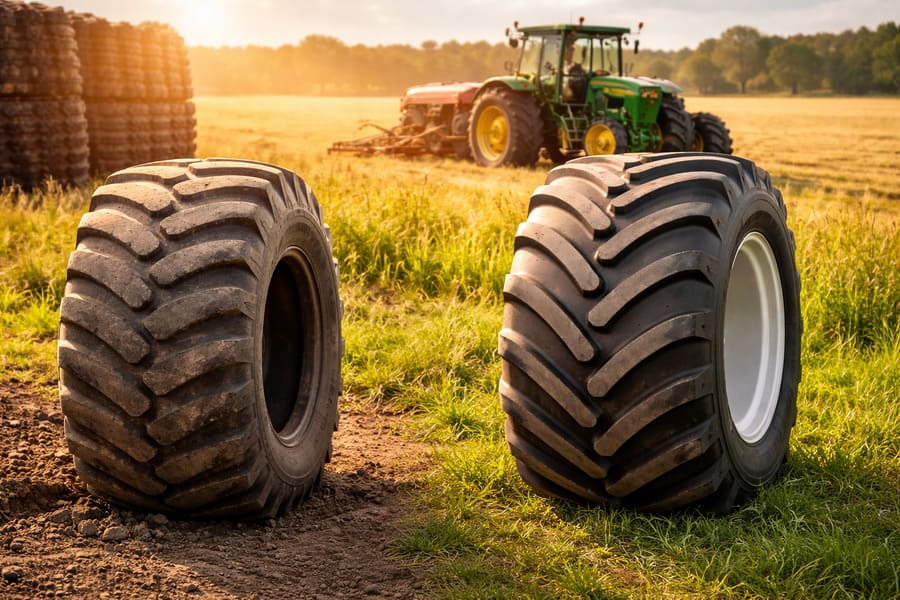
For years, the industry expanded by volume—more tractors meant more tires. Today, the focus has shifted to value. As tractors and combines become heavier and more powerful, standard cross-ply tires can't keep up. They lead to deep soil compaction4, which directly hurts crop yields. This is why we're seeing a massive transition to radial tires, especially those with IF (Increased Flexion) and VF (Very High Flexion) technology. These tires can carry the same load at a lower air pressure, creating a larger footprint that protects the soil. For a procurement manager, this means the purchasing decision has changed. You are no longer just buying a "tire"; you are investing in a technology that impacts fuel efficiency, operational speed, and ultimately, the agricultural output of your end-users. This performance return on investment is what's driving real growth.
The Shift from Volume to Value
| Tire Type | Old Market Focus (Volume) | New Market Focus (Value) |
|---|---|---|
| Cross-Ply (Bias) | Low initial cost, simple construction. | Seen as a liability for modern, heavy machinery. |
| Radial | Considered a premium option. | The new standard for performance and efficiency. |
| IF/VF Tires | Niche, high-tech product. | Increasingly essential for soil protection and high loads. |
Are Reliable Supply Chains Becoming More Valuable Than the Lowest Price?
You found a supplier with an unbeatable price, but their delivery dates are inconsistent and communication is poor. Now, your production line is at risk, and you're spending all your time chasing orders.
Yes, for OEMs and large buyers, a stable and compliant supply chain is now more critical than the lowest unit cost. The financial damage from a single line-down event or a compliance failure far outweighs any savings from a cheap tire.
I once worked with a client who switched suppliers to save 8% per tire. Three months later, they called me in a panic. A large shipment was held up at customs because the supplier's REACH certification5 had lapsed. Their entire assembly line for a new model of trailer was halted for two weeks. The cost of that delay was catastrophic and completely erased any savings they had made. This is the new reality. Professional buyers now evaluate suppliers on a much broader set of criteria. Can they provide consistent quality across every batch? Do they have all necessary international certifications (ISO, DOT, REACH)? Can they offer flexible logistics like mixed-container loading? A supplier who acts as a reliable partner, helping you manage inventory and reduce risk, provides far more value than one who simply offers a low price.
How Is the 'Made in China' Label for Tires Changing?
You're hesitant about sourcing from China, worried you'll only find low-quality, mass-produced tires. This outdated view means you could be missing out on some of the industry's most advanced and reliable manufacturing partners.
The Chinese market has split into two distinct tiers. While low-cost commodity suppliers still exist, a new class of technology-driven manufacturers has emerged, offering branded, high-performance products that compete globally on quality, innovation, and reliability.
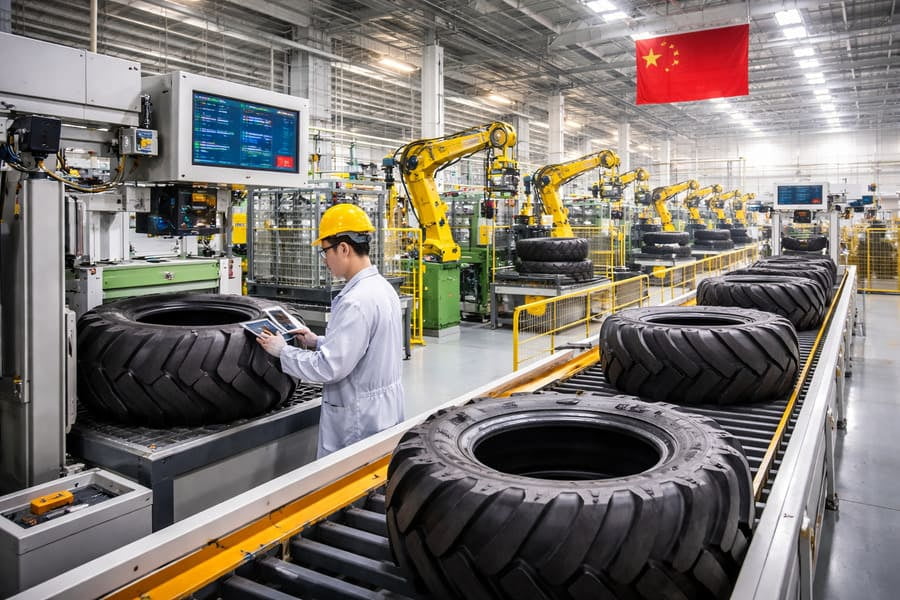
The old stereotype of Chinese manufacturing is just that—old. Over the past decade, we've seen a clear divergence. On one side, you have factories focused purely on volume, competing fiercely on price. They often serve the replacement market where cost is the only driver. On the other side, you have suppliers like us at Gescomaxy. We've invested heavily in R&D, automated production lines6, and rigorous quality control with over 30 key inspection points. We don't just produce tires; we engineer solutions. We offer full customization, from private mold development to specific rubber compounds for unique applications. This technology-driven tier is what allows brand managers and OEMs to build a high-performance, cost-effective private label program7 without sacrificing quality. The question is no longer "Should I source from China?" but "Which tier of the Chinese market aligns with my brand's strategy?"
Are Smart Features a Trend or the New Requirement?
You see terms like "sustainable rubber8" or "smart tires9" and dismiss them as marketing buzzwords. But failing to adopt these standards could soon mean losing access to key international markets and customers.
Smart and sustainable features are quickly becoming essential requirements for market access. Things like full material traceability10 and low rolling resistance11 compounds are now expected by regulators and environmentally-conscious buyers, not just seen as a bonus.

What was once a product differentiator is now becoming a ticket to the game. For example, the European Union is placing greater emphasis on sustainability and traceability in supply chains. Soon, being unable to provide data on a tire's material origins or its environmental impact could become a significant trade barrier. Similarly, features that were once considered premium are now part of the baseline expectation for performance. Low rolling resistance, for instance, is directly tied to fuel savings and is a key selling point for end-users. We've integrated these elements into our core production. Each tire has a unique barcode for full traceability, and our R&D focuses on developing compounds that improve wear life while reducing environmental impact. For a brand manager, incorporating these features is no longer just about marketing—it's about future-proofing your product line and ensuring it remains competitive and compliant on a global scale.
Conclusion
The agricultural tire market has matured. Success is no longer measured by cost alone, but by a combination of performance, reliability, and forward-thinking features that deliver total value and reduce risk.
Understanding supply chain reliability can help you make informed decisions that enhance operational efficiency and reduce risks. ↩
Learning about risk reduction can help you mitigate potential issues and enhance your supply chain management. ↩
Discovering the advantages of high-horsepower machinery can inform your purchasing decisions and operational strategies. ↩
Learning about soil compaction can help you make better decisions for soil health and agricultural productivity. ↩
Understanding REACH certification can help you select compliant suppliers and avoid legal issues. ↩
Learning about automation in manufacturing can provide insights into efficiency and quality improvements. ↩
Exploring private label programs can help you understand branding strategies and market positioning. ↩
Exploring sustainable rubber can inform your choices towards environmentally friendly products. ↩
Understanding smart tires can help you leverage technology for better efficiency and productivity. ↩
Learning about material traceability can enhance your supply chain transparency and compliance. ↩
Understanding low rolling resistance can lead to better fuel savings and operational cost reductions. ↩