
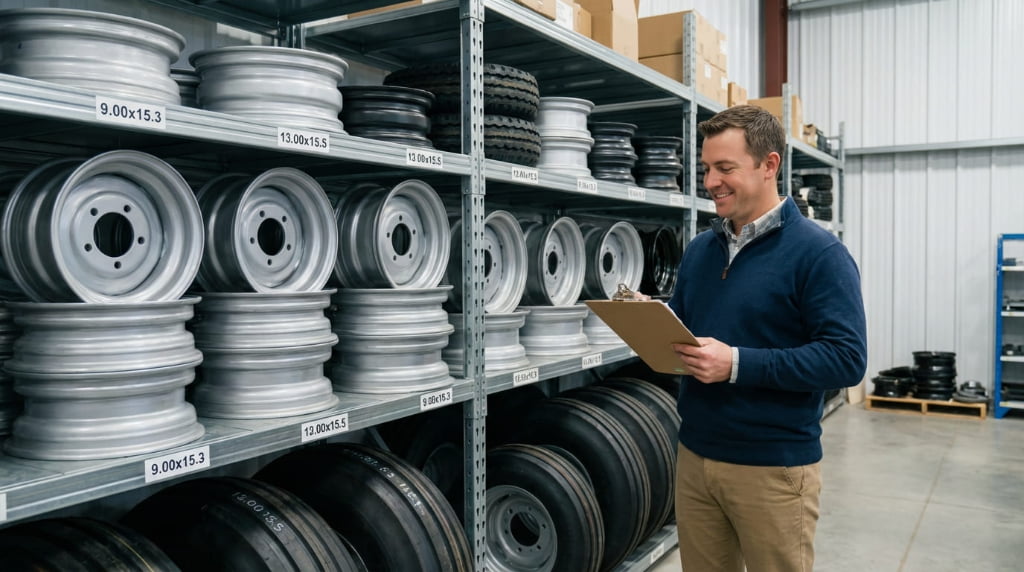
Focusing only on big tractor wheel sales? You're ignoring the consistent, easy profits from smaller implement wheels1 that your customers are already buying from someone else.
Dealers leave money on the table by overlooking high-volume implement wheels1. These are a "cash cow2" product made profitable through mixed-loading3, where we pack them inside larger tractor wheels, making their freight cost4 virtually zero and maximizing your container's value.
I was walking through a dealer's warehouse years ago, and I saw something that stuck with me. He had rows of massive, impressive rear tractor wheels and tires. That's where he focused his energy—the big-ticket items. But later that day, a farmer came in asking for a simple 15-inch wheel for his hay baler. The dealer didn't stock it. He told the farmer to try the local co-op. I realized my dealer friend had just sent a customer, and an easy sale, to a competitor. He was so focused on hunting for elephants that he was letting the rabbits run right past him. Those "rabbits"—the small, frequently replaced implement wheels1—are a source of steady, reliable income5 that many dealers completely overlook.
Are You Missing Out on the Most Replaced Wheels on the Farm?
You chase the big, impressive sales of rear tractor rims. But those sales are infrequent, while a hidden, high-volume market6 is quietly making your competitors money every single day.
Yes, you're likely missing out. Implement wheels for seeders, balers, and trailers wear out constantly and are needed in large quantities. They are a classic "cash cow2"—a low-cost, high-turnover product that ensures consistent revenue between your larger sales.
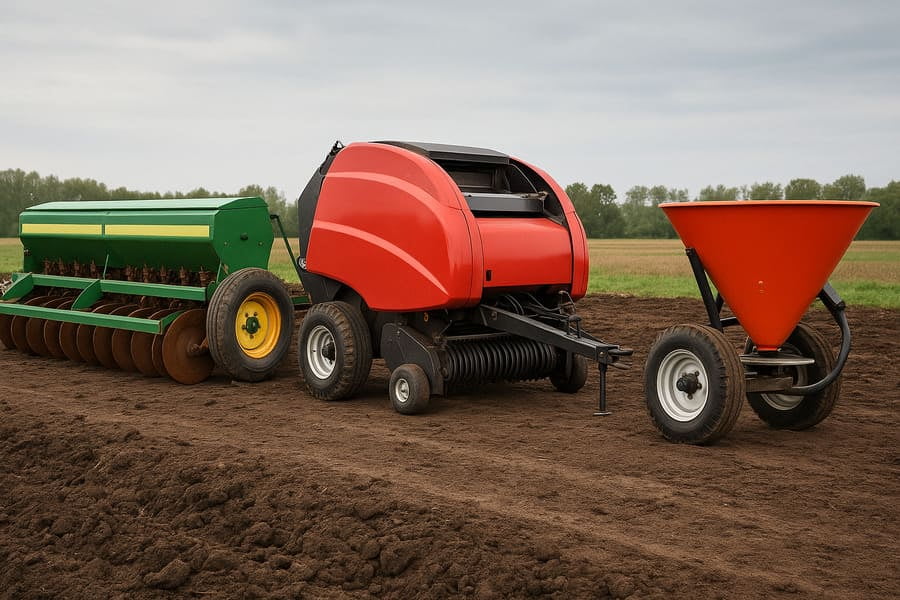
Let's think about a typical farm. A farmer might replace the huge rear tires on their main tractor every few years. It's a big, profitable sale, but it's not a frequent one. Now, think about all the other equipment they use. They have seed drills, fertilizer spreaders, hay rakes, balers, and transport trailers. Each of these machines runs on multiple smaller wheels. These wheels operate in harsh conditions, get damaged, and wear out much faster than tractor wheels. This makes them a high-frequency replacement7 item. While a single implement wheel doesn't have the high price tag of a tractor wheel, the sheer volume makes them incredibly valuable. Selling one tractor wheel is great. But selling dozens of implement wheels1 every month provides a steady cash flow8 that can pay the bills and smooth out the seasonal highs and lows9 of the big-ticket items.
Tractor Wheels vs. Implement Wheels: A Sales Comparison
| Feature | Large Tractor Wheels | Small Implement Wheels |
|---|---|---|
| Sales Frequency | Low (every 2-5 years) | High (multiple times a year) |
| Sales Volume | Low (sold in pairs) | High (sold in sets of 4, 8, or more) |
| Customer Urgency | Often planned | Often an emergency replacement |
| Revenue Type | Large, infrequent profit | Steady, reliable cash flow |
Why Is Shipping Small Wheels So Unprofitable on Its Own?
You see the opportunity in small wheels, but the numbers don't add up. The cost to ship a container of low-priced wheels from overseas eats up all your potential profit.
Because the freight cost4 for a shipping container10 is fixed. When you fill it with low-priced items like small implement wheels1, the shipping cost per unit becomes a huge percentage of the total cost, completely destroying your profit margin.
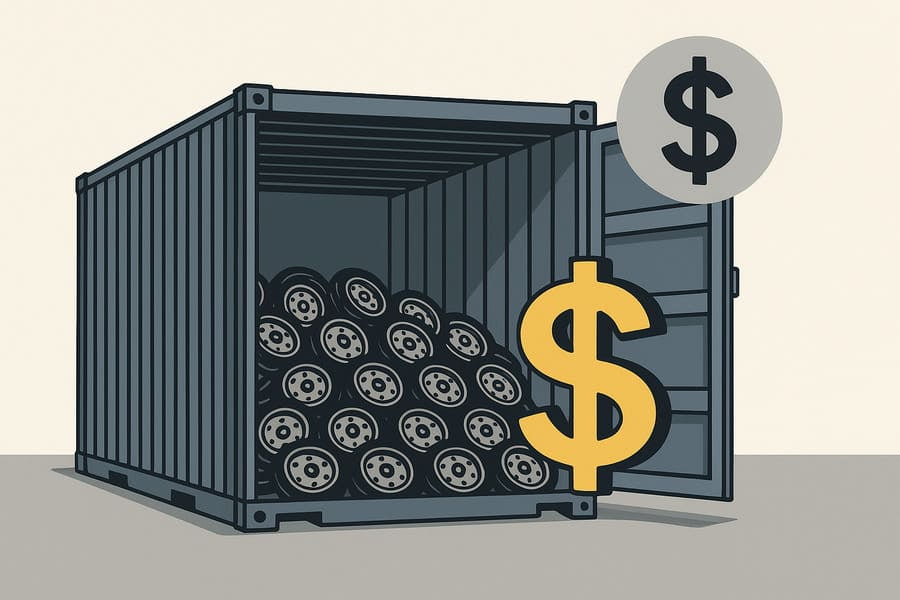
This is the core business problem that keeps most dealers out of the implement wheel market. Let's say a 40-foot shipping container10 costs $4,000 to ship. If you fill that container with large tractor wheels worth $100,000, the freight is only 4% of your product cost. That's a healthy margin. But now, imagine filling that same $4,000 container with small implement wheels1. You might only fit $20,000 worth of product in there. Suddenly, that same $4,000 freight cost4 is a whopping 20% of your product cost. There's almost no room left for you to make a profit after you account for your overhead. The economics are simple: shipping low-cost, bulky items by themselves is a losing game. This is why you can't just order a container of implement wheels1 and expect to make money. The math works against you from the start.
How Can Mixed-Loading Make Implement Wheels Your Most Profitable Add-On?
You know shipping small wheels alone is a bad deal. But what if you could get them shipped for free, turning a losing product into a highly profitable one?
Mixed-loading, or "nesting," is the answer. We pack your small, high-volume implement wheels1 into the empty space inside the large tractor rims you're already ordering. This uses wasted space, making the freight cost4 for the small wheels effectively zero.
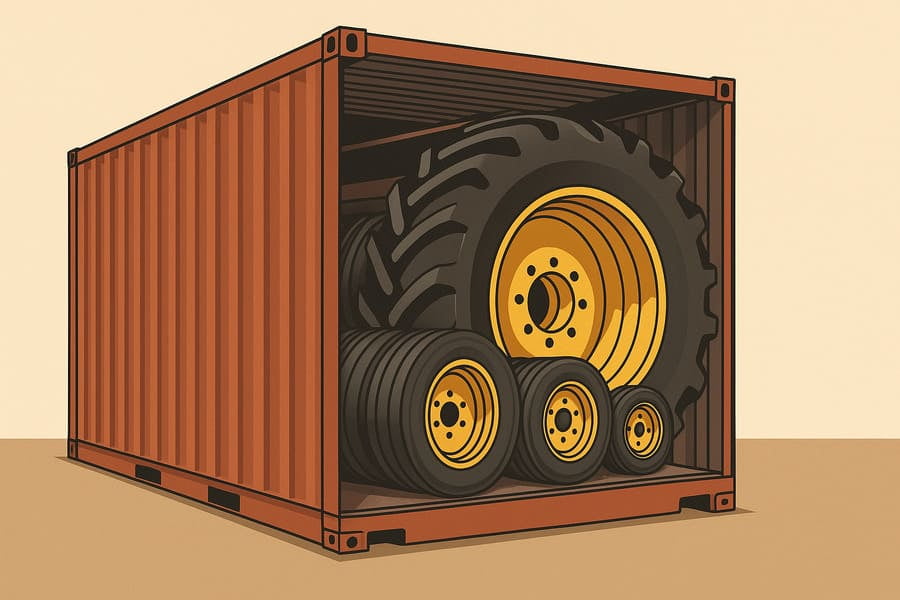
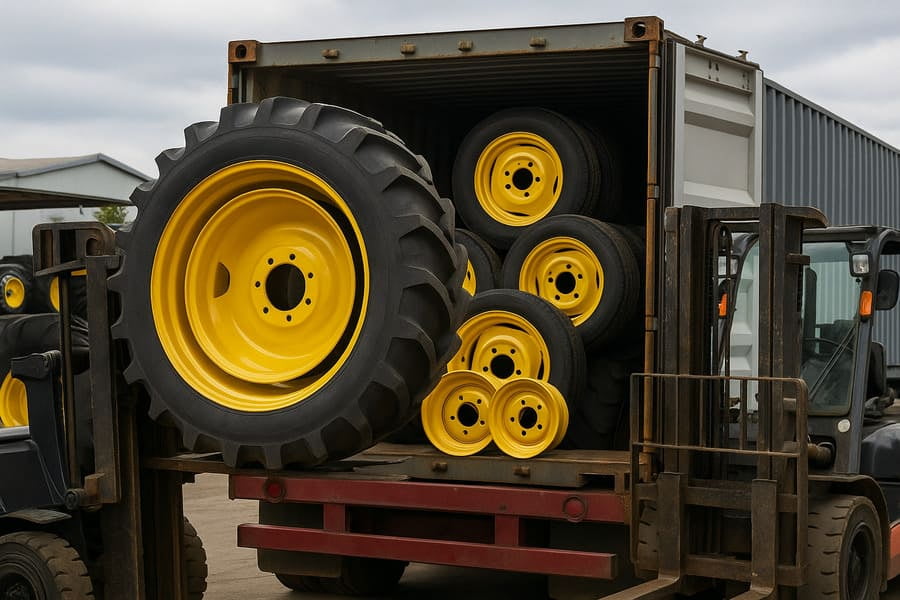
This is our game-changing solution. A large 38-inch or 42-inch tractor rim is mostly empty air. When you pay to ship that rim, you are paying to ship that empty space. We saw this as a massive inefficiency. So, we developed a system we call nesting. When you place an order for tractor wheels, you can also add on boxes of popular implement wheel assemblies. Our logistics team11 then professionally packs these smaller wheels securely into the large, empty cavity of the tractor rims. They are braced and protected, so there is no damage. The result? You utilize 100% of the space in your container that you're already paying for. The small wheels are essentially hitching a free ride. That $4,000 freight cost4 is now spread across both your high-value tractor wheels and your new, high-volume implement wheels1, making them instantly and incredibly profitable.
Which Implement Wheel Sizes Should You Stock First?
You're convinced. You want to add implement wheels1 to your next order. But where do you start? Stocking the wrong sizes will just leave you with dead inventory12.
Start with the universal best-sellers13 that fit the most common equipment. Sizes like 13.00x15.5 for flotation wagons and 9.00x15.3 for balers and spreaders are high-demand, fast-moving products that give you the best chance for quick sales.
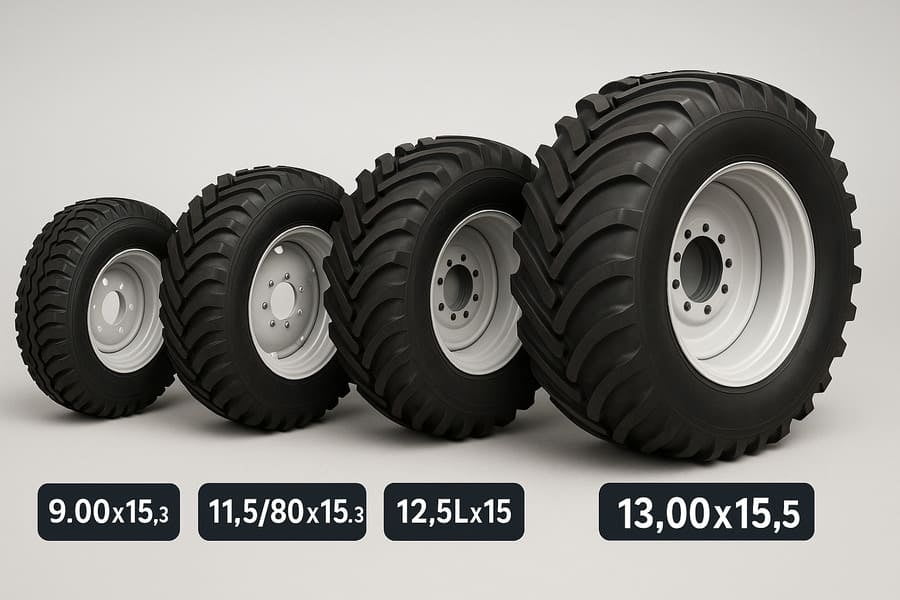
You don't need to stock every size to be successful. The key is to start with the "greatest hits" that service the widest range of common farm implements. We have analyzed sales data from across the globe for years, and a few sizes consistently come out on top. These are the wheels that farmers are constantly looking for to keep their essential support equipment14 running, especially during planting and harvest seasons. By adding a small quantity of these proven sellers to your next tractor wheel order, you create a low-risk opportunity to test the market. You can offer a more complete solution to your customers, capture sales you were previously losing, and and a significant new revenue stream to your business with almost no additional shipping cost.
Top Implement Wheel Sizes to Get Started
| Implement Wheel Size | Common Applications | Why You Should Stock It |
|---|---|---|
| 9.00x15.3 | Flotation implements, trailers, wagons | Excellent load capacity and flotation. Very popular. |
| 13.00x15.5 | Balers, spreaders, seed drills | A universal size for dozens of common implements. |
| 13.00x17 | Hay rakes, small trailers | A staple for lighter-duty support equipment. |
| 16.00x17 | Older implements, utility trailers | Services the large market of used farm equipment. |
Conclusion
Stop leaving easy money on the table. Add high-volume implement wheels1 to your next tractor wheel order using our mixed-loading3 service to make your freight cost4 nearly zero.
Explore how implement wheels can enhance farming efficiency and profitability. ↩
Understand the concept of a cash cow and how it applies to product sales. ↩
Learn about mixed-loading and how it can optimize your shipping costs. ↩
Find out how freight costs affect pricing strategies and profit margins. ↩
Discover methods to establish reliable income sources for long-term success. ↩
Discover the advantages of tapping into high-volume markets for steady income. ↩
Learn about products that require frequent replacement and their market potential. ↩
Explore effective strategies to maintain a consistent cash flow in your business. ↩
Learn how to navigate seasonal fluctuations in agricultural sales effectively. ↩
Get insights into shipping container costs and how they affect product profitability. ↩
Understand the importance of a logistics team in ensuring efficient product distribution. ↩
Learn strategies to prevent dead inventory and optimize stock management. ↩
Discover which products are consistently in demand in the agricultural market. ↩
Explore the role of essential support equipment in maintaining farm operations. ↩