
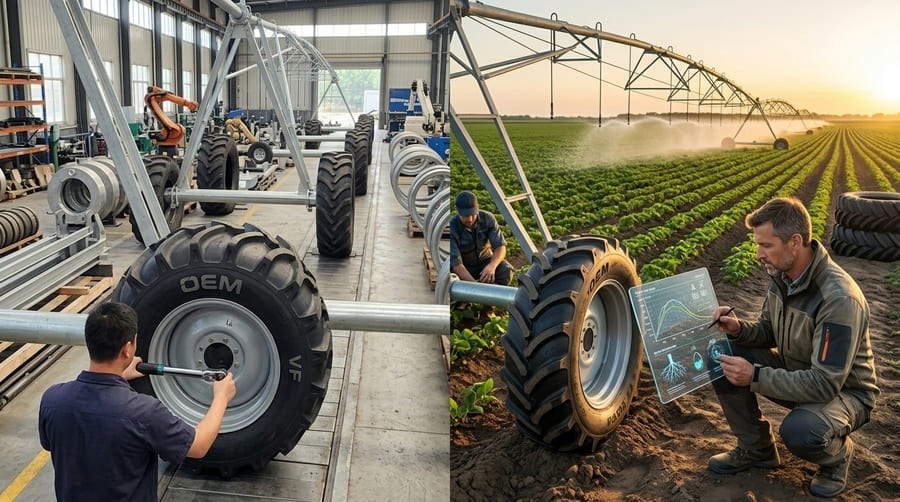
Buying irrigation tires based on old rules feels uncertain. You worry if you're getting the right value, as the market shifts under your feet, making yesterday's logic obsolete.
The market is reshaping because farmers now demand application-specific tires1 that reduce soil compaction2. This shift forces suppliers to provide technical advice3 and prioritize stable OEM partnerships4 over simple aftermarket sales, changing the entire value chain.
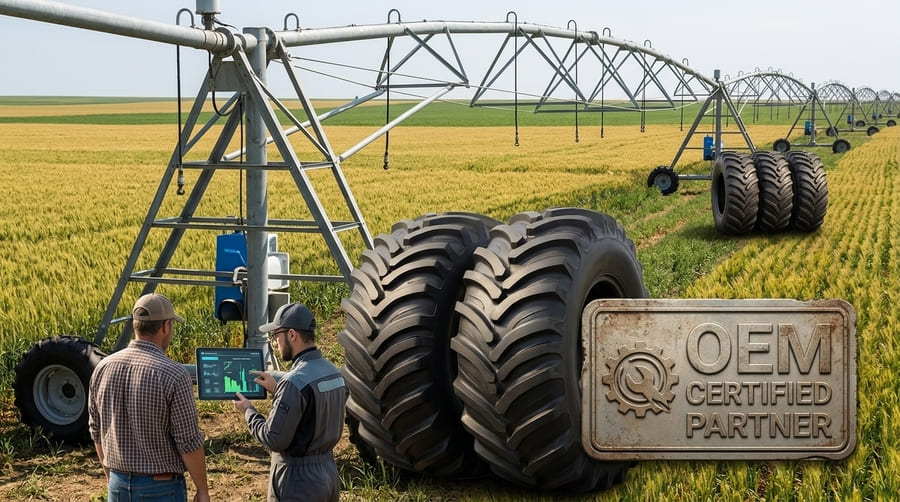
I was talking to a distributor recently who was frustrated. His old sales pitch—"lowest price per unit"—wasn't landing anymore. He told me, "Farmers are asking me about carcass durability5 and soil compaction2. Five years ago, nobody cared about that." He was seeing the market change in real-time. His customers weren't just buying a round piece of rubber anymore; they were buying a component of a high-performance system. This change is forcing everyone, from manufacturers to dealers, to rethink what "value" really means. It's not about being the cheapest; it's about being the smartest investment for the farm's bottom line.
Why Aren't Generic Tractor Tires Good Enough for Pivots Anymore?
You used to buy any sturdy-looking tire for your irrigation pivot. But now you find those generic tires wear out unevenly or cause rutting, creating more problems than they solve.
Generic tires are not designed for the unique stress of irrigation systems. Pivots apply constant, slow-moving loads and require exceptional stability and a controlled footprint, which demands specific engineering that standard tractor tires lack.
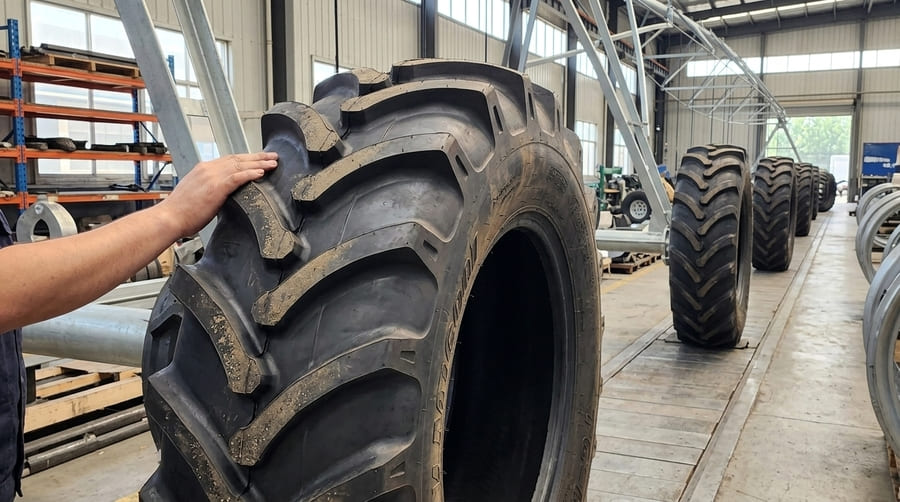
A tractor tire is designed for a completely different job. It needs to handle high-speed travel on roads, pull heavy implements, and manage massive torque. An irrigation tire's life is very different. It moves slowly but almost constantly, carrying a consistent load for months on end. This creates unique failure points. The constant flexing can fatigue the casing, and the repetitive path can quickly create deep ruts in the field. This is why application-specific engineering is no longer a luxury; it's a necessity. We now focus on building tires with reinforced sidewalls6 for stability, advanced rubber compounds7 that resist weathering, and tread designs that create a wide, even footprint. This isn't just about making the tire last longer; it's about making sure the tire helps the pivot do its job without damaging the field.
Irrigation Tire vs. Generic Tractor Tire
| Feature | Irrigation Tire Requirement | Generic Tractor Tire Design |
|---|---|---|
| Load Cycle | Constant, low-speed load | Variable, high-torque, high-speed loads |
| Primary Stress | Sidewall stability and casing endurance | Tread wear and traction |
| Footprint Goal | Wide and even to minimize soil compaction2 | Deep lugs for maximum grip |
| Key Performance Metric | Long-term durability and field preservation | Power transfer and road performance |
How Is Soil Compaction Changing the Way Farmers Buy Tires?
You always focused on the sticker price of a tire. But now you're hearing that a cheaper tire might actually be costing you money in lost crop yield due to soil compaction2.
Farmers now see soil compaction2 as a direct economic cost. They are shifting from evaluating tires by unit price to measuring their total cost per hectare, which includes the impact on yield. This makes advanced tires an investment, not an expense.
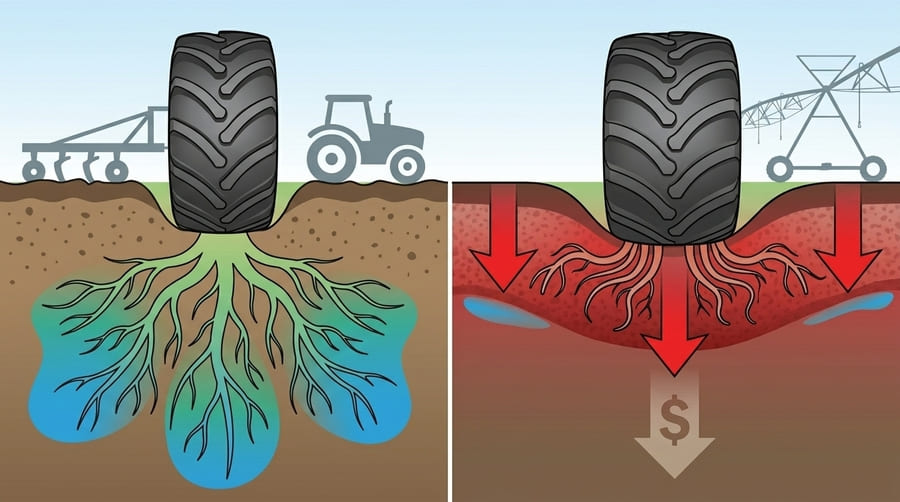
For years, the tire was just a necessary evil. Now, with precision agriculture, farmers can measure everything, including the yield loss from compacted soil. When a heavy pivot on narrow tires presses down on the soil, it squeezes out the air and water pockets that roots need to thrive. The result is a strip of underperforming crops along every wheel track. This has started a major shift in thinking. The conversation is no longer about, "How much does this tire cost?" It's now, "How much will this tire cost me in lost yield?" This is where technologies like IF (Increased Flexion)8 and VF (Very High Flexion)9 come in. These tires are designed to carry the same load at a lower pressure, creating a much wider and longer footprint. This spreads the weight out, dramatically reducing compaction. It's a move from short-term savings to long-term profitability10.
Why Is Selling Tires No Longer Just About the Product?
You used to be able to sell tires from a catalog. Now, customers come with detailed questions about performance data11 and expect you to help them manage their tire lifecycle and replacement schedule.
Large, structured farms12 now manage tires as assets using performance data11. They can predict replacement cycles. A supplier who only sells a product is seen as a commodity; one who provides technical advice3 becomes a valuable partner.
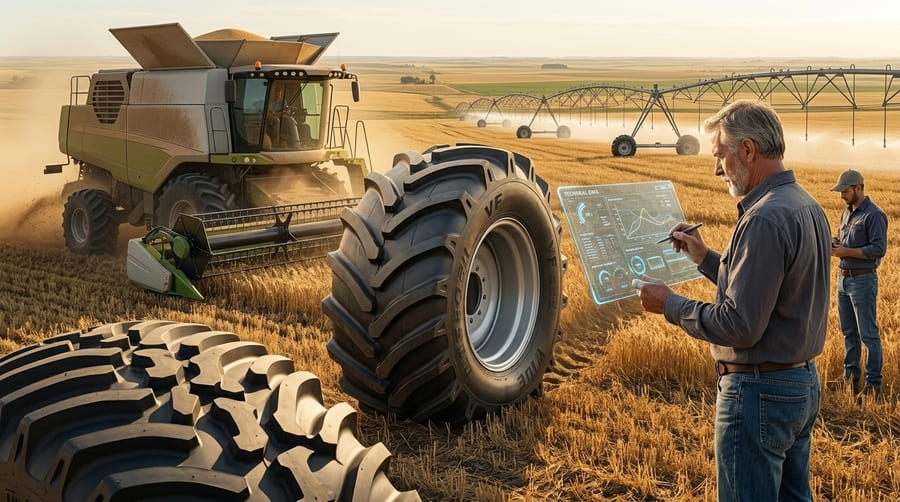
The best-run farms operate with incredible efficiency. They don't wait for things to break; they replace them proactively based on data. This is now happening with tires. Managers are tracking operational hours, wear rates, and failure patterns. They know that a tire on the end tower of a long pivot works much harder than one near the center. Using this data, they can build predictable replacement schedules13, which allows them to budget better and avoid emergency downtime. This changes the role of the tire supplier. If all you can do is quote a price, you're competing with everyone else on the internet. But if you can come in, analyze their fleet, look at their data, and offer expert advice on the right tire for each specific application, you become indispensable. You're no longer just a vendor; you're a technical advisor helping them optimize a key part of their operation.
Why Are OEM Partnerships Becoming the New Priority for Tire Makers?
In the past, the aftermarket—selling replacement tires directly to farmers—was the biggest part of the business. But now, more focus is shifting toward partnerships with the equipment manufacturers themselves.
OEM partnerships4 are more strategic. Factory integration ensures the right tire is on the right machine from day one, which reduces service issues. It also provides stable, predictable sales volume, which is better than chasing fragmented aftermarket sales.
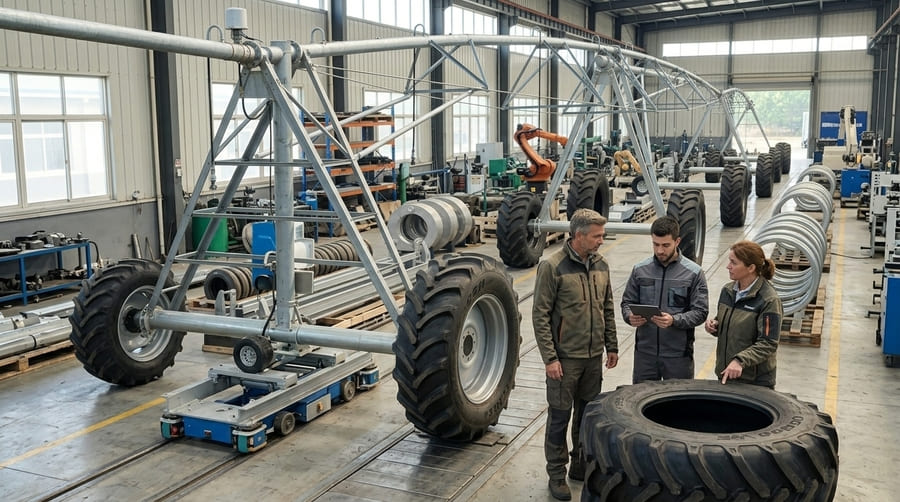
The aftermarket is a tough game. It's competitive, pricing is aggressive, and demand can be unpredictable. Selling directly to an Original Equipment Manufacturer (OEM) is a completely different business model. When you become the official tire supplier for a major pivot brand, you're building a long-term relationship. The OEM knows that tire failures reflect poorly on their brand, so they want a partner who can provide a high-quality, reliable product that is perfectly matched to their equipment. For us as a tire maker, this is a huge win. It gives us predictable, large-volume orders, which makes our production planning much more efficient. It also means our tires are on new equipment right from the start, building brand recognition and trust with the end-user. It’s a move from a short-term, transactional sales model to a long-term, strategic partnership that benefits everyone.
Conclusion
The irrigation tire market is maturing. It's now driven by specific engineering, economic impact14, and strategic partnerships15, rewarding those who deliver true performance value over just a low price.
Understanding application-specific tires can help you choose the right product to minimize soil compaction and improve farm efficiency. ↩
Learn how soil compaction can lead to reduced crop yield and why investing in the right tires can mitigate this issue. ↩
Technical advice transforms tire suppliers into valuable partners, offering expertise beyond just product sales. ↩
Discover how OEM partnerships can lead to better product integration and stable sales for tire manufacturers. ↩
Exploring carcass durability will help you understand how it affects tire longevity and performance in agricultural settings. ↩
Reinforced sidewalls provide stability and durability, essential for irrigation tires under constant load. ↩
Advanced rubber compounds enhance weather resistance and longevity, crucial for irrigation tires. ↩
IF technology allows tires to carry loads at lower pressure, reducing soil compaction and improving yield. ↩
VF technology offers a wider footprint, reducing soil compaction and enhancing crop yield. ↩
Investing in advanced tires reduces soil compaction, leading to better crop yield and long-term profitability. ↩
Using performance data helps farms predict tire replacement cycles, optimizing efficiency and reducing downtime. ↩
Structured farms use data to manage tires as assets, improving efficiency and reducing costs. ↩
Predictable replacement schedules allow farms to budget effectively and avoid unexpected downtime. ↩
Understanding the economic impact of soil compaction can guide investment in advanced tires for better yield. ↩
Strategic partnerships provide stable sales and enhance product reliability, benefiting both manufacturers and users. ↩