
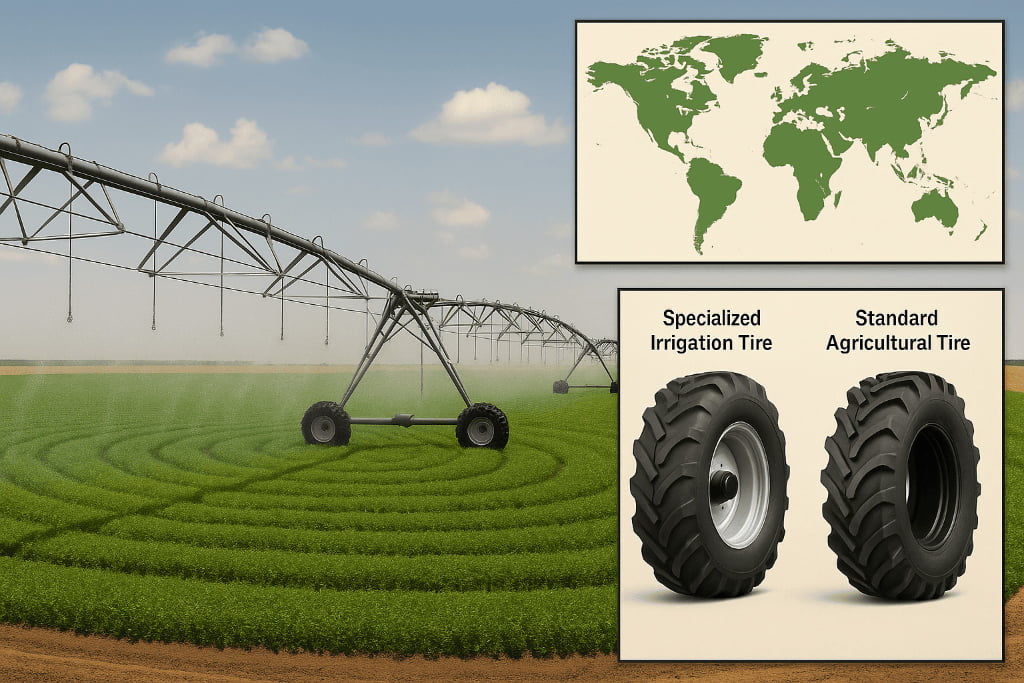
You focus on the massive tractor tire market, but your sales are flat and competition is brutal. You are fighting for scraps while a hidden opportunity passes you by.
Irrigation tires1 are a new growth engine because they are essential for mechanized irrigation2, a sector expanding rapidly worldwide. This creates sustained, non-discretionary demand3 that outpaces the broader, more saturated agricultural tire market.
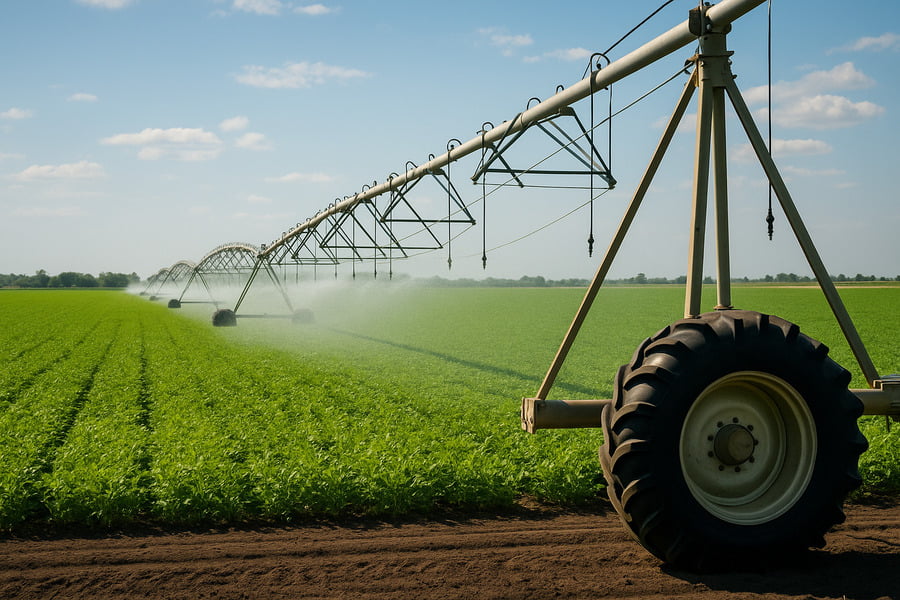
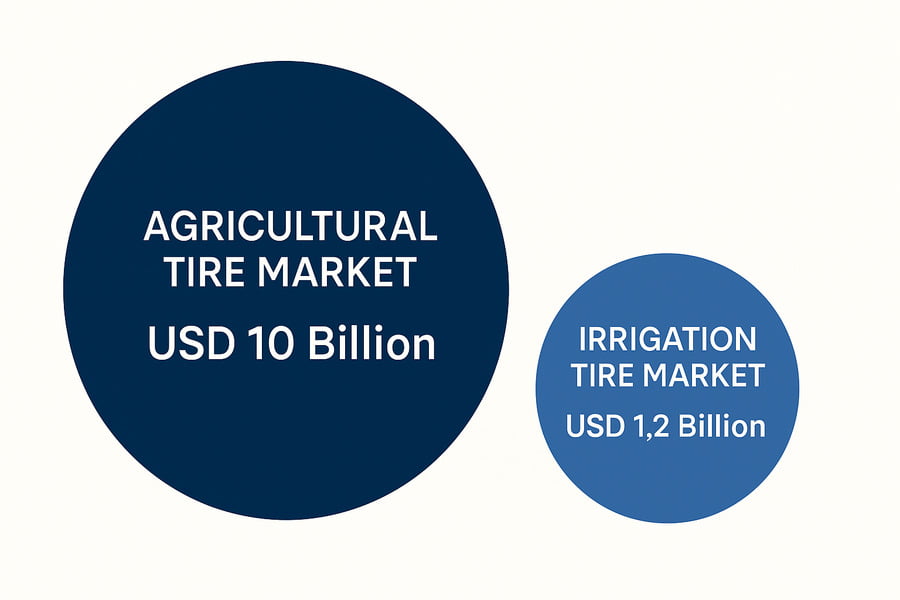
I often speak with large distributors who are fixated on the headline numbers. They see the USD 10 billion agricultural tire market and want a piece of it. When I mention the USD 1.2 billion irrigation tire segment, they sometimes dismiss it as small. But I had a client in North Africa who made that exact mistake. He focused all his energy on competing for big tractor tire tenders. Meanwhile, his smaller competitor started stocking our irrigation tires. In two years, that smaller company had captured a huge portion of the local market because hundreds of new center-pivot systems were being installed. My client was fighting an old war, while his rival was arming a new one. This shows why looking at the growth momentum4, not just the current size, is so critical.
How Can Such a Niche Market Offer So Much Potential?
You look at the $1.2 billion market size and think it's too small to be a priority. You worry that focusing on this niche will distract you from the main prize.
This niche has huge potential because its growth is driven by necessity, not choice. As farmers in new regions like Asia and Africa adopt pivot irrigation5 to combat water scarcity, they must buy these tires. It's a new, predictable, and expanding demand.
The real power of the irrigation tire market isn't its current size, but the speed and certainty of its growth. Think about it. A farmer might decide to use an old tractor for one more season to save money. But if you're in a region with inconsistent rainfall, installing a pivot irrigation5 system is not an optional upgrade; it's the difference between a successful harvest and a total loss. This makes the demand "non-discretionary." As this technology spreads from its traditional home in North America to developing agricultural economies, it creates entirely new markets from scratch. One new pivot system can require over a hundred tires. A distributor who gets in early and becomes the local expert for these specialized products6 can dominate this new category before the big, slow-moving competitors even notice it's a real opportunity.
Comparing Market Dynamics
| Aspect | General Ag Tire Market | Irrigation Tire Market |
|---|---|---|
| Market Size | ~ USD 10 Billion | ~ USD 1.2 Billion |
| Primary Driver | Replacement cycle, new tractor sales | New irrigation system installations, water scarcity |
| Demand Type | Often discretionary (can be delayed) | Largely non-discretionary (essential for yield) |
| Competition | Extremely high | Moderate, but growing |
| Growth Momentum | Slower, more mature | Faster, emerging in new regions |
What Makes These Tires So Specialized?
You might think you can just sell any small agricultural tire for these systems. Why stock another specialized product line if a generic one could work, saving you inventory costs?
Using the wrong tire will cause crop damage7 and system failure. Irrigation tires1 have unique, non-directional treads for flotation and are made with special compounds to resist UV radiation8 and ozone, unlike any standard farm tire.

I once had to solve a problem for a customer who bought cheap, standard-tread tires for his new pivot system. The tires dug deep ruts in his field, creating channels that diverted water and damaged the roots of his crops. The pivot's motors also had to work harder to pull the wheels through the mud, leading to a costly gearbox failure. This is a perfect example of why specialization is key. An irrigation tire is designed for one job: to float over wet, soft soil with minimal compaction. The tread is shallow. The footprint is wide. Most importantly, the rubber compound is fundamentally different. These tires spend their lives outdoors, often stationary for months under intense sun. Without high resistance to UV and ozone, they will crack and fail in a single season. Selling the correct, specialized tire isn't just an upsell; it's a basic requirement for the system to function correctly and protect the farmer's investment.
Critical Design Differences
| Feature | Specialized Irrigation Tire | Standard Agricultural Tire |
|---|---|---|
| Traction Goal | Flotation to prevent sinking | Grip to maximize pulling power |
| Soil Impact | Low soil compaction | High soil disturbance |
| Tread Pattern | Shallow, multi-directional | Deep, directional lugs |
| Rubber Compound | UV and ozone resistant | Puncture and wear resistant |
| Primary Failure Mode | Environmental cracking (if poor quality) | Tread wear, sidewall cuts |
Conclusion
The irrigation tire market is a powerful new growth engine. Its demand is driven by global needs, offering a faster-growing and less crowded opportunity than the traditional agricultural tire market.
Explore how irrigation tires can enhance agricultural efficiency and yield, making them a vital investment for farmers. ↩
Learn about the advancements in mechanized irrigation and its impact on farming practices worldwide. ↩
Understand the concept of non-discretionary demand and its significance in agricultural markets. ↩
Explore the factors that drive growth momentum in niche markets, particularly in agriculture. ↩
Discover the benefits of pivot irrigation systems and how they can improve water management in farming. ↩
Explore the importance of specialized agricultural products in enhancing farming efficiency and productivity. ↩
Find out how the right tire choice is crucial to prevent crop damage and ensure successful harvests. ↩
Understand the effects of UV radiation on agricultural tires and the importance of using UV-resistant materials. ↩