
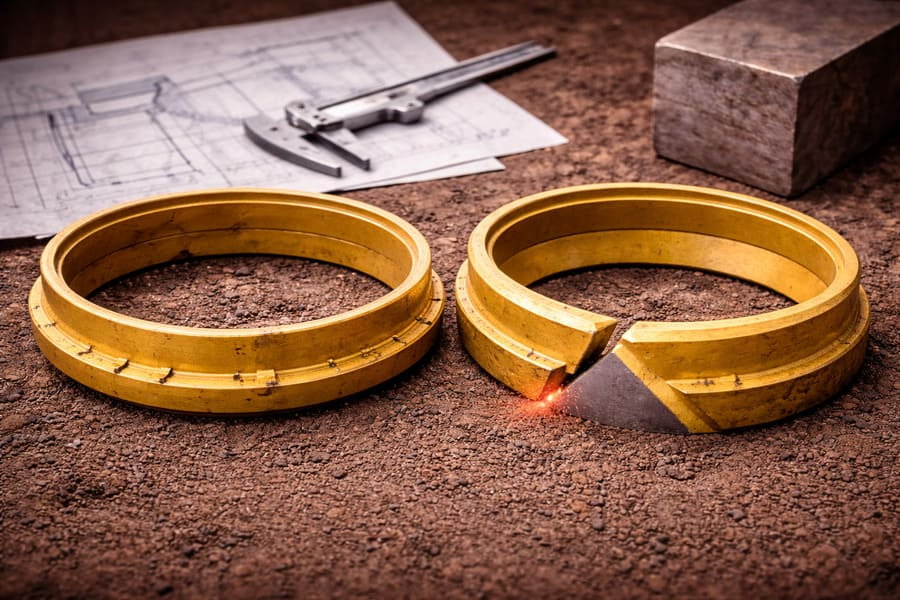
Seeing a massive steel lock ring crack seems impossible. Yet, these failures happen, risking downtime and safety. The cause isn't what you think: it's not about simple strength.
The fatigue life of an OTR wheel lock ring1 is primarily controlled by its geometric design2, not just material strength. How the ring's shape manages microscopic movements under constantly changing (cyclic) loads determines whether it will fail prematurely.
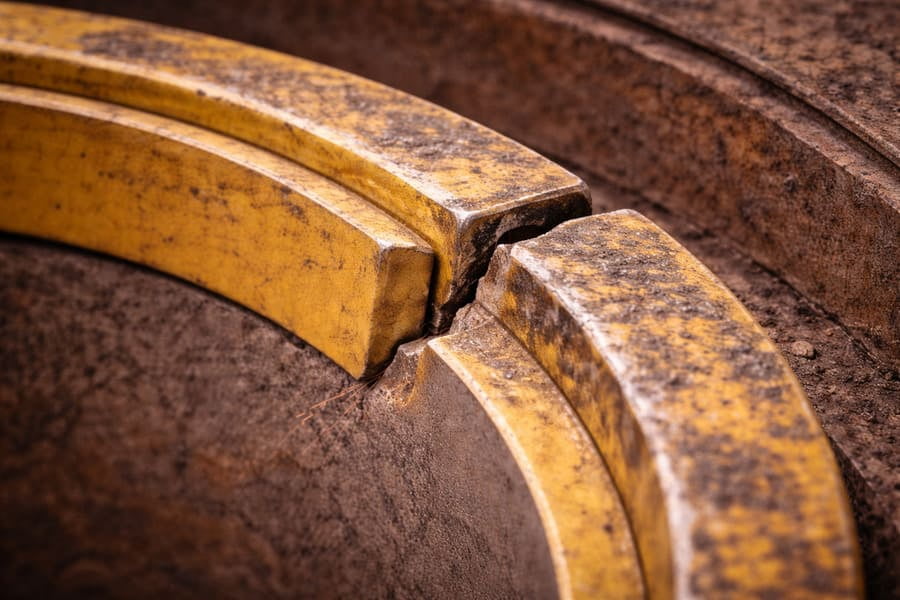
I remember inspecting a pile of failed lock rings at a port facility. The procurement manager was frustrated. "We paid for high-strength steel3," he said, "but they're still cracking faster than the old ones." He thought he had a material problem, but he actually had a design problem4. The rings were strong, but their flat contact surfaces5 were rubbing themselves to death under the constant loading and unloading of heavy containers. We switched them to a tapered design6, and the premature failures stopped. It was a powerful lesson that in the world of fatigue, clever geometry always beats brute force.
Why Do 'Strong' Lock Rings Still Crack and Fail?
You’ve invested in lock rings made from high-grade steel, expecting them to last. But you still find cracks appearing over time, leading to unexpected failures. Why does strength alone not prevent this?
Even the strongest lock rings fail because the load isn't static; it's cyclic. The constant flexing and relaxing of the tire creates tiny movements (fretting7) at the contact surfaces, which initiates fatigue cracks.
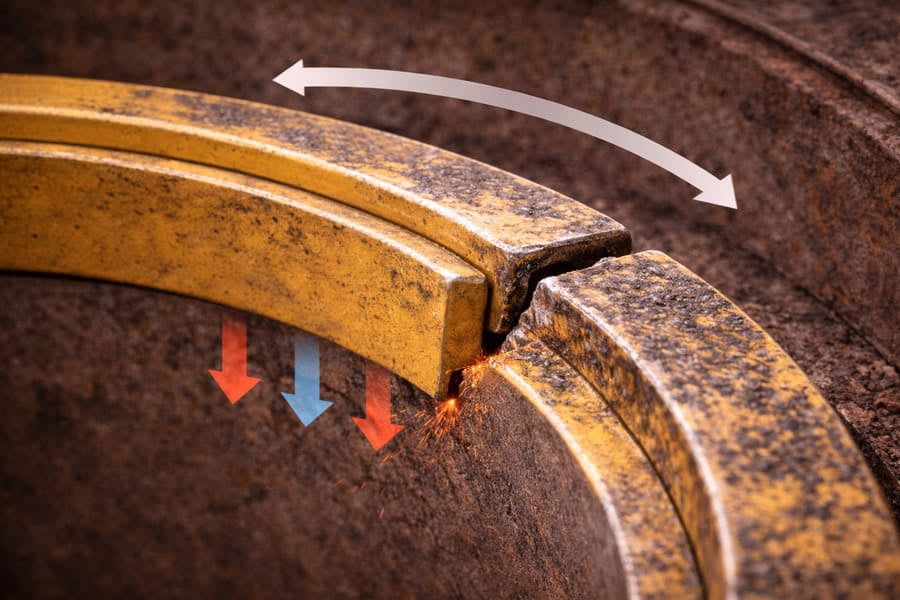
Think of bending a paperclip back and forth. Even though you aren't pulling it apart with massive force, the repeated bending motion will eventually cause it to break. This is fatigue. An OTR wheel experiences a similar, though less dramatic, process. As the tire rotates, the load on the lock ring is constantly changing—increasing at the bottom of the rotation and decreasing at the top. If the ring has a simple, flat contact surface against the rim, this cyclic loading causes microscopic slipping and rubbing. This phenomenon, called fretting7, creates surface damage and stress concentrations8. These tiny imperfections are the starting points for fatigue cracks that grow over time, eventually leading to a complete fracture, no matter how strong the steel is.
How Does Tapered Geometry Prevent Lock Ring Failure?
If flat contact surfaces5 are a source of fatigue, what is the alternative? How can a different design solve this problem of microscopic movement and prevent cracks from starting in the first place?
A tapered or conical geometry creates a wedging effect under load. This pre-loads the contact surfaces, effectively locking them together and preventing the micro-movements that initiate fatigue cracks. It turns a weakness into a strength.
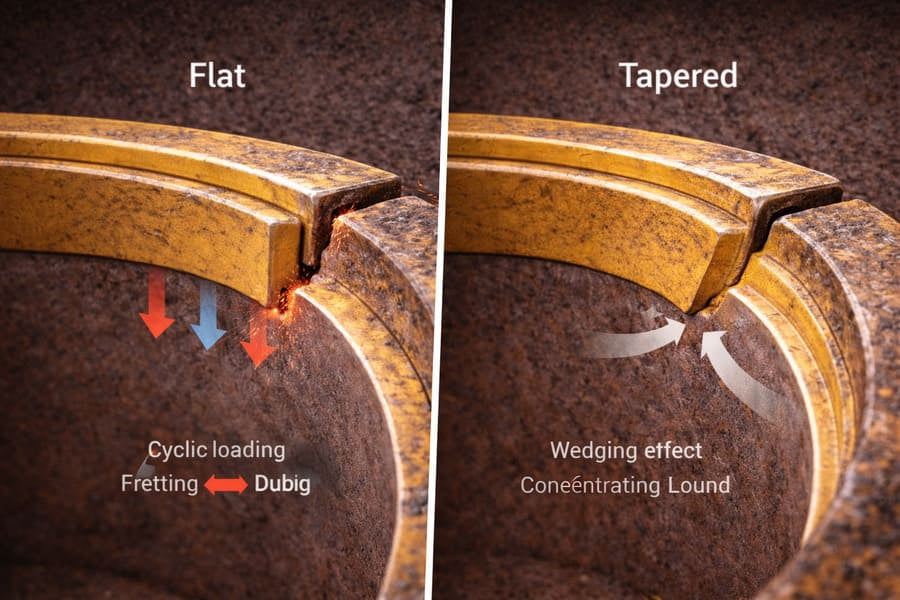
A tapered design6 is a more intelligent solution9. Instead of two flat surfaces lying against each other, a tapered lock ring fits into a matching angled groove in the OTR rim, like a cone seating into another cone. When the tire is inflated, the pressure forces the ring deeper into the groove, creating a tight, wedged connection. This tight fit eliminates the space for micro-slipping. The components are essentially locked together as one unit, moving in unison with the wheel's flex. By preventing the root cause of fretting7, the tapered design6 dramatically reduces the chances of a fatigue crack ever starting. It's a proactive design10 that uses the tire's pressure to create a more stable and durable assembly.
| Design Type | Contact Style | Performance Under Cyclic Load | Fatigue Risk |
|---|---|---|---|
| Flat Ring | Two flat surfaces | Prone to micro-slip (fretting7) | High |
| Tapered Ring | Mating angled surfaces | Creates a tight wedge, prevents slip | Very Low |
| Integrated | Part of the rim base | No moving contact surface | Eliminated |
Is Stronger Steel or Smarter Design More Important for Longevity?
When looking to improve the durability of your OTR wheels, it's tempting to just specify a stronger, more expensive steel alloy. Is this the best investment, or is there a more effective way to ensure a long service life11?
Smarter geometric design2 is far more important for lock ring longevity than simply using stronger steel. Proper geometry controls the stress and eliminates movement, attacking the root cause of fatigue, while stronger material only resists the symptoms.
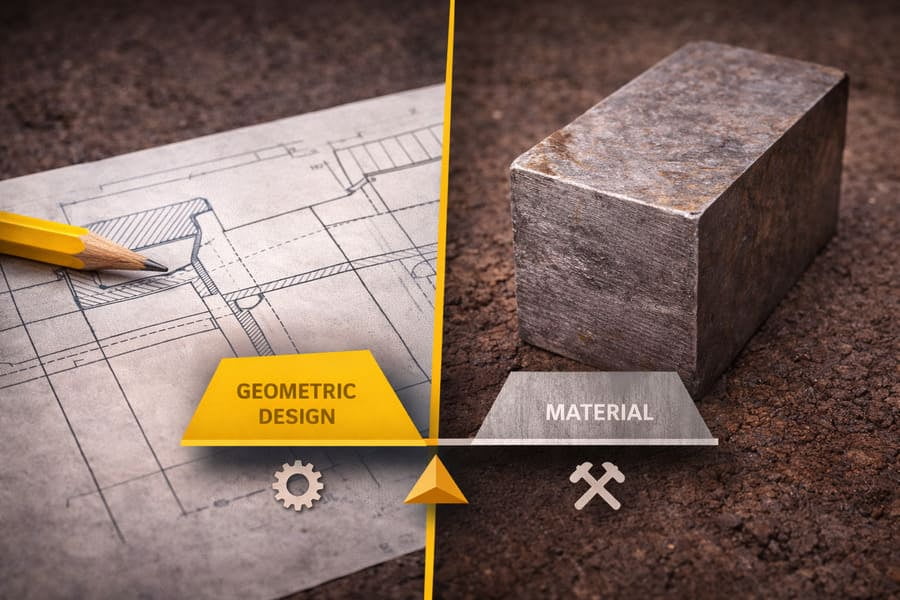
Relying on material strength alone is a reactive approach. You are essentially using a stronger material to better withstand the damage being caused by a flawed design. The underlying problem—the fretting7 and stress concentration—is still there. A smarter geometric design2 is a proactive approach. It fundamentally changes how forces are managed within the wheel assembly. By eliminating the micro-movements that initiate cracks, a good design prevents the damage from ever occurring. While a quality material is always important, its benefits are maximized only when it's used in a design that minimizes stress and fatigue. For long-term reliability and lower lifecycle costs, investing in superior geometry provides a much greater return than just paying for a higher tensile strength.
Conclusion
The true key to lock ring longevity is a smart design that controls cyclic load and eliminates movement. Prioritize geometry over material strength to proactively prevent fatigue failure and ensure operational safety.
Understanding the fatigue life can help you choose better designs for durability. ↩
Explore how geometric design can enhance performance and longevity in engineering. ↩
Explore the limitations of high-strength steel in preventing failures. ↩
Understanding design issues can help you avoid costly mistakes in engineering. ↩
Find out why flat surfaces can lead to issues and how to avoid them. ↩
Discover how tapered designs can improve performance and reduce failure rates. ↩
Understanding fretting can help you prevent premature failures in mechanical systems. ↩
Learn about stress concentrations to better manage material integrity. ↩
Discover innovative solutions that enhance performance and reliability. ↩
Explore the benefits of proactive design in preventing failures and enhancing safety. ↩
Learn how to ensure longevity in your mechanical designs and components. ↩