
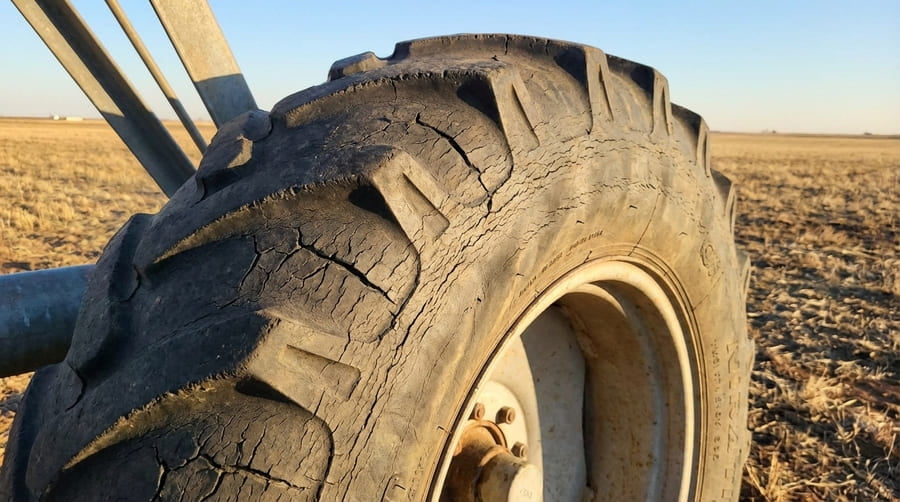
Your pivot tire shows cracks but it's still holding air. You think "it's working," so you leave it. This simple judgment confuses performance with safety, exposing your entire harvest to a risk you can't control.
Many irrigation tire1 issues, like weather checking2 or slow leaks, aren't performance failure3s; they are risk indicators4. They signal a loss of predictability5. This means you can no longer trust the tire to function during critical periods, exposing your operation to catastrophic downtime6.
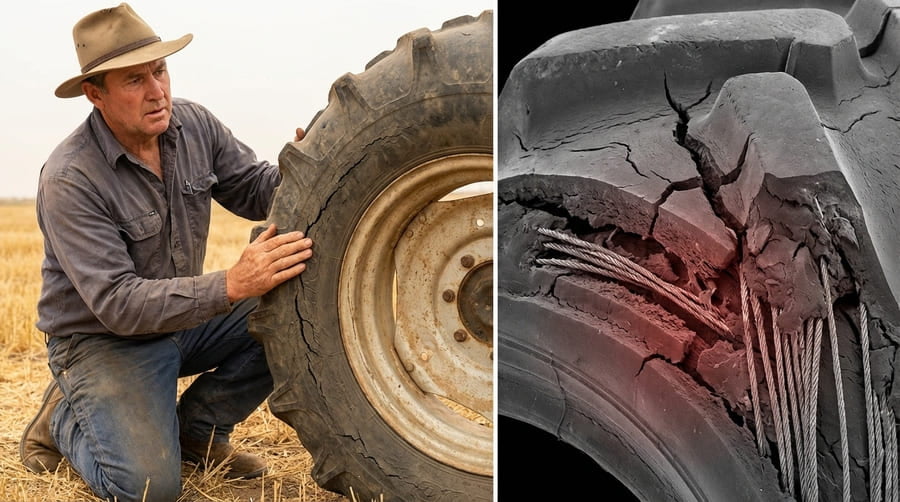
I was visiting a large farm in Colorado, and the manager pointed to a set of irrigation tire1s on his pivot. They were visibly cracked, a classic sign of ozone damage7. "They've been like that for a year," he said, "but they still hold air. They're still performing." I asked him if he could guarantee they'd last through the next 60 days of peak summer heat. He paused and said, "Well, no, I can't guarantee that." At that moment, he understood. The problem wasn't that the tires were performing poorly today. The problem was that he had lost all ability to predict their performance tomorrow, and that unpredictability5 was the real risk to his operation.
Do Irrigation Tires Suddenly Become Unsafe, or Do They Quietly Become Unpredictable?
A irrigation tire1 works perfectly for weeks, then fails without any obvious warning. It feels like a sudden betrayal by your equipment. But the real failure happened long before the tire went flat.
Irrigation Tires rarely fail suddenly. They gradually lose structural integrity8, making their future performance impossible to predict. This quiet loss of predictability5 is the true danger, not a sudden blowout. You simply can't count on them anymore.
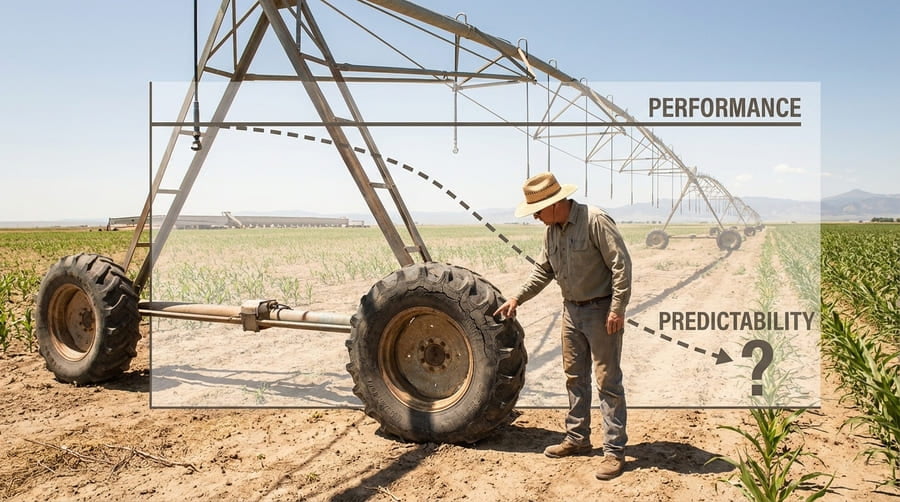
Risk in a irrigation tire1 doesn't appear overnight. It's a slow, creeping process. A tire is a complex structure of rubber compounds and fabric plies. Over time, UV rays, ozone, and constant flexing cause microscopic damage. At first, this doesn't affect performance. The irrigation tire1 still holds air and rolls. But what has changed is its resilience. It has lost its safety margin9. The problem is that this loss is invisible. The irrigation tire1 still looks like it's working. This is where managers get into trouble. They wait for a clear performance failure3, like a flat. But the real failure already occurred when the irrigation tire1 lost its predictability5. The moment you can no longer confidently say, "I know this tire will survive the season," the risk is already unmanaged. The blowout isn't the failure; it's just the final, costly symptom.
Is a Irrigation Tire That's "Still Running" a Safe Tire?
You check your pivot and all the tires are up. The system is completing its circles. It feels like everything is fine. But "running" is not the same as "safe" or "reliable."
"Still running" is a simple observation of current function, not a judgment of future risk. A tire can be fully operational one minute and the source of a catastrophic field-wide failure the next. Function does not equal safety.
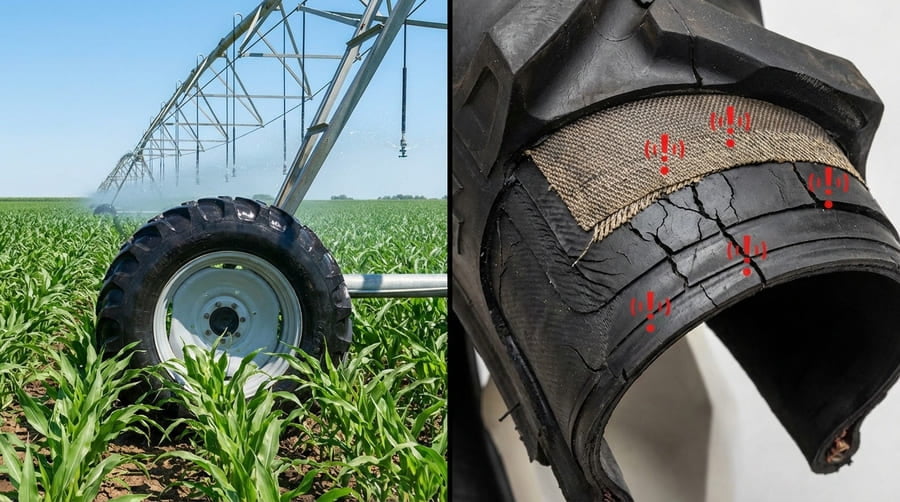
Confusing function with safety is one of the most dangerous assumptions in farming. Imagine a bridge with a few hairline cracks in its support columns. The bridge is still "running"—cars are driving over it just fine. Is it a safe bridge? Of course not. The cracks indicate that its structural integrity8 is compromised, and its point of failure is now unknown. It might fail today, or in a year, but the risk is unacceptable. An irrigation tire1 is the same. Just because it is holding air and turning does not mean the risk is controlled. The presence of significant cracking, bulging, or persistent pressure loss means the tire's safety margin9 is gone. It has entered a state where its continued operation is a gamble, not a certainty. Judging a tire by whether it's "still running" is like judging the safety of a bridge by whether it's still standing at this exact moment.
Functional State vs. Risk State
Seeing the difference is key to good management.
| Tire Condition | Functional State | Risk State | Smart Decision |
|---|---|---|---|
| New Tire | Working | Controlled | Deploy |
| Mid-Life Tire | Working | Controlled | Monitor |
| Cracked, Worn Tire | Working | Uncontrolled | Replace Proactively |
| Failed Tire | Not Working | Realized | Reactive, Costly Repair |
Are You Maximizing Irrigation Tire Life or Just Inviting Disaster?
Trying to squeeze every last hour out of a tire feels like good financial management. But pushing equipment to its absolute limit is a strategy that guarantees you will eventually have a failure.
Professional management isn't about pushing a tire's service life to its breaking point. It's about strategically replacing it before it enters an irreversible risk zone. The goal is to avoid disaster, not explain a failure after it happens.
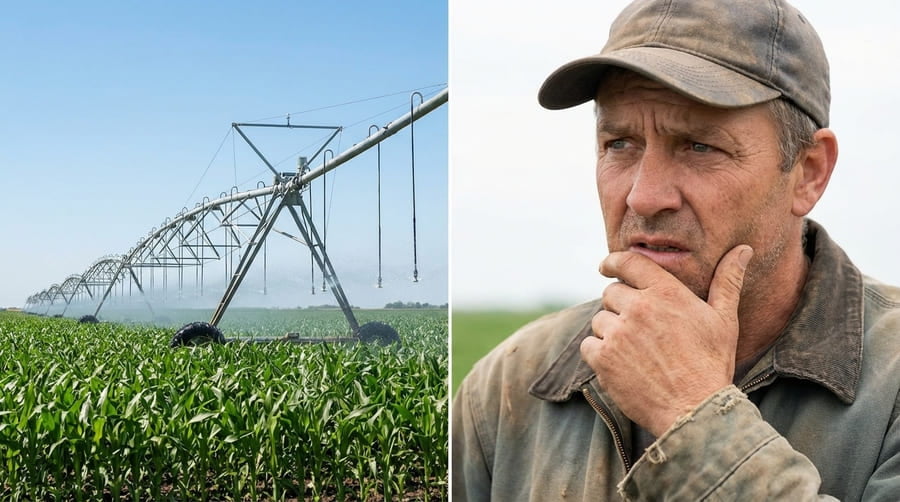
There are two ways to manage equipment. One is to run it until it breaks, then fix it. This is reactive and costly. The other is to identify when an asset becomes a liability and act before it breaks. This is proactive and smart. With irrigation tire1s, the "risk zone" is the high-stress summer season10. A irrigation tire1 with visible signs of degradation might have 20% of its physical life left, but it has 0% of the reliability you need to get through that risk zone. A professional manager sees this and understands that the small value of that remaining 20% is not worth the massive risk to the crop. They will choose to "lose" that small residual value by replacing the tire early. This isn't a loss; it's the cost of securing the harvest. The best managers are not the ones who can fix problems the fastest; they are the ones who prevent problems from ever happening.
Conclusion
Focus on a irrigation tire1's predictability5, not just its performance. By replacing tires before they enter a high-risk state, you are not losing value; you are buying certainty for your entire operation.
Explore this resource to learn how to effectively maintain irrigation tires and ensure their reliability. ↩
Understanding weather checking can help you prevent tire failures and ensure safe operations. ↩
Explore this link to identify common performance failures and how to address them proactively. ↩
Learn about the key risk indicators that can help you assess tire safety and performance. ↩
This link will explain the significance of predictability in tire management and its impact on safety. ↩
This resource will provide insights into the risks associated with downtime and how to manage them. ↩
Discover how ozone damage affects tires and what steps you can take to mitigate its effects. ↩
Learn about the importance of structural integrity in tires and how it relates to safety and performance. ↩
Understanding safety margins can help you make informed decisions about tire replacements and maintenance. ↩
Find out how to prepare your irrigation tires for peak performance during the summer months. ↩