
You believe offering the lowest tire price will win over large farm operators. But your deeply discounted offer gets rejected in favor of a competitor's more expensive tire, leaving you confused.
Large-scale farms prioritize the total cost of ownership1, not the initial purchase price. They calculate the tire's cost per hour2 or cost per acre, as this figure directly impacts their operational efficiency3, fuel consumption4, and overall profitability5. A low price is irrelevant if the operating cost is high.
I remember losing a major contract years ago. We had the lowest price by a wide margin. I was sure we had it. The purchasing manager for the 5,000-acre operation looked at my quote, then at a competitor's that was 20% higher, and chose them. When I asked why, he said, "Your price is good for your invoice, but it's bad for my balance sheet." That day, I learned that professional farms aren't buying tires; they are buying hours of efficient, predictable performance.
Why is a one-time price tag misleading for farm operations?
You lead with a great unit price, thinking it's a winning strategy. But the client seems unimpressed, asking about performance data6 and wear rates7, questions you're not prepared to answer.
A tire's price is a single expense, but its performance creates continuous operational costs. Large farms calculate cost per hour2 because it captures the tire's true financial impact on fuel, labor, and machine uptime over thousands of hours, which a simple price tag cannot.
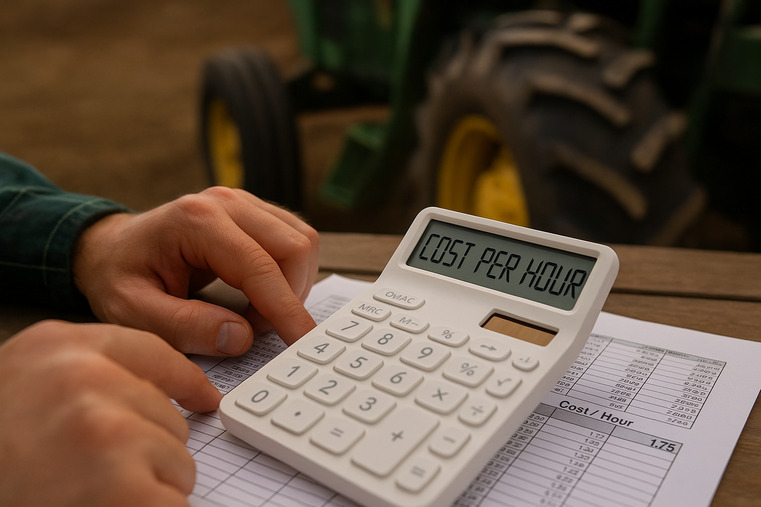
For a large commercial farm, a tire isn't just a consumable part; it's a critical component of a very expensive piece of machinery. The farm manager’s goal is to maximize the output of that machine while minimizing the cost to run it. The initial cost of the tire is just one small part of that equation. They are far more interested in how many hours the tire will last and how efficiently it will perform during that time. A tire that costs $2,000 and runs for 4,000 hours has a capital cost8 of $0.50 per hour. A cheaper $1,500 tire that only lasts 2,500 hours costs $0.60 per hour. The "cheaper" tire is actually 20% more expensive before you even factor in performance.
Shifting the Focus from Invoice to Ledger
| Buyer Mindset | Primary Metric | Core Focus |
|---|---|---|
| Small-Scale Operator | Unit Price ($) | Immediate Savings |
| Large Commercial Farm | Cost per Hour ($/hr) | Long-Term ROI & Uptime |
| Decision Driver | "How much is it?" | "What will it cost me to run?" |
This table shows the fundamental difference. The conversation shifts from a simple transaction to a strategic investment.
Can a cheaper tire actually be your most expensive one?
You proudly present a tire that undercuts the competition on price. But experienced farm managers know that a low upfront cost can be a warning sign for high downstream expenses.
Yes, a cheaper tire often becomes the most expensive one in the long run. Poor tread design can lead to increased wheel slip, burning more fuel per acre. Inferior compounds can cause premature wear and costly downtime9 during critical planting or harvesting seasons.
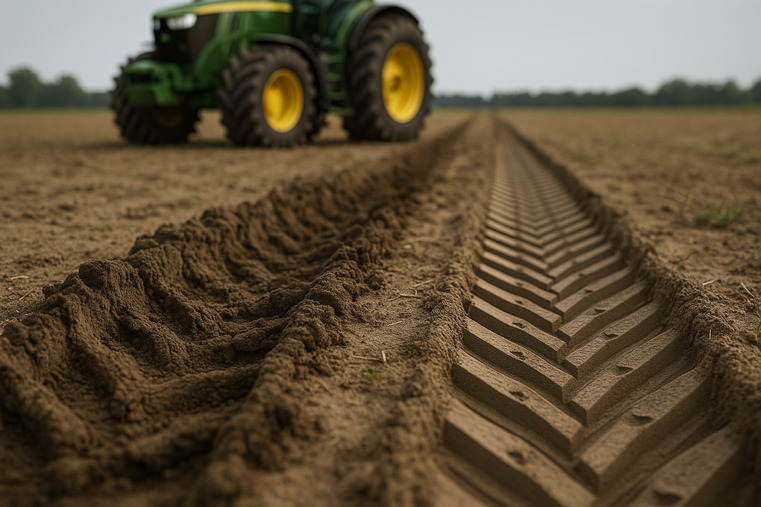
Think about wheel slip. A high-quality tire might achieve a slip ratio of 8-12%, which is very efficient. A cheaper tire, with a less-optimized design, might slip at 15-20%. That difference doesn't sound like much, but it means the engine has to work harder and burn more fuel to cover the same amount of ground. An extra 5% slip can easily translate to a 7-10% increase in fuel consumption4. On a large tractor that burns 50 liters of diesel per hour, that's an extra 5 liters every hour. Over a 2,000-hour season, that's 10,000 extra liters of fuel. Suddenly, the $500 you saved on the tire purchase is dwarfed by thousands of dollars in extra fuel costs. This is what professional buyers understand.
Do farms over 1,000 acres even care about unit price?
You're focused on the price tag, believing it's the main factor. But for industrial-scale farms, the conversation isn't about the price of the tire; it's about the value of the work it performs.
For large farms, the upfront price is secondary to Return on Investment (ROI)10. The key question is not "How much is this tire?" but "How many productive hours will this tire deliver at maximum efficiency before it needs to be replaced?"
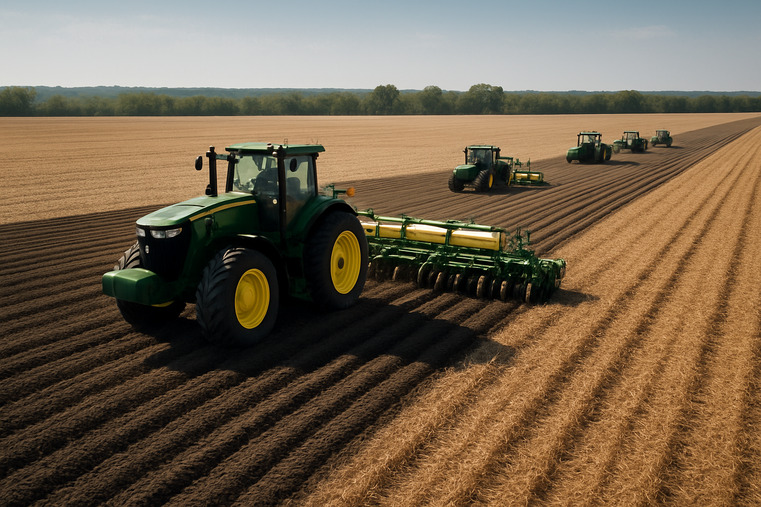
When you manage thousands of acres, your entire operation is a finely tuned machine. Every input cost is measured against the output it helps generate. Downtime during the short planting or harvesting window is catastrophic. A single day of a tractor being out of commission due to a tire failure can cost tens of thousands of dollars in lost yield or labor costs. So, would a farm manager save $1,000 on a set of tires if that increases the risk of failure by even a small percentage? Absolutely not. They will gladly pay a premium for a tire from a brand known for reliability and a long, predictable service life. They aren't buying rubber; they are buying uptime, efficiency, and peace of mind. The cost of failure is simply too high to gamble on an unproven, low-cost option.
How is data changing the way farms buy tires?
You think tire sales are still made based on relationships and brochures. But high-end farms are now making decisions based on hard data streamed directly from their machines.
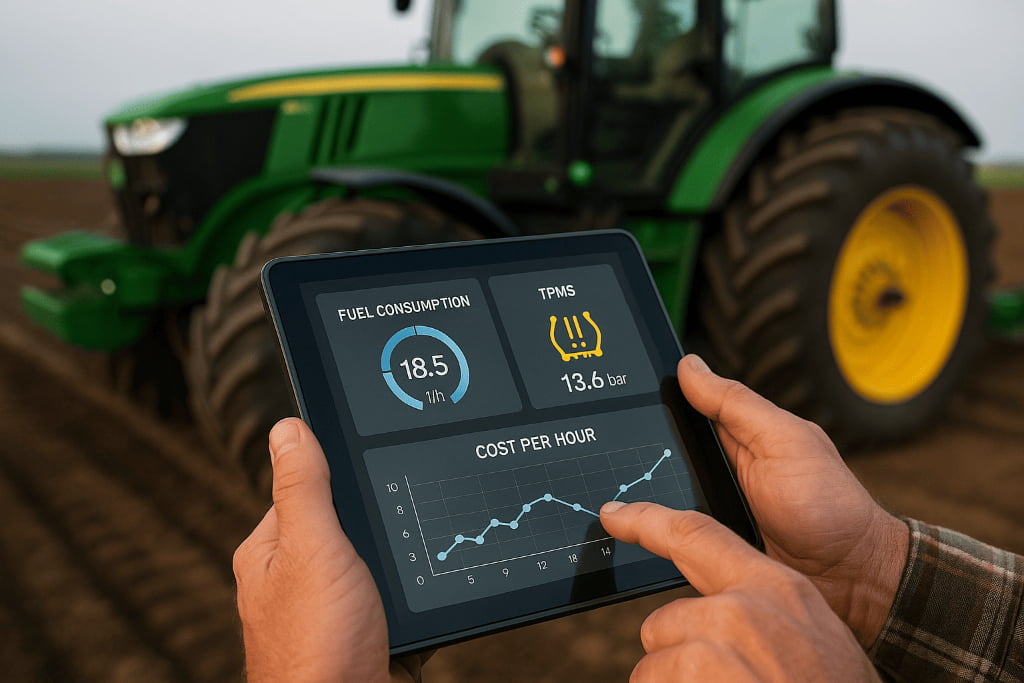
The decision logic has shifted from a 'Buy & Replace' cycle to a 'Predict & Optimize' model. Modern farms use telematics, TPMS, and fuel monitoring data to calculate the real-time cost per hour2 of their tires and will pay a premium for a tire that is proven to lower that cost.
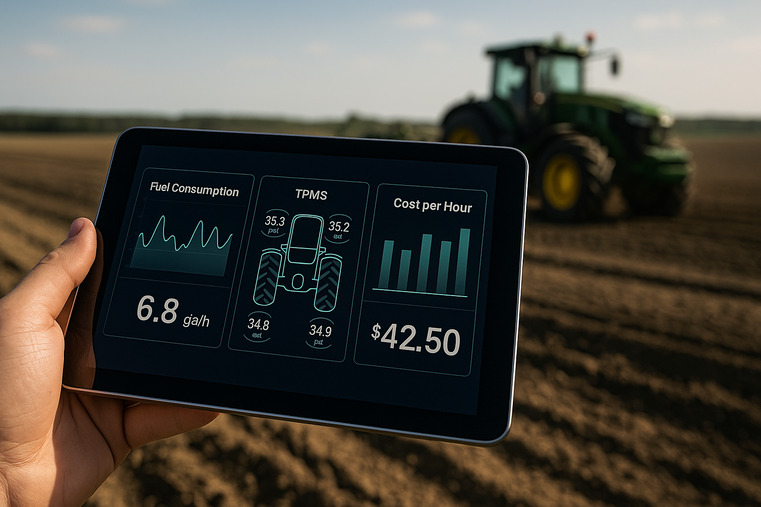
The most advanced farms are essentially data companies that happen to grow crops. Their tractors are equipped with telematics systems that track everything: location, engine load, fuel burn, and wheel slip. Tire Pressure Monitoring Systems (TPMS)11 provide constant feedback on inflation and temperature, which are critical for performance and safety. All this data is fed into farm management software that can calculate the true operating cost of every component, including the tires. They can see in real-time which tire brand is delivering the lowest fuel consumption4 and the longest life. When it's time to buy new tires, they don't look at your sales brochure. They look at their own data. If you can provide a tire that demonstrably lowers their cost per hour2, they will buy it, and they will pay what it's worth.
Conclusion
Stop selling price and start selling performance. Large farms don't buy the cheapest tire; they invest in the one that delivers the lowest total cost per hour2, proven by data and reliability.
Understanding total cost of ownership helps farmers make informed decisions about equipment investments. ↩
Learn how cost per hour impacts operational efficiency and profitability for large farms. ↩
Explore the key elements that drive operational efficiency in agricultural operations. ↩
Discover the relationship between tire quality and fuel efficiency in agricultural machinery. ↩
Gain insights into strategies that enhance profitability in large-scale agricultural operations. ↩
Understand the critical performance metrics that influence tire purchasing decisions. ↩
Learn about the importance of wear rates in selecting tires for agricultural machinery. ↩
Explore the concept of capital cost and its significance in agricultural investments. ↩
Discover the financial impact of downtime and how to minimize it in agricultural settings. ↩
Understand how ROI is calculated and its importance in making investment decisions. ↩
Understand how TPMS contributes to tire performance and safety in farming. ↩