
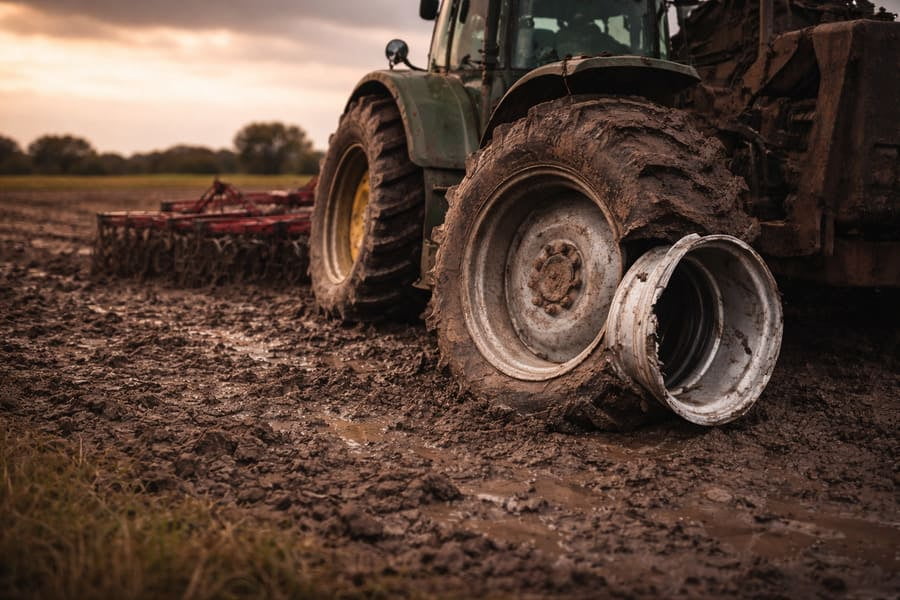
Your tractor is down in the middle of the field. The tire looks perfect, but the wheel has failed, costing you precious time and money during a critical season.
The first failure in an agricultural wheel system1 is rarely the tire itself. It's typically the critical interface between the tire bead2 and the wheel rim3, which breaks down under massive, concentrated load spikes4 created during high-risk maneuvers like sharp headland turns5.
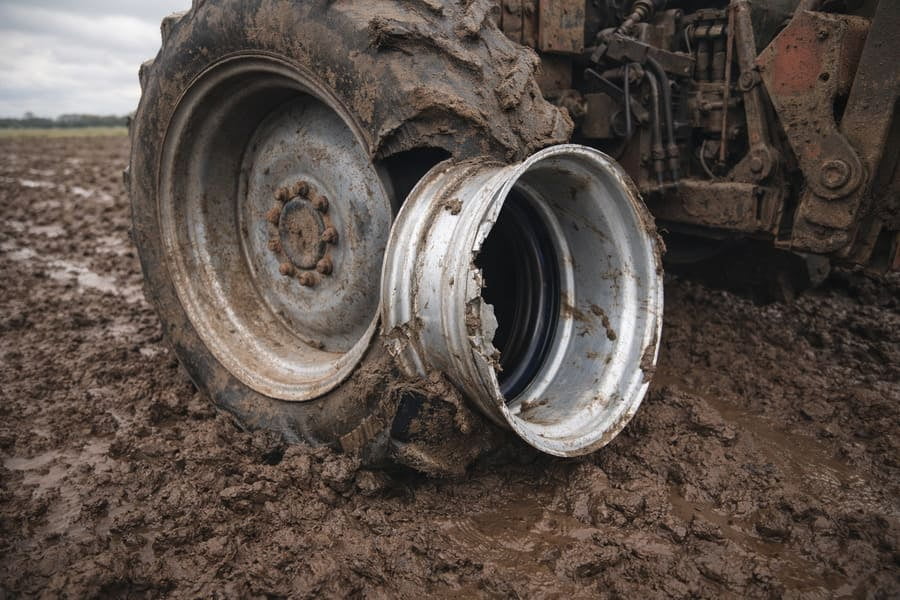
For over 12 years, I've dealt with countless field failures. In the beginning, everyone, including me, would point at the tire. It’s the biggest, most visible component, so it’s the easy scapegoat. But experience has taught me that the tire is often just the last part of the story. The real problem is almost always hidden in the forces that the tire and rim endure together as a single unit. It's a system, and understanding how that system fails is the key to preventing downtime.
Why Do Most Failures Happen During Turns, Not Straight Pulling?
Your equipment pulls heavy loads all day without a problem. Then, a simple turn at the end of the row causes a major wheel failure. It feels random and unpredictable.
Failures happen during turns because they create massive, temporary load spikes4. This concentrates forces on the bead and rim flange with an intensity far greater than the steady load of pulling in a straight line. Straight-line work hides weaknesses that turns instantly expose.
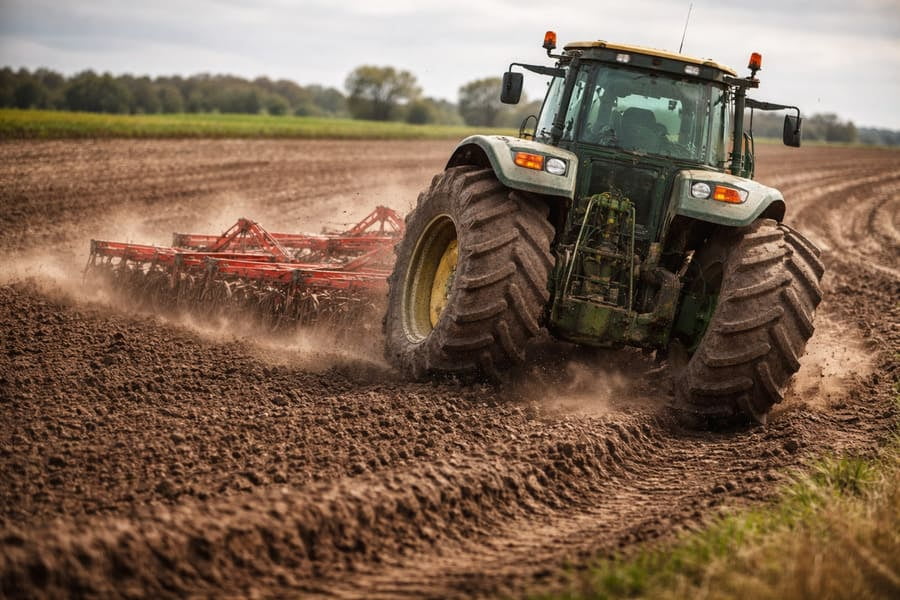
When I first analyzed field data, this pattern became clear. A wheel system can handle its rated load for hundreds of hours while moving straight. But the real test, the moment of maximum stress, happens in the few seconds it takes to make a tight turn. The entire weight of the machine shifts, and immense sideways forces come into play, pushing the tire bead2 against the rim flange with incredible power. It's this repeated, sharp stress that slowly weakens the system until it breaks.
Steady Load vs. Load Spikes
To understand the risk, you have to see the difference between the two types of work.
| Operation | Load Type | Key Forces | Risk Level |
|---|---|---|---|
| Straight Pulling | Steady, Distributed | Vertical (weight) & Rearward (traction) | Low |
| Headland Turn | Spike, Concentrated | Vertical (weight) & Strong Lateral (sideways) | High |
During straight work, the load is predictable and spread out. The wheel system is comfortable. But during a turn, the machine's center of gravity shifts. The outer wheels bear a sudden, massive increase in vertical load while also being hit with powerful lateral forces6. This load spike attacks the bead-seat area7, the weakest point in the entire assembly. Each turn is like hitting the wheel with a hammer, and eventually, something has to give.
Can a Agricultural Tire and Wheel Fail Even if Both Meet Specs?
You’ve done your due diligence. You bought a tire and a wheel that both meet or exceed the load specifications for your machine. Yet, the assembly still failed in the field.
Absolutely. An agricultural tire and wheel can fail together even when both components are perfectly within specification. This happens because individual component ratings do not account for the combined, dynamic stress8 the system endures, especially the concentrated forces at the bead-rim interface during turns.
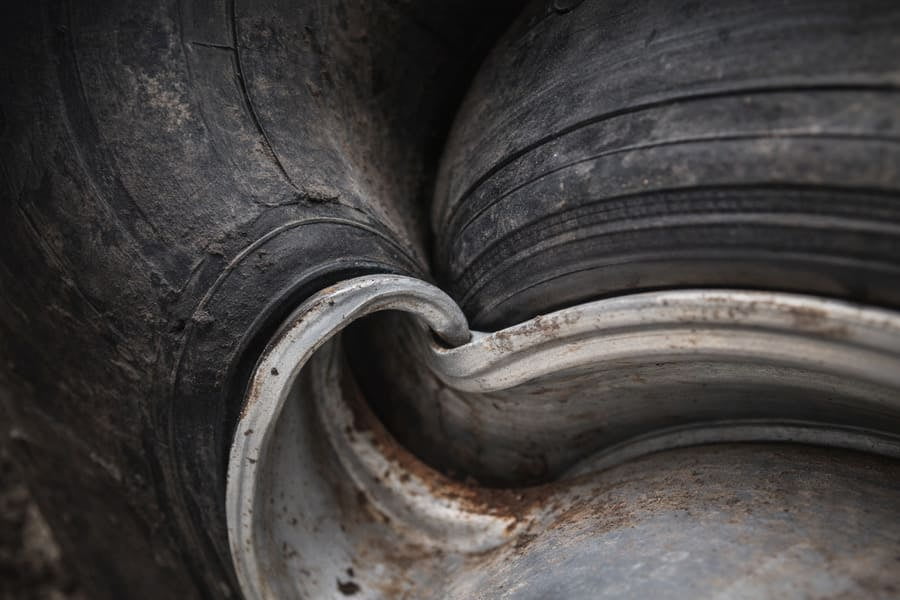
This was a hard lesson for me to learn. I used to think that if the parts were good, the result would be good. But a agricultural wheel system1 is more than the sum of its parts. It’s about how those parts interact under extreme stress. A tire manufacturer9 tests the tire. A agricultural wheel manufacturer10 tests the rim. But very few test how they perform together under the real-world lateral forces6 of a headland turn. This is the gap where failures occur.
Why Individual Specs Aren't Enough
The problem lies in how components are rated versus how they are used.
- Agricultural Tire Specs: A tire's load index is typically rated for straight-line operation at a specific speed and inflation pressure. It doesn't fully represent its ability to resist the bead being pushed sideways off the rim seat.
- Agricultural Wheel Specs: A rim is tested for its structural integrity to carry a vertical load and resist fatigue from rotation. It is not typically tested for the immense, outward pressure exerted by the tire bead2 during a severe turn.
The result is a system-level weakness. The agricultural tire and wheel might be strong enough on their own, but their connection point becomes the fuse in the system. When a load spike hits during a turn, the force concentrates right where the tire bead2 sits on the rim. If that connection isn't perfectly matched and secure, it will be the first thing to fail, often resulting in the tire de-beading or causing a structural failure of the rim flange.
How Can You Prevent These System Failures Before They Happen?
You're tired of reacting to field failures. You want to stop them from happening in the first place, but it's hard to know where to start when the individual components seem fine.
Preventing failures starts with proactive system matching11, not reactive failure analysis. A good supplier should help you understand the risks of your specific operation and match the tire and wheel together as a system designed to withstand the unique stresses of your machine.
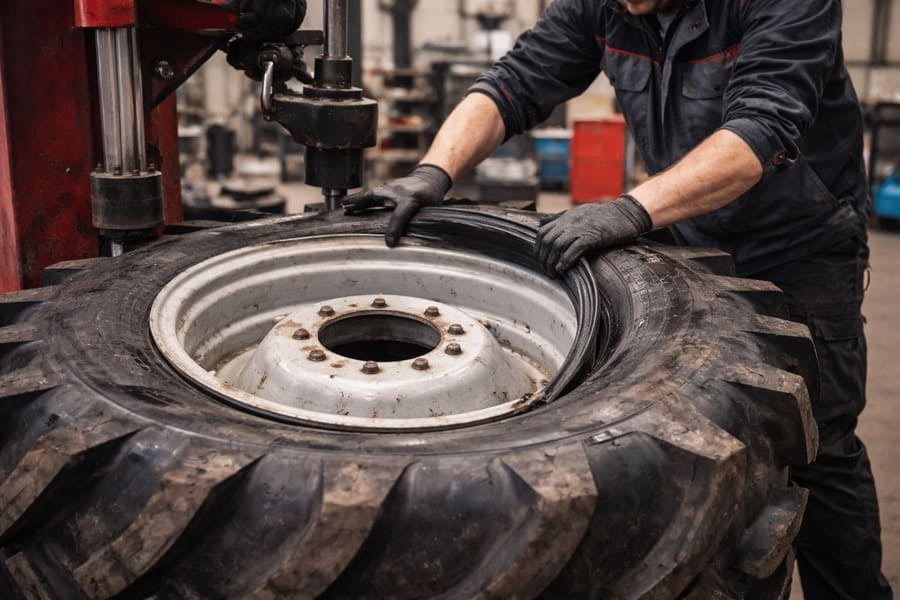
Over the years, my approach has shifted entirely from selling parts to providing solutions. I tell my clients that a good wheel matching process is like a warning system. It should identify potential problems before the equipment ever touches the dirt. It's not about explaining why a wheel failed afterward; it's about building an assembly that won't fail in the first place. This requires a deeper conversation about how the machine is actually used, not just what it says on a spec sheet.
Shifting from Reaction to Prevention
Preventing downtime requires focusing on the highest-risk operations and building a wheel system to handle them.
- Analyze the Operation: The first step is to understand the real-world stresses. Is the machine doing tight headland turns5? Is it operating on slopes? Is it carrying heavy, offset implements? These factors increase lateral stress far more than the machine's basic weight.
- Focus on the Bead-to-Rim Interface: The most critical decision is how the tire and rim work together. This means selecting rim profiles that offer the best bead support and tires with reinforced bead areas designed for high-load applications.
- Prioritize Assembly Quality: Even the best-matched components can fail if assembled incorrectly. Using the right lubrication, ensuring the bead is seated perfectly, and applying correct torque settings for wheel bolts are not minor details—they are critical to system survival.
- Partner with an Expert: Work with a supplier who understands system dynamics. At Gescomaxy, we don't just sell you a tire and a wheel. We analyze your application and provide a fully assembled, guaranteed solution designed to minimize your risk and keep you running.
Conclusion
The key to reliability is shifting focus from individual components to the entire wheel system. Understanding that failures start with load spikes4 during turns, not steady work, is the first step to preventing them.
Explore this resource to understand the complexities of agricultural wheel systems and their importance in farming. ↩
Learn about the tire bead's role in wheel performance and how it affects agricultural machinery. ↩
Discover the significance of wheel rims in agricultural equipment and their impact on performance. ↩
Understanding load spikes can help you prevent failures in your agricultural equipment. ↩
This resource explains the challenges of headland turns and their impact on equipment reliability. ↩
Understanding lateral forces can help you design better agricultural systems and prevent failures. ↩
Explore the critical role of the bead-seat area in tire and wheel performance. ↩
Understanding dynamic stress can help you design more resilient agricultural systems. ↩
Gain insights into tire testing processes and how they relate to agricultural performance. ↩
Learn about the testing standards for agricultural wheels and their importance in equipment reliability. ↩
Learn how proper system matching can prevent failures and improve equipment performance. ↩