
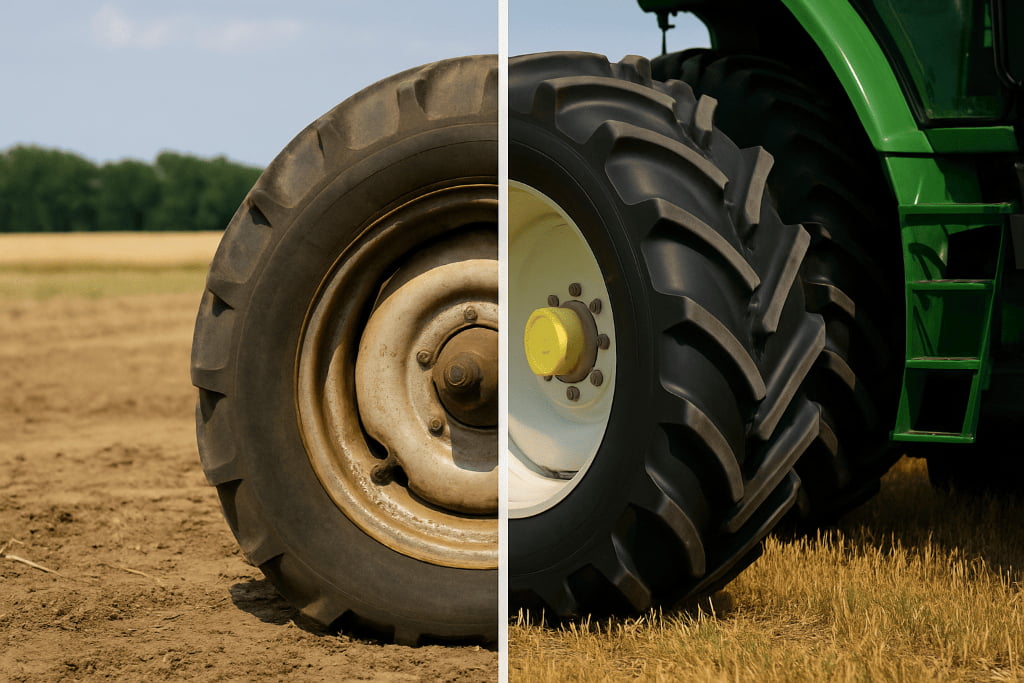
A flat tire during planting or harvest is every farmer's nightmare. For those still using older tube-type tires1, this risk is a constant, costly threat to their productivity.
It's time to move to tubeless because they are fundamentally safer, more reliable, and more efficient. Tubeless tires prevent catastrophic blowouts2, allow for lower operating pressures for better traction, dissipate heat effectively, and can be repaired much more quickly than tube-type tires1.
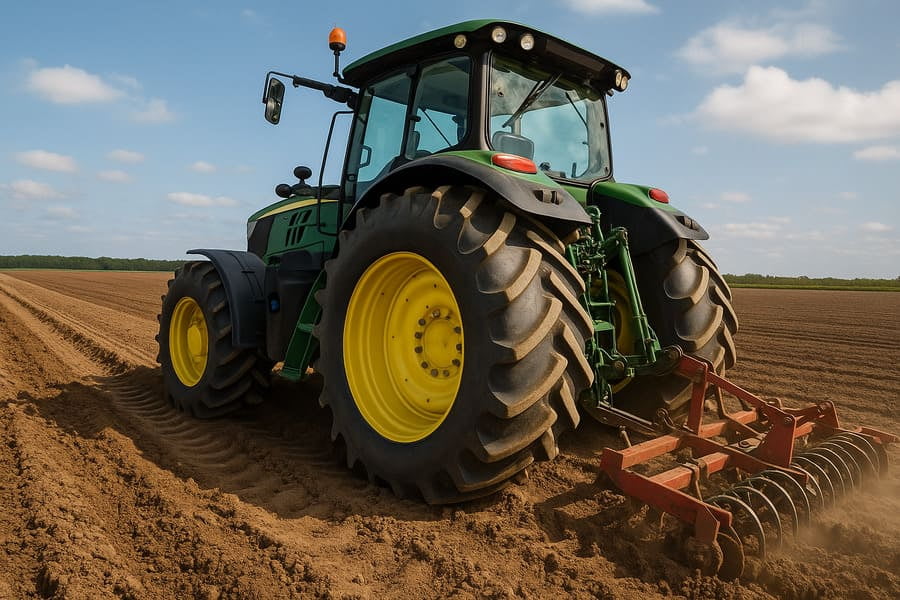
I remember talking to a parts manager who had a farmer call him in a panic. The farmer’s tractor, running on old tube-type tires1, had a blowout in the middle of a remote field during peak harvest season. The entire operation ground to a halt. It wasn't just the cost of a new tire and tube; it was the lost hours and potential crop damage that really hurt. Many farm operations are still running on this outdated technology, often because they don't realize how significant the upgrade to tubeless is. This isn't just about convenience; it's about improving the safety and profitability of the entire farm.
Are Agricultural Tubeless Tires Really Safer and More Efficient?
You worry about your customers getting stranded by a sudden blowout. A catastrophic tire failure3 can damage equipment and, worse, cause a serious accident.
Yes, agricultural tubeless tires4 are significantly safer. Instead of a violent blowout, a puncture in a agricultural tubeless tire typically results in a slow, manageable leak. This gives the operator time to safely stop the vehicle and make a simple repair.
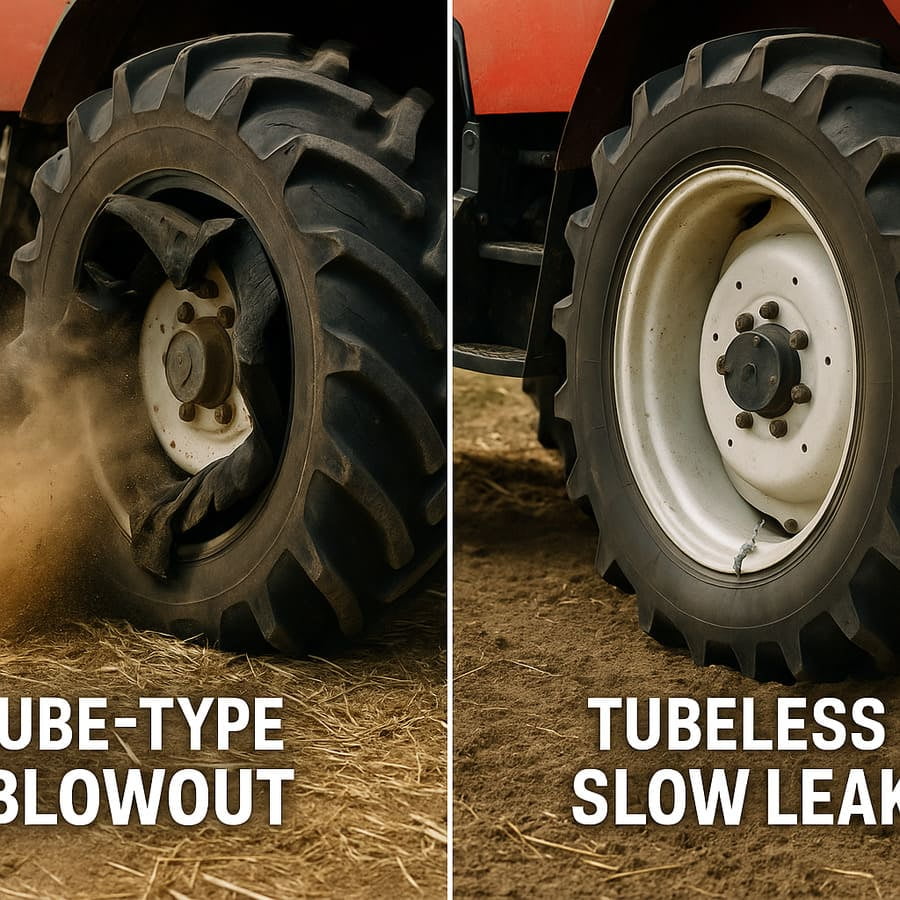
The difference in how tube-type (TT) and tubeless (TL) tires handle a puncture is night and day. In a TT agricultural tire, the inner tube holds the air. When punctured, the tube can rip instantly, causing a complete and immediate loss of air—a blowout. This can cause the driver to lose control. A agricultural tubeless tire, on the other hand, has an inner liner that is bonded directly to the tire itself. The tire and the rim form an airtight seal. If a nail punctures the tire, the tire's structure helps hold the object in place, and the air leaks out slowly. This slow deflation is far safer. Furthermore, agricultural tubeless tires4 run cooler because there's no inner tube to trap heat, which is a leading cause of tire failure3. This allows them to be run at lower pressures, improving the tractor's footprint, increasing traction, and reducing soil compaction.
Tube-Type (TT) vs. Tubeless (TL): A Clear Winner
| Feature | Tube-Type (TT) Tire | Tubeless (TL) Tire |
|---|---|---|
| Puncture Response | Sudden, catastrophic blowout | Slow, controlled leak |
| Repair Process | Difficult; must remove tire to patch tube | Easy; can often be plugged on the wheel |
| Heat Dissipation | Poor; tube traps heat against the rim | Excellent; direct air-to-rim contact |
| Low-Pressure Use | Risky; tube can slip and get pinched | Ideal; improves traction and reduces soil compaction |
How Does This Upgrade Create a Major Sales Opportunity?
Selling a single replacement tire is a small transaction. You are looking for ways to provide higher-value solutions that your customers genuinely need.
The switch from tube-type to tubeless is a complete system upgrade, not just a tire swap5. It requires both new tubeless tires4 and new, compatible tubeless rims, instantly doubling the value of the sale and providing a comprehensive solution.
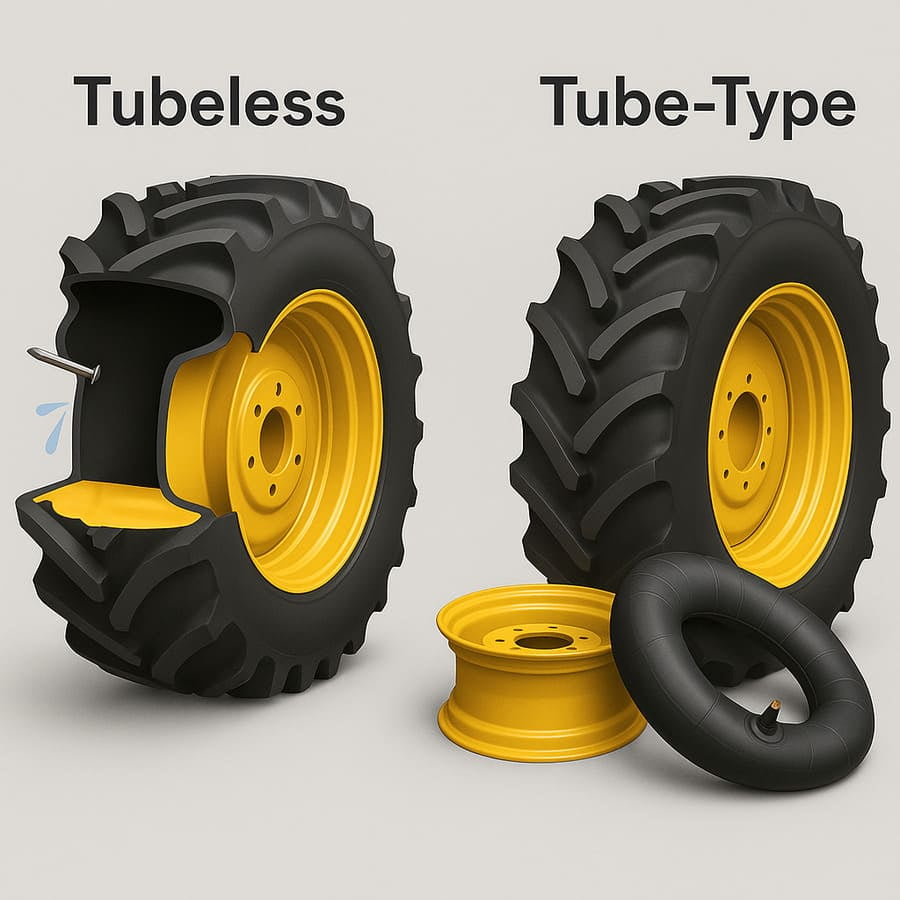
Most dealers see a customer's need for a new agricultural tire as a one-off replacement sale. But when you identify a customer running old tube-type tires1, you have a much bigger opportunity. You can educate them on the massive safety and performance benefits of going tubeless. Because tube-type rims are not designed to create an airtight seal, they cannot be used with tubeless tires4. This means the upgrade is a package deal. You are not just selling a tire; you are selling a complete wheel assembly solution6—new tires and new rims. This transforms a low-margin replacement into a high-value upgrade project. You are solving a fundamental problem for your customer, improving their operation's safety and efficiency, and in turn, creating a more significant and profitable sale for your business. It's a true win-win scenario that builds customer trust and loyalty.
Why Is Your Free Mounting Service a Game-Changer?
Your customer wants to upgrade but their local shop can't handle it. Seating a large tubeless agricultural tire requires specialized, high-pressure equipment they don't have.
We eliminate this problem with our free pre-mounting service7. We professionally mount the new tubeless tires4 onto the new rims and deliver a ready-to-install assembly, saving your customers time, money, and hassle.
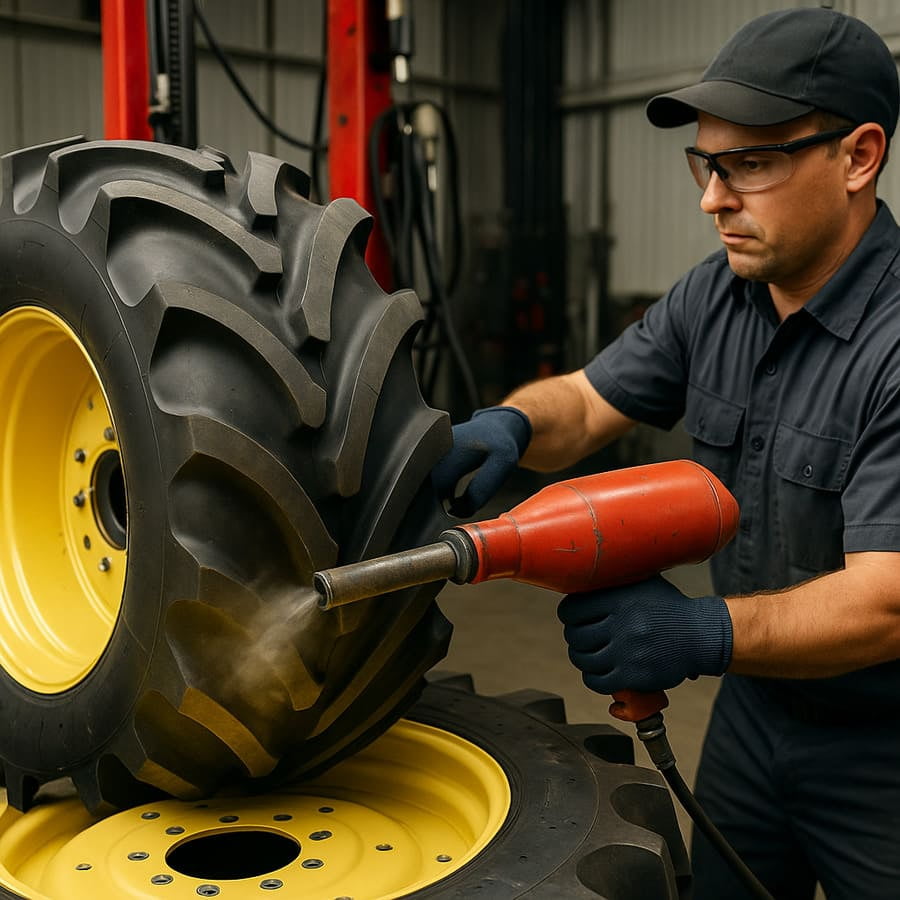
The biggest hurdle in a tubeless upgrade is often the installation itself. To seat the bead of a tubeless tire against the rim and create that critical airtight seal, you need a large, instantaneous burst of high-pressure air. Most small repair shops or on-farm workshops simply don't have the powerful air compressors and specialized bead-seating tools required for large agricultural tires. This can stop an upgrade in its tracks. As your partner, we take this entire problem off the table. When you order a tubeless tire and rim package from us, our expert technicians will professionally mount and balance the assembly in our facility, free of charge. We ship you a complete, ready-to-go wheel. Your customer simply needs to bolt it onto their machine. This service adds immense value, removes the final barrier to the sale, and ensures the installation is done correctly and safely.
Conclusion
Upgrading from tube-type to tubeless tires4 is a critical step forward for farm safety and efficiency. It offers a high-value sales opportunity8 that you can confidently deliver with pre-mounted assemblies.
Learn why tube-type tires may be a liability for farmers and how upgrading can enhance productivity. ↩
Understand the risks associated with tire blowouts and how to prevent them with modern technology. ↩
Gain insights into tire failure causes and how to mitigate risks with the right tire choice. ↩
Explore the advantages of tubeless tires, including safety and efficiency improvements for agricultural operations. ↩
Understand the process and benefits of upgrading to tubeless tires for agricultural equipment. ↩
Discover how a complete wheel assembly can enhance safety and efficiency in farming operations. ↩
Learn how professional mounting services can simplify the upgrade process for farmers. ↩
Explore how offering tubeless tire upgrades can lead to higher-value sales and customer loyalty. ↩