
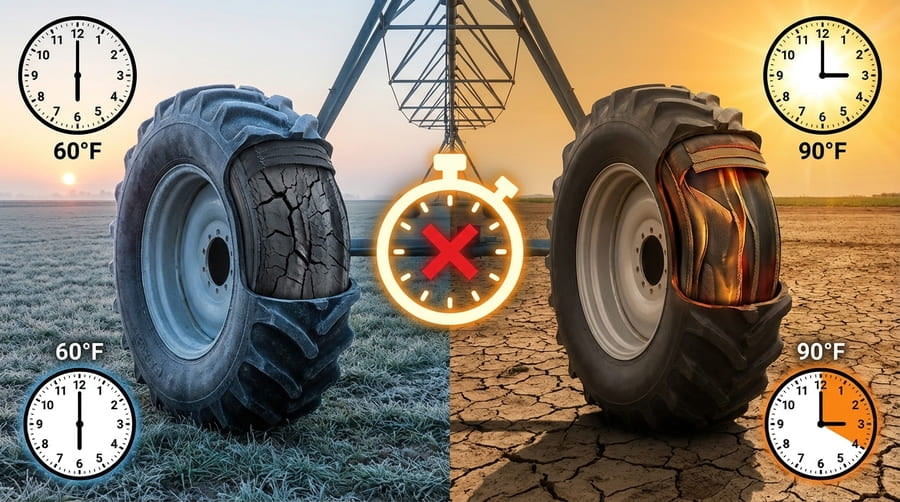
You assume your pivot's tire pressure is set for the season. But invisible temperature swings are silently altering it, putting your entire operation at risk of sudden failure.
Irrigation Tire pressure checks are critical because ambient temperature constantly changes1 it. A tire that seems fine can be dangerously underinflated, causing hidden internal damage2. This leads directly to premature blowouts3, expensive downtime, and warranty claims that hurt your brand reputation.
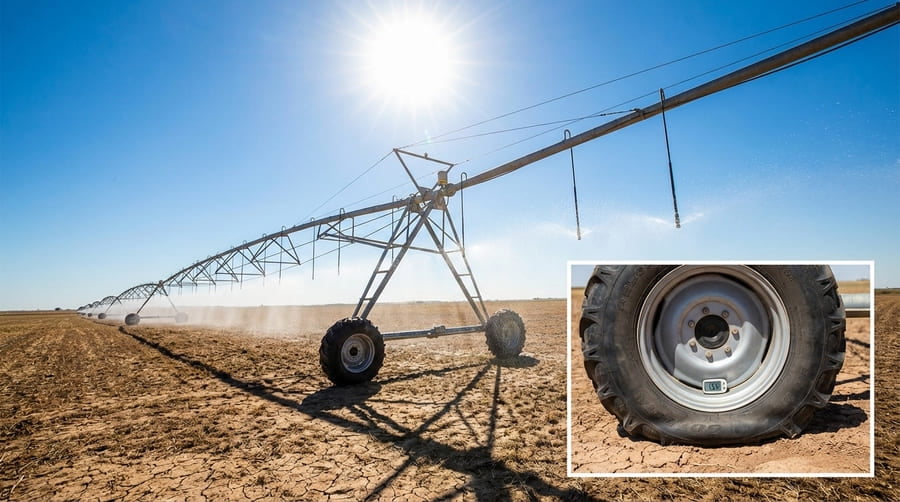
For years, I've seen procurement managers focus on tread depth and visible damage. They believe that if a tire looks good, it is good. But I once handled a warranty claim for a tire that failed mid-season with almost no tread wear. The cause wasn't a defect; it was a slow, invisible killer. The pressure had drifted with the daily temperature cycles4, stressing the sidewall until it gave out. This taught me that the most expensive problems are the ones you can't see. Regular pressure checks aren't just maintenance; they're your first line of defense against hidden failure.
How Can Summer Heat Deceive You About Your Irrigation Tire Pressure?
You check the pressure on a hot afternoon, and it reads perfectly. So why did that same tire fail just a week later? The heat was hiding the truth.
Summer heat increases the air pressure5 inside a tire, which can mask a dangerous low-pressure problem6. A tire that was underinflated in the cool morning might read as "normal" in the afternoon, while internal structural damage continues to accumulate.
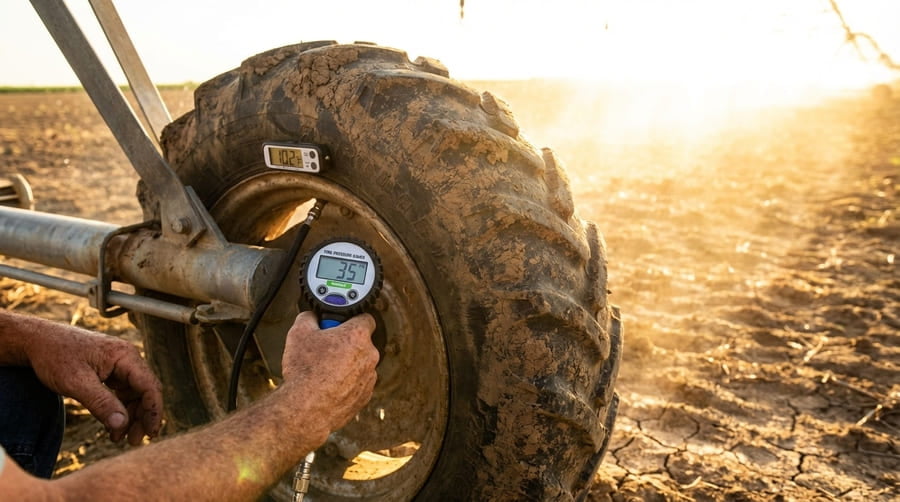
This is one of the most common and misunderstood issues I see in the field. It’s a simple matter of physics that has major financial consequences. The air inside your tires expands when it gets hot and contracts when it cools. As a rule of thumb, for every 10°F (or 5.6°C) change in ambient temperature, the tire pressure will change by about 1-2 PSI. This doesn't sound like much, but it creates a dangerous illusion.
The Daily Pressure Illusion7
Imagine this scenario for a irrigation tire that should be at 15 PSI:
| Time of Day | Ambient Temperature | Actual Tire Pressure | What You See | The Hidden Reality |
|---|---|---|---|---|
| Early Morning | 60°F (15°C) | 12 PSI | Tire looks slightly flat, but it's early. | Tire is underinflated; sidewall is over-flexing. |
| Hot Afternoon | 90°F (32°C) | 15 PSI | Gauge reads "perfect." The tire looks fine. | Pressure is normal, but damage has already occurred. |
In the afternoon, your pressure check tells you everything is okay. But for hours that morning (and again overnight when it cools), the irrigation tire was running underinflated. This repeated cycle of flexing and stress is what silently destroys the tire's internal structure, leading to a failure that seems to come out of nowhere. The afternoon heat didn't fix the problem; it just hid the evidence.
How Do Temperature Swings Weaken the Irrigation Tire Itself?
You know temperature affects pressure8. But did you know it also directly attacks the tire's materials, making them more likely to fail under stress?
Temperature variations change the elasticity of the rubber and the behavior of the internal carcass. Cold can make rubber brittle, while heat softens it. These changes expose any existing structural weak points, turning minor vulnerabilities into major failures.
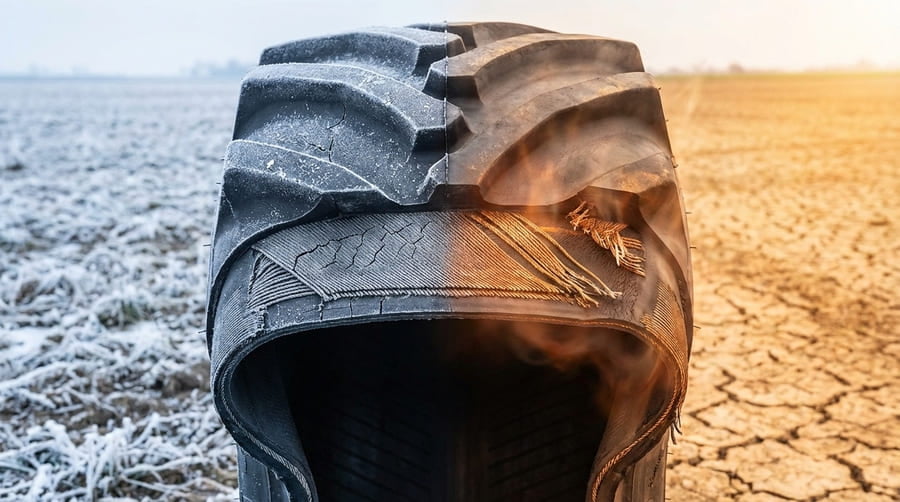
A irrigation tire isn't just a balloon holding air; it's a complex composite of different materials engineered to work together. Temperature changes disrupt this balance. When the weather gets cold, the rubber compounds in a tire become stiffer and less flexible. If the tire is already underinflated and forced to flex, this brittleness can lead to cracks forming in the sidewall. These cracks can then propagate through the internal plies, causing a catastrophic failure.
On the other hand, significant heat makes the rubber softer9 and more pliable. While this might sound good, it can also reduce the irrigation tire's structural integrity. The bonds between the rubber and the internal reinforcing cords can weaken, increasing the risk of ply separation, especially when combined with the stress of underinflation. The irrigation tire essentially becomes too soft to properly support the load, and the internal layers start to tear apart. So, whether it’s a cold snap or a heatwave, temperature changes are actively testing your tires and exposing any hidden weakness.
Why Is a Simple Gauge Check Cheaper Than a New Irrigation Tire?
You think spending time on pressure checks is a hassle. But the cost of not doing them is far greater than just the time it takes to walk the pivot.
Routine pressure inspection10 is far more economical than reactive troubleshooting. It prevents the cumulative stress that causes premature failure, saving you from the high costs of a replacement tire, crop damage, and operational downtime during a critical period.
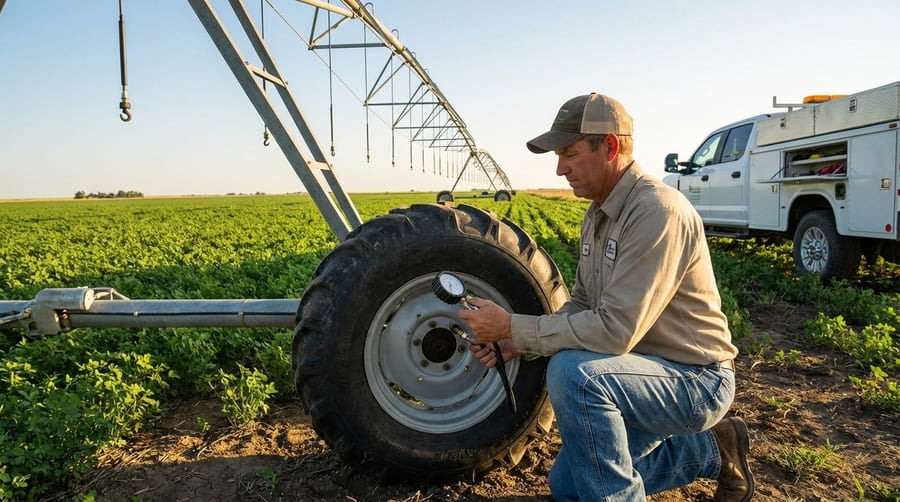
As a supplier, I’ve analyzed the costs associated with tire failure, and the price of the tire itself is often the smallest part of the bill. Let's break down the real economics. A simple, consistent inspection routine is a form of risk management. By keeping tire pressure correct, you are directly reducing the internal stress cycles that lead to material fatigue. You are extending the tire's operational life to its maximum potential.
Now, consider the alternative. When a tire fails mid-season, you face a cascade of costs:
- Emergency Replacement11: You'll pay a premium for a new tire and for someone to install it urgently.
- Downtime12: Every hour your pivot is down, your crops are not getting water. In a dry spell, this can directly impact yield and revenue.
- Potential Crop Damage: A failed pivot can get stuck, and the repair process can damage the surrounding crops.
- Reputation Damage13: If you are a brand manager, every field failure is a mark against your product's reliability, leading to difficult conversations with distributors and end-users.
When you compare the five minutes it takes to check a irrigation tire against these significant and unpredictable costs, the choice is clear. Proactive maintenance is not an expense; it is one of the highest-return investments you can make in your operation.
Conclusion
Ignoring irrigation tire pressure is ignoring a ticking clock. Regular checks turn this unpredictable risk into a manageable routine, protecting your investment, your crops, and your reputation.
Understanding how ambient temperature affects tire pressure can help you prevent unexpected tire failures and maintain optimal performance. ↩
Exploring the causes of hidden internal damage in tires can help you identify potential risks and take preventive measures to avoid costly failures. ↩
Learning how to prevent premature blowouts can save you from expensive downtime and protect your brand reputation. ↩
Understanding the impact of daily temperature cycles on tire pressure can help you maintain proper inflation and prevent tire damage. ↩
Discovering how summer heat affects tire pressure readings can help you avoid misleading measurements and ensure tire safety. ↩
Identifying the risks of low-pressure in irrigation tires can help you take corrective actions to prevent structural damage and failures. ↩
Understanding the daily pressure illusion can help you recognize misleading tire pressure readings and prevent hidden damage. ↩
Exploring how temperature affects tire pressure and materials can help you understand the vulnerabilities and take preventive measures. ↩
Understanding the effects of heat on tire rubber can help you prevent ply separation and maintain tire strength. ↩
Recognizing the importance of routine pressure inspection can help you prevent premature failures and save on replacement costs. ↩
Exploring the costs of emergency tire replacement can help you understand the financial impact and prioritize preventive maintenance. ↩
Understanding how tire failure leads to operational downtime can help you mitigate risks and maintain productivity. ↩
Learning how tire failures affect brand reputation can help you take proactive measures to protect your business image. ↩