
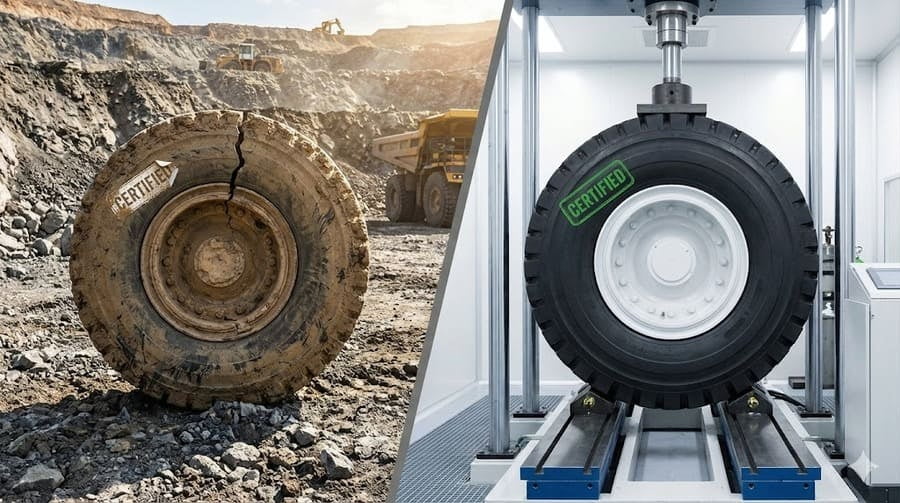
You’ve done everything right. You bought OTR wheels1 that meet all industry standards, expecting them to be reliable. Yet, a wheel fails prematurely, causing costly downtime and damaging your reputation.
Standard-compliant OTR wheels1 fail because standards test2 for minimum, static conditions. The real world involves complex, combined, and cyclical loads—like impact plus tension—that these simple, one-time lab tests do not and cannot simulate, leading to unexpected failures on the job site.
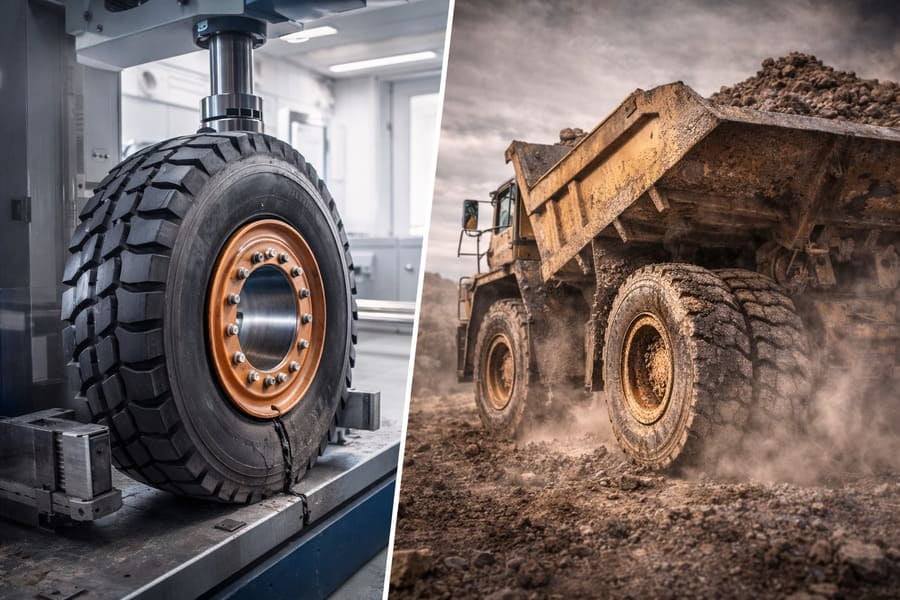
I remember a client, a fleet manager for a large mining operation, who was furious about this exact problem. "We only buy certified wheels," he told me, "so why do they keep cracking?" He felt betrayed by the very system designed to ensure quality. What he discovered, and what I've seen over my 12+ years in this industry, is that a certificate on paper is not a shield against the harsh realities of physics in the field. Let’s break down why that compliance stamp is only the beginning of the story, not the end.
Aren't Standards Supposed to Guarantee Safety?
You trust industry standards to protect your investment and ensure safety. But a failed wheel proves that trust might be misplaced, leaving you wondering what those certifications are really worth.
Standards typically test for a single, static load in a controlled lab. Real-world OTR wheels1 endure continuous, cyclical loading from multiple directions. A one-time pass in a lab test doesn't predict long-term durability under constant, repetitive stress.
Think of it this way: a standard might test if a wheel can withstand a 50-ton load applied once without breaking. It passes, gets certified, and is shipped. But on your machine, that wheel might handle a 30-ton load, release it, then handle it again, thousands of times a day. This is called cyclic loading3, and it creates metal fatigue4—tiny cracks that grow over time until the wheel fails. The single, static test in the lab is like testing if a paperclip can hold a small weight. The real job is bending that paperclip back and forth until it snaps.
The Test vs. The Jobsite
The core issue is the difference between a controlled test and an uncontrolled environment. The standard is a minimum entry ticket; it's not a guarantee of performance.
| Test Parameter | Standard Lab Test | Real-World Jobsite |
|---|---|---|
| Load Type | Static, one-time | Dynamic, cyclical, constant |
| Load Direction | Unidirectional | Multi-directional (axial, radial, torsional) |
| Environment | Controlled, clean | Harsh, unpredictable, impacts |
| Goal | Pass a minimum threshold | Survive millions of stress cycles |
Standards check a box. Reality is a relentless, ongoing test that never stops.
Why Don't Tests Replicate Real-World Conditions?
You assume a wheel test covers all the bases. But in reality, your equipment faces a chaotic mix of forces that standard, isolated tests simply ignore, leading to unexpected failures.
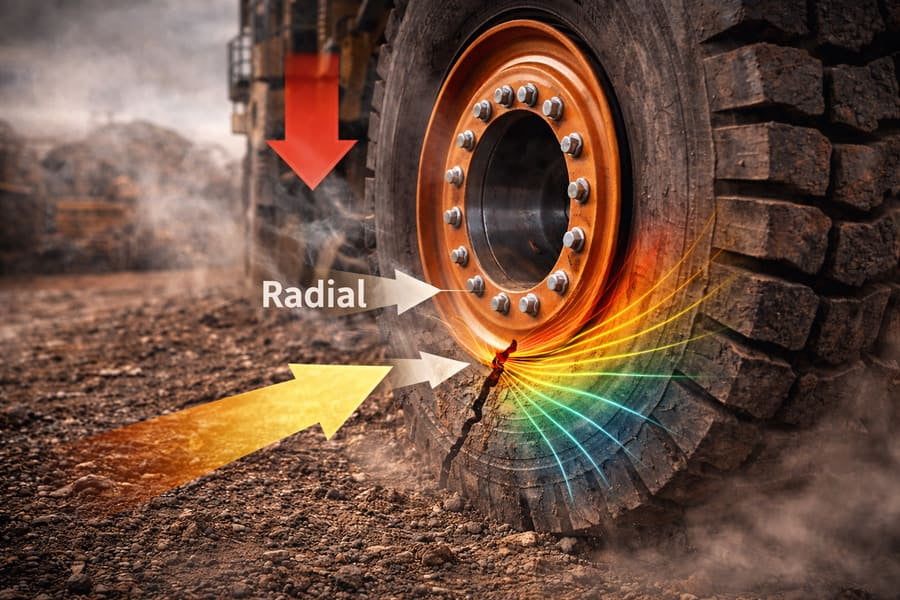
Real-world loads are never isolated. In the field, different forces are combined and overlapping—cycling, impact, and multi-directional stress5 all happen together. Most standards test2 these forces one at a time, if at all, missing the dangerous combinations.
Imagine you're driving your truck. You're carrying a heavy load (radial load), turning a corner (side thrust), and you hit a pothole (sudden impact). All three forces hit the wheel at the exact same moment. A standard test might check the radial load capacity and maybe a separate impact test. But it almost never simulates what happens when all of these forces combine. It's this combination of stresses that finds the true weak point in a wheel's design, a point that isolated testing will always miss. As a supplier, we can't just rely on the certificate; we have to understand how our clients actually use their equipment.
Critical Load Combinations Standards Miss
These are the failure scenarios6 that keep fleet managers up at night, and they happen because tests look at the world too simply.
- Radial Load + Circumferential Tension: The weight of the vehicle is pressing down while the tire's air pressure is pushing outwards. This combined stress attacks weld points7 from two different directions.
- Cyclic Load + Sudden Impact: The wheel is already weakened by millions of normal flex cycles when it suddenly hits a rock. The fatigue makes it far more likely to crack from the impact.
- Off-Center Loading + Stiffness Differences: Turning or operating on uneven ground puts more stress on one part of the wheel. This uneven load is amplified by the stiff weld zones, creating a massive stress concentration.
These aren't rare events; they are everyday occurrences on any job site.
If a Wheel Is Compliant, Isn't a Failure a Defect?
A compliant wheel fails, so your first thought is it must be a manufacturing defect. But when the analysis comes back showing good welds and materials, you're left without an explanation.
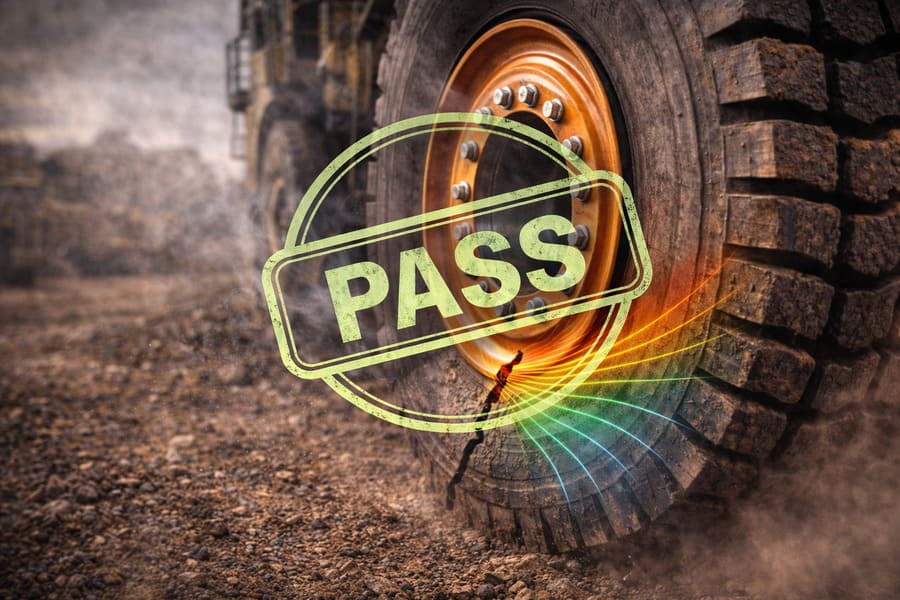
"Compliant" does not mean "invincible." Most failures don't happen because the wheel broke a rule. They happen because the real-world operational stresses8 exceeded what the standard was ever designed to protect against.
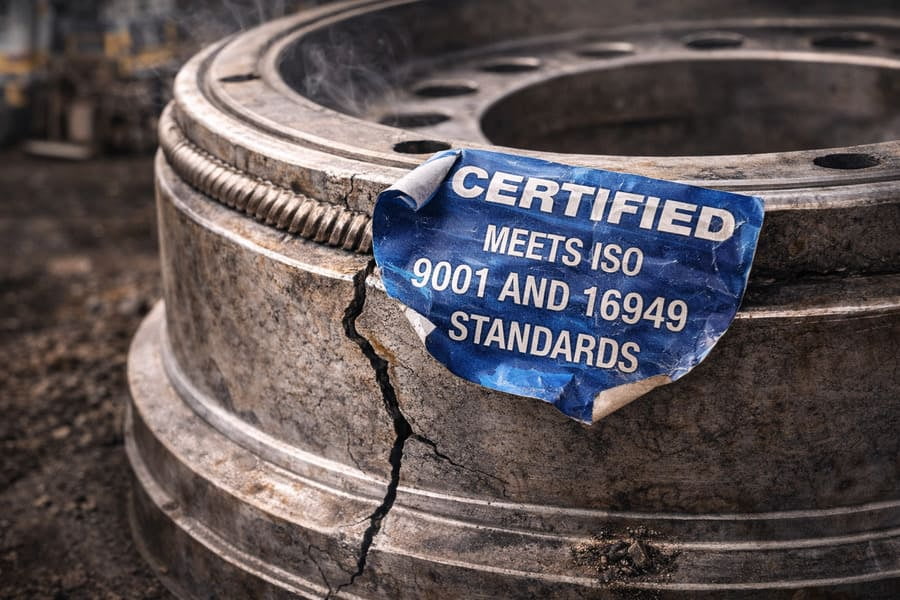
This is the most important lesson I've learned. The standards are not the finish line; they are the starting line. A reliable supplier knows that compliance is the absolute minimum requirement. True quality comes from designing and engineering a wheel that goes far beyond the standard. It means using Finite Element Analysis (FEA)9 to simulate those complex, combined loads. It means understanding the customer's specific application—the loads, the terrain, the duty cycles—and providing a solution engineered for that reality, not just for a lab test. When a wheel fails, the question shouldn't just be "Was it compliant?" but "Was it designed for the job it was actually doing?"
Moving Beyond the Standard
To reduce risk, you need to change your perspective on what quality means.
- From Compliance to Performance: Don't just ask for a certificate. Ask for performance data10, case studies, and evidence of testing that simulates your conditions.
- From Product to Partner: Work with suppliers who understand engineering and application, not just trading. A good partner helps you select a wheel that is not just compliant, but appropriate.
- From Minimum to Optimal: A standard defines the floor of quality. Your operation's efficiency and safety depend on aiming for the ceiling.
Conclusion
Relying on standards alone is a risk. True OTR wheel reliability comes from engineering for real-world, combined forces, not just passing a minimum, one-time test in a lab.
Explore this link to understand the critical role OTR wheels play in ensuring operational efficiency and safety. ↩
Learn about the limitations of standards tests and how they impact wheel performance in real-world conditions. ↩
Discover how cyclic loading contributes to wheel fatigue and potential failures in heavy machinery. ↩
Understanding metal fatigue is crucial for preventing wheel failures; explore this resource for in-depth insights. ↩
Explore the complexities of multi-directional stress and its impact on wheel durability in the field. ↩
This resource outlines typical failure scenarios, helping you to anticipate and mitigate risks. ↩
Learn about the significance of weld points in ensuring the structural integrity of OTR wheels. ↩
Understanding these stresses is key to preventing failures; explore this link for detailed explanations. ↩
Discover how FEA helps in simulating real-world conditions for better wheel design and performance. ↩
This resource highlights the importance of performance data in choosing reliable OTR wheels for your operations. ↩