
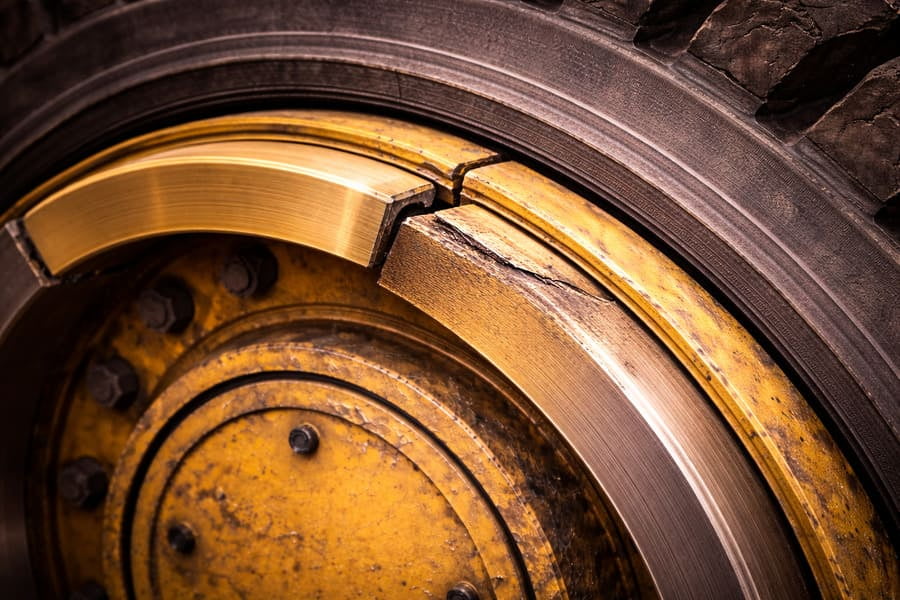
Think a side ring is just another part holding the tire on? This common mistake can lead you to overlook critical signs of wear, setting the stage for unexpected, costly failures.
The primary role of a OTR wheel side ring1 is not locking but load bearing2. It is an engineered structural component designed to absorb and distribute the massive axial and radial forces from the tire bead3 across the entire wheel assembly4.
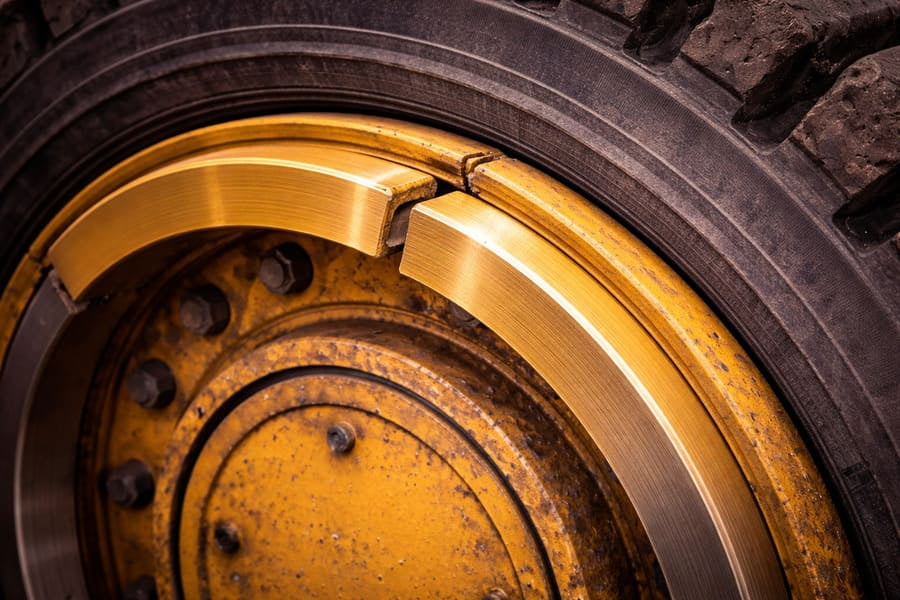
I was once called to investigate a series of recurring cracks on a customer's wheel bases. They had tried everything, even switching to a more expensive wheel brand, but the problem persisted. The maintenance logs showed no major incidents. As I inspected the scrap pile, I noticed something subtle. The discarded side rings were slightly warped, showing signs of deformation near the bead seat5 area. The crew had been reusing them because they "still fit." They didn't realize the bent side ring was the root cause, silently transferring stress to the wrong parts of the wheel and destroying it from the inside out.
What's the First Line of Defense Against Tire Stress?
It’s easy to assume the forces from a massive OTR tire spread out evenly. In reality, the load is concentrated on one component first, and it's not the one most people think.
The OTR wheel side ring1 is the initial interface for the tire's force. During inflation and under load, the tire bead3 transfers its immense stress directly to the side ring before it reaches any other wheel component.
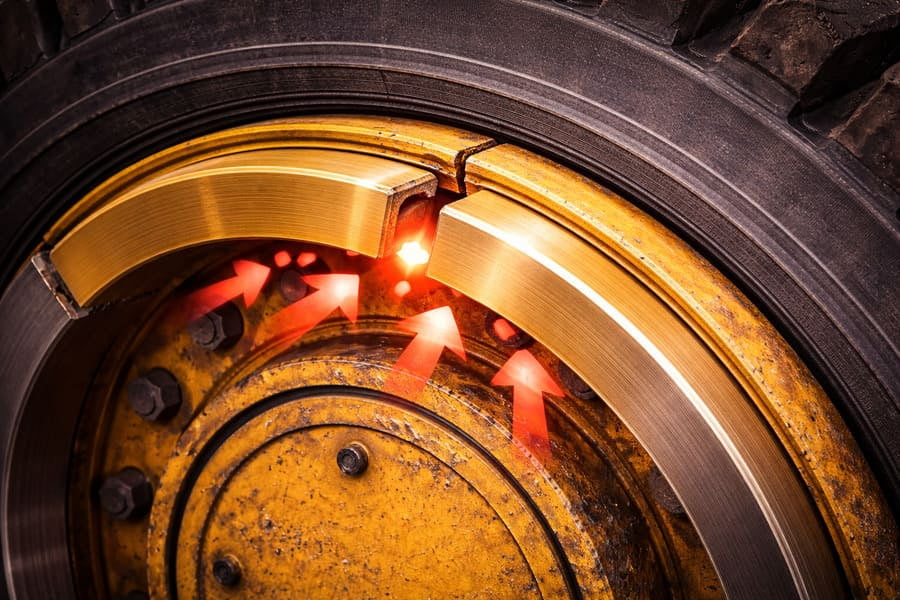
Think about what happens during tire inflation. The air pressure forces the tire bead3 outwards with incredible power. The very first thing that stops this movement is the side ring. Its specific geometry, particularly the bead seat angle, is precision-engineered to catch and absorb this initial force. It takes both the outward push (axial force) and the downward pressure (radial force) from the tire. Only after the side ring has properly seated and managed this initial load does the force get transferred safely to the rest of the wheel assembly4. It acts like a crucial buffer, protecting the other components from the direct, raw impact of tire pressure and operational loads. Without it taking that first hit, the entire system would be unstable.
How Does a Damaged Side Ring Compromise the Whole OTR Wheel?
A slightly bent or worn side ring might seem like a minor cosmetic issue. But this small imperfection secretly reroutes massive forces, turning the entire wheel into a structural liability.
A deformed side ring fundamentally alters the OTR wheel's load path6. Even minor geometric changes redistribute forces to areas not designed to handle them, creating stress concentrations7 that can lead to catastrophic failure.
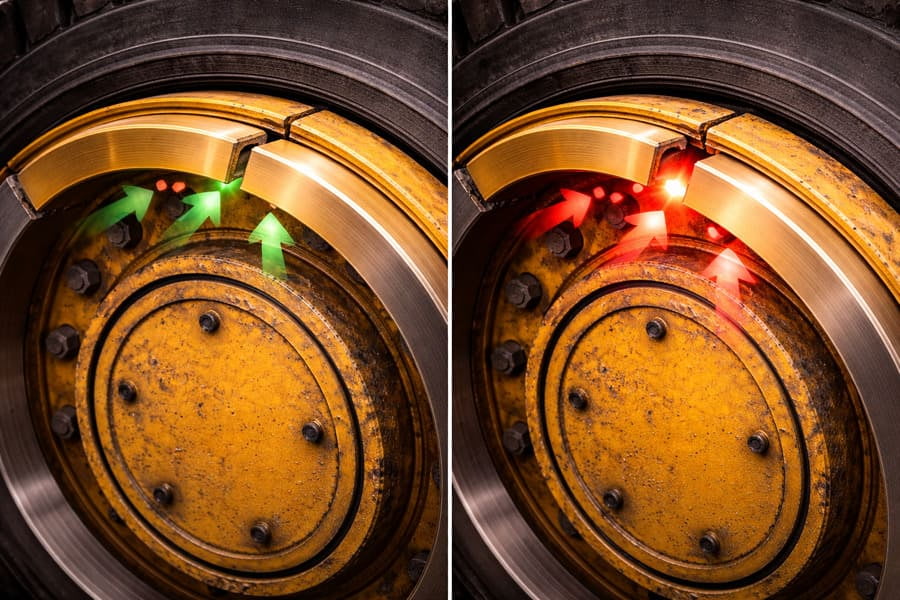
A OTR wheel assembly4 is a precisely balanced system. The side ring, bead seat band, and lock ring are designed to fit together perfectly, creating a specific route for forces to travel safely. When a side ring is bent—even by a few millimeters—that perfect fit is gone. A gap might open up, or a sharp edge might become a pressure point. Now, the load from the tire bead3 can no longer follow its intended path. Instead, it gets concentrated on a small section of the lock ring or the bead seat band. This is incredibly dangerous. These components aren't designed for such concentrated stress. This leads to metal fatigue8, cracking, and eventual failure of a part that appears to be unrelated to the original bent side ring.
Why Do Side Ring Problems Cause Delayed Failures?
You might inspect a OTR wheel with a damaged side ring, and it looks fine. This creates a false sense of security, but the damage is silently accumulating with every rotation.
OTR wheel Side ring issues rarely cause immediate, explosive failure. Instead, they introduce progressive deformation9 and fatigue, with the consequences appearing much later—often long after the original cause has been overlooked.
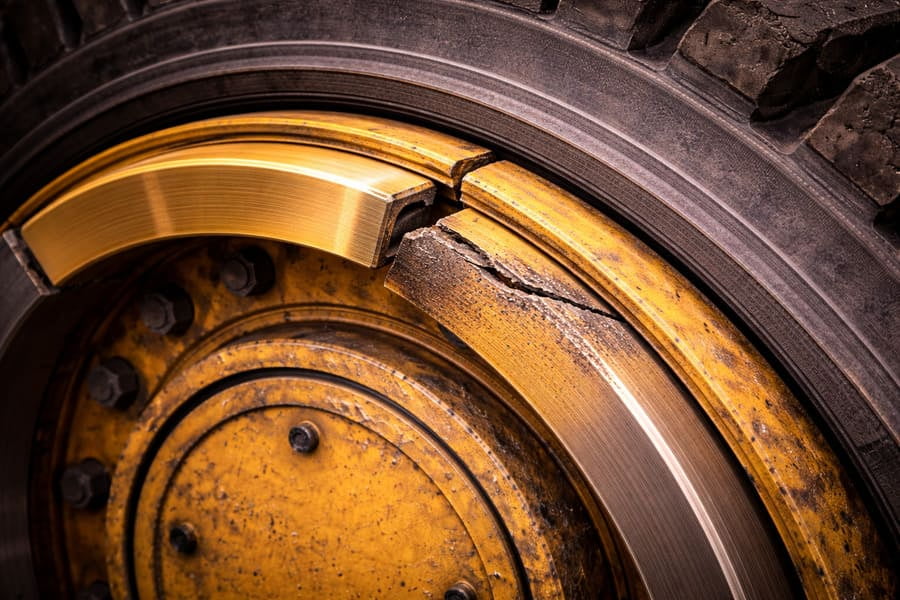
Unlike an explosive tire blowout, a faulty side ring starts a slow, methodical process of destruction. The altered load path6 doesn't cause the OTR wheel to fail instantly. Instead, it begins a cycle of fatigue damage. With every single rotation, the incorrectly loaded parts of the wheel are bent and stressed in ways they were not designed for. This might go on for hundreds or thousands of hours. You won't see any issue during a daily walk-around inspection. But inside the steel, microscopic cracks are forming and growing. Eventually, one of these cracks will reach a critical size, and the component will fail. By the time this happens, the maintenance team might blame the failed part, never realizing the true culprit was a damaged side ring that was installed months or even years earlier.
| Failure Stage | Visible Signs | Hidden Damage | Consequence |
|---|---|---|---|
| Initial Damage | Slightly bent or worn side ring | Load path is altered immediately | None yet. The system seems to work fine. |
| Fatigue Accumulation | None, or minor fretting corrosion | Micro-cracks form in other components | The wheel's lifespan is being silently reduced. |
| Progressive Wear | Uneven tire wear, vibration | Cracks grow larger with each stress cycle | Performance degrades, but failure is not yet catastrophic. |
| Final Failure | Crack appears on bead seat or lock ring | A component's structural integrity10 is gone | Sudden, unexpected failure of the wheel assembly4. |
Conclusion
The side ring is a critical load-bearing part, not just a spacer. Inspecting it for damage and replacing it when necessary is essential to protect the entire wheel and ensure long-term operational safety.
Understanding the role of the OTR wheel side ring can help you appreciate its importance in tire safety and performance. ↩
Exploring the significance of load bearing can enhance your knowledge of wheel assembly dynamics and safety. ↩
Learning about tire beads can provide insights into how they interact with other wheel components. ↩
Learning about wheel assembly components can improve your knowledge of vehicle safety and maintenance. ↩
Discovering the causes of deformation can help in preventing future wheel failures. ↩
Understanding load paths can enhance your grasp of how forces are distributed in mechanical systems. ↩
Understanding stress concentrations can help you identify potential failure points in wheel assemblies. ↩
Learning about metal fatigue can help you recognize the signs of wear in mechanical systems. ↩
Exploring progressive deformation can help you understand how small issues can lead to major failures. ↩
Understanding structural integrity is crucial for ensuring the safety and longevity of mechanical systems. ↩