
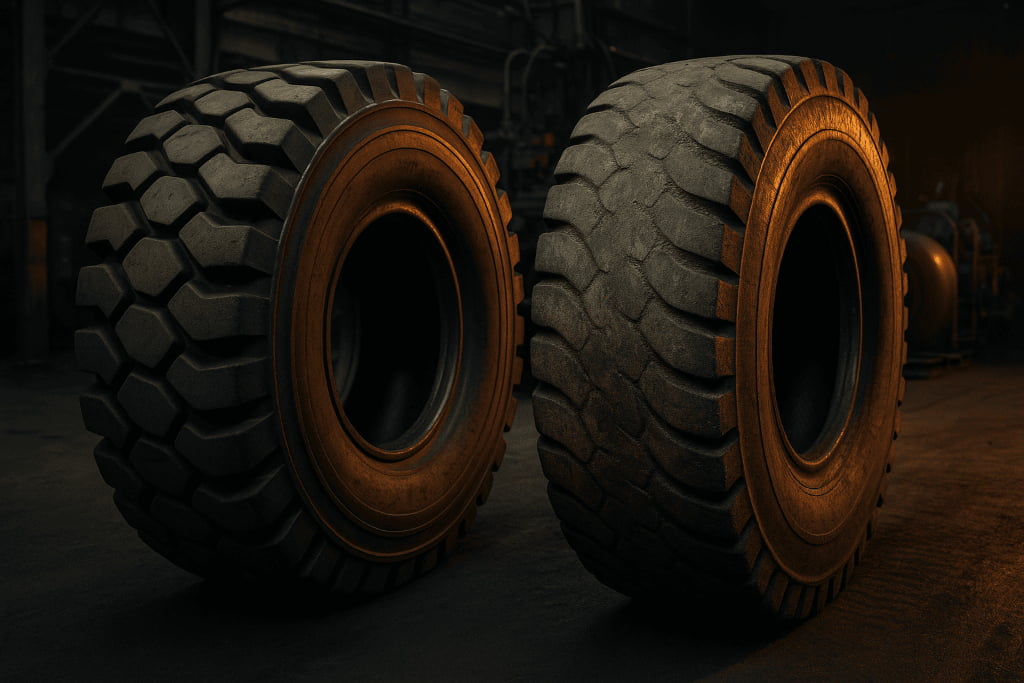
It’s a frustrating situation. You receive a shipment of OTR tires1, all from the same batch, yet some fail prematurely. This inconsistency creates warranty headaches and erodes customer trust.
Performance differs even within the same batch due to invisible variations. Tiny shifts in rubber compound mixing2, manual casing construction3, and slight changes in the curing process4 are the primary causes of these unpredictable differences in durability and wear life.
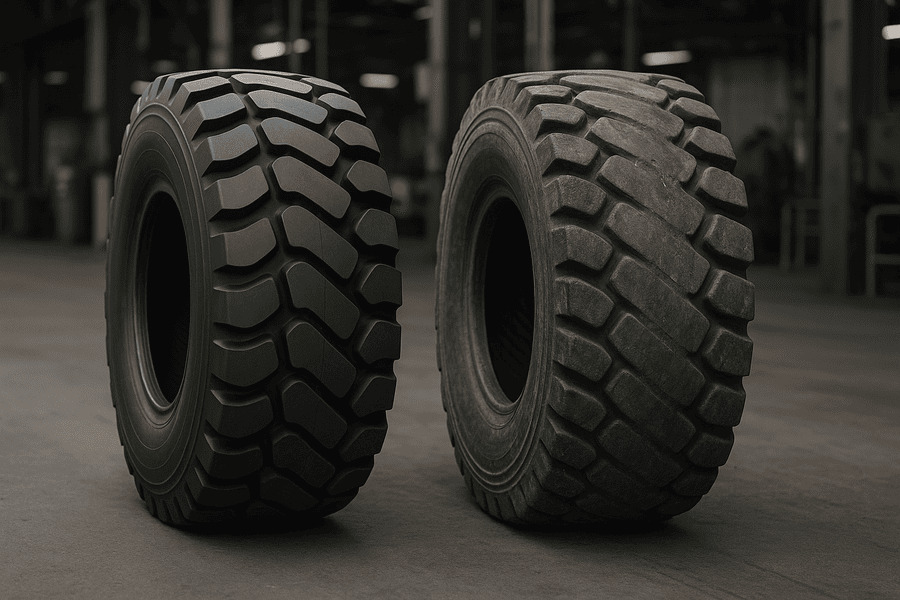
As a procurement manager, you stake your reputation on reliability. When tires from the same production run don't perform equally, it points to deeper issues in the manufacturing process. I've spent years diagnosing these exact problems with suppliers. A client once told me, "It feels like a lottery, not a supply chain5." He was right. Let's pull back the curtain on the five key factors that turn a seemingly uniform batch into a game of chance.
How Can the Rubber Compound Vary Within the Same Batch?
You assume "same batch" means identical material. But when one tire resists cuts and another doesn't, it points to a problem that started before the tire was even built.
Compound variation happens when ingredients like carbon black6 or oils are not perfectly dispersed in the rubber mixer. Even a 1% difference can change the tire's heat resistance and durability, creating performance gaps7 between tires made from the same master batch.
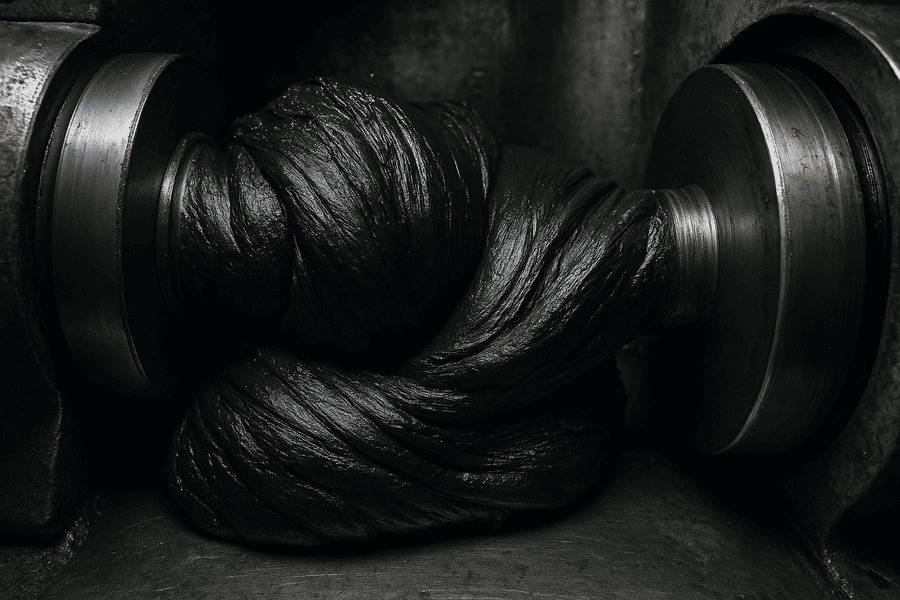
I once investigated a case where tires used in a hot climate were failing at different rates. We traced it back to the mixing room. The factory's equipment wasn't ensuring perfect dispersion in every batch of compound. The tires with slightly more accelerator8 were curing faster but becoming brittle, while others were more resilient. This is why at Gescomaxy, we insist on testing not just the raw materials, but samples from the mixed compound itself. Consistency starts here. If the foundation is variable, the final product will be too.
The Science of Small Differences
A tire's formula is like a recipe. If you add a little too much or too little of one ingredient, the result changes. In OTR tires1, these small changes have big consequences.
| Component | Variation (e.g., ±1%) | Performance Impact |
|---|---|---|
| Carbon Black | Inconsistent dispersion | Creates hard/soft spots, leading to uneven wear. |
| Oils | Lower than specified | Harder compound, becomes brittle and prone to cracking. |
| Accelerator | Higher than specified | Cures faster and harder, reducing fatigue life. |
A supplier who only tests raw materials is missing half the picture. You need one that validates the compound after it's mixed.
How Do Technicians Introduce Differences During Tire Building?
The tire looks perfect coming off the line. But hidden stresses built into its structure by hand can determine whether it lasts 1,000 hours or 3,000 hours under the same conditions.
OTR tire building is a manual craft. Each technician applies plies with slight differences in tension, overlap, and splice angles. These small inconsistencies in the tire's skeleton, or 'green tire,' affect how it handles load and can lead to uneven wear and premature failure.
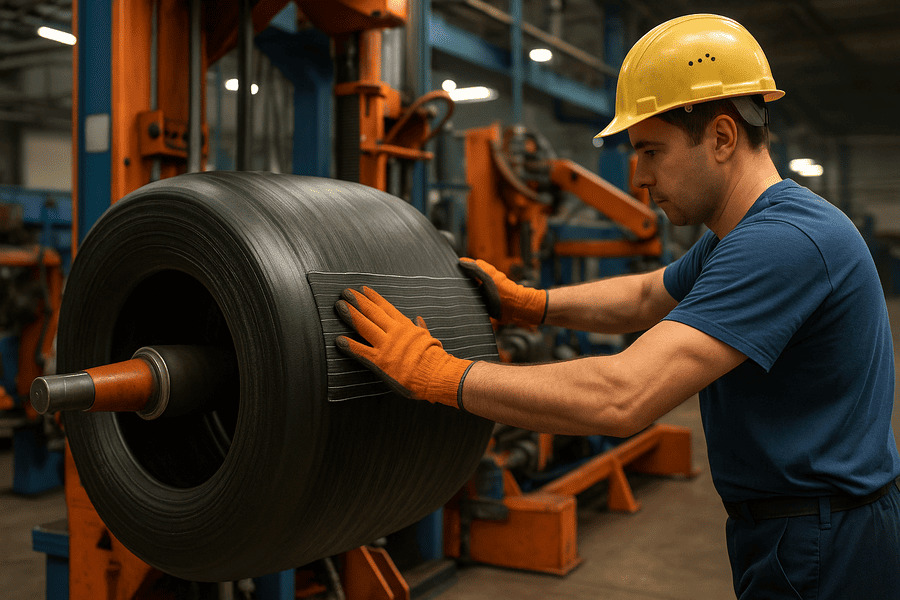
I've stood on factory floors and watched five different technicians build the same model of tire. While they all follow the same procedure, there are subtle, human differences—like a baker kneading dough. One might pull a ply slightly tighter, another might align a splice with microscopic imprecision. These aren't mistakes, but human variations. A top-tier factory minimizes this by investing heavily in technician training, using laser guides for alignment, and implementing multiple inspection points during the build process, not just at the end. This is how you control the "art" part of tire building with science.
The Blueprint for a "Green Tire"
The "green tire" is the assembled but uncured tire. Its uniformity is critical for the final performance.
- Ply Tension & Overlap: Uneven tension creates internal stress points. When the tire is under load, these stresses concentrate and can lead to belt separation.
- Splice Angle: The point where layers are joined is a potential weak spot. An incorrect angle can cause a bulge or a weak seam that fails over time.
- Bead Seating: If the bead isn't perfectly seated before curing, the tire won't mount correctly on the rim. This leads to wobbling, uneven load distribution, and rapid wear.
A good supplier doesn't just build tires; they build them within extremely tight tolerances at every manual step.
Why Are Curing and Molds a Final Source of Variation?
The tire is built, but the final, most crucial transformation is still to come. You might think this stage is fully automated, but hidden variables can still sabotage consistency.
Slight differences in curing press temperature9 or time, along with mold wear10, create inconsistencies. Just a few degrees or minutes can alter rubber elasticity, while a worn or dirty mold causes uneven heat transfer, resulting in inconsistent tread hardness across the batch.
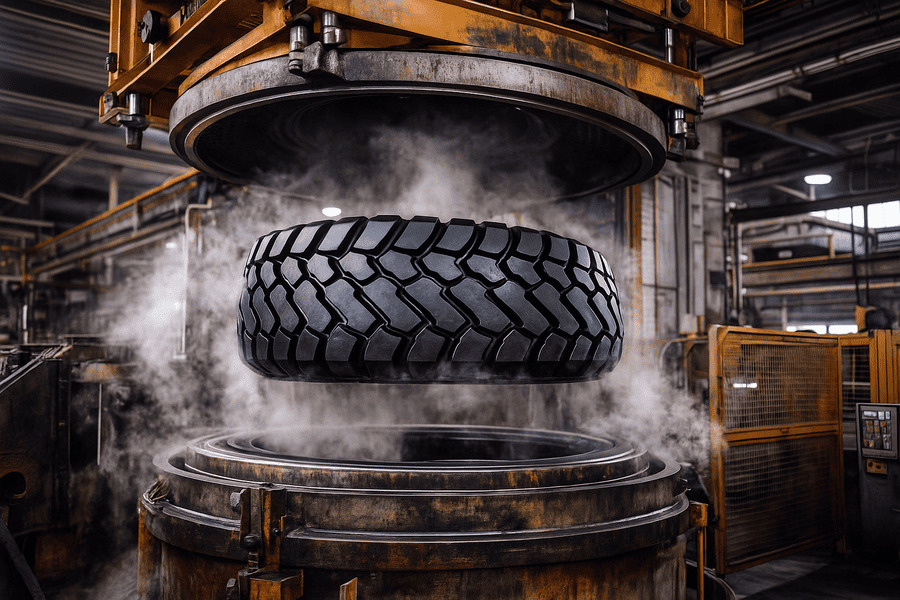
This is one of the most overlooked areas. I audited a supplier where tires from one specific press were consistently underperforming. We discovered a faulty temperature sensor on that machine; it was running a few degrees cooler than the others. The tires looked identical, but they were essentially under-cooked and wore out faster. Similarly, molds get microscopic residue buildup over time, which affects heat transfer. Without a strict mold cleaning and maintenance schedule, you get inconsistent curing. This is why we demand automated monitoring and data logging for every single curing press from our partners.
The Final Transformation
Curing is where the tire gets its final properties. It’s a chemical reaction under heat and pressure, and precision is everything.
| Factor | Variation | Impact on Tire Performance |
|---|---|---|
| Curing Temperature | A few degrees too low | Under-cured, soft rubber, wears quickly. |
| Curing Time | A few minutes too long | Over-cured, brittle rubber, prone to cracking. |
| Mold Condition | Worn or dirty surface | Uneven heat transfer, inconsistent tread hardness. |
| Bladder Pressure | Slight pressure drop | Incomplete mold fill, can cause cosmetic or structural defects. |
Controlling these final steps is the last line of defense against in-batch inconsistency.
Conclusion
Same-batch performance variation isn't random; it's caused by invisible factors in materials, manual assembly, and curing. Only a supplier with obsessive process control and data tracking11 can deliver true consistency.
Explore this link to understand the significance and applications of OTR tires in various industries. ↩
Learn about the critical role of rubber compound mixing in determining tire durability and performance. ↩
Discover the importance of casing construction in ensuring tire reliability and performance. ↩
Understand how the curing process impacts tire quality and longevity. ↩
Explore the complexities and challenges faced in the tire supply chain for better understanding. ↩
Explore the significance of carbon black in enhancing tire performance and durability. ↩
Find out the factors leading to performance gaps in tires and how to mitigate them. ↩
Discover how accelerators influence the curing process and tire durability. ↩
Understand the importance of curing press temperature in achieving optimal tire quality. ↩
Explore how mold wear can lead to inconsistencies in tire production. ↩
Find out how data tracking can enhance consistency and quality in tire manufacturing. ↩