
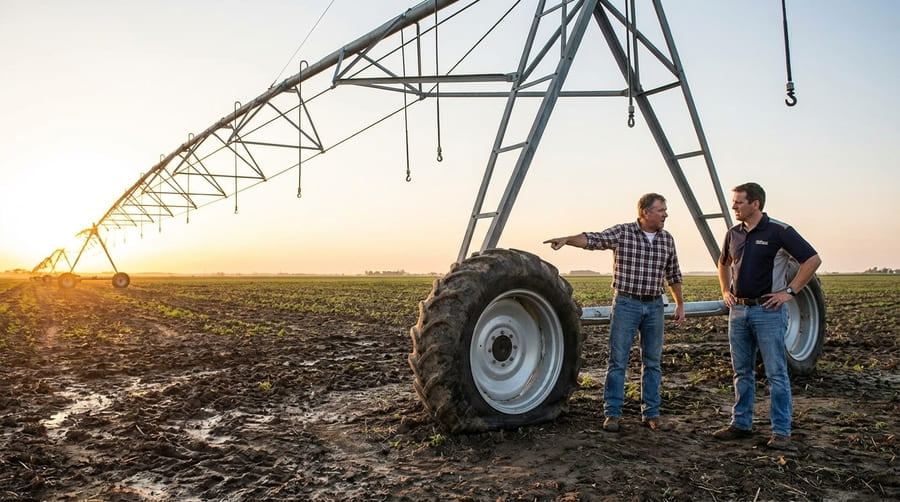
Peak season is coming. You feel prepared, but then a irrigation tire fails on a key customer's pivot. The customer blames the tire, the supplier questions the operating conditions, and you're caught in the middle with no proof.
Before peak season, you must record irrigation tire technical data1 (pressure, load, install date), document the working conditions2 (slopes, soil, ruts), and analyze old tire failure patterns3s](https://www.arxiv.org/pdf/2506.04654v1)%%%FOOTNOTE_REF_4%%%. This proactive documentation5 creates a baseline that protects your business from disputes and unexpected downtime.
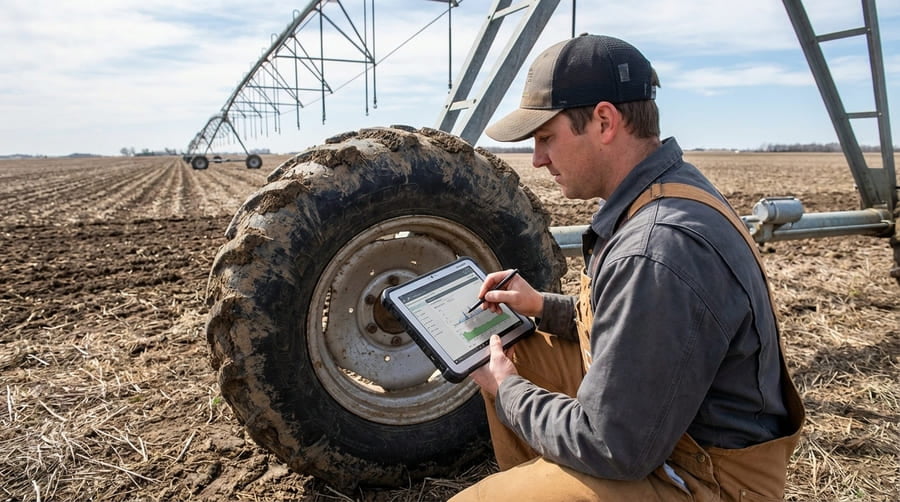
A few years ago, a dealer I work with faced a nightmare scenario. A whole set of irrigation tires on a new pivot wore out in a single season. The farmer was furious and demanded a full, free replacement. The dealer was looking at a huge loss. But because he had followed a pre-season checklist6, he had photos of the field's steep hills and deep, muddy ruts, and a log of the tire pressure7s he had set. He was able to show the farmer and us, the supplier, that the wear was due to extreme conditions, not a tire defect. We worked out a fair compromise, but without that data, he would have been forced to cover the entire cost himself. That's when I realized that a few hours of prep work is worth weeks of headaches later.
Why Is a Simple Tire Log Your Most Powerful Tool?
A tire fails mid-season and a dispute begins. You can't recall the exact installation date8 or the initial pressure setting, instantly weakening your position and turning a technical issue into a guessing game.
A simple log with tire pressure7, load conditions9, rim model10, and installation date8 creates a powerful technical baseline. It transforms subjective arguments into objective, data-driven evaluations, protecting you from unfair claims.
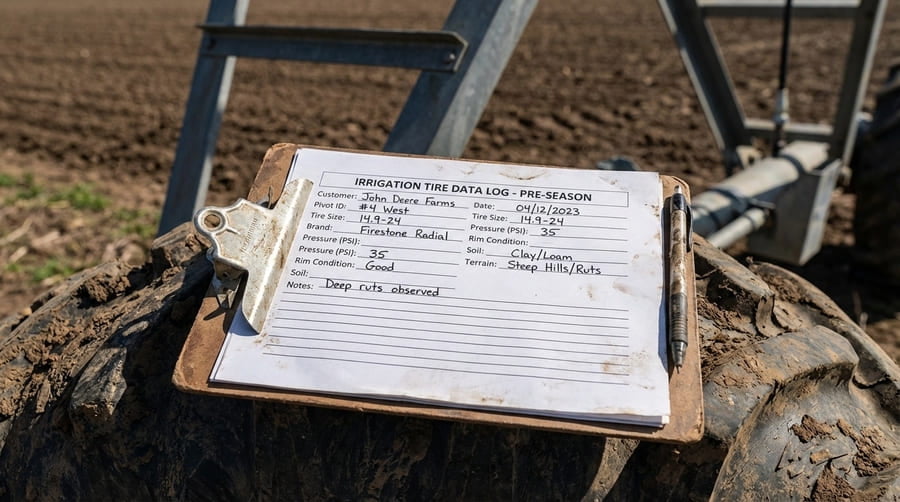
The most powerful tool in any irrigation tire dispute isn't a strong opinion; it's a simple logbook. When a problem arises, the first questions a supplier will ask are, "What was the inflation pressure?" and "When was it installed?" If your answer is "I'm not sure," your credibility is gone. But if you can pull up a record showing the tire was installed on April 15th with a pressure of 20 PSI on a specified rim model10, the entire conversation changes. You are no longer just a dealer defending a sale; you are a technical professional presenting facts. This baseline data is your first line of defense. It proves you did your job correctly from the start. It shifts the focus from blaming you to analyzing the facts, which is exactly where you want the conversation to be.
Your Pre-Season Data Baseline
| Data Point to Record | Why It Protects You |
|---|---|
| Inflation Pressure | Proves the tire was set to the correct specification, ruling out the #1 cause of failure. |
| Load Condition | Documents if the pivot has extra equipment, explaining potential overload stress. |
| Rim Model & Condition | Confirms the tire was mounted on a compatible and undamaged rim, avoiding bead issues. |
| Installation Date | Establishes a clear start date to accurately measure the tire's service life. |
How Can Documenting the Field Itself Save You Money?
A tire on a pivot shows rapid, unusual wear, and the customer immediately blames the irrigation tire's quality. You suspect the harsh field conditions11s](https://arxiv.org/html/2505.17310v2)%%%FOOTNOTE_REF_12%%% are the real problem, but you have no way to prove it.
Documenting field conditions12 like steep slopes, soft soil, deep ruts, and high turning frequency provides critical context. This data allows you to analyze abnormal wear objectively, shifting the blame from the product to the application.
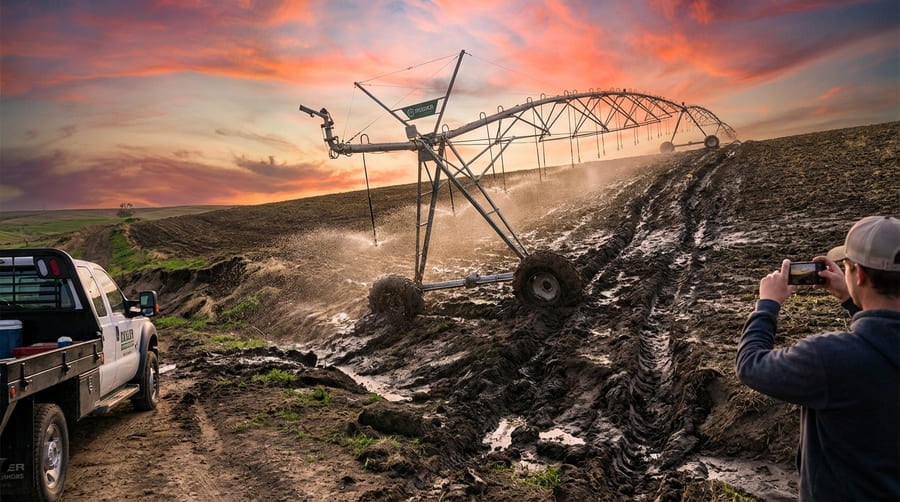
The irrigation tire is only one part of a complex system. The environment it operates in is just as important. A irrigation tire that lasts five years on a flat, dry field might only last two on a wet, hilly one. Before the season starts, walk the pivot path with your phone and take pictures. Document the steep grades, the muddy patches, and the sharp turns the end tower has to make. Note if the soil is sandy and abrasive or deep and soft. This information is not just "nice to have"; it's your evidence. When a tire wears out prematurely and you can show photos of it constantly fighting its way through deep ruts, it becomes clear that the wear is a result of the job it was asked to do. This context protects you from unfair quality claims and helps you educate your customer on why a more robust tire might be needed for their specific conditions, turning a problem into an upsell opportunity.
Do Your Old Irrigation Tires Hold the Secret to Future Problems?
You replace a failed tire, toss the old one on the scrap pile, and move on. But six months later, the new irrigation tire fails in the exact same way, and you're left wondering why.
Yes, because documenting the failure patterns4 of old tires helps you identify recurring issues. A specific wear type, crack location, or bead damage pattern reveals root causes that isolated complaints will never show.
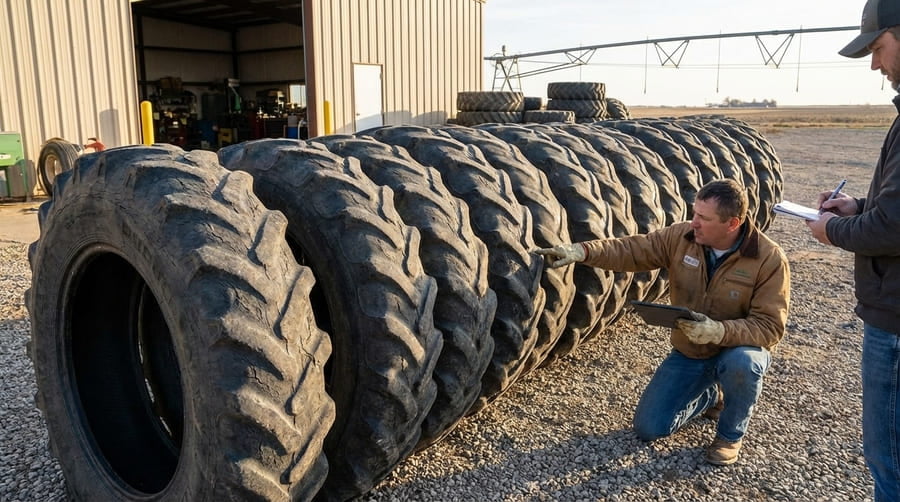
Your scrap pile is a library of information, but only if you take the time to read it. Don't just discard old, failed irrigation tires. Look at them. Is the tread worn evenly, or is one shoulder bald? A bald shoulder points to an alignment or inflation issue. Are there cracks forming at the base of the lugs? That could signal excessive stress from running in deep ruts. Is the bead area chewed up? That suggests a problem with the rim or improper mounting. When you see the same failure pattern on two or three irrigation tires from the same farm, you've moved beyond a random defect and have identified a systemic problem13. Taking photos of these old tires and noting the patterns helps you predict future risks. You can then address the root cause—like fixing the pivot's alignment—instead of just treating the symptom by replacing another irrigation tire.
How Do Records Define Who Is Responsible?
The busy season ends, and a customer disputes a tire failure. With no records, the argument becomes emotional and personal, and you might end up paying for something that wasn't your fault.
Clear records are a form of risk control14 that defines responsibility. The data determines if a failure is due to improper maintenance, harsh usage conditions, or a product defect15. When the season is over, data, not emotions, should decide liability.
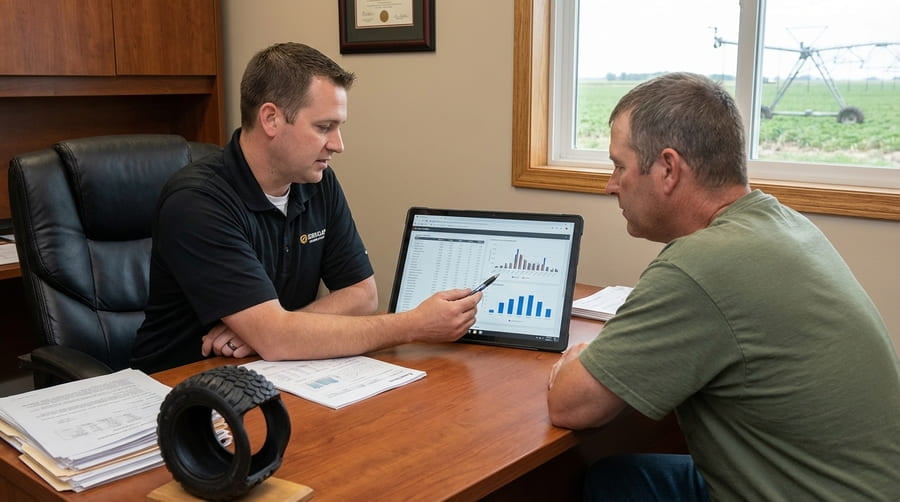
Documentation is not about creating more paperwork; it's about building a shield for your business. When you have a file that contains the pre-season pressure log, photos of the field conditions12, and notes on past failure patterns4, you have a complete story. This record creates clear boundaries of responsibility. If your log shows the pressure was set correctly but the tire failed, it points away from a maintenance error. If your field photos show extreme conditions, it points toward a usage issue. If the failure doesn't match the conditions and your maintenance was perfect, it strengthens the case for a product performance issue. This data protects you from unfair claims from customers and gives you the solid evidence you need to file a warranty claim16 with your supplier. In the end, good records ensure that decisions are based on facts, which is always better for business.
Conclusion
A few hours spent recording data before the season begins can save you thousands of dollars and countless hours of disputes. Proactive documentation is your best protection for a smooth, profitable season.
Understanding the significance of recording technical data can help prevent disputes and ensure smooth operations during peak season. ↩
Exploring how working conditions impact tire performance can help identify potential issues and improve maintenance strategies. ↩
Analyzing failure patterns can reveal recurring problems, allowing for proactive measures to prevent future tire failures. ↩
Identifying failure patterns helps address root causes, preventing recurring issues and improving tire performance. ↩
Proactive documentation prevents disputes and ensures efficient operations, saving time and money during peak season. ↩
A comprehensive checklist ensures all necessary data is recorded, protecting against disputes and unexpected downtime. ↩
Proper tire pressure is essential for optimal performance and longevity, reducing the risk of premature failure. ↩
Knowing the installation date helps measure service life accurately, aiding in maintenance and replacement decisions. ↩
Understanding load conditions helps explain potential stress on tires, preventing overload and ensuring proper maintenance. ↩
The compatibility and condition of the rim model are crucial for avoiding bead issues and ensuring tire longevity. ↩
Understanding the impact of harsh conditions can guide decisions on tire selection and maintenance strategies. ↩
Documenting field conditions provides context for tire wear, helping identify if issues are due to product or application. ↩
Identifying systemic problems allows for targeted solutions, preventing recurring issues and improving overall performance. ↩
Clear records define responsibility, ensuring decisions are based on facts rather than emotions, protecting your business. ↩
Proper documentation can distinguish between maintenance errors and product defects, aiding in warranty claims. ↩
Data provides solid evidence for warranty claims, ensuring fair resolutions and protecting against unfair customer claims. ↩