
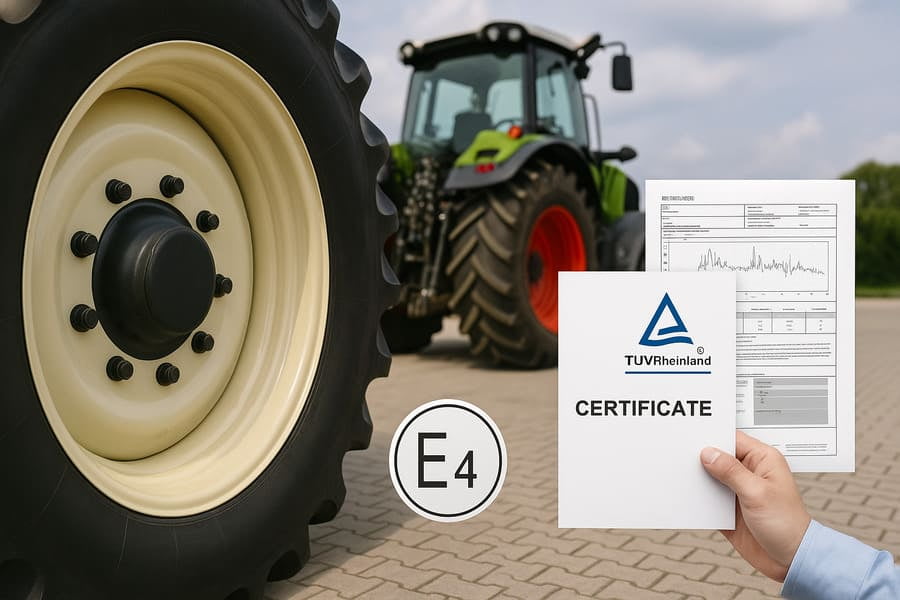
You're a European dealer, and a customer's new tractor just failed its road inspection. The reason? The wheels lack proper certification, exposing you to fines and damaging your reputation.
For European dealers, especially in Germany and France, E-Mark1 and TÜV certifications2 are non-negotiable. They are legal proof that an agricultural wheel meets strict safety and load standards for public road use3, preventing failed inspections, fines, and potential product recalls.
I'll never forget a conversation with a dealer in Germany. He was in a panic because a whole shipment of new implements was stuck at an inspection center. The machines were perfect, but the wheels had no documentation. The supplier had assured him they were "strong enough," but that's not how it works in Europe. Without the test reports and certifications, those machines were legally confined to the farm. They couldn't be driven on a public road to get from one field to another. It was a costly lesson for him: in Europe, "trust me" is not a compliance strategy. Proof is everything.
Why is "Homologation4" so important for agricultural wheels?
You might think wheels are a simple component, but once a tractor hits a public road, the rules change completely. Ignoring this can render a vehicle illegal and create huge liabilities.
Homologation4 is the official process of certifying that a component, like a wheel, meets all legal and safety standards5 for road use. Without it, the vehicle is not "road-worthy," invalidating insurance and exposing the owner and dealer to significant legal risks.
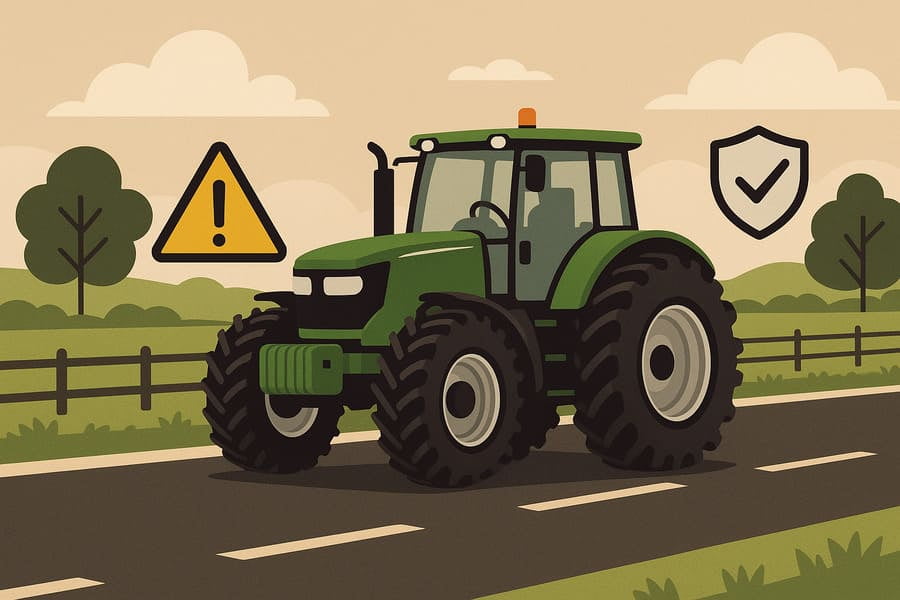
The moment an agricultural machine leaves a private farm and enters a public road, it ceases to be just farm equipment. It becomes a road vehicle, subject to the same fundamental safety principles as cars and trucks. "Homologation4" is the formal process that proves a vehicle and its critical components are safe for this transition. For wheels, this isn't just about being strong enough to not break. It involves rigorous testing to prove the wheel can handle its maximum rated load at a specified speed, endure fatigue cycles, and is manufactured with consistent, high-quality materials. It's the official stamp of approval that tells authorities, "This component has been tested and is safe for public use."
On-Farm vs. Public Road: A Compliance Snapshot
| Aspect | On-Farm Use | Public Road Use (EU) |
|---|---|---|
| Regulation Level | Low; focused on operational performance. | High; focused on public safety and vehicle law. |
| Wheel Requirement | Must be strong enough for the job. | Must be proven safe via homologation/testing. |
| Legal Risk | Low; primarily equipment damage. | High; fines, recalls, liability, voided insurance. |
| Proof Needed | Supplier's word may suffice. | Formal certificates (E-Mark1) or test reports (TÜV). |
How can you prove a wheel meets compliance standards?
A wheel from a distance looks like any other. Faced with a skeptical inspector, how can you provide immediate, undeniable proof that it's built for compliance and traceability6?
The first and most critical evidence is the permanent stamping7 on the rim. This includes the load rating8, production date, and manufacturer's logo. This stamp is the physical link between the wheel and its underlying compliance documentation9.
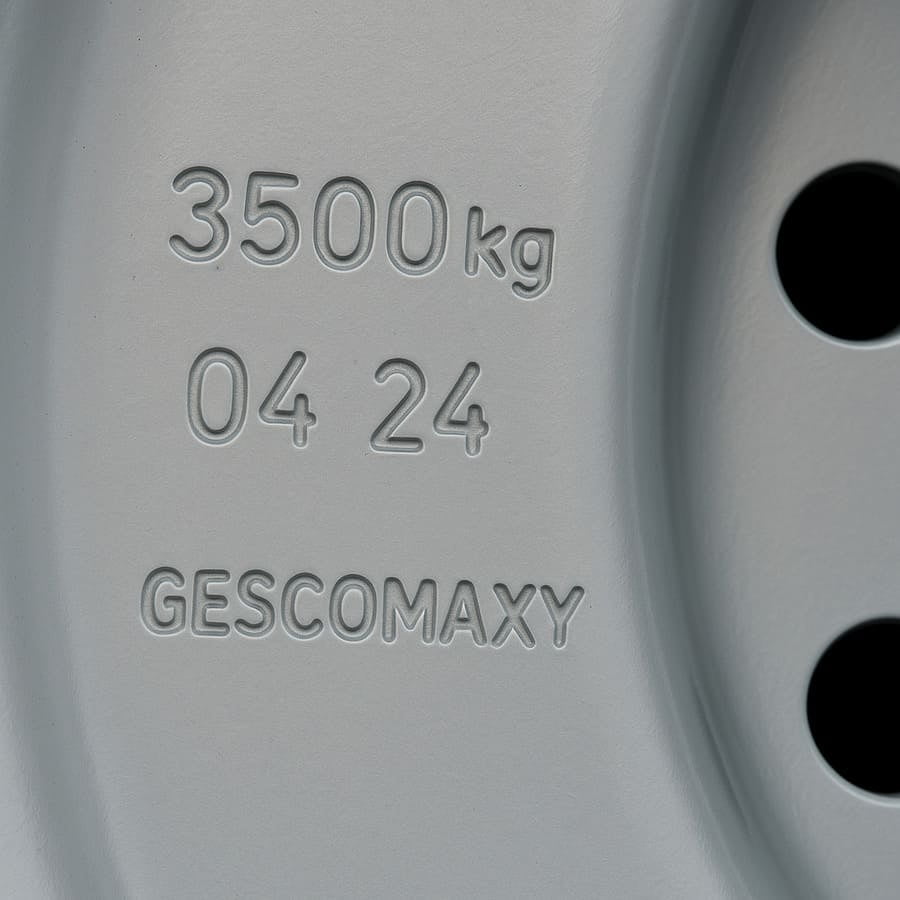
Before any certificate is issued, the manufacturing process must build in accountability. That's the function of permanent rim stamping. It’s a declaration of responsibility etched directly into the steel. The manufacturer's logo shows who made it. The production date provides full traceability6 back to the specific batch of materials and manufacturing shift. Most importantly, the load rating8 is a clear statement of the wheel's tested capacity. This isn't just for show; it's the foundational step for any formal certification. While we don't submit every single wheel model for expensive formal TÜV certification, our entire factory manufacturing process is built to meet those stringent standards. The stamping is our promise that the wheel's performance is backed by rigorous internal testing and quality control that mirrors TÜV's requirements.
How do we support OEM10s with full vehicle homologation?
As an Original Equipment Manufacturer (OEM10), you're responsible for certifying the entire vehicle, not just one part. Getting the right data from dozens of component suppliers can be a nightmare.
We actively support our OEM10 customers by providing a complete package of compliance documentation9 for our wheels. This includes material certificates and detailed laboratory test reports (e.g., fatigue, load testing11) needed to complete your full vehicle homologation smoothly.
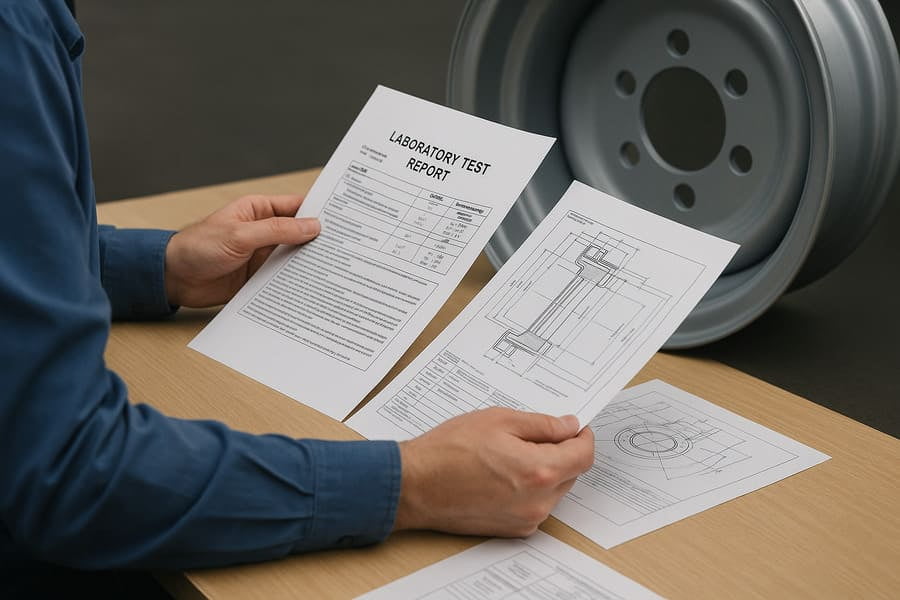
We see ourselves as partners in our OEM10 clients' success, not just parts suppliers. We understand that homologating a complete tractor or implement is a complex and document-intensive process. You need to prove to the authorities that every critical component is up to standard. To make this easier, we have a streamlined process to support you. For any wheels we supply, we can provide a comprehensive data package. This includes certificates for the steel we use, confirming its grade and properties, and our internal laboratory reports. These reports detail the results of our rigorous fatigue and radial load tests, which are performed according to internationally recognized testing protocols. By giving you this organized, professional documentation, we help you check off the "wheel" category in your homologation file, saving you time, money, and stress.
Conclusion
For European dealers and OEM10s, E-Mark1 and TÜV compliance for wheels are essential for business safety. We build our wheels to these standards and provide the traceability6 and documentation to prove it.
Understanding E-Mark certification is crucial for compliance and avoiding legal issues in Europe. ↩
Learn about TÜV certifications to ensure your agricultural wheels meet safety standards. ↩
Discover the regulations governing agricultural vehicles on public roads to avoid fines and legal issues. ↩
Explore the homologation process to understand its significance for road safety and compliance. ↩
Understanding safety standards is vital for compliance and protecting your business from liabilities. ↩
Discover the importance of traceability in ensuring compliance and quality in agricultural wheels. ↩
Find out how permanent stamping ensures compliance and traceability for agricultural wheels. ↩
Understanding load ratings is essential for ensuring the safety and performance of agricultural wheels. ↩
Explore the necessary compliance documentation to ensure your agricultural wheels meet legal standards. ↩
Learn about the responsibilities of OEMs in the homologation process for agricultural machinery. ↩
Learn about load testing to ensure agricultural wheels can handle their rated capacity safely. ↩