
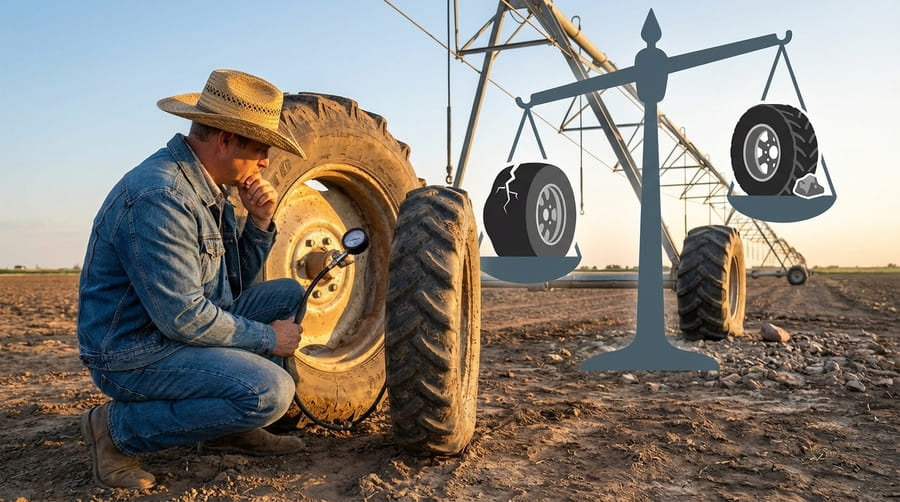
Confused about the right irrigation tire pressure1? Guessing between underinflation2 and overinflation is a gamble. One choice silently destroys your tires from the inside out, leading to catastrophic field failures.
While both are harmful, underinflation%%%FOOTNOTE_REF2%%% is typically more damaging for irrigation tires. It causes excessive [sidewall flexing](https://directpivotparts.com/blog/Irrigation-Tires-Knowing-Which-Tire-to-Use?srsltid=AfmBOoqaPKVNCeXg-gTcSlmn9fRVgFhCm0VnqF_2r5Zh6heSXCx9qDi)3, leading to internal structural fatigue4 and heat buildup5. This hidden damage accumulates over time, often resulting in a sudden, catastrophic failure during operation.
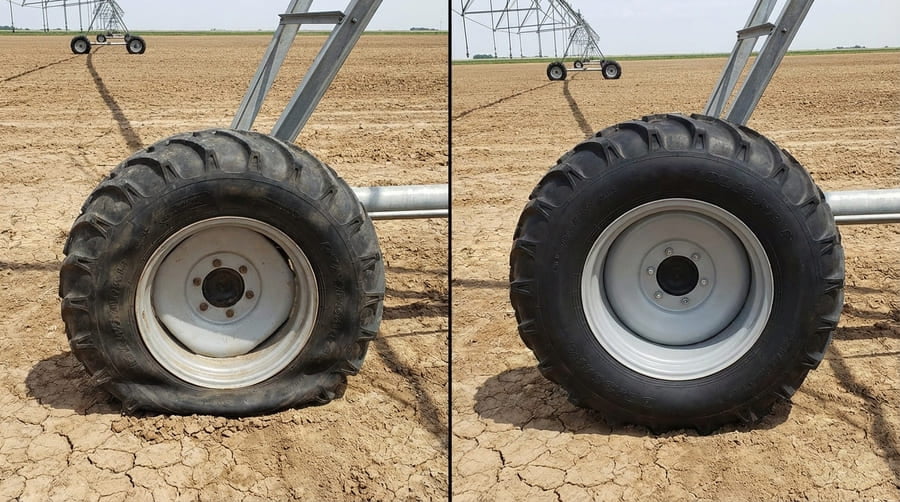
I once spoke with a procurement manager who was baffled by a series of irrigation tire blowouts. His team was diligent, always ensuring tires were firm to avoid punctures from rocks6. They were slightly overinflating them as a precaution. But the irrigation tires weren't failing from punctures; the sidewalls were literally tearing apart. They had traded one risk (impact damage7) for a much more insidious one (structural fatigue4 from underinflation2 on other tires they'd neglected), proving that not all pressure mistakes are created equal. This experience taught me that understanding how a tire fails is just as important as preventing the failure itself.
How Do Low and High Pressures Damage Irrigation Tires Differently?
You inflate your irrigation tires, but do you know what’s happening inside? The wrong pressure starts a distinct and destructive process, silently compromising your assets with every single rotation.
Underinflation causes the sidewall to over-flex, generating destructive heat and fatiguing the irrigation tire's internal structure. Overinflation makes the irrigation tire rigid, concentrating wear on the tread's center and making it extremely vulnerable to impact fractures from rocks or field debris.
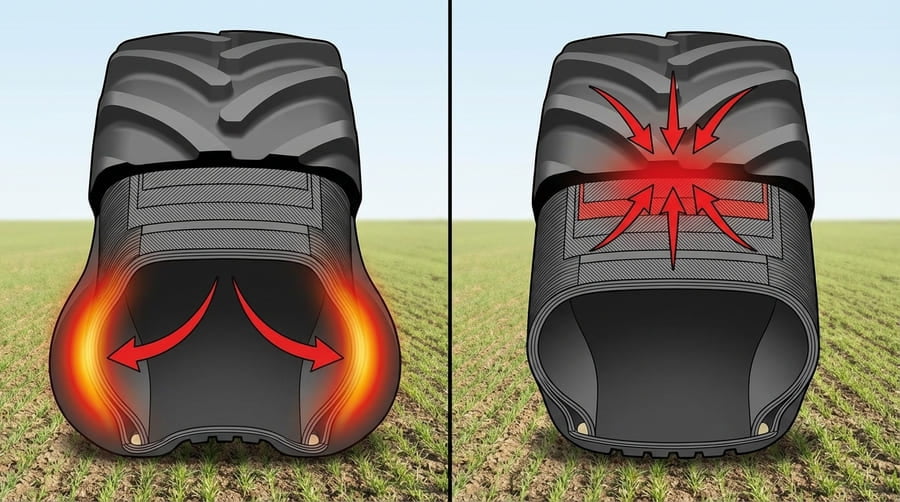
Thinking about irrigation tire pressure1 as just a number is a mistake. It’s about managing forces. A tire is designed to operate with a specific shape, maintained by the correct air pressure. When you deviate from that, you shift the load to parts of the irrigation tire that were never meant to handle it. This initiates two very different paths to failure. Underinflation is a slow death from exhaustion, while overinflation is a sudden death from shock. Neither is good, but understanding the mechanism helps you diagnose problems and prevent them.
The Two Paths to Irrigation Tire Failure
Let's break down exactly what happens to the tire's structure in each scenario.
| Feature Area | Underinflation Damage | Overinflation Damage |
|---|---|---|
| Sidewall | Excessive flexing causes heat, cracks, and fatigue. | Becomes rigid, transfers impact shock, less flexible. |
| Tread | Wears unevenly on the outer edges. | Wears excessively in the center, reducing traction. |
| Internal Cords | Stretch and break down from constant heat and flex. | Under extreme tension, prone to snapping on impact. |
| Primary Cause | Gradual structural breakdown from internal fatigue. | Sudden failure from external impact stress8. |
Why Is Underinflation a Sneakier Threat in Irrigation?
Your irrigation pivots move slowly, so you might think tire stress is low. But this slow, constant load creates a hidden danger that can destroy your tires without warning.
Underinflation is more severe in irrigation because the slow, continuous operation allows internal heat and structural fatigue4 to build up undetected. Unlike a fast-moving vehicle where you might feel a change, this damage accumulates silently until the tire's structure completely fails.
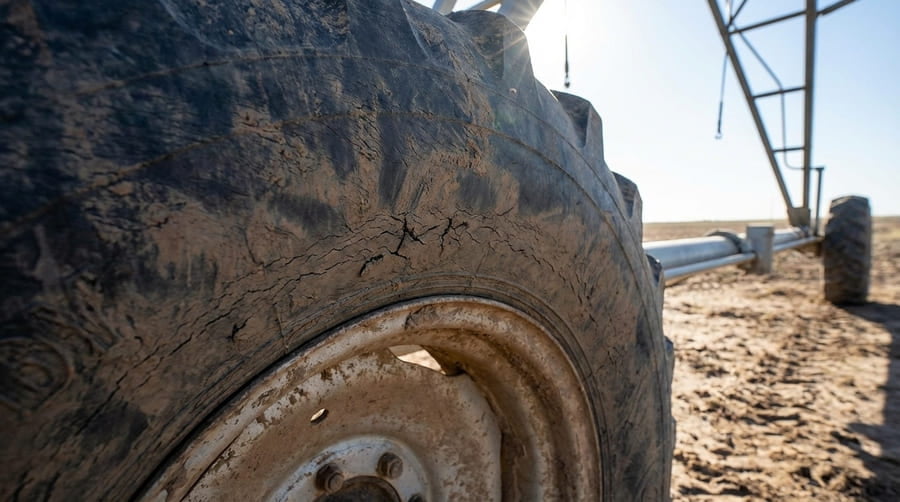
The danger of underinflation2 is all about heat. Every time the tire rotates, the overloaded sidewalls flex excessively. This flexing generates heat. In a high-speed application like a truck, that heat builds up very quickly and can be noticed. But in a low-speed, high-load irrigation system, the heat builds more slowly. It might not feel hot to the touch, but it's consistently cooking the rubber and weakening the internal polyester or nylon cords.
This process is invisible. There are often no external signs of a problem until it's too late. The tire holds air and appears functional, while inside, its structural integrity is being compromised with every single turn. This is why a tire that looked fine yesterday can have a catastrophic blowout today. It didn't fail suddenly; it failed gradually, and then all at once. The slow, relentless nature of irrigation work makes it the perfect environment for this hidden killer to thrive.
Are You Choosing Between Right and Wrong Pressures?
You might feel like you made a "mistake" by underinflating or overinflating a irrigation tire. But it's more productive to see this not as an error, but as a mechanical trade-off9.
Neither condition is simply right or wrong—they represent different failure mechanisms. Underinflation and overinflation are not moral failures but mechanical realities. Each one triggers a distinct and predictable path that leads to tire degradation and eventual failure.
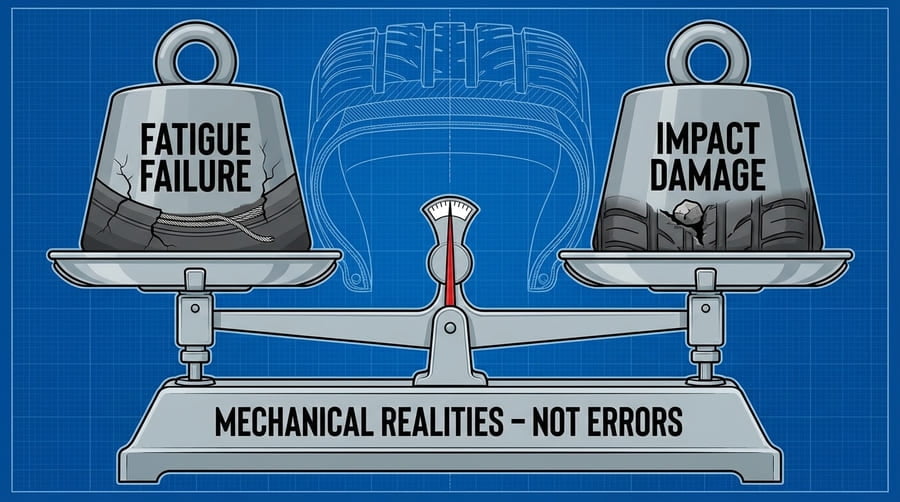
As a procurement manager, I've seen teams get frustrated by repeat tire failures, blaming bad luck or faulty products. But often, it comes down to the operational choices they made. When you choose a pressure level, you are inadvertently choosing a type of risk you are willing to accept. There is no single "perfect" pressure that eliminates all risk in all conditions. A pressure that protects you from rock punctures in a rough field might increase stress on your tread on a smooth pathway.
Viewing this as a trade-off is empowering. It moves you from a reactive mindset of fixing "broken" tires to a proactive one of managing predictable risks. You can't eliminate every possibility of failure, but you can understand the consequences of your choices. This lets you align your maintenance strategy with the most likely threats in your specific operating environment, turning you from a victim of circumstance into a manager of mechanical outcomes.
How Do You Decide on the Right Irrigation Tire Pressure?
If there's no single perfect pressure, how do you make the right call? The decision is not about finding a magic number, but about understanding your priorities and risk tolerance.
Choosing an irrigation tire pressure1 is ultimately a risk preference decision10. The key question is not "Which pressure is perfect?" but "Which consequence—fatigue failure11 or impact damage7—are you more prepared to manage in your specific operation?"
Your decision should be based on your field conditions and operational reality. If your fields are extremely rocky and you consistently suffer from impact-related punctures, running your tires at the higher end of the recommended range might be a calculated risk. You are accepting increased center-tread wear12 in exchange for better puncture resistance. Conversely, if your fields are smooth but your pivot carries a heavy load and runs for long periods, protecting against underinflation2-induced fatigue is your top priority.
Making a Risk-Based Choice
Here’s a simple framework to guide your decision-making process.
| Your Primary Concern | Your Risk Tolerance | Pressure Strategy Bias | What to Watch For |
|---|---|---|---|
| Punctures from rocks/debris | Willing to accept faster wear. | Lean towards Overinflation | Accelerated wear on the center of the tread. |
| Sudden blowouts / downtime | Willing to risk impact damage7. | Lean towards Underinflation | Any sign of sidewall cracking or bulging. |
Ultimately, you are choosing your preferred failure mode. By consciously making this choice, you can implement a targeted inspection plan to monitor for the specific signs of wear and stress associated with your strategy.
Conclusion
Underinflation is the more hidden and structurally damaging threat for most irrigation systems. Choosing the right pressure is not about perfection, but about managing risk to prevent catastrophic downtime13.
Understanding the right tire pressure can prevent costly failures and improve efficiency in irrigation systems. ↩
Learn how underinflation can lead to hidden structural damage and catastrophic tire failures. ↩
Discover how excessive sidewall flexing can lead to internal fatigue and tire failure. ↩
Understand the process of structural fatigue and how it leads to tire blowouts. ↩
Explore the reasons behind heat buildup and its impact on tire integrity. ↩
Discover strategies to minimize puncture risks from rocks through proper tire inflation. ↩
Find out how overinflation can make tires vulnerable to impact fractures from field debris. ↩
Learn about the effects of impact stress on tire structure and performance. ↩
Understand the trade-offs involved in selecting tire pressure and their impact on tire health. ↩
Learn how risk preferences can guide decisions on tire pressure settings. ↩
Understand the concept of fatigue failure and how it affects tire lifespan. ↩
Discover how inflation levels affect tread wear and tire performance. ↩
Find out how maintaining the right tire pressure can avoid unexpected operational halts. ↩