

You're chasing the lowest price on tires, but surprise surcharges and "market adjustments" keep blowing up your budget. This endless cycle makes effective planning feel completely impossible.
Suppliers are shifting from offering the lowest initial price to providing the most stable and predictable cost. This is achieved by managing material volatility through engineering and strategic sourcing, which has become more valuable to buyers than a temporarily cheap offer.

A few years ago, I sat in a meeting with a large equipment dealer. His procurement manager was chest-thumpingly proud of negotiating a 3% discount from a new, low-cost tire supplier. Six months later, I got a panicked call. That supplier had just imposed a 15% "raw material surcharge1" because rubber prices had spiked. The dealer's small "win" was wiped out five times over. He learned a hard lesson that day: he wasn't buying a tire; he was unknowingly gambling on the commodities market. The game has changed. The best suppliers aren't the cheapest; they're the most predictable.
Is a "Low Price2" Offer Now Just a High-Risk Gamble?
You get a quote that's significantly lower than everyone else's. Your first instinct is to take the deal, but a voice in the back of your head questions how it's even possible.
Yes, in a market where raw materials can fluctuate 15-40% annually, a "low price" is a gamble on future stability. It indicates the supplier has no margin to absorb market shocks, putting your supply chain3 and budget at immediate risk.

The desire for a low price is understandable, but it's based on an old market reality. Today, uncertainty is the biggest cost. Every professional buyer fears unpredictable expenses far more than a reasonably high, but fixed, price. A low quote from a supplier is not a sign of efficiency; it's a sign they have not hedged against volatility in rubber, carbon black, or steel. When the market turns, they have only two choices: pass the increase to you or risk going out of business. Either way, you lose. A supplier who offers a stable, predictable price is telling you they have their costs under control. They are selling you business continuity4, not just a tire. That is the new measure of a premium partner.
Supplier Strategy Comparison
| Feature | The "Low Price2" Supplier | The "Stable Cost5" Supplier |
|---|---|---|
| Pricing Model | Lowest initial offer | Fair, but predictable price |
| Risk Exposure | High (passes all volatility to you) | Low (absorbs market shocks) |
| Budget Impact | Unpredictable surcharges, budget chaos | Stable, forecastable expenses |
| True Value | A temporary, illusory saving | Long-term business continuity4 |
Where is Real Cost Control Happening Now?
Your procurement team6 is working hard, negotiating for weeks to shave a few cents off each unit. Yet your overall tire spending continues to climb unpredictably, and you don't understand why.
True cost control has moved from the negotiating table to the engineering department. While procurement negotiates for cents, material science7 and structural design are reducing costs by whole percentages by minimizing dependency on the most volatile raw materials.

For decades, we thought cost control was about buying power. It was about pushing the supplier on their margin. That world is over. The real source of margin loss today isn't your competitor; it's uncontrollable exposure to material markets. A smart manufacturer knows this. They aren't just trying to buy rubber cheaper; they are actively re-engineering the tire to use less of the most expensive and volatile rubber, replacing it with advanced, stable synthetic compounds8 without compromising performance. This is where the real savings are made. They are designing cost stability directly into the product's DNA. This proactive approach is infinitely more powerful than any reactive negotiation. When you choose a supplier, you are choosing their engineering and material strategy.
How Can a Supplier Protect You From Market Volatility?
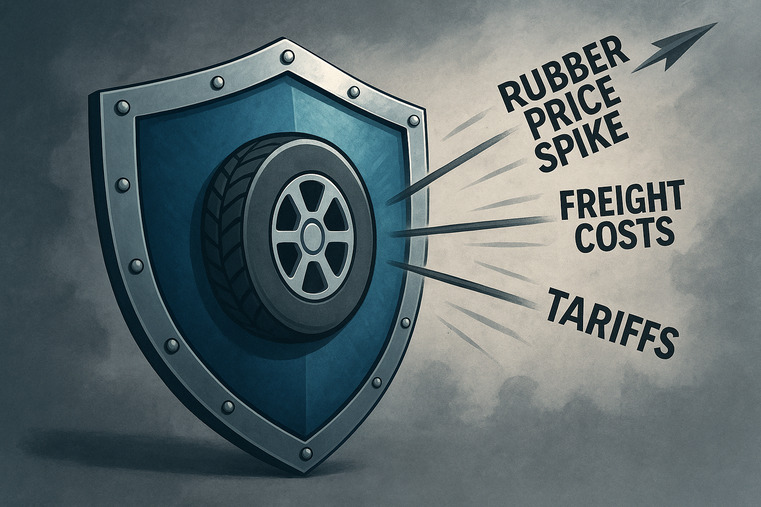
You're tired of being a victim of the commodities market. You need a partner who can offer a shield against this chaos, not just another line on a spreadsheet that will change next month.
By leveraging a diverse portfolio of raw materials and mastering material engineering, a supplier can decouple their pricing from the spot price of any single commodity. This allows them to offer fixed, long-term pricing, effectively insuring you against market volatility9.
The ultimate sign of a modern, world-class supplier is their ability to confidently say: "Your price is fixed for the next 12 months, regardless of what the rubber market does." How is this possible? It's not magic. It's strategy. It means they have a robust supply chain3 with multiple material sources. It means their R&D team has created formulas that balance performance with cost stability. And it means their business is built on partnership, not just transactions. They understand that their success is tied to yours. When you find a supplier who talks more about their material hedging strategy10 than their latest discount, you have found a true partner. They aren't just selling you a tire; they are selling you certainty, which is the most valuable commodity of all.
Conclusion
The tire industry's competitive landscape has changed. The winners are no longer the cheapest, but the most stable. They compete on their ability to protect you from cost volatility.
Discover how raw material surcharges can impact your procurement costs and budgeting. ↩
Understand the risks associated with low price offers and how they can impact your overall expenses. ↩
Learn about effective supply chain strategies that can enhance cost stability and reliability. ↩
Explore how suppliers can provide stability and continuity in your operations through effective pricing. ↩
Explore how stable cost suppliers can provide long-term savings and predictability in your budget. ↩
Learn about innovative strategies procurement teams can implement to manage costs and supplier relationships. ↩
Find out how advancements in material science can lead to significant cost savings. ↩
Find out how synthetic compounds can reduce costs and improve tire performance. ↩
Learn about strategies suppliers use to mitigate market volatility and protect your budget. ↩
Discover how material hedging strategies can safeguard your business from price volatility. ↩