
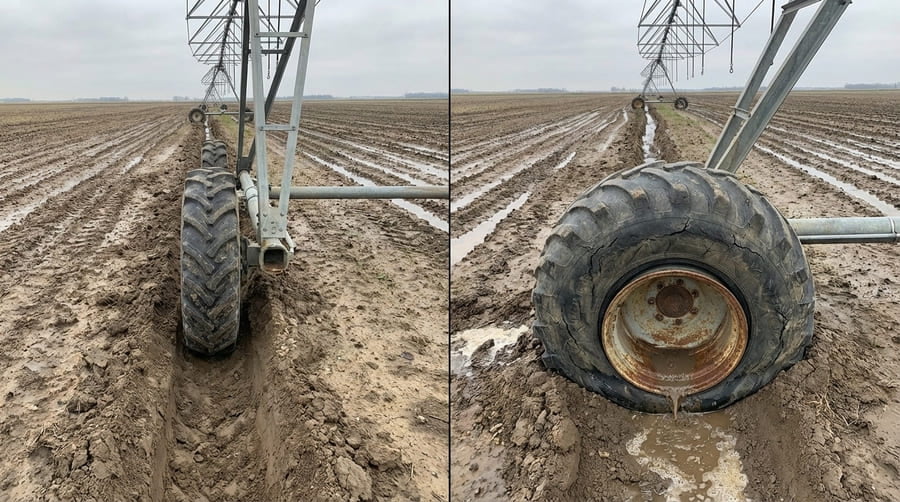
You switched to wider tires to reduce soil compaction1 and deep ruts. But now you're seeing unexpected sidewall damage2 and failures, trading one problem for another.
No, wider is not always better. While wider tires reduce ground pressure, they can increase sidewall stress, create uneven load points in ruts, require more precise rim compatibility3, and do not automatically guarantee better stability, potentially leading to new, unexpected failure modes.
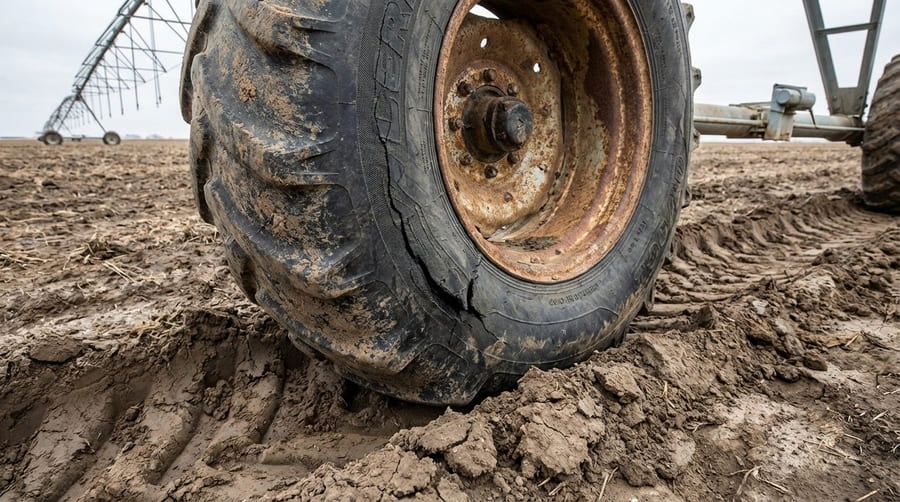
I consulted for a large farm that had just invested a small fortune in refitting their entire pivot fleet with wider tires. They were excited about reducing soil compaction1 for their root crops. A few months later, they called me in a panic. They were experiencing a wave of tire failures, mostly blowouts near the shoulder. They were convinced they had received a bad batch of tires. But the problem wasn't the tire quality; it was the application. By solving the compaction problem, they had inadvertently introduced a series of new, invisible stresses that their old maintenance practices weren't prepared for.
Does a Wider Tire Always Protect Your Field and Itself?
You see the wide footprint and assume it's a win-win: less soil compaction1 and a stronger tire. But then the sidewalls start showing signs of stress and premature cracking.
No. While a wider tire protects your field by distributing load, it can put itself at risk. The wider profile often leads to greater sidewall flex, which increases internal strain4 and heat, causing structural fatigue if the tire isn't designed for it.
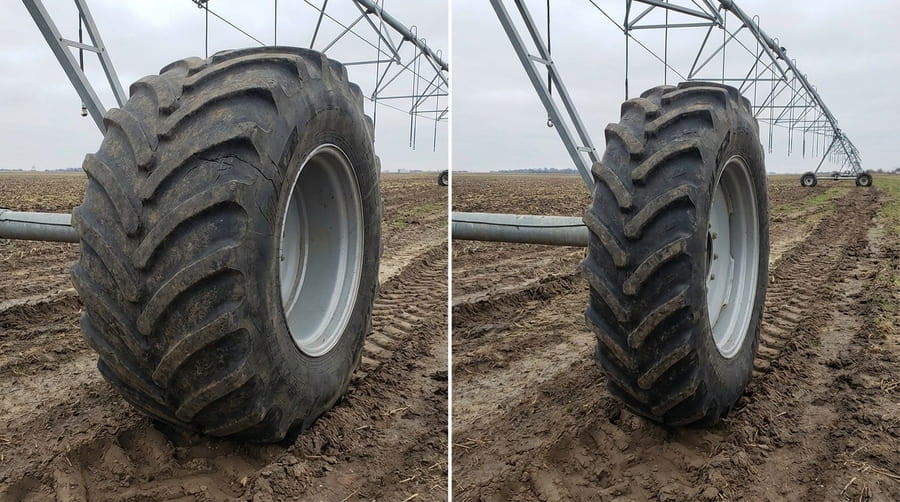
Think of a tire's sidewall like a spring. On a narrow tire, that spring is relatively short and stiff. On a wider tire, the spring is longer and has to flex more to support the same weight. This increased flex, or "lateral deformation5," is the key. While it helps create that nice, wide footprint, it also generates more internal friction and heat within the tire's structure. If the tire's carcass—its internal skeleton of plies—isn't built to withstand this extra movement, the rubber and fabric layers can begin to weaken and separate over time. What you see on the outside as a small crack is often the final symptom of a deep, internal structural failure that has been developing for weeks.
Narrow vs. Wide: A Trade-Off in Performance
| Feature | Standard Narrow Tire | Wide "Flotation" Tire |
|---|---|---|
| Primary Benefit | Durability in tough conditions | Reduced soil compaction1 |
| Footprint | Smaller, concentrated load | Larger, distributed load |
| Sidewall Flex | Less | More |
| Internal Strain | Lower | Higher |
| Risk Factor | Can create deep ruts | Prone to fatigue if not robustly built |
Why Do Wider Tires Fail Faster in Rutted Fields?
You hoped your new wide tires would glide over the ruts left from last season. Instead, they seem to be failing even faster and more catastrophically than the old narrow ones.
Wider tires fail in ruts because they bridge the gap instead of fitting inside. The edges of the tire carry the entire load on the rut's shoulders, leaving the center unsupported. This creates massive stress points that destroy the tire's structure.
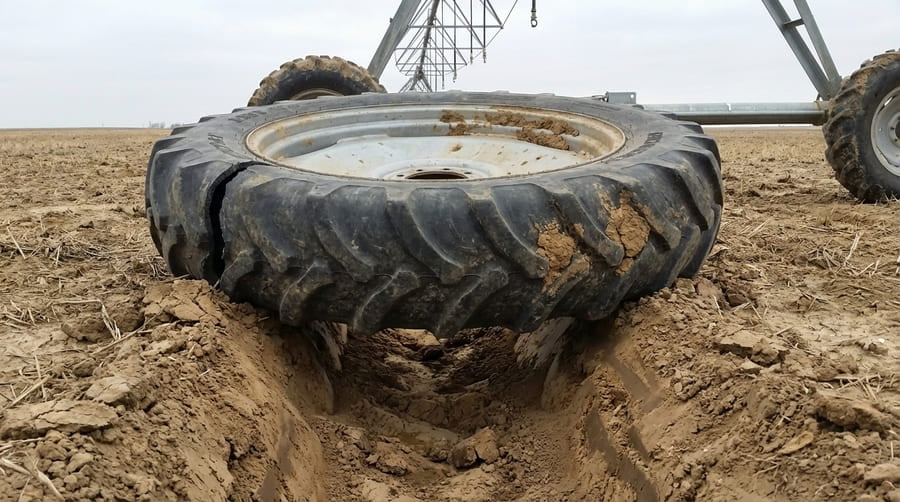
This is a classic physics problem. A narrow tire might drop into a rut, but it remains fully supported from bead to bead. A wide tire, however, acts like a plank of wood laid across a ditch. The entire weight of the pivot tower presses down on the two points where the tire's shoulders6 contact the edges of the rut. The center of the tread, which is designed to carry a large portion of the load, is left hanging in the air with no support. This setup puts an incredible, unnatural strain on the tire's shoulders6 and internal ply structure. It's like trying to bend a steel bar over a sharp edge; eventually, something has to give. The constant flexing and stress concentration in these two spots quickly lead to casing breaks and catastrophic blowouts.
Is Your Rim the Hidden Weakness for Your Wider Tire?
You invested in premium wide tires, but they keep losing air or showing damage right at the bead. You've checked the tire, but the problem persists, causing frustrating downtime.
Yes, the rim is often the weak link. Wider tires are much more sensitive to rim compatibility3. Using a rim that is too narrow for a wide tire forces the beads into an improper angle, leading to poor seating, air leaks, and eventual bead failure7.
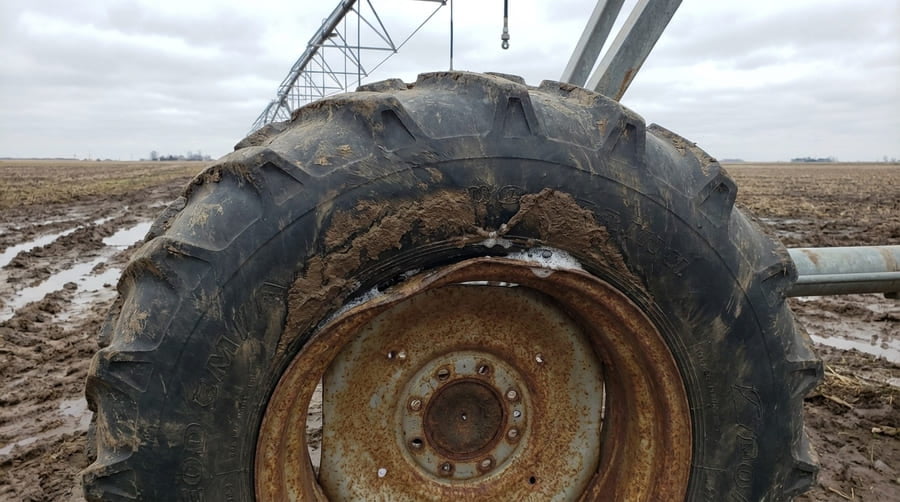
The connection between the tire and the rim—the bead seat—is one of the most critical areas. It has to create a perfect air seal and transfer all the operational forces. For a standard tire, there's a certain amount of tolerance. But with a wide tire, that tolerance shrinks dramatically. When you mount a wide tire on a standard, narrower rim, you pinch the beads together. This changes the angle at which the sidewall comes off the rim, creating a constant, high-stress point. The bead itself may not even seat fully against the rim flange, allowing for small movements. This chafing, combined with the stress, will eventually tear the bead apart or cause chronic, slow leaks that lead to the tire running underinflated and destroying itself. For a wide tire, the rim isn't just something it sits on; it's a critical, engineered part of the system.
Does a Wider Profile Automatically Mean More Stability?
You assume a wider stance means a more stable pivot tower. But you've noticed the towers seem to have more wobble and sway, especially when the machine starts, stops, or turns.
No, width alone does not guarantee stability. True stability comes from the tire's internal construction and its ability to resist lateral forces. A poorly constructed wide tire with soft sidewalls can be less stable than a well-built narrow tire.
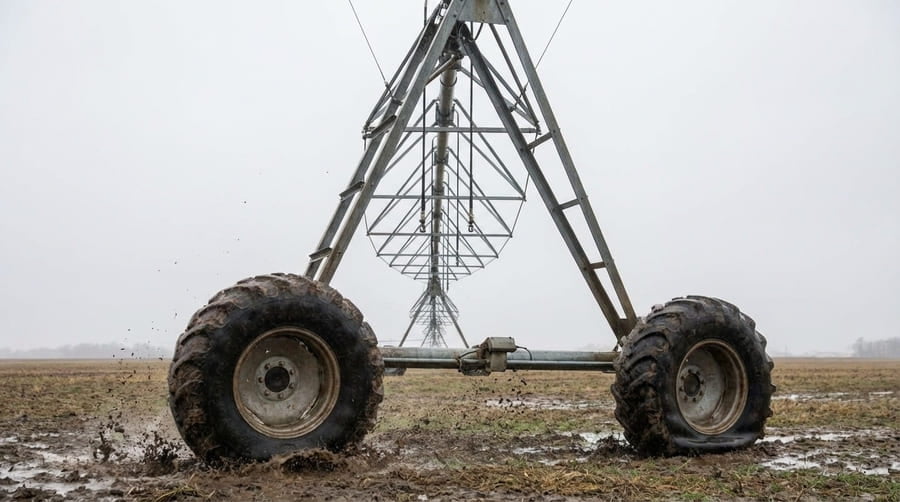
This is a common misconception. We associate a wide base with stability, like on a race car. But an irrigation tire isn't a race car tire. Its job is to support a heavy, shifting load on uneven ground. While a wide footprint can help, the tire's ability to resist side-to-side sway comes from the stiffness of its carcass and sidewalls. Some wide tires are designed primarily for flotation and have very flexible sidewalls to maximize their footprint. While great for soft soil, this flexibility can allow the pivot tower to wobble back and forth, putting stress on the pivot's drivetrain and structure. A robustly built tire, whether wide or narrow, will have a carcass designed to manage these lateral forces effectively. Stability isn't just about the width of the tread touching the ground; it's about the strength of the entire tire structure holding it up.
Conclusion
Choosing the right tire isn't about "wider is better." It's about matching the tire's specific design—its construction, not just its contact area—to the unique demands of your field.
Understanding soil compaction is crucial for farmers to improve crop yield and soil health, making it essential to explore solutions and prevention methods. ↩
Exploring the causes of sidewall damage can help prevent tire failures and extend the lifespan of your tires, saving costs and improving safety. ↩
Rim compatibility ensures proper tire function and safety. Learning about it can prevent tire damage and improve vehicle performance. ↩
Understanding internal strain helps in selecting the right tires, preventing premature wear and ensuring safety and longevity of the tires. ↩
Learning about lateral deformation can help in choosing the right tire design to prevent structural failures and improve performance. ↩
Tire shoulders are critical for load distribution and stability. Learning about them can help in choosing the right tires for specific conditions. ↩
Preventing bead failure is crucial for maintaining tire integrity and safety. Learning about causes and prevention can help avoid costly repairs. ↩