
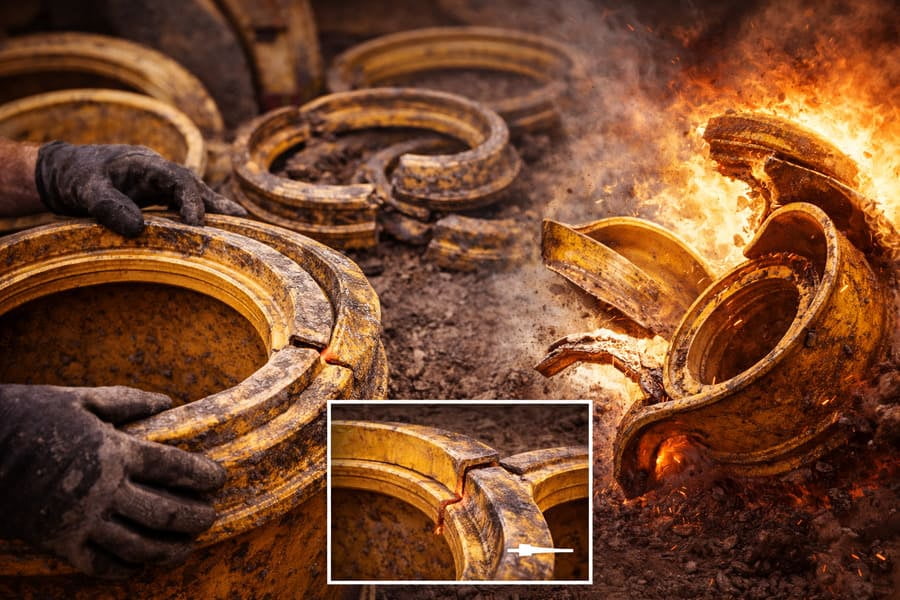
Technicians handle heavy multi-piece wheel1s every day, trusting them to be solid steel. Yet, one small, removable part is all that stands between them and an explosive release2 of immense pressure.
The lock ring3 is the most dangerous component because it is the sole removable piece responsible for containing the tire's massive air pressure. Any wear, damage, or improper seating4 can lead to a catastrophic, explosive failure during inflation or operation.
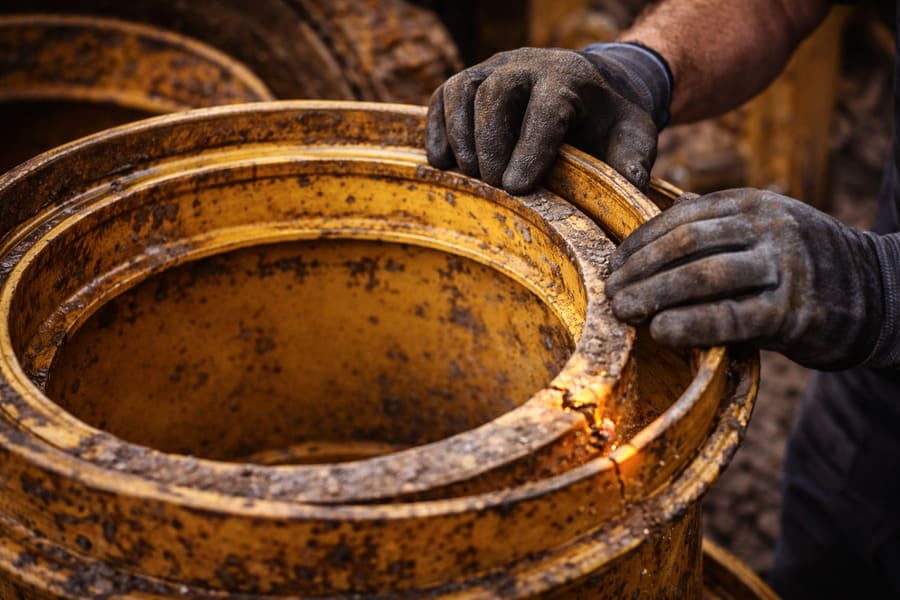
Early in my career, I walked through a customer's repair shop and saw a safety poster that has stuck with me forever. It was a picture of a wheel rim, violently banana-peeled open, with the simple caption: "Did you inspect the lock ring3?" It wasn't a warning about a product defect, but about a maintenance procedure. It drove home a frightening reality: the single greatest danger in our industry isn't a faulty tire or a cracked rim base5, but a small, often overlooked steel ring. The forces it holds back are immense, and the consequences of it failing are life-altering.
Why Does Repeated Removal Make a Lock Ring So Risky?
Tire changes are routine. Technicians pry off lock ring3s, mount new tires, and hammer them back into place, often hundreds of times. So why is this specific routine so hazardous?
Because the lock ring3 is the only critical load-bearing part6 of the wheel assembly that is designed to be repeatedly removed. Each cycle of removal and re-installation introduces wear, the potential for damage, and the risk of improper seating4.
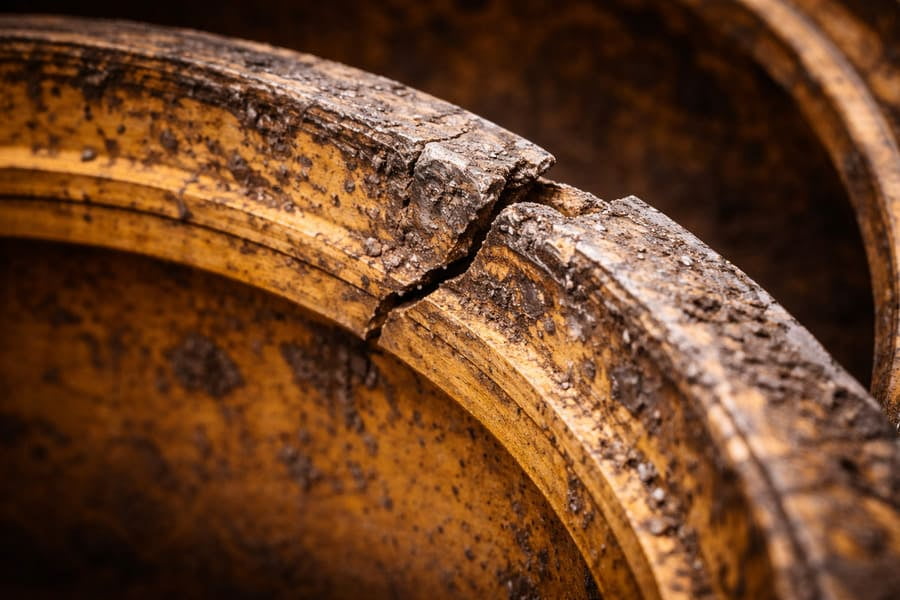
Unlike the OTR wheel's disc or rim base5, which are welded into a permanent, factory-perfect unit, the lock ring3 is a service component. Think about other parts of the wheel assembly. The rim base5 and disc are fused together, not meant to be taken apart. They fail from long-term fatigue. The lock ring3, however, faces a different battle. Every time a technician uses a hammer or pry bar to remove it, there's a chance of causing a small dent, bend, or scrape. Every time it's re-installed, dirt or rust can get trapped in the gutter, preventing a perfect fit. This constant cycle of use and potential misuse degrades the very surfaces that are critical for safety. It’s the only part that must be perfect every single time, despite being handled imperfectly throughout its life.
| Component | Load-Bearing? | Frequently Removed? | Primary Risk |
|---|---|---|---|
| Lock Ring | Yes | Yes | Disengagement Under Pressure |
| Rim Base | Yes | No | Long-Term Fatigue Crack |
| Disc | Yes | No | Long-Term Fatigue Crack |
| Tire Bead | Yes | Yes | Incorrect Seating / Damage |
How Can a Tiny Bend in a Lock Ring Cause a Huge Accident?
You see a used lock ring3 on the workshop floor. It has a slight warp, maybe from being dropped or pried off carelessly. It seems minor, but why is this considered a red flag for a safety incident?
Even a minor deformation completely compromises the lock ring3's critical locking geometry. Safety depends on a perfect, flush fit between the ring and the rim gutter. A small bend creates a gap, turning the locking mechanism into a ramp for failure.
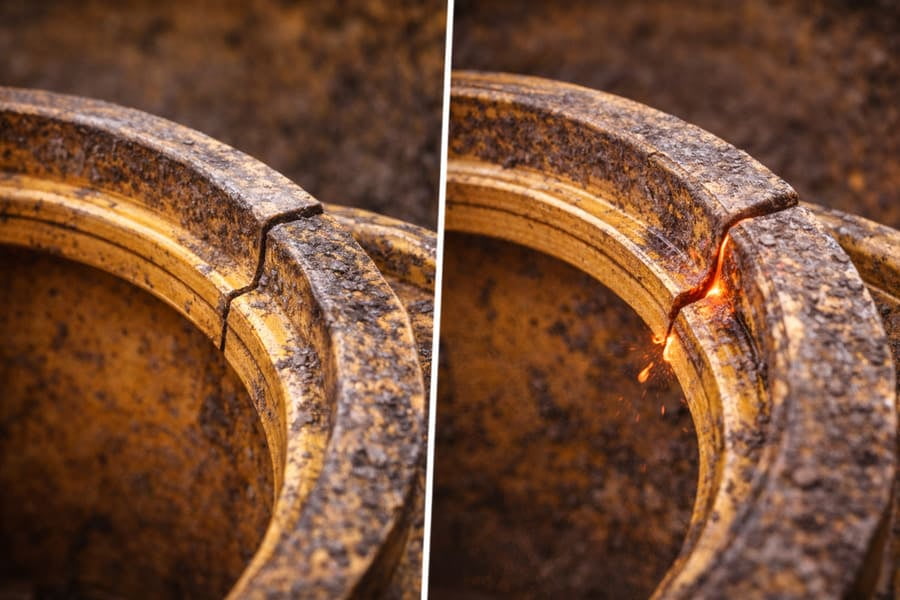
The safety of a multi-piece wheel1 relies on a brilliant but unforgiving design. When the tire inflates, it pushes the flange and bead seat band outwards. This force is transferred to the lock ring3, which is tapered to match the rim's gutter. A correctly shaped ring will be forced deeper and tighter into the gutter by this pressure. The system is self-locking. However, if the ring is even slightly bent or warped, it will no longer sit flush. A tiny gap is created. Now, when the tire pressure7 builds, the force is concentrated on one high point. Instead of locking tighter, the force pushes against the bent section at an angle, effectively trying to pry or "ramp" the ring up and out of the gutter. What was a secure, self-tightening system becomes an explosive ejection mechanism, waiting for enough pressure to launch.
Are Lock Ring Failures Sudden, Unpredictable Events?
We often hear about explosive lock ring3 failures as if they are sudden, freak accidents. But is that the whole truth, or is there a slower, more predictable story leading up to the incident?
Most lock ring3 accidents are not sudden failures but the final, catastrophic result of cumulative damage8. They are caused by the long-term effects of using mismatched components, repeated misuse, and overlooking small signs of wear over time.

A catastrophic failure9 feels sudden, but the cause is almost always gradual. It's rarely the first time a bent lock ring10g](https://arxiv.org/html/2601.03698v1)%%%FOOTNOTE_REF_3%%% was used, or the first time a technician hammered it into a rusty gutter. It's the tenth time, or the fiftieth. Each instance of misuse—using a slightly bent ring, pairing it with a worn flange, or not cleaning the gutter—might not cause an immediate failure. The assembly might hold pressure, and the technician moves on, thinking it's safe. But each time, the components are weakened. The bent ring gets a little more stressed. The gutter wall gets a little more deformed. This is the "cumulative" nature of the risk. It's like a chain with one link being filed down a little bit every day. For a long time, the chain still holds. But one day, a normal amount of load is applied, and that weakened link finally snaps. This is what happens with lock ring3s. The final accident is just the breaking point of a long history of degradation.
Does a Thicker Lock Ring Mean It's a Safer Lock Ring?
When looking to improve safety, an intuitive thought is to make the components stronger. If you make the lock ring3 thicker and heavier, it should be safer, right?
No, safety depends on the precision of its geometry, not its thickness. A thicker lock ring3 that doesn't perfectly match the rim gutter and flange is actually more dangerous because it can create a false sense of security while providing a poor fit.
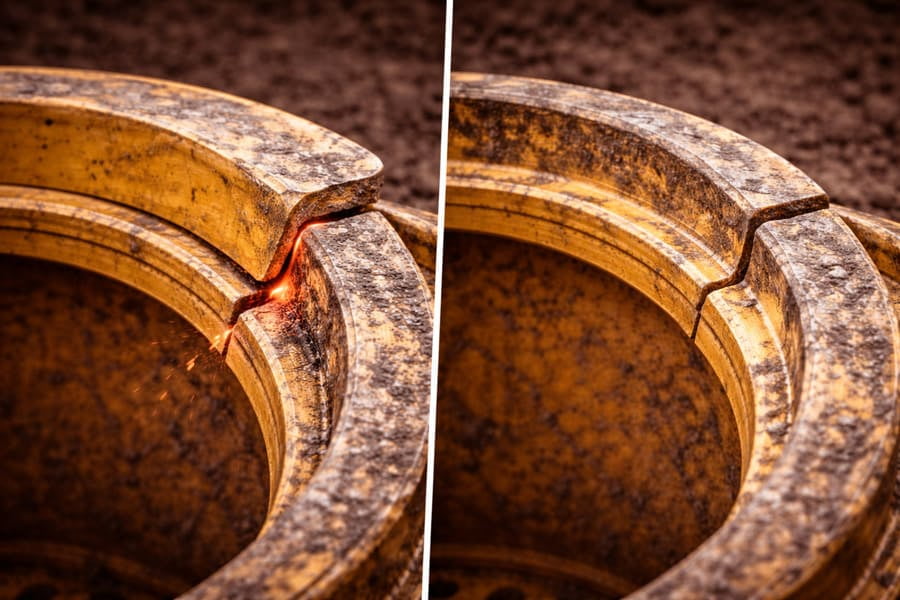
Increasing the thickness of a lock ring3 is a classic example of solving the wrong problem. The lock ring3 doesn't fail because it lacks bulk strength; it fails because its geometric lock is compromised. The entire safety system11 is based on a precise, multi-part interface. The lock ring3, the OTR rim base5 gutter, the bead seat band, and the flange must all be manufactured to tight tolerances to work together as a single unit. If you introduce a thicker, non-standard lock ring3, it may not seat correctly in the gutter designed for a standard ring. It might feel tight when hammered in, but it could be making contact on only a few high points instead of being flush. This creates enormous stress concentrations and can actually increase the risk of it dislodging under pressure. A properly engineered system is a balanced one. True safety comes from ensuring all components are dimensionally correct, unworn, and matched as a set—not from simply adding more steel.
Conclusion
The lock ring3's danger comes from its unique role. It's a removable, wearable part holding back explosive force, where safety relies entirely on a perfect fit. Prioritizing inspection and correct matching is not just good practice—it's life-saving.
Gain insights into multi-piece wheels to understand their safety requirements. ↩
Learn about the dangers of improper tire inflation and how to prevent explosive failures. ↩
Understanding the lock ring's function is crucial for safety in tire maintenance. ↩
Understanding improper seating can help prevent dangerous tire incidents. ↩
Understanding the rim base's function is key to ensuring overall wheel safety. ↩
Understanding load-bearing components is essential for safe tire maintenance. ↩
Explore the relationship between tire pressure and lock ring integrity. ↩
Learn how cumulative damage develops over time and its implications for safety. ↩
Explore the factors leading to catastrophic failures to enhance safety measures. ↩
Learn why even minor deformations in lock rings can lead to serious accidents. ↩
Explore the components of a safety system to enhance tire maintenance practices. ↩