
Why Do Irrigation Tire Warranties Cause So Many Dealer-Customer Disputes?
A tire deforms under load, but doesn't burst. Your customer is furious, but your supplier says it’s not a warranty issue. Now your reputation is on the line.
Irrigation tire warranties cause disputes because they rely on strict definitions like 'structural breakage1,' while customers define failure as anything preventing them from finishing the season. This fundamental misalignment between technical policy and real-world outcomes puts dealers in a difficult position, creating conflict and eroding trust.
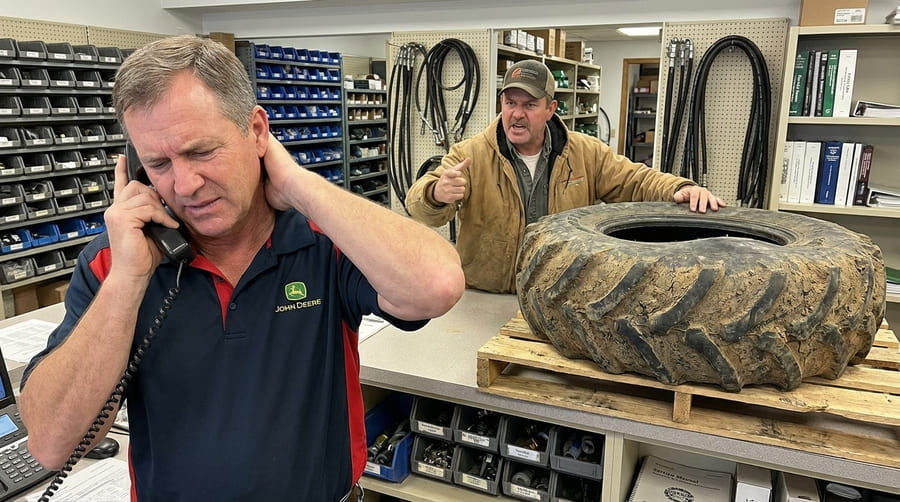
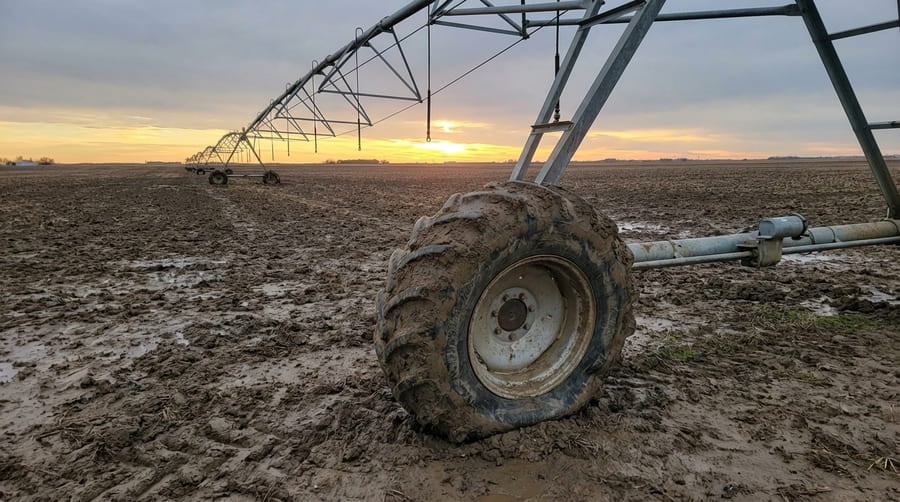
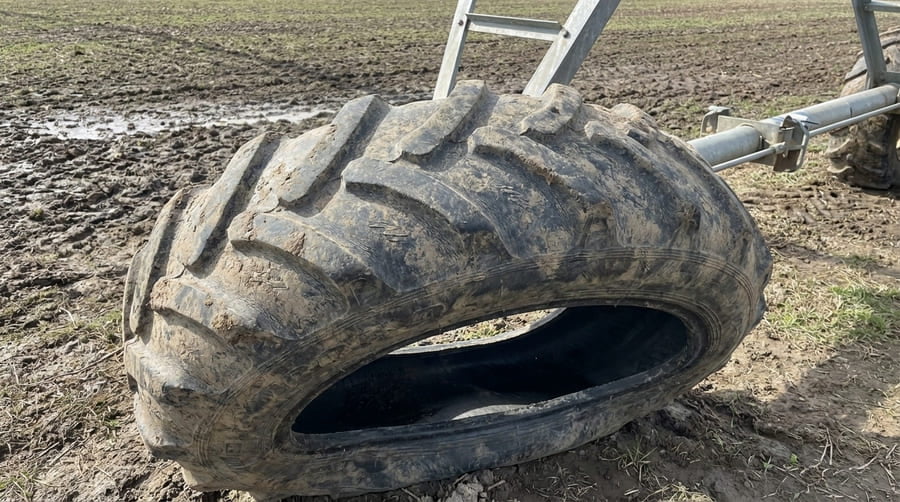
I once spent a whole afternoon on a farm acting as a mediator. The dealer, a good partner of mine, was at his wit's end. His customer had a pivot tire that was severely deformed, looking almost melted on one side after a season in a muddy field. It was holding air, but it wobbled badly and was clearly not right. The farmer saw a failed irrigation tire. The supplier's warranty department, looking at photos, saw no "structural breakage1 or burst" and denied the claim. The dealer was caught in the middle, with thousands of dollars and a long-term relationship at stake. The problem wasn't malice on anyone's part; it was a problem of language and perspective.
What Exactly Is a "Soft Failure" and Why Isn't It Covered?
Your customer shows you a tire that is misshapen or fatigued. It's clearly not performing, but since it hasn't burst, your supplier's warranty department says it doesn't qualify for a claim.
A "soft failure2" is a performance decline3, like severe deformation, excessive vibration4, or material fatigue5, that makes the tire unusable without it technically breaking. Most warranties don't cover these because they are written to protect against clear manufacturing defects6, not gradual performance loss7.
Think about warranties from the manufacturer's perspective. Their goal is to guarantee that the product is free from defects in materials and workmanship. The easiest way to define a defect is through a clear, catastrophic event: a blowout, a ply separation8, or a bead break9. These are binary events; the irrigation tire either broke or it didn't. "Soft failures" exist in a gray area. A tire deforming could be due to a defect, but it could also be due to overloading, chronic under-inflation, or extreme heat—all operational issues. Because the cause is ambiguous, manufacturers write strict policies to avoid paying for failures caused by misuse. This leaves dealers in a tough spot, trying to explain to a customer that their unusable tire isn't technically "failed" according to the rulebook.
Hard Failure vs. Soft Failure
| Aspect | Hard Failure (Warranty Covered) | Soft Failure (Often Not Covered) |
|---|---|---|
| Definition | Catastrophic structural breakdown | Gradual performance degradation |
| Example | Sidewall burst, ply separation8, tread rip | Severe deformation, fatigue cracking, excessive wobble |
| Warranty View | Clear evidence of a manufacturing defect | Ambiguous cause, often linked to operation |
| Result | Claim is typically approved | Claim is typically denied |
Why Do Customers Feel Betrayed When a Warranty Is Denied?
You follow the supplier's policy and deny a warranty claim. The farmer, who trusted you, now feels cheated and betrayed, even though you were just following the rules.
Customers feel betrayed because they don't buy technical specifications; they buy an outcome. Their only measure of success is "Did the tire get me through the season?" When it doesn't, they see a broken promise, regardless of what the warranty fine print says.
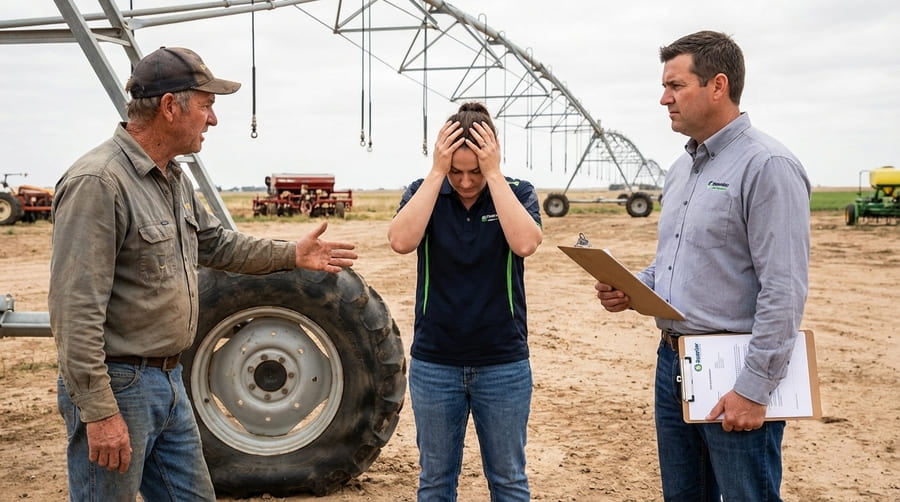
When you sell a irrigation tire to a farmer, the unspoken agreement in their mind is simple: "This tire will reliably do its job for a reasonable amount of time." For them, "reasonable" often means finishing the critical irrigation season without causing downtime. They aren't thinking about ply adhesion strength or bead construction. They are thinking about getting water to their crops. So when a tire deforms so badly that it risks damaging the pivot's gearbox, the farmer sees a complete failure of the product to deliver on its core promise. When you then present a warranty document that says "this isn't a failure," it feels like a legal trick. It sounds like you are using fine print to escape your responsibility. The denial invalidates their real-world experience and makes them feel like their problem doesn't matter.
Are You Trapped Between Your Supplier and Your Customer?
Your customer is demanding a free replacement for a tire that isn't performing. Your supplier is quoting policy and refusing to cover it. You are stuck in the middle, forced to absorb the cost or lose the customer.
Yes, this is the classic dealer's trap. You are the face of the product to the customer, but you have no control over the manufacturer's warranty policies. This forces you to manage the customer's real-world dissatisfaction while being constrained by rigid, formal rules.
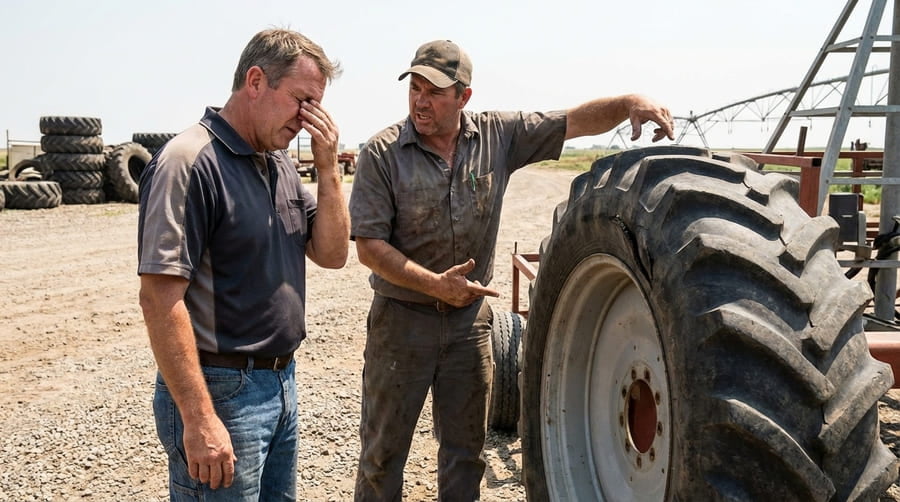
In a perfect world, you are a bridge connecting a great product to a happy customer. But in a warranty dispute, that bridge becomes a battlefield. Your customer sees you as the seller and holds you responsible for the product's performance. They have a relationship with you, not with a faceless warranty department hundreds of miles away. Meanwhile, your supplier sees you as the first line of defense for their policies. They expect you to enforce the rules. This pins you in an impossible position. If you side with the customer and replace the tire at your own cost, your profit margin disappears. If you side with your supplier and enforce the policy, you damage your reputation and likely lose a valuable customer for life. This operational tension10 is one of the most stressful and costly aspects of being a dealer.
How Can Unclear Warranty Rules Destroy Your Business?
You think you are saving money by sticking to a strict warranty policy. But you notice more customers are leaving, and your reputation in the community is starting to suffer.
Unclear or misaligned warranty expectations act like a slow poison. Each dispute erodes trust. This "relationship cost11" is far greater than the price of one tire, leading to lost future sales, negative word-of-mouth, and long-term damage to your business.
The most expensive part of a warranty dispute isn't the tire; it's the trust you lose. When you and a customer argue about a claim, you are not just debating the cost of a replacement. You are fundamentally damaging the partnership you've worked hard to build. The customer, feeling unheard, will tell their neighbors. The next time they need tires, or any other product you sell, they will go to a competitor. I've seen dealers lose accounts worth tens of thousands of dollars annually over a single, poorly handled $800 irrigation tire claim. The math is simple but brutal. Proactively managing expectations before the sale is the only way to prevent these relationship cost11s from exploding. Aligning the customer's definition of "success" with the product's capabilities and the warranty's limits from day one is not just good customer service; it's essential business defense12.
Conclusion
Warranty disputes are not about tires; they're about mismatched expectations. Aligning customer goals with warranty realities before the sale is the only way to protect your relationships and your business.
Understanding 'structural breakage' helps clarify why some tire issues aren't covered under warranty, aiding in better communication with suppliers. ↩
Exploring 'soft failure' reveals why certain tire issues aren't covered, helping customers understand warranty limitations. ↩
Learning about performance decline can help identify non-warranty issues, aiding in better tire maintenance and usage. ↩
Exploring causes of excessive vibration can help in diagnosing tire issues and improving maintenance practices. ↩
Understanding material fatigue aids in recognizing non-warranty issues, helping in better tire care and usage. ↩
Knowing about manufacturing defects helps in identifying legitimate warranty claims, ensuring fair resolutions. ↩
Understanding why gradual performance loss isn't covered can help manage customer expectations and prevent disputes. ↩
Identifying causes of ply separation aids in distinguishing between warranty-covered defects and operational issues. ↩
Learning about bead breaks helps in understanding warranty coverage and preventing operational misuse. ↩
Exploring operational tension reveals the challenges dealers face, aiding in better negotiation strategies. ↩
Exploring relationship cost highlights the long-term impact of warranty disputes on business reputation and sales. ↩
Aligning warranty expectations is crucial for protecting business relationships and ensuring long-term success. ↩