
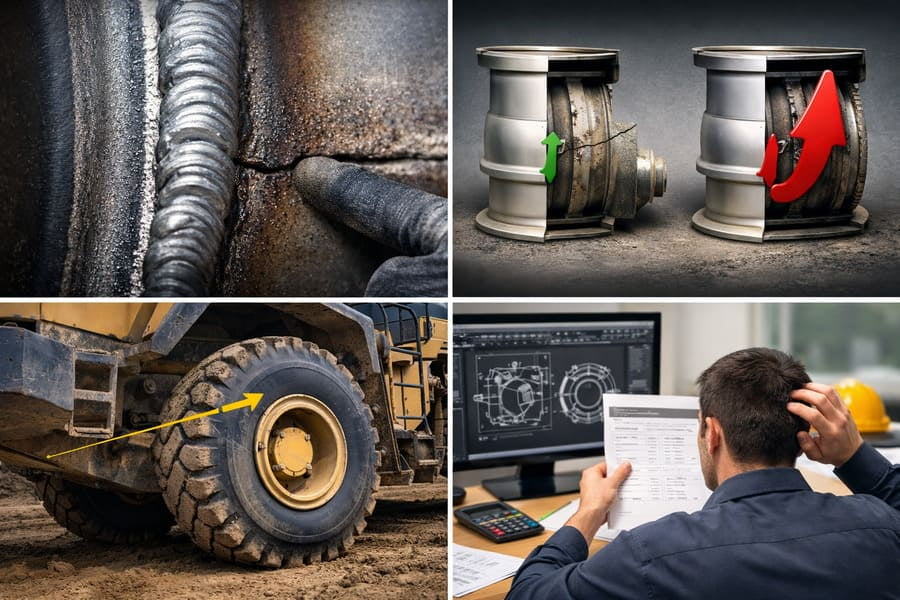
You've just replaced a set of OTR wheels1, and already you're seeing small cracks forming near the welds. It's frustrating and makes you question the quality of your supplier.
Early cracks are almost never caused by poor manufacturing. They are fatigue failures2 that happen when the wheel's structural design3 is forced to handle amplified stresses4, often from an incorrect and overlooked wheel offset5.
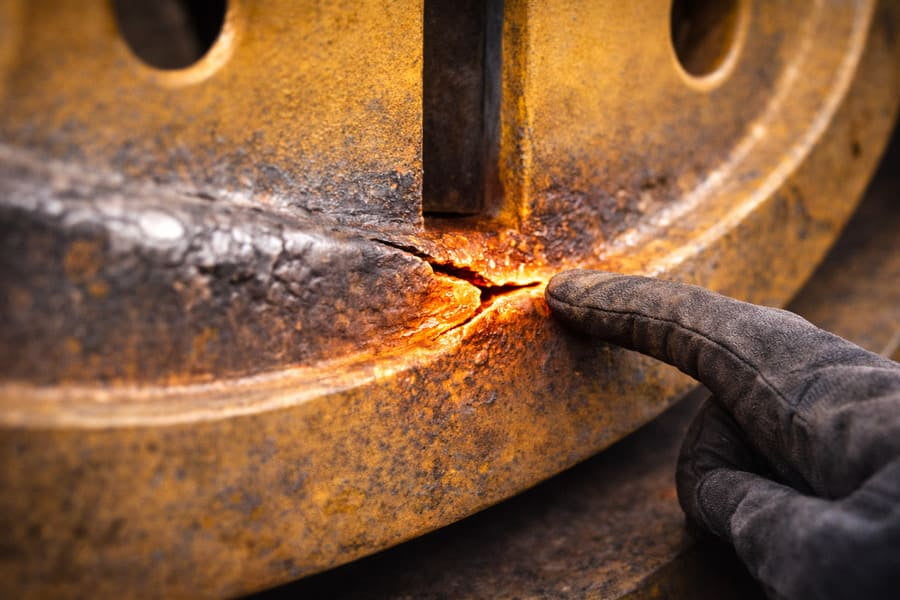
Over my 12+ years in this business, the first email I get when a wheel fails is almost always the same. It comes with a picture of a crack and a message blaming "poor quality." I understand the immediate reaction. It's a brand-new OTR wheel; it shouldn't fail. But after we talk, I usually find out the machine's track width was changed, or a non-standard wheel6 was fitted to "make it work." They've unknowingly introduced the real culprit. The crack isn't a sign of a bad product; it's a symptom of a much bigger, hidden problem.
If It's Not Poor Quality, Why Did It Crack So Soon?
It’s logical to assume an early failure means a manufacturing defect. Why else would a huge, solid steel wheel give out long before its expected service life?
A wheel cracks early because it's accumulating fatigue damage7 much faster than intended. The wheel's structure is being subjected to amplified, repetitive stresses that accelerate its journey to failure, regardless of how well it was made.
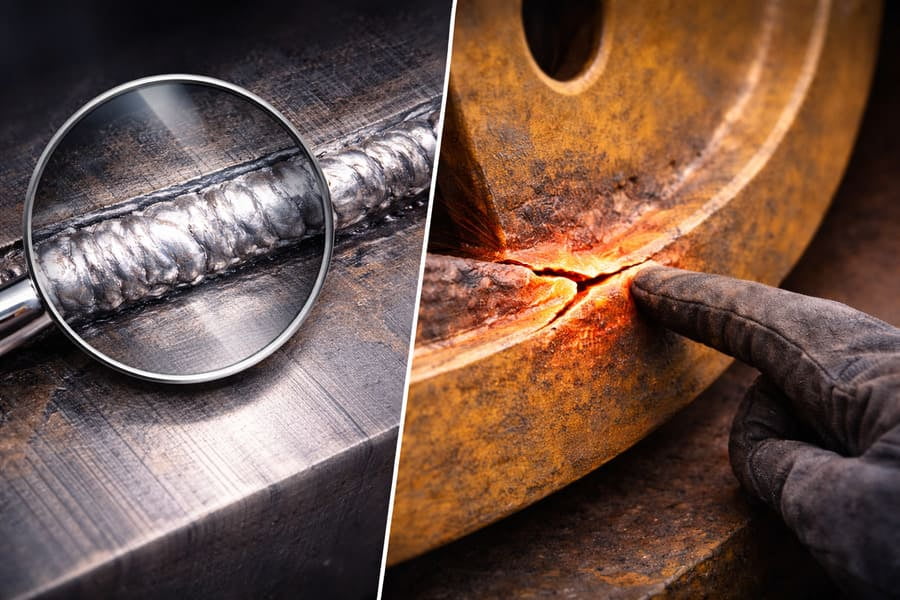
It's crucial to understand the difference between a defect and fatigue. A true manufacturing defect, like porosity in a weld or a flaw in the steel, is a weak spot from day one. It might fail under the very first heavy load. A fatigue failure, however, is the result of accumulated stress over time. The wheel was perfectly strong when it left our factory, passing every one of our ISO 9001 quality checks8. But out in the field, it was forced into a situation that bent it a tiny bit too much with every single rotation. Even a flawless wheel will break if you bend it enough times. The early crack isn't a sign of weakness; it's evidence of unexpectedly high stress.
How Is Fatigue Being Amplified in the Field?
Your machine is operating within its weight limits, and the terrain is normal. So where is this extra, destructive stress on the wheel coming from?
Fatigue is amplified by leverage created by the wheel's geometry. The structure is failing faster because the cyclic stress from each rotation is magnified, turning normal operational loads into damaging forces that fatigue the steel prematurely.
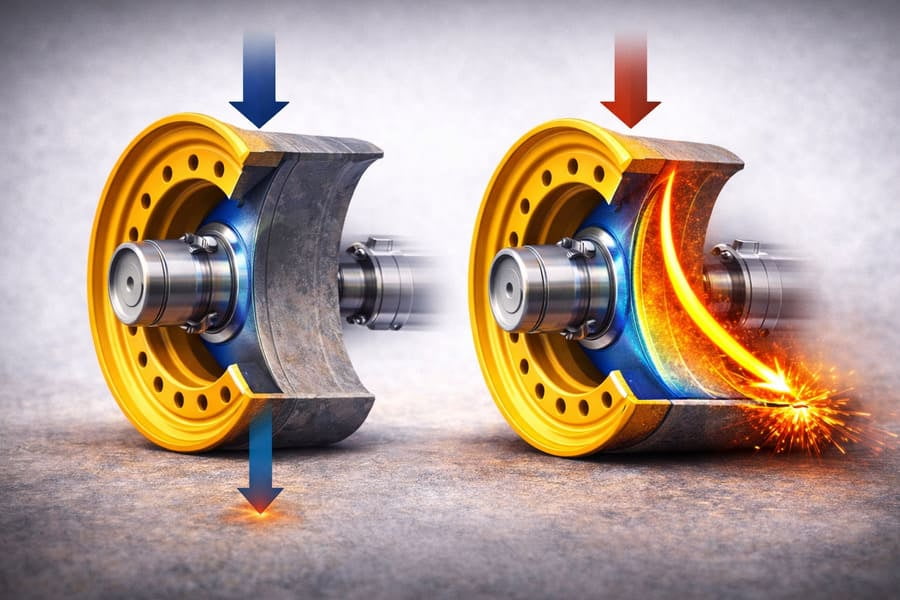
Imagine you're using a wrench to tighten a bolt. A short wrench requires a lot of your strength. A long wrench makes it easy. The bolt and your goal are the same, but the long wrench amplifies your force. In an OTR wheel, this amplifier is built into its geometry. When a wheel is designed, the engineers carefully balance the shape of the disc, the position of the welds, and the offset to ensure that the machine's load is transferred smoothly and without creating leverage. But if that geometry is altered, even by a small amount, you've attached a longer handle to the wrench. Now, with every rotation, the normal weight of the machine is amplified into a much larger bending force9, aimed directly at the weakest points of the structure.
What Is the Hidden Role of Offset in These Failures?
You might check tire pressure and inspect for visible damage, but when was the last time you confirmed the exact offset of your wheels against the machine's specifications?
Offset is the silent killer of OTR wheels1. A deviation of just a few millimeters changes the load path10, creating a powerful bending moment that quietly multiplies fatigue damage7 with every rotation. It's the hidden driver behind most early failures.
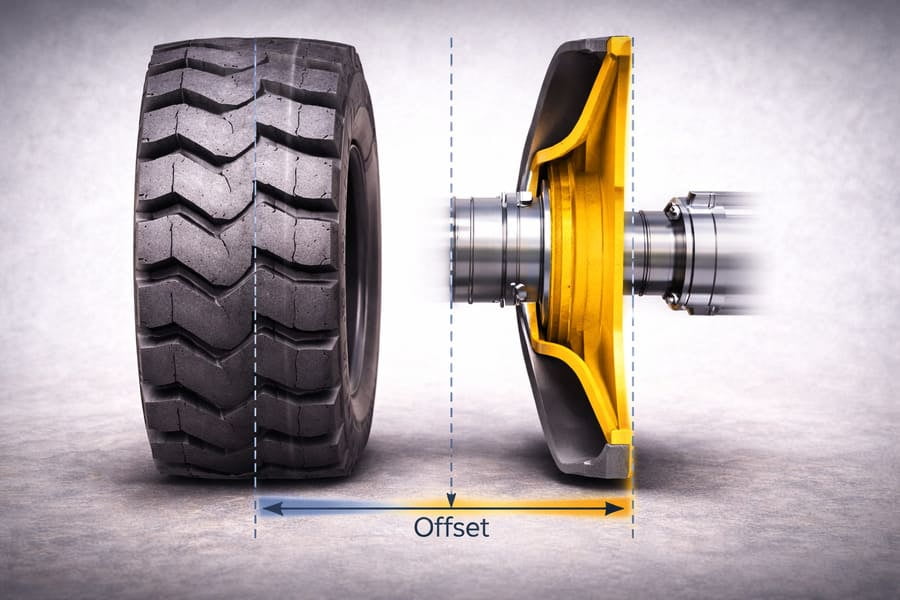
Offset is simply the distance from the wheel's mounting face (where it bolts to the axle) to the centerline of the OTR rim. It seems like a minor detail, but its impact is enormous. Think of it as the wheel's center of balance.
How Offset Changes Everything
| Offset Type | Load Path | Effect on Structure | Result |
|---|---|---|---|
| Correct (Designed) Offset | Load passes directly through the strongest parts of the disc. | Minimal bending force9, low stress on welds. | Full, expected service life. |
| Incorrect (Increased) Offset | Load is applied "outboard," creating a lever arm. | High bending force9 is focused on the OTR disc/rim weld. | Accelerated fatigue, early cracks. |
When the offset is correct, the wheel works as a cohesive unit. When the offset is wrong, you turn the OTR wheel against itself. The disc is actively trying to pry itself away from the rim, and the only thing holding it together is the weld. This constant prying action is what leads to those "premature" cracks.
Why Is Offset the Most Overlooked Cause of OTR Wheel Cracks?
When a wheel fails, maintenance logs11 are checked, and the supplier is called. But the wheel's fundamental dimensions, like its offset, are rarely questioned. Why is this critical factor so often ignored?
Because offset is a specification, not a maintenance item. It's assumed to be correct from the start. It is rarely questioned, yet it is frequently responsible for early failures when non-OEM or improperly specified wheels are installed.
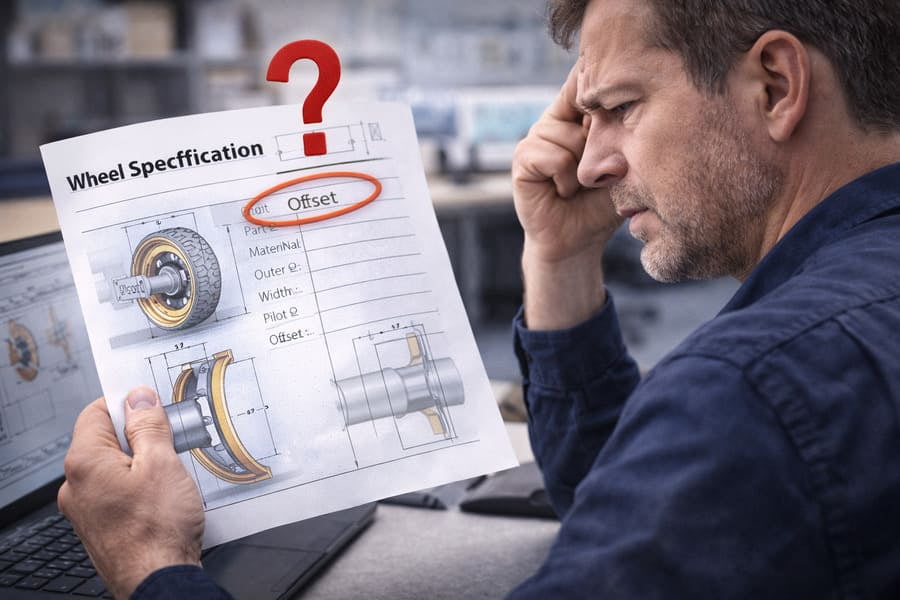
This is an issue I see constantly. A purchasing department needs a replacement wheel and orders one based on bolt pattern and rim diameter alone. Or, an operator wants a wider stance for stability and installs wheels with a larger offset, not realizing the consequences. Because the wheel physically bolts onto the machine, everyone assumes it's correct. No one thinks to measure the offset. It's not part of a daily check, and it's not something that wears out. It is a foundational parameter that, if wrong, guarantees an eventual failure. This is why a key part of our process at Gescomaxy is not just asking "What wheel do you want?" but "What machine is it for?" We ensure the structure is right before we even talk about price.
Conclusion
Early cracks are not a sign of bad quality but of amplified stress. This hidden stress is almost always created by an incorrect offset, a critical but often overlooked structural specification.
Explore this link to understand the significance and applications of OTR wheels in various industries. ↩
Learn about fatigue failures to grasp how they affect the longevity of mechanical parts like wheels. ↩
Understanding structural design principles can help you appreciate the engineering behind OTR wheels. ↩
This resource will explain the factors leading to amplified stresses in mechanical systems. ↩
Discover the impact of wheel offset on performance and safety in vehicles. ↩
Learn about the potential risks associated with using non-standard wheels in machinery. ↩
Learn about fatigue damage to understand how it affects material performance over time. ↩
Explore the importance of ISO 9001 quality checks in manufacturing and product reliability. ↩
This link will clarify the concept of bending force and its implications in engineering. ↩
Understanding load path is essential for analyzing structural integrity in engineering. ↩
This resource will guide you on maintaining effective maintenance logs for machinery. ↩