
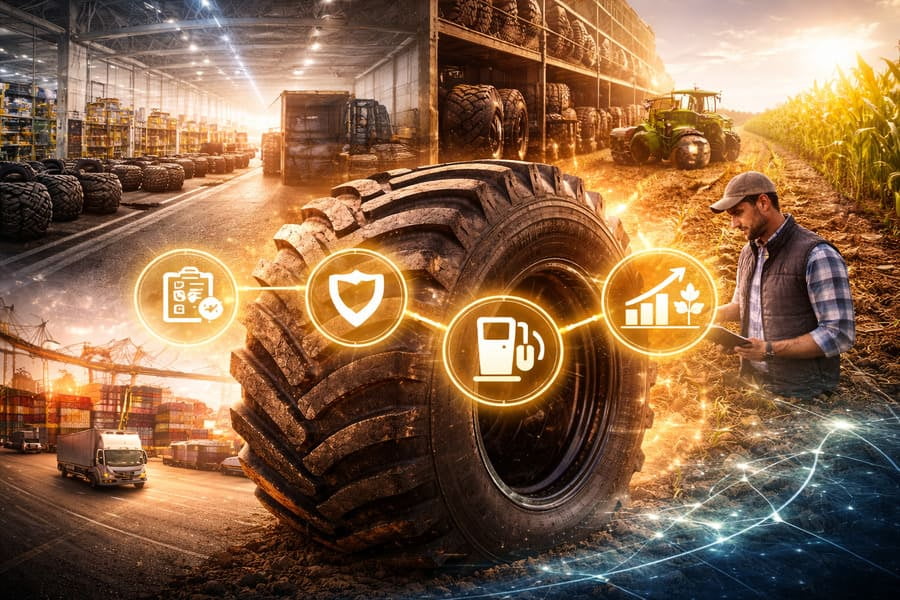
You're worried about price hikes and supply shocks, but sticking to old purchasing habits is the real risk. The market is changing fast, and your cost-first strategy is becoming a major liability.
The 2026 market reset means a fundamental shift from prioritizing unit price to prioritizing total value1. For buyers, this requires focusing on supply chain resilience2, the economic rationality3 of advanced technology like VF tires4, and the tire's overall impact on operational uptime5.
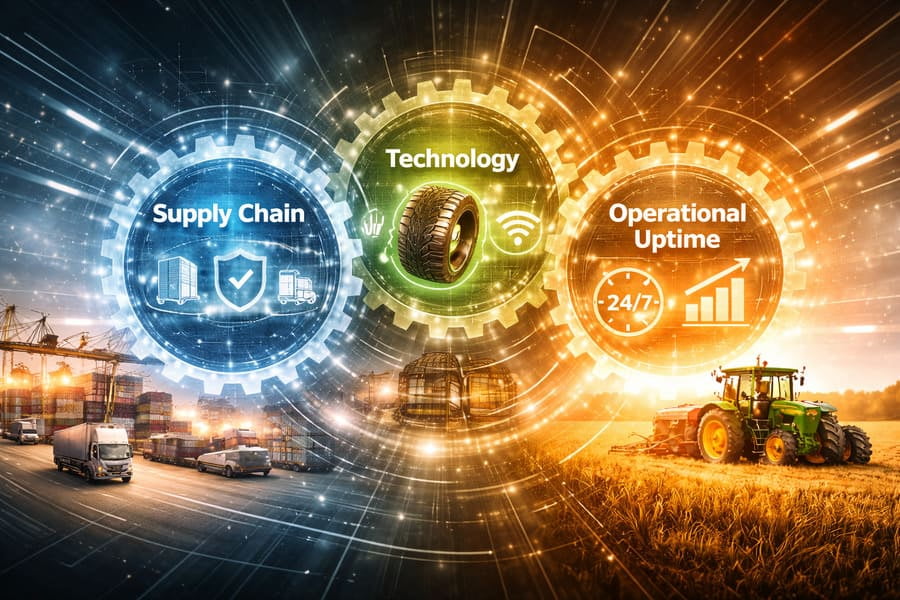
Over my 13 years in this business, I've seen buyers celebrate a 5% cost saving on a container of tires. Today, those same buyers are telling me that a single delayed shipment can cost them ten times that amount in production downtime. The conversation has completely changed. We're moving away from a simple transaction based on price to a strategic partnership6 based on reducing risk and maximizing operational efficiency7. The "reset" isn't a single event; it's this permanent change in mindset that smart buyers must adopt to stay competitive through 2026 and beyond.
Why Has Supply Chain Reliability Become More Important Than Unit Price?
You found a supplier offering a rock-bottom price, but their communication is slow and their delivery dates are a moving target. The initial savings look great, but the constant uncertainty is creating huge operational risks.
A reliable supply chain is now more valuable because the financial and reputational cost of production delays8, stockouts, and compliance failures far exceeds any potential savings from a slightly cheaper tire. Stability has become the most valuable commodity.
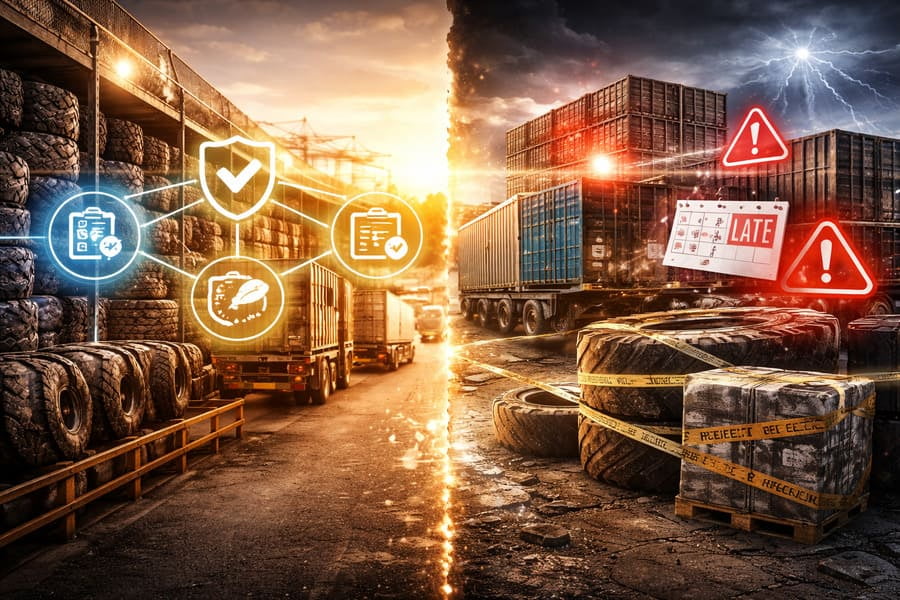
Let's do some simple math that every procurement manager understands. Imagine you save $10 per tire on an order of 500 tires. That's a $5,000 saving. Now, imagine that shipment is delayed by two weeks because the supplier had a production issue or failed a customs check. If that delay halts your OEM assembly line, the cost of idle machinery and labor can easily reach tens of thousands of dollars per day. The initial $5,000 saving becomes insignificant. This is why professional buyers have re-calibrated their definition of "cost." The true cost of a component includes the risk associated with its supply. A dependable partner like Gescomaxy, with 10 production lines, flexible scheduling, and a full suite of international certifications, isn't just selling tires; we are selling uptime, predictability, and peace of mind. That is the new currency.
Calculating the True Cost of a Supplier
| Metric | Low-Price, Low-Reliability Supplier | High-Reliability Partner |
|---|---|---|
| Unit Price | Lowest | Competitive |
| Risk of Delay | High | Low |
| Cost of Downtime | Potentially Catastrophic | Minimized |
| Compliance Risk | High (Uncertain) | Low (Verified) |
| True Cost | Unit Price + High Risk Cost | Unit Price + Low Risk Cost |
Why Are VF Tires a Rational Choice, Not a Premium Luxury?
You see the high price of VF (Very High Flexion) tires and classify them as a premium, "nice-to-have" option for your brand. This view overlooks the clear economic arguments that are driving their rapid adoption.
VF tires4 are an economically rational choice because they deliver measurable ROI. Their ability to carry 40% more load at the same pressure, or the same load at 40% less pressure, directly translates into fewer field passes, lower fuel consumption, and higher yields.
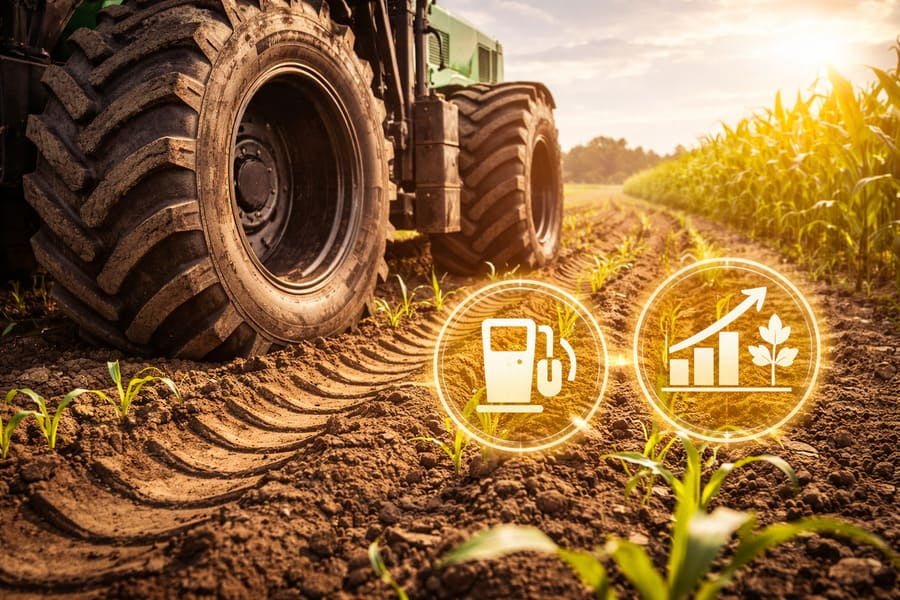
For modern agriculture, efficiency is everything. Let's break down the business case for a VF tire. The primary benefit is reduced soil compaction9. Less compaction means better root growth and water absorption, leading to a direct increase in crop yield—a clear revenue gain for the farmer. Second, the larger footprint and improved traction mean less fuel is needed to pull the equipment, reducing operational costs. Third, the ability to carry heavier loads means a grain cart or sprayer can cover more ground in a single run, reducing the number of passes required. This saves time, fuel, and labor. When you add up these benefits—higher revenue from better yields and lower costs from fuel and labor savings—the higher initial investment in a VF tire pays for itself, often within a single season. It's not a luxury; it's a tool for optimizing the entire agricultural operation.
How Has Tire Selection Evolved from a Purchase to a Strategic Choice?
Your purchasing team still uses a checklist: find the right size, load index, and tread pattern for the lowest price. This spec-based approach fails to consider how the tire actually performs as part of a larger operational system.
Tire selection is now a strategic choice because modern machinery and farming practices demand it. The focus has shifted to total operational impact, including maximizing uptime, ensuring compatibility with heavier equipment, and preserving long-term soil health10.

Think about the assets on a modern farm. A new combine or high-horsepower tractor is a massive capital investment. The tires are the only thing connecting that expensive machine to the ground. Choosing the wrong tire can bottleneck the entire operation. An underspecified tire can lead to premature failure and costly downtime during a critical harvest window. A tire not designed for the machine's weight will cause deep soil compaction9, reducing the value of the land itself over time. This is why the evaluation criteria have changed. Procurement managers and brand managers must now think like an operations manager. The key questions are no longer just "Does it fit?" but "Will it keep my machine running? Will it support the full capability of my equipment? And will it protect my most valuable asset, the soil?" This makes the tire supplier a critical strategic partner in the success of the entire operation.
Conclusion
The 2026 market reset is here. It demands a move from chasing low prices to building resilient, high-performance supply chains that deliver true operational value and reduce your total risk.
Exploring total value can transform your purchasing strategy and improve your bottom line. ↩
Understanding supply chain resilience can help you mitigate risks and enhance operational efficiency. ↩
Exploring economic rationality can help you make informed and cost-effective purchasing choices. ↩
Learn how VF tires can enhance efficiency and yield in agricultural operations. ↩
Discover the importance of operational uptime and how it impacts productivity and profitability. ↩
Building strategic partnerships can lead to better reliability and efficiency in your supply chain. ↩
Improving operational efficiency can lead to significant cost savings and increased productivity. ↩
Learn about the significant impacts of production delays and how to avoid them. ↩
Understanding soil compaction can help you optimize your farming practices for better yields. ↩
Maintaining soil health is essential for sustainable farming and long-term productivity. ↩