
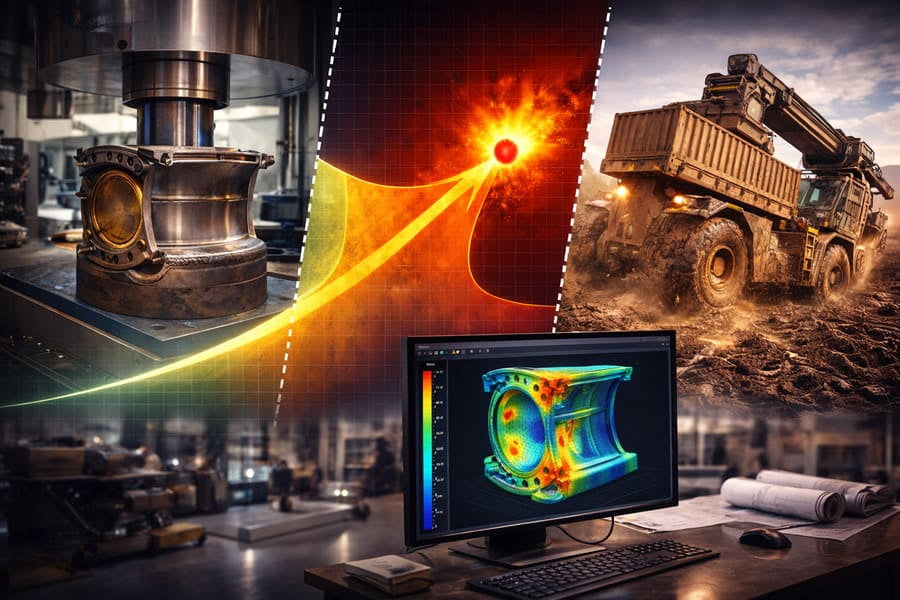
You specified a OTR rim1 that meets all the international standards2 like ETRTO3 and TRA4. You checked every box for compliance, confident in your purchase. But then, it fails prematurely in your toughest application, leaving you with downtime and questions.
Standard tests validate rims for average, predictable conditions, not for the unique, high-stress duty cycles5](6s">https://arxiv.org/pdf/2204.13245)6s of extreme applications. Risk exists in this gap between the standardized "ideal case" and your specific, real-world operational reality, leading to unexpected failures.
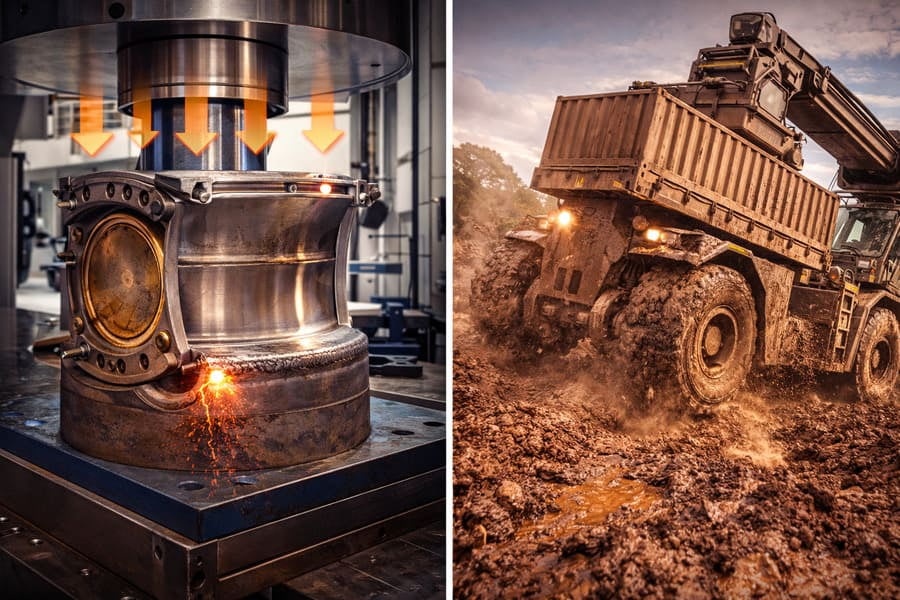
I'll never forget a call from a port operations manager. They were using our rims on their reach stackers, and while most were performing perfectly, a few were showing early signs of fatigue. He was frustrated, saying, "Your OTR rim1s are certified, what's going on?" After a short discussion, we found the issue. The failing OTR rim1s were on the machines doing constant, tight-turning maneuvers with maximum loads, a far more intense duty cycle6 than the others. The standard didn't account for that specific, repetitive, high-stress cornering. The certification proved the rim was made correctly, but it couldn't predict its performance under a workload that went far beyond the average the standard was built for.
Why Do 'Certified' Rims Still Fail Under Heavy Loads?
You invested in certified rims, believing the compliance stamp was a guarantee of performance. Yet, a failure occurs, making you question the value of the standards themselves.
Certification confirms a OTR rim1 meets a baseline for safety and fitment under a set of assumed "average" conditions. It is not a performance guarantee7 for your unique, high-stress application, which often exceeds these standard assumptions.
Think of standards like ETRTO3 or TRA4 as the highway code for rims. They ensure that a 25-inch OTR rim1 from any certified manufacturer will fit a 25-inch tire and handle a certain calculated load. This is essential for safety and interoperability. However, the tests that validate this are performed under controlled, repeatable laboratory conditions. They simulate forces like cornering and straight-line loading, but they can't replicate the chaotic combination of stresses your machine sees in the real world—hitting a pothole while turning at speed with a full load, for example. The standard is a starting point, a crucial baseline, but it's not the finish line for performance in extreme environments.
Is Your Machine's Duty Cycle a 'Standard' Use Case?
You might think that because you use a standard machine, your application is also standard. But the way your machine works—its "duty cycle6"—can be far from average.
A duty cycle6 is the unique sequence of loads, speeds, and movements a machine performs. An aggressive, short-cycle loading operation puts entirely different stresses on a rim than a long, steady hauling route, even if the machine and load weight are identical.
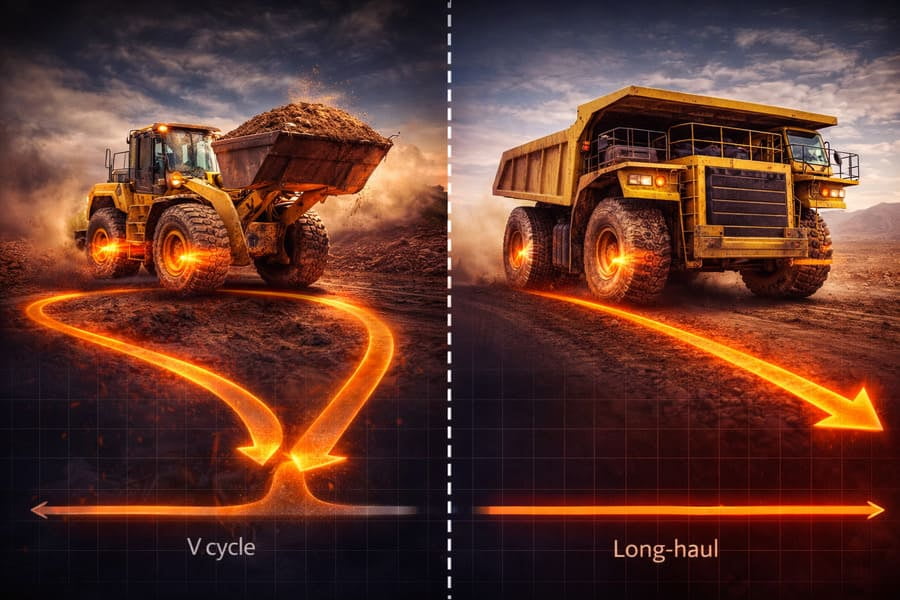
I often ask clients to describe exactly how their machine operates day-to-day. Two clients can have the same model of front-end loader, but their rim requirements can be vastly different. One might use it for simple long-distance material transport, which is relatively low stress. The other might use it for "V-cycle" loading—a highly aggressive, fast-paced routine involving constant acceleration, braking, and sharp turns.
Duty Cycle Impact on OTR Rim Stress
| Operational Factor | Long-Haul Duty Cycle | V-Cycle Loading Duty Cycle |
|---|---|---|
| Cornering Frequency | Low | Very High |
| Braking/Acceleration | Infrequent | Constant |
| Primary Stress Type | Radial Load (Weight) | Torsional & Bending Stress |
| Risk Profile | Standard | Extreme |
This V-cycle operation generates immense torsional stress8 and heat that a standard test doesn't fully capture. Your duty cycle6, not just your machine's spec sheet, defines your actual risk.
What Happens When Your Operation Exceeds the 'Safety Envelope'?
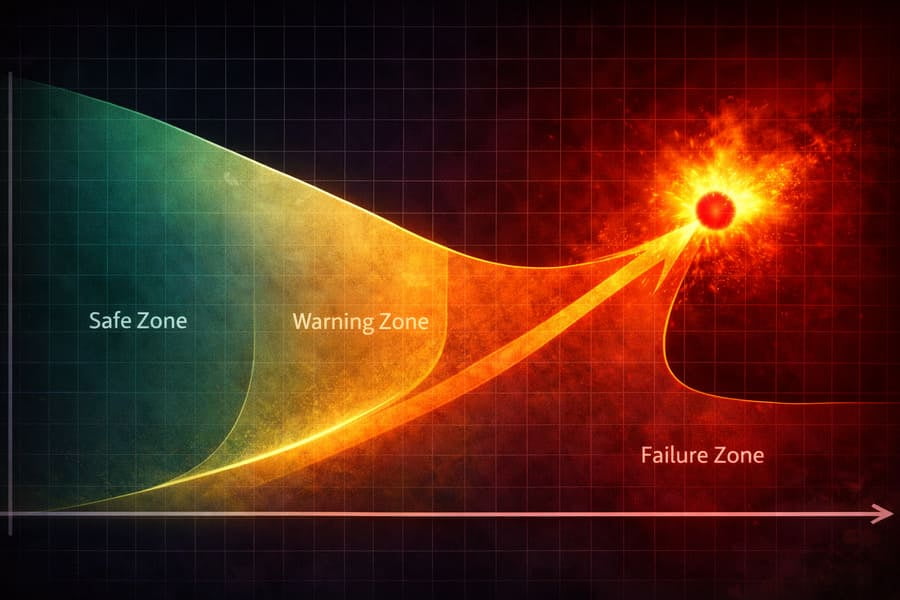
Standards create a "safe operating envelope" based on a set of assumptions. But what happens when your real-world use pushes past the edges of that envelope?
Once your operational stress exceeds the limits assumed by the standard, compliance no longer predicts reliability. The risk of failure increases dramatically because the rim is now facing forces and combinations of forces it was never designed or tested to handle.
Imagine a standard cornering fatigue test9 spins a rim for 2 million cycles with a certain side force. This defines a point within the safe envelope. Your aggressive V-cycle operation might apply double that force in a shorter, sharper burst, combined with intense braking heat. This condition is completely outside that tested envelope. The materials behave differently out there. Fatigue life doesn't just decrease by half; it can drop by 90% or more. The certified rim isn't defective; it's simply being used in a context the certification was never meant to cover. This is why just "buying certified" isn't enough for demanding jobs. You need a solution designed for your specific place on the map, especially if it's in uncharted territory.
Where Is the Hidden Risk That Standard Tests Can't See?
If standard tests don't cover your extreme application, where does the real risk come from, and how can you possibly find it before a failure happens?
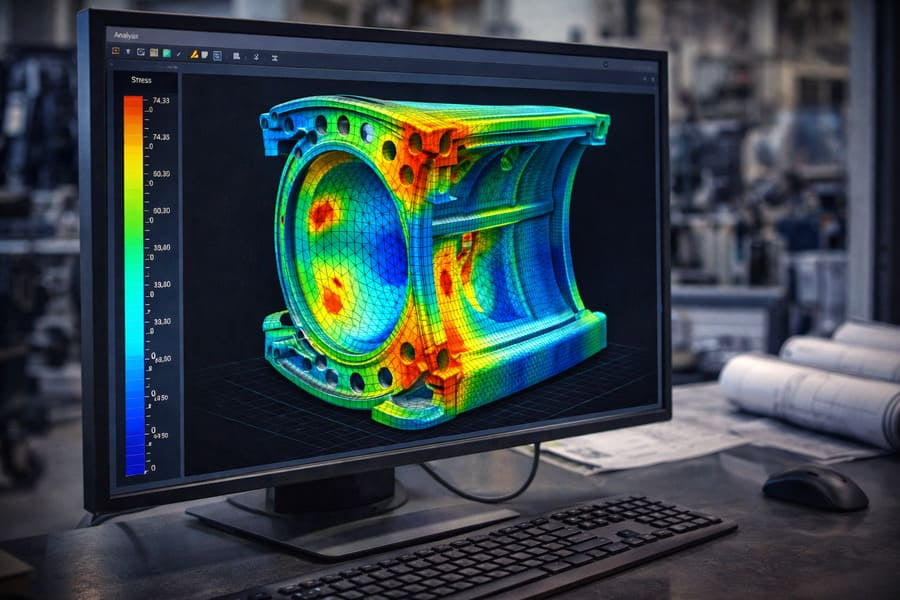
The hidden risk10 lies in the unique combination of forces specific to your job site—the mix of load, speed, terrain, and operator habits. This risk can only be found through a deeper partnership with your supplier, using tools like Finite Element Analysis (FEA)11.
Standard physical tests are great, but they are one-size-fits-all. They can't see the specific stress your reach stacker gets from cornering with a 40-ton container swinging at the top. This is where modern engineering tools come in. At Gescomaxy, when a client comes to us with an extreme application, we don't just point to a certificate. We ask for their duty cycle6 data. Then, we can run an FEA simulation. This computer model allows us to apply the specific forces of their operation to a virtual rim and see exactly where the stress hotspots will be. We can identify a potential failure point in the computer before it ever happens in the field. This moves the conversation from "Is it certified?" to "Is it right for my job?"
Conclusion
Standard certifications are a baseline, not a guarantee for extreme use. True risk management12 comes from partnering with a supplier who analyzes your specific duty cycle6 to find and solve problems.
Explore this resource to understand how to choose OTR rims that can withstand extreme conditions and avoid premature failures. ↩
Learn about the international standards that ensure safety and performance in OTR rims, crucial for informed purchasing decisions. ↩
Discover the significance of ETRTO standards in ensuring compatibility and safety for OTR rims and tires. ↩
Understand how TRA standards contribute to the safety and performance of OTR rims, helping you make better choices. ↩
Explore the concept of high-stress duty cycles to better understand the demands placed on OTR rims in extreme applications. ↩
This resource will explain how different duty cycles impact rim performance, helping you assess your specific needs. ↩
Find out what a performance guarantee means for OTR rims and why it matters for your operations. ↩
Understand torsional stress and its implications for rim durability in demanding applications. ↩
Learn about cornering fatigue tests and their importance in evaluating rim performance under stress. ↩
Explore the hidden risks associated with certified OTR rims to better prepare for potential failures. ↩
Discover how FEA can predict rim performance under specific conditions, enhancing safety and reliability. ↩
Learn about effective risk management strategies that can enhance the performance and longevity of OTR rims. ↩