
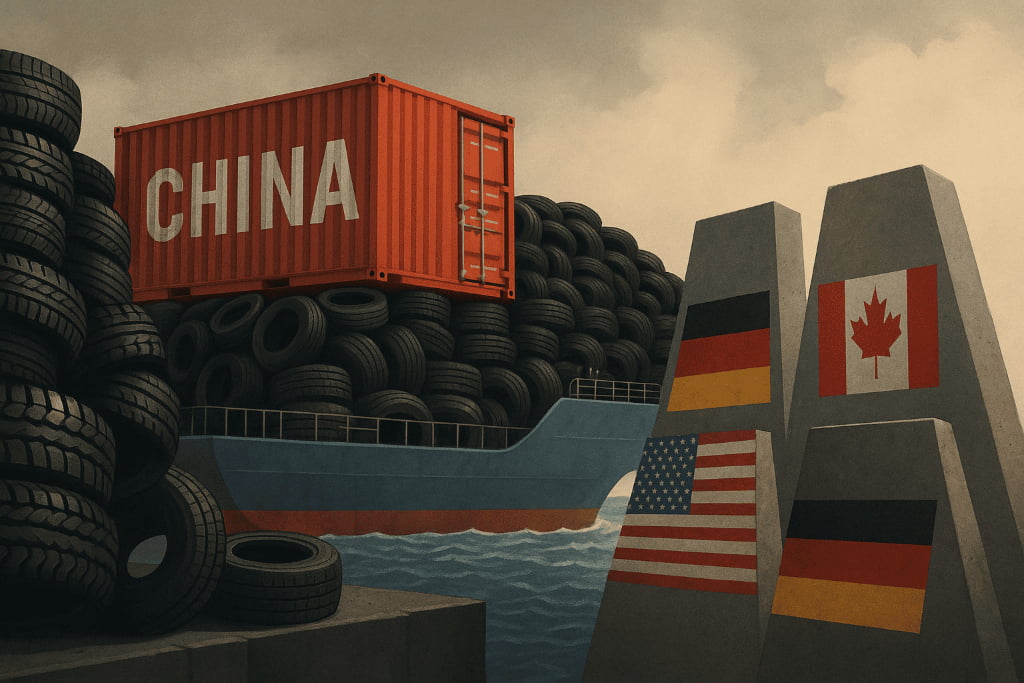
You rely on the massive supply and competitive cost of Chinese tires1. But now, you face a confusing web of new tariffs2, anti-dumping duties3, and origin rules4 that threaten your supply chain5.
China became the world's factory through unbeatable cost and scale. The world is pushing back with complex tariff barriers, not just against China, but also against Chinese-owned factories in other countries, to counter this overwhelming dependency and protect local industries.
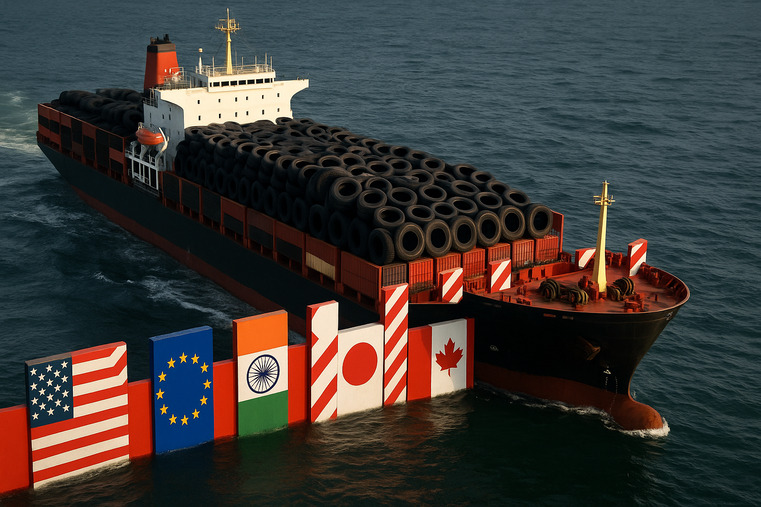
I've been exporting tires from China for over 12 years, and I've seen the entire landscape transform. A decade ago, the game was simple: produce a quality tire at a good price, and the world would buy it. We were focused on production, quality control, and logistics. Today, the game has completely changed. The biggest challenge isn't making a great tire anymore; it's figuring out how to get it into the customer's hands profitably and legally. The conversation with my clients is no longer just about tread depth and load capacity. It's about tariff codes, country of origin compliance6, and the risk of mirrored tax7es. This isn't a temporary shift; it's the new reality of the global tire trade.
Isn't 'Made in Vietnam' a Safe Bet Against Tariffs Anymore?
You thought you were being clever by sourcing from factories in Thailand or Vietnam to bypass tariffs2 on Chinese goods. Now you hear those supply lines are also facing new duties, creating fresh uncertainty.
No, it is not a safe bet. The real competition is now "China vs. China-made-in-Vietnam." Regulators know 70% of these Southeast Asian factories are Chinese-owned, and they are closing this loophole by targeting the manufacturing origin, not just ownership.
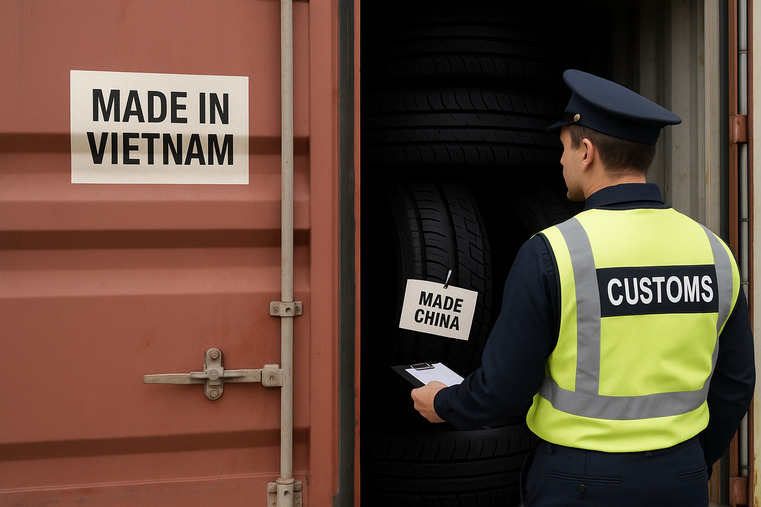
For a few years, moving production to ASEAN countries8 was the perfect strategy. It worked beautifully. We could offer our clients the same Chinese quality and efficiency but with a "Made in Thailand" stamp that avoided the heavy tariffs2 aimed at mainland China. But that party is over. The US and EU have caught on. They are no longer just looking at the label on the box; they are investigating the entire supply chain5. They call it "transshipment9," and they are targeting it aggressively. I recently had a client in Europe who was shocked when a shipment from Vietnam was flagged. The authorities argued it was a product of Chinese capital10 and technology, subject to the same anti-dumping rules. The "safe disguise" is gone. Sourcing from these countries is no longer a simple solution; it's a calculated risk with a potential 40% tariff penalty.
The Shifting Risk Profile: China vs. ASEAN
| Sourcing Origin | Old Advantage | New Reality / Risk |
|---|---|---|
| Mainland China | Lowest production cost11 | High, direct tariffs2 and anti-dumping duties3. |
| Vietnam/Thailand | Bypassed direct tariffs2 | High risk of transshipment9 tariffs2; "origin" is now scrutinized. |
| Mexico | NAFTA/USMCA benefits12 | Rising Chinese investment attracts scrutiny; could be the next target. |
| Local (US/EU) | No import tariffs2 | Higher production cost11, less capacity. |
If Demand Is Still High, Why Are Exports Becoming So Difficult?
The world still wants and needs affordable, high-quality tires. But your Chinese suppliers are talking more about tax compliance6 and logistics than about fulfilling your order, making the whole process slower and more expensive.
Because the battleground has shifted from demand to compliance6. Exports are not shrinking because nobody wants the tires; they are shrinking because global tariffs13s](https://arxiv.org/pdf/2505.05576)%%%FOOTNOTE_REF_2%%% are making it unprofitable for Chinese factories to ship them to key markets.
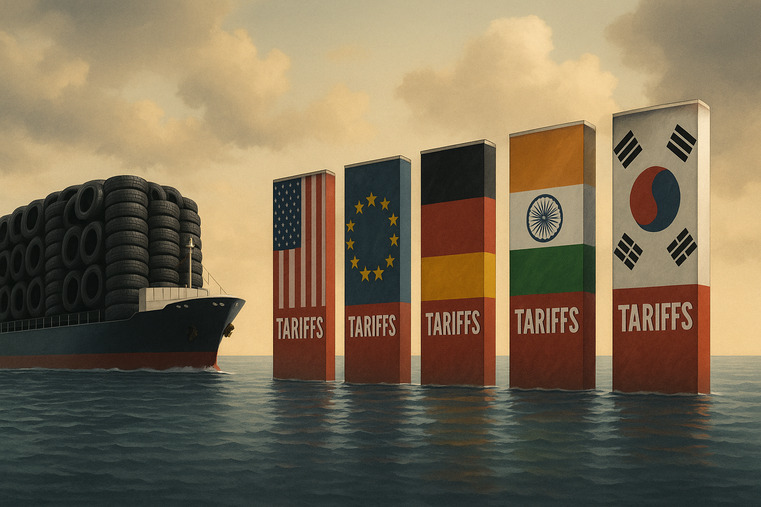
A few years ago, our biggest challenge was managing a boom in orders. Now, the challenge is navigating a minefield of regulations. Global anti-dumping laws, dual countervailing duties, and new "mirrored tax7" regimes are forcing Chinese manufacturers into a corner. They face a stark choice: build factories overseas in places like Mexico or the US, or get priced out of the market entirely. The export business has shifted from being opportunity-driven to survival-driven. I have conversations every day with factory owners who have top-tier products sitting in their warehouses. They have willing buyers in the US and Europe, but the combination of tariffs2 and shipping costs makes the final price completely uncompetitive. The core problem is no longer production; it's market access14. The gate is closing, and only those who can find a new key will survive.
So, Is China's Cost Advantage Completely Gone?
You see all these new barriers and wonder if China's time as the undisputed tire king is over. You're trying to figure out if you should be looking for entirely new supply regions for the long term.
No, China's cost advantage in producing high-quality tires remains unbeatable. However, its access advantage is collapsing. The ability to enter markets legally and profitably is now the real barrier, not the ability to produce a better or cheaper tire.
Let's be clear: no country can currently match China's combination of advanced technology, skilled labor, efficient supply chain5s, and massive scale in tire manufacturing. The quality and performance of our top-tier tires are on par with global brands, at a fraction of the cost. That fundamental advantage has not disappeared. What has disappeared is the easy path to the customer. For a while, Russia was the "last big escape window" for Chinese exports, absorbing huge volumes. But even that is changing, as Russia is now considering its own taxes to protect its local industry. This is the new global pattern. The demand for our products is strong. However, having a great product is useless if you can't get it past customs. The future for companies like mine is not just about making tires, but about building sophisticated, resilient, and compliant global supply chain5s.
Conclusion
China’s tire industry isn't fading, it's being forced to evolve. The future winners won't be the cheapest producers, but the smartest navigators of a new world of global trade.
Explore insights on the evolving landscape of Chinese tire manufacturing and its global impact. ↩
Understand the implications of tariffs on global trade and how they influence market dynamics. ↩
Learn about anti-dumping duties and their role in protecting local industries from unfair competition. ↩
Discover the importance of origin rules and how they affect trade compliance and tariffs. ↩
Find strategies for effective supply chain management amidst changing global trade regulations. ↩
Explore the critical role of compliance in navigating the complexities of global trade. ↩
Get insights into mirrored taxes and their effects on global trade practices. ↩
Learn about the trade landscape in ASEAN and its significance in global supply chains. ↩
Gain clarity on transshipment and its implications for tariffs and trade compliance. ↩
Explore the impact of Chinese capital on global manufacturing and trade dynamics. ↩
Understand the relationship between production costs and competitive advantage in trade. ↩
Discover how NAFTA and USMCA influence trade relations and economic benefits. ↩
Learn about global tariffs and their significant role in shaping international trade policies. ↩
Understand the barriers to market access and how they impact international business. ↩