
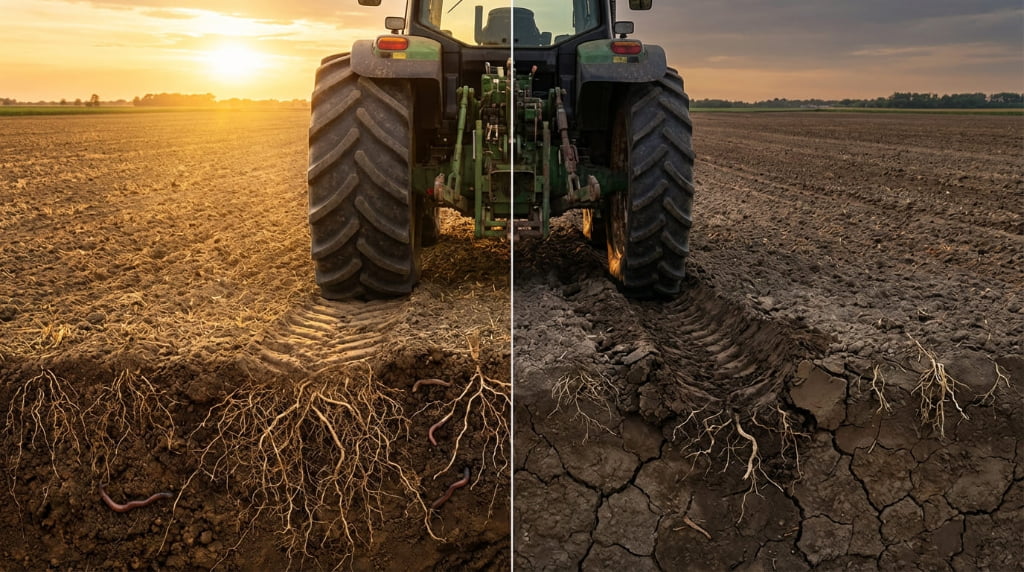
You see declining yields but can't pinpoint the cause. The problem might be hiding in plain sight, right on your wheels, silently compacting your soil and your future profits.
The wrong agricultural rim1 forces tires to run at high pressures2, leading to severe soil compaction3. This crushes the soil structure, suffocates roots, and drastically reduces crop yields4 over time. A properly matched rim is crucial for preventing this silent damage.
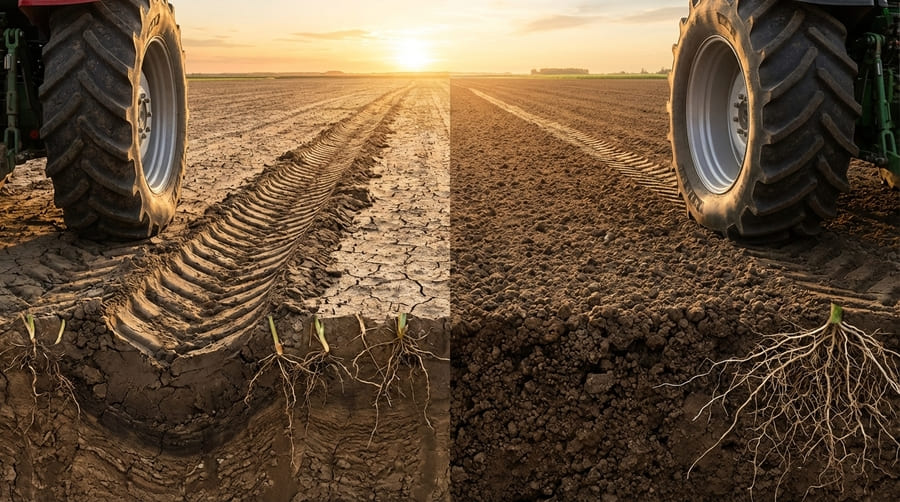
I've spent 13 years helping dealers and large-scale farms optimize their equipment. One of the most overlooked components is the rim. It seems like a simple piece of steel, but getting it wrong has huge consequences that go far beyond a simple mechanical failure. It can impact the very health of your soil and the profitability of your entire operation. Let’s look at how this happens and what you can do to avoid these hidden risks.
How Does Your Equipment's Weight Contribute to Soil Compaction?
Your new, powerful tractor is incredibly efficient but also incredibly heavy. This weight presses down on your fields, crushing the life out of the soil and reducing your harvest potential year after year.
Heavy machinery creates deep soil compaction3, squeezing out the air and water channels that plant roots need to thrive. This leads to poor drainage, stunted growth, and significant yield loss. Modern tire technologies like IF/VF are designed to combat this.
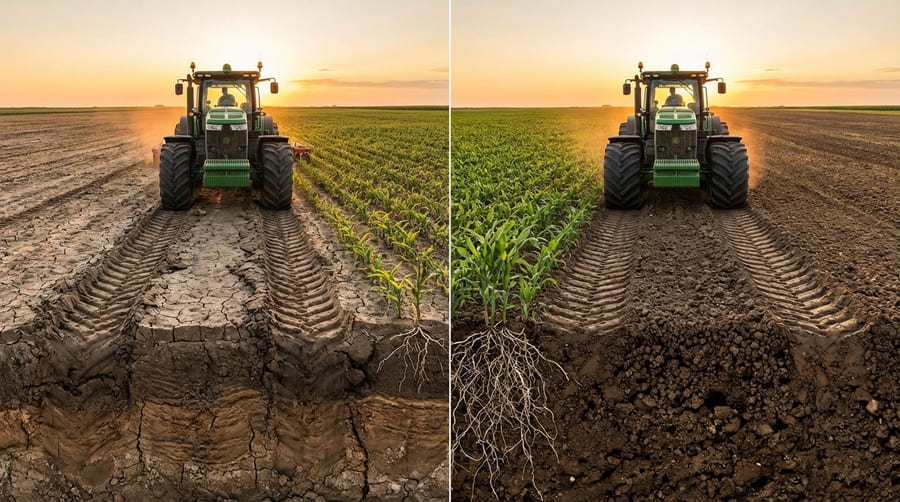
The science is simple: pressure equals force divided by area. As farm machinery gets heavier, the only way to avoid damaging soil is to increase the area of contact—the tire's footprint. This is where modern tire technology comes in. IF (Increased Flexion) and VF (Very High Flexion) tires are engineered with flexible sidewalls that can carry the same load at a much lower air pressure. This creates a longer, wider footprint that distributes the machine's weight, much like snowshoes allow you to walk on top of deep snow. However, these advanced tires are completely dependent on the rim they are mounted on. An undersized or poorly designed rim cannot support the tire's flexible sidewall correctly, which negates the low-pressure benefits and can even lead to catastrophic tire or rim failure under load.
Why Does Rim Strength and Quality Matter for Heavy Loads?
You've invested in advanced, low-pressure tires. But if the rim buckles or the weld fails under load, your entire investment is worthless, and your equipment is dangerously stranded in the field.
For heavy-load operations, reinforced rims5 are essential. Their strength comes from high-grade steel, precise welding, and durable coatings. These features prevent structural failure under high stress and protect against corrosion, ensuring long-term reliability and safety.
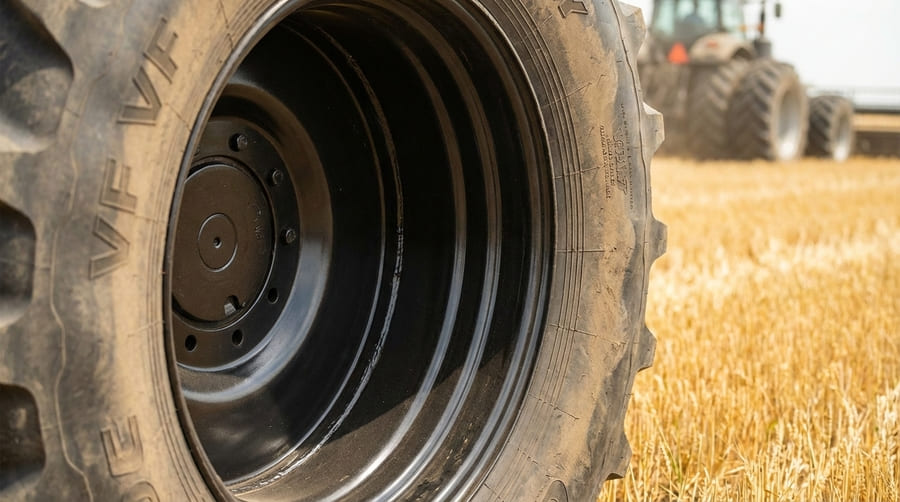
A rim is not just a hoop of metal; it’s a critical structural component. When dealing with the massive torque and weight of modern tractors and combines, especially when using low-pressure tires, the stress on the rim is immense. A high-quality rim starts with the right material—high-grade steel that resists flexing and fatigue. The welding process is just as critical. I’ve seen cheap rims fail at the weld seam, causing immediate deflation and loss of control. At Gescomaxy, we use automated welding for perfect consistency and inspect every weld to ensure it meets rigorous standards. Finally, the coating process is vital for longevity. Our multi-stage paint and powder-coating systems create a durable barrier against moisture, chemicals, and physical damage, preventing the corrosion that can silently weaken the rim from the inside out.
Are You Using the Right Rim for Your Specific Farming Conditions?
You wouldn't use a sports car to haul logs. Yet, many operators use a standard "one-size-fits-all" rim for highly specialized tasks like paddy farming6, leading to poor performance and premature failure.
Different farming conditions demand different rim designs. A standard rim will quickly rust and fail in the wet, corrosive environment of a paddy field, while a specialized paddy wheel is built for that exact purpose. Choosing the right custom rim7 is key to efficiency and durability.
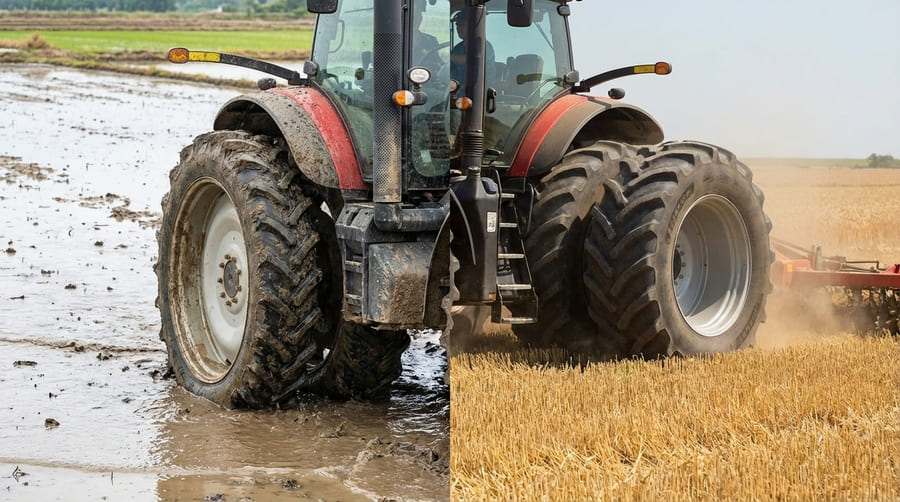
The idea of a universal rim is a myth in modern agriculture. The optimal solution always depends on the specific application. Your rim choice should be as specialized as your choice of crop. Take paddy-field farming, for example. The constant submersion in water requires a wheel with excellent corrosion resistance8 and a design that sheds mud. We engineer our paddy wheels with specific coatings and structural features for this environment. In contrast, dryland farming9 with heavy harvesters might require a reinforced, wide rim designed to maximize the footprint of a huge VF tire for flotation and minimal soil compaction3. Here’s a quick look at how requirements differ:
Rim Customization: Paddy Field vs. Dryland
| Feature | Paddy-Field Rim (Paddy Wheel) | Dryland Heavy-Load Rim |
|---|---|---|
| Primary Goal | Corrosion Resistance, Traction | Load Capacity, Soil Protection |
| Design Focus | Narrow profile, self-cleaning | Wide profile for flotation |
| Material Needs | Advanced anti-rust coatings | Reinforced steel, precision welds |
| Failure Risk | Rapid rusting and structural rot | Cracking under load, bead failure |
As a supplier, our role is to help you match the right rim and tire combination to your exact needs.
Conclusion
Choosing the right rim is not just about fitment; it's a critical investment in your soil's health, your equipment's reliability, and your farm's long-term profitability.
Learn how the right agricultural rim can enhance tire performance and prevent soil damage. ↩
Explore the impact of high tire pressures on soil health and crop yields. ↩
Understanding soil compaction is crucial for improving crop yields and soil health. ↩
Discover the various factors that can affect crop yields and how to optimize them. ↩
Explore how reinforced rims can enhance safety and performance in heavy-load operations. ↩
Explore best practices for paddy farming to enhance productivity and sustainability. ↩
Discover how custom rims can improve efficiency and durability in specific farming conditions. ↩
Learn why corrosion resistance is vital for the longevity of agricultural equipment. ↩
Understand the unique challenges of dryland farming and how to address them effectively. ↩