
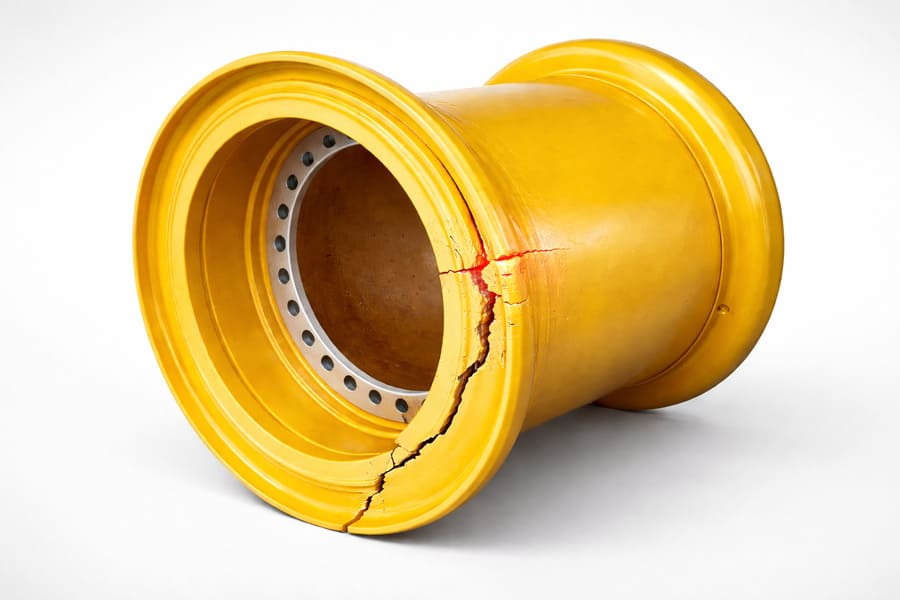
An OTR wheel fails, and the blame falls on 'material quality1.' But the material report looks perfect, leaving you confused and stuck with a recurring, expensive problem.
Material quality is often a convenient but misleading explanation for failure. More frequently, the failure is caused by a design flaw2 that concentrates stress, a problem that even the highest-grade material cannot overcome. The material didn't fail; the design failed the material.
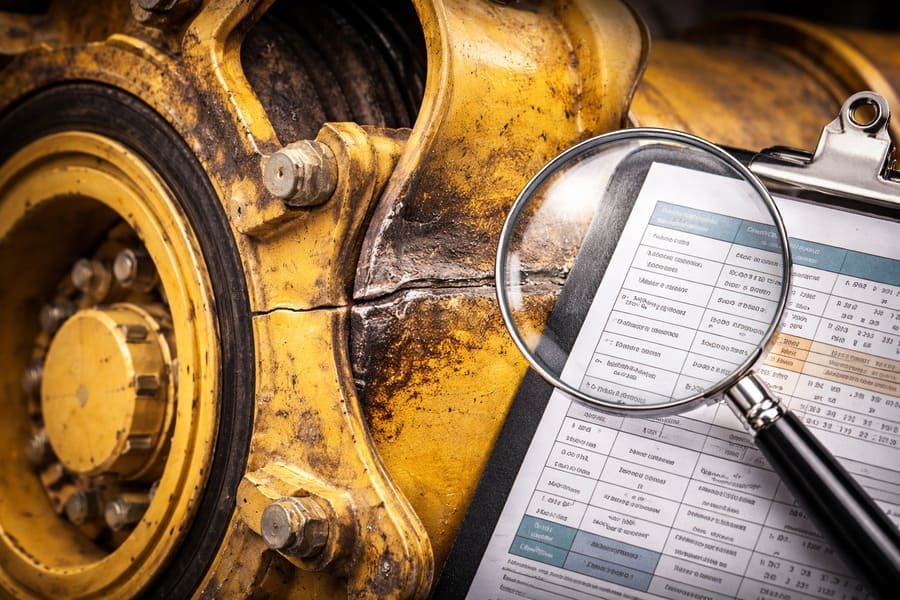
As a procurement manager, you rely on data. When a wheel breaks, one of the first things you ask for is the material test report3. It's tangible, measurable, and seems like a straightforward way to assign blame. I've been in countless meetings where these reports are laid on the table as if they are the final word. But over 13 years in this industry, I've learned that the numbers on that sheet often hide a more complex truth. The real story isn't just about the steel's grade; it's about the geometric and operational reality that the steel was forced to endure.
Why Do Material Specs Dominate Failure Discussions?
A wheel failure occurs, and the conversation immediately turns to steel grade and tensile strength4. This focus on material data can often lead the investigation down the wrong path, wasting time and resources.
We focus on material specs because they are easy to quantify. Unlike complex design analysis, a material certificate provides simple, comparable numbers. This makes material quality1 an easy, but often incorrect, scapegoat for deeper structural problems5.
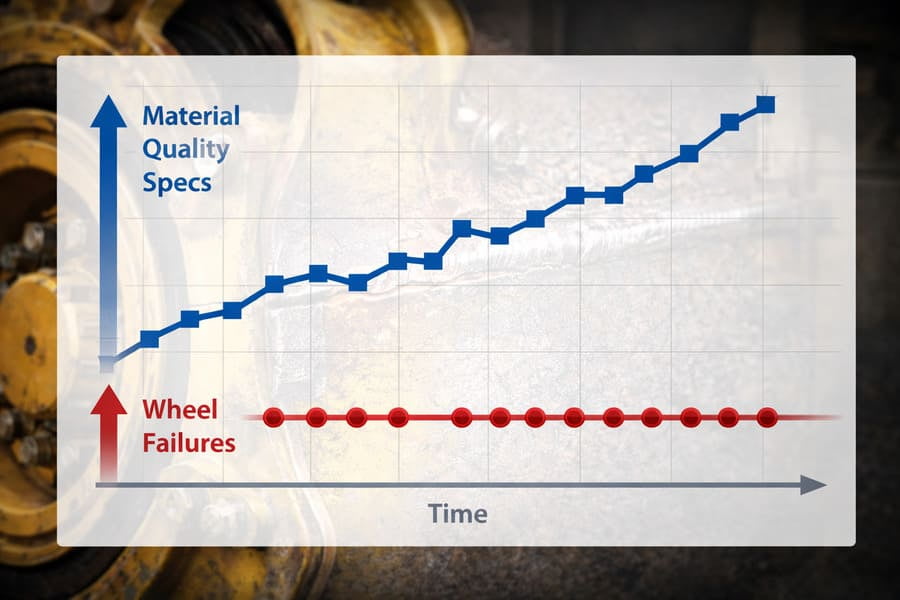
In any failure analysis, people crave certainty. A material test report3 offers exactly that. It gives you a clear number for yield strength, tensile strength4, and elongation. You can compare this number to a standard and declare it "good" or "bad." It's a simple, binary conclusion. Discussing stress concentration6, bending moments, or fatigue cycles7 is far more complex and abstract. As a result, teams on both the client and supplier side gravitate toward the simplest, most measurable data point. This creates a powerful bias. The problem is that a OTR wheel can be made from steel that meets every single specification perfectly and still fail catastrophically if the design is flawed. The material report becomes a distraction, a convenient box to tick that prevents a more difficult but necessary conversation about the wheel's fundamental geometry.
Is a Stronger Material Just Hiding a Weaker Design?
Your team's solution to a recurring failure is to specify a higher-grade, more expensive steel for the next order. This seems like a logical upgrade to prevent future issues and improve durability.
Often, yes. Upgrading to a stronger material is a common tactic to compensate for a poor design. It's a brute-force solution that acts as a bandage, masking underlying geometric flaws that create stress risers8 instead of actually fixing them.
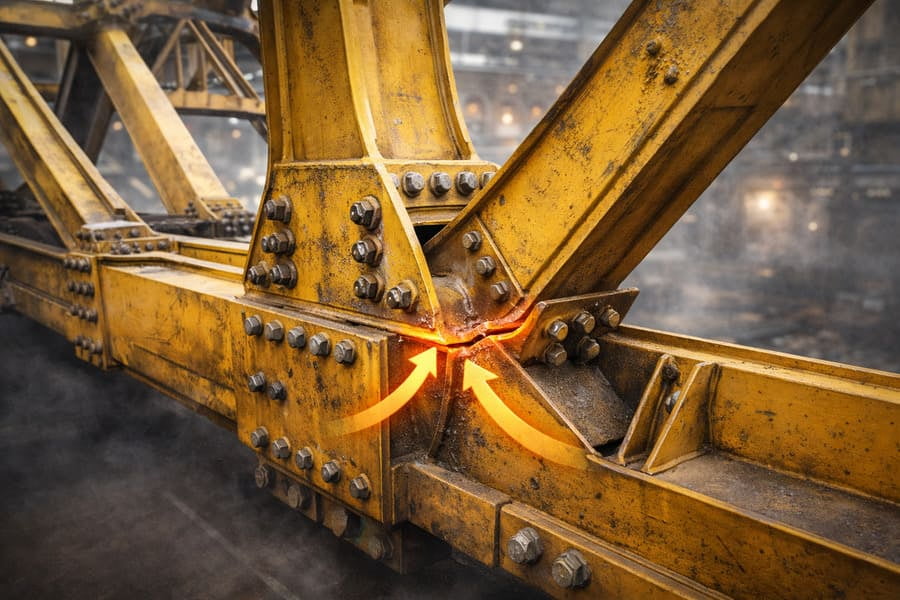
Think of it like building a bridge. If the architectural design is flawed and puts too much stress on one point, you have two options. The right option is to redesign the bridge to distribute the load correctly. The easy option is to simply use a massively thick, expensive steel beam at the single stress point. This might stop the beam from breaking, but it doesn't fix the bad design. In OTR wheels, this happens all the time. Instead of refining the disc's shape or the OTR rim's profile to smooth out the flow of stress, a manufacturer might just switch from Q235 steel to Q355. The stronger material absorbs more punishment, so the wheel lasts longer. It gives the illusion of a solution, but the root cause—the inefficient and stressful geometry—is still there. A truly well-engineered wheel uses the right material intelligently, not the strongest material as a crutch.
Can Better Steel Correct Flawed Geometry?
You're convinced that if you use a premium alloy9 with superior strength and ductility, it can overcome any potential weak points in the wheel's shape, ensuring a longer operational life.
Absolutely not. Material choice can increase a wheel's overall strength, but it is powerless to fix a fundamental geometric error. A sharp corner or an abrupt transition in a design will always concentrate stress, regardless of what material it's made from.

Stress flows through a wheel like water in a river. A good design has smooth curves and gradual transitions, allowing the "water" to flow evenly. A poor design has sharp internal corners and sudden changes in thickness, which are like large, jagged rocks in the river. The water crashes against them, creating turbulence and high pressure. No matter how strong you make that rock, the turbulent force is still there. In the same way, a high-grade steel alloy at a stress concentration6 point will still be subjected to forces far beyond what the rest of the wheel experiences. The superior material might resist those forces for more cycles, but the failure is inevitable because the geometry is creating the problem. As a procurement manager, it's crucial to partner with suppliers who focus on design excellence10, not just on touting premium material grade11s.
Why Does High-Grade Steel Still Suffer from Fatigue Cracks?
You've invested in OTR wheels made from top-tier steel, expecting them to be nearly immune to failure. Yet, you still see fatigue cracks12 develop over time, which seems to contradict the material's superior specifications.
Fatigue doesn't follow the simple logic of material strength. It is the accumulation of damage from millions of small stress cycles. Even low levels of stress, when repeated enough times at a concentration point, will cause a crack in any grade of steel.
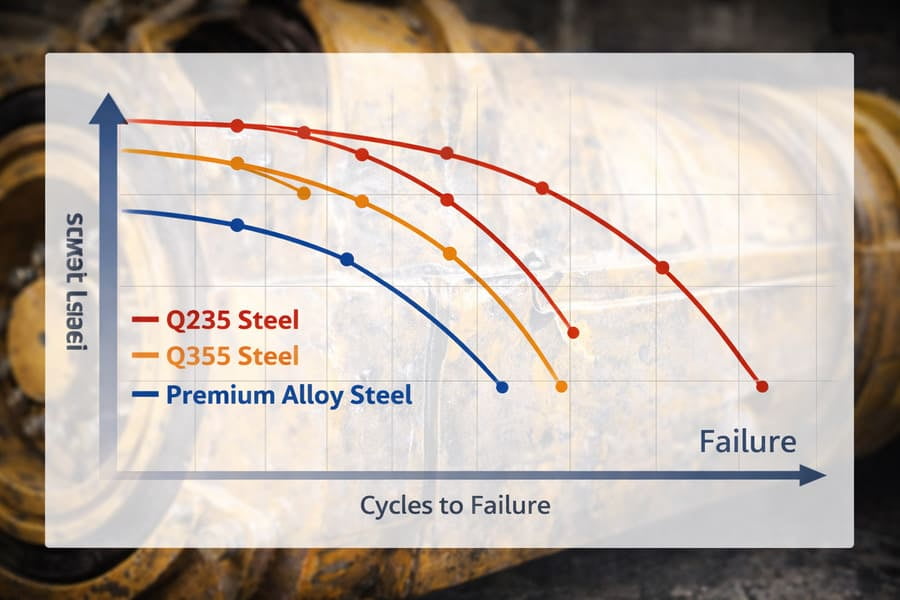
A material's tensile strength4 tells you how much force it can withstand in a single pull. It’s a measure of ultimate strength. Fatigue, however, is a completely different phenomenon. It's failure by a "death by a thousand cuts." Every time the OTR wheel rotates under load, it flexes, causing tiny amounts of stress. If the wheel's geometry creates a stress riser, that one small spot gets "pinched" harder than the rest of the wheel on every single rotation. While a higher-grade steel13 might have a higher fatigue limit, it is not immune. If the localized stress at the concentration point is above that limit, the clock is ticking. The material's grade might determine whether it fails at 2 million cycles or 3 million cycles, but the geometric flaw has already guaranteed that it will fail. Focusing on fatigue resistance through design is far more effective than just chasing a higher material grade11.
Conclusion
Material quality is part of the story, but it's rarely the main plot. True reliability comes from a design that respects the material, ensuring that no single point bears the burden of failure.
Understanding material quality's role can help you make informed decisions in procurement and design. ↩
Exploring design flaws can reveal critical insights into preventing future wheel failures. ↩
A comprehensive material test report is essential for assessing material quality and performance. ↩
Grasping tensile strength helps you evaluate material performance under load. ↩
Identifying structural problems can lead to more effective solutions and improved wheel reliability. ↩
Learning about stress concentration can enhance your understanding of structural integrity in wheel design. ↩
Understanding fatigue cycles can help you predict and extend the operational life of wheels. ↩
Exploring stress risers can enhance your design strategies to prevent wheel failures. ↩
Learning about premium alloys can inform your material selection for better durability. ↩
Focusing on design excellence can lead to innovative solutions and enhanced wheel reliability. ↩
Understanding material grade helps you make informed choices in material selection for wheels. ↩
Understanding the causes of fatigue cracks can help you mitigate risks in wheel design. ↩
Investigating higher-grade steel can help you understand its advantages and limitations in wheel design. ↩