
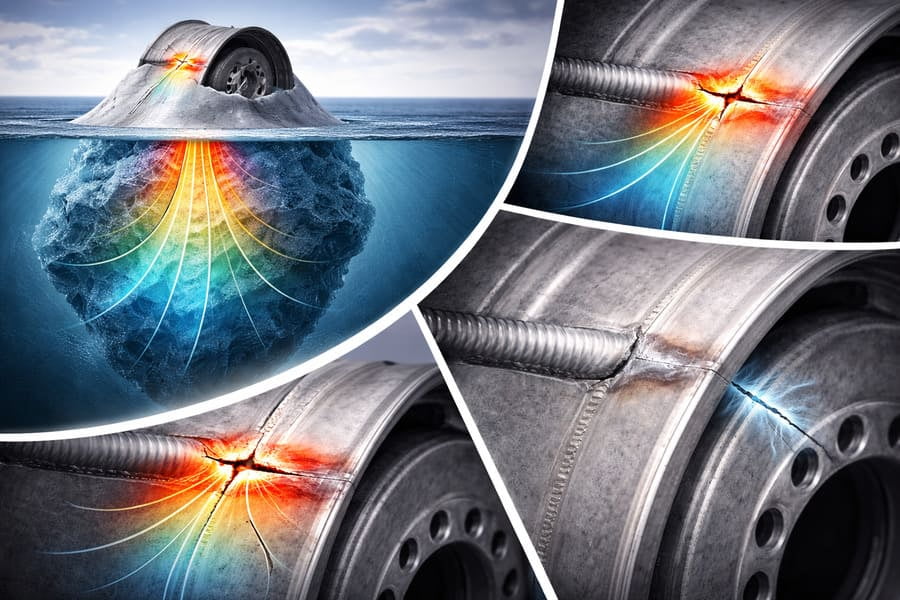
You discover a crack on an OTR wheel right at the weld. Your immediate reaction is to blame a faulty weld1, leading to warranty claims and friction with your supplier, yet the problem persists.
A weld crack2 is rarely a sign of a bad weld; instead, it's a physical symptom of where the OTR wheel's design concentrates the most stress. It's the location where the forces become too great for the material, not necessarily the weakest point in the structure.
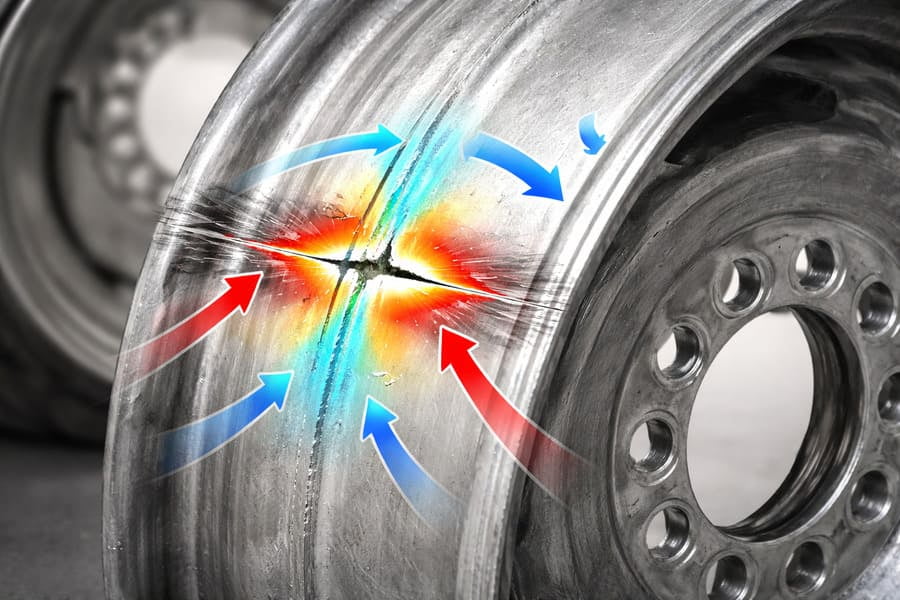
In my 13 years of exporting agricultural and OTR components, the most common debate I've had with procurement managers is over cracked welds. They see a failure at the joint and logically conclude the joint was faulty. I understand the perspective completely. However, I've learned to ask a different question: "What story is this crack trying to tell us about the forces on the OTR wheel?" The crack isn't the problem; it's a map pointing to the real problem, which is almost always hidden in the wheel's design and operational stress3.
Why Is the Crack's Location a Misleading Clue?
You find a failure at the weld and naturally assume that is the source of the problem. This leads you to focus all your corrective actions on weld quality4, a path that rarely solves the issue.
The location of a crack only shows where the failure became visible, not where the problem originated. Stress from the vehicle's operation is channeled through the wheel's structure, and the crack simply appears at the point where that stress is most concentrated.

Thinking the crack's location is the root cause is a classic diagnostic error. It's like finding a puddle in your basement and only fixing that one damp spot on the floor, ignoring the leaking pipe in the wall above it. In OTR wheels, the entire structure is a system for managing immense forces. The geometry of the disc5, the thickness of the rim, and the angle of the joint all work together to direct a load path. A crack is simply the final, visible result of millions of stress cycles being focused on one area. By the time the crack appears, it's just reporting the news of a long-standing design or loading issue. Chasing weld quality4 alone is a distraction from the much more important questions about the overall structural integrity6 and stress distribution within the wheel.
Symptom vs. Root Cause
| Common Assumption (Symptom) | Engineering Reality (Root Cause) |
|---|---|
| The weld is defective or weak. | The wheel's geometry funnels stress into the weld zone. |
| We need a stronger weld bead. | We need a design that distributes the load more evenly. |
| The supplier is at fault. | The operational load may exceed the original design intent. |
Where Does Stress Actually Reveal Itself?
If the weld isn't the weakest link, then why do cracks consistently appear there? It seems counterintuitive that a strong, solid weld would be the first place to show signs of failure.
Stress always becomes visible at points of abrupt change in stiffness. The area where the rigid weld bead meets the more flexible parent metal creates a "stiffness transition zone," which acts as a natural focal point for fatigue, initiating cracks.
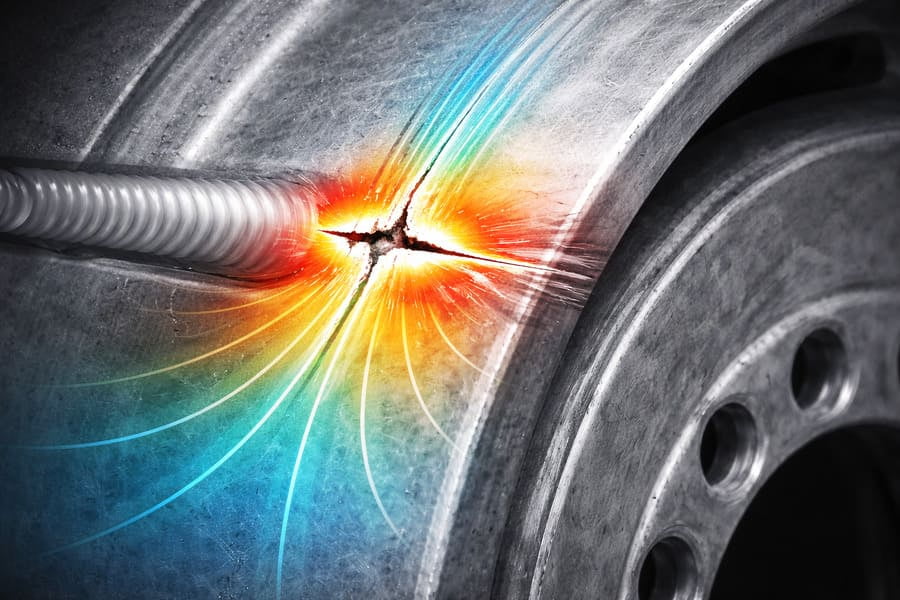
Imagine two different rubber bands, one very thick and one very thin, tied together. If you stretch the combined band, where will it most likely snap? Right at the knot—the point of transition. A welded joint in a OTR wheel is no different. You have three distinct zones: the very hard and rigid weld material itself, the Heat-Affected Zone (HAZ)7 where the steel's properties were changed by the heat, and the original "parent" steel of the disc and rim. This creates a gradient of stiffness. As the wheel flexes under load, this transition area is subjected to intense, localized strain. It’s not a defect; it’s physics. The stress doesn't have a choice; it is forced to concentrate at this boundary. This is where the truth of the wheel's operational load is told, in the form of a tiny fatigue crack8 that eventually grows into a visible failure.
So, the Weld Is Just the Messenger?
You’ve always been taught that a chain is only as strong as its weakest link. Seeing the weld fail first reinforces the idea that it must be the weak point in the OTR wheel's structure.
Precisely. The weld is usually the first to expose an underlying structural issue, not because it's defective, but because its location at a key structural transition9 makes it the focal point for stress. It's the messenger that gets shot, not the cause of the war.
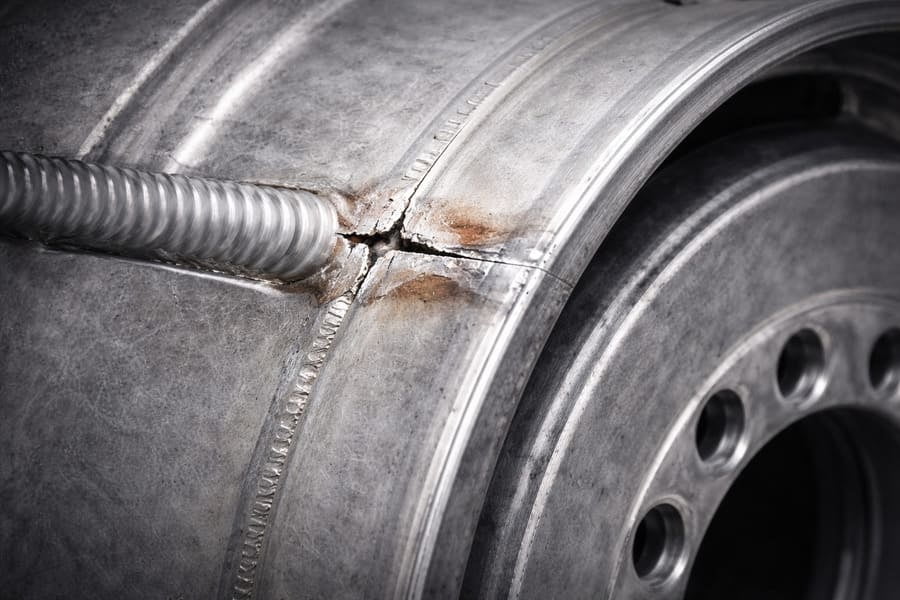
The weld on an OTR wheel sits at the intersection of two major challenges. First, as we discussed, it's a material transition (the stiffness jump). Second, and just as important, it's a major structural transition. It's the point where the disc, which transfers torque from the axle, is joined to the rim, which holds the tire and interacts with the ground. This junction is inherently a high-stress area due to the immense bending moments it must endure. So, the weld is placed in the worst possible neighborhood from a stress perspective. It's not a poorly made component; it's a well-made component that has been designed into a location that bears the brunt of the entire system's load. It is simply the first part of the structure to cry out for help when the overall design or load conditions are unsustainable.
Can Repairing the Crack Ever Be a Real Solution?
When a wheel cracks, the most immediate and seemingly logical solution is to grind out the crack and re-weld it. This gets the machine back to work quickly and seems like a cost-effective repair.
Fixing the crack without addressing the underlying structural stress is only a temporary patch. It buys you a little more time, but because the root cause—the flawed load path—remains, the failure is guaranteed to happen again.
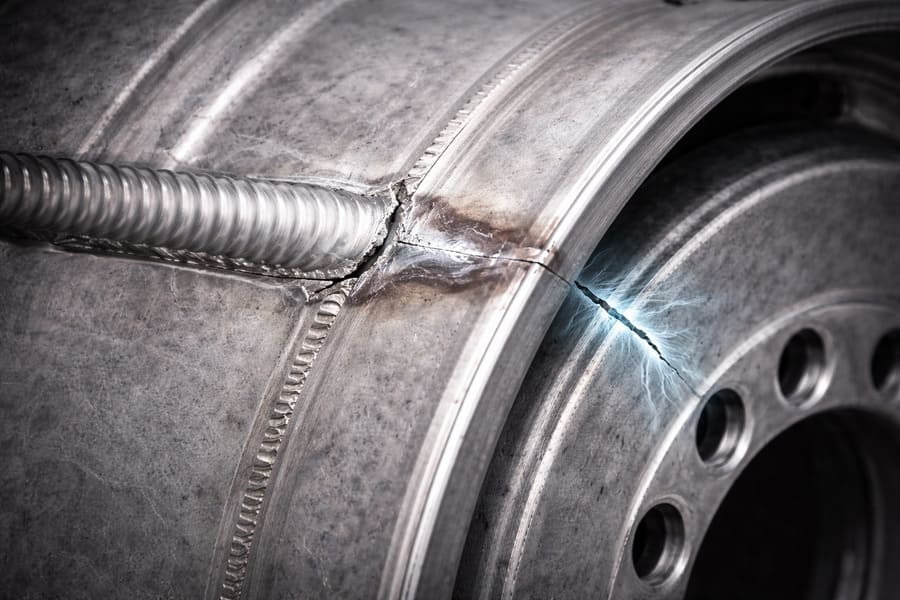
This is the cycle I see so often. A OTR wheel cracks, it's repaired. It runs for a while, then cracks again, often right next to the repair. Why? Because the repair did nothing to change the fact that the wheel's geometry is funneling massive stress into that one area. You've essentially just put a bandage on a deep wound. The only true, long-term solution is to change the equation. This means using a wheel with a better design—perhaps with a thicker disc, a more robust rim profile, or a different joint geometry that distributes the load more effectively across a wider area. As a procurement manager, your goal should be to break this expensive cycle of failure and repair. This requires partnering with a supplier like Gescomaxy who understands root cause analysis and can provide an engineered solution, not just a temporary fix.
Conclusion
A weld crack2 isn't a verdict on your supplier's quality; it's a data point. It tells you where your OTR wheel's design is failing. Listen to what it's saying to find a real solution.
Identifying faulty welds is crucial for ensuring the integrity of OTR wheels and preventing costly repairs. ↩
Understanding the causes of weld cracks can help you prevent future failures and improve wheel design. ↩
Understanding operational stress helps in designing wheels that can withstand real-world conditions. ↩
Improving weld quality can enhance the overall performance and reliability of OTR wheels. ↩
The geometry of the disc plays a crucial role in the performance and durability of OTR wheels. ↩
Assessing structural integrity is vital for ensuring the safety and longevity of OTR wheels. ↩
Understanding HAZ is essential for improving weld quality and preventing failures. ↩
Learn about fatigue cracks to understand their implications for OTR wheel durability. ↩
Learn about structural transitions to better understand stress points in OTR wheels. ↩