
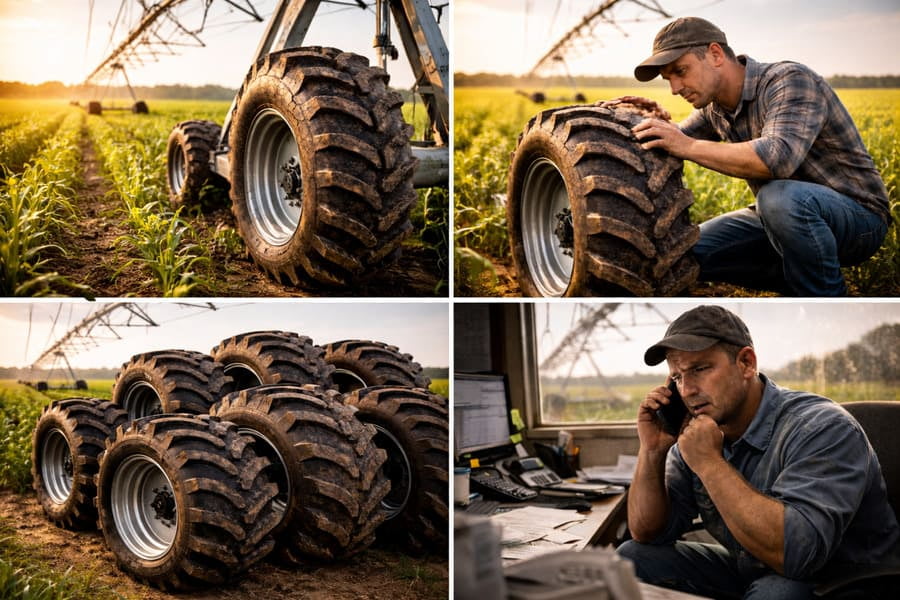
Tired of pushing performance specs that don't stop mid-season calls from frustrated farmers? These "small" irrigation tire issues cost you trust and repeat business. The solution is selling reliability, not just features.
You win dealers by shifting the focus from product specifications to operational certainty. Provide a irrigation tire that acts as a risk buffer, guaranteeing a trouble-free season, which is far more valuable to a farmer than any performance metric on paper.
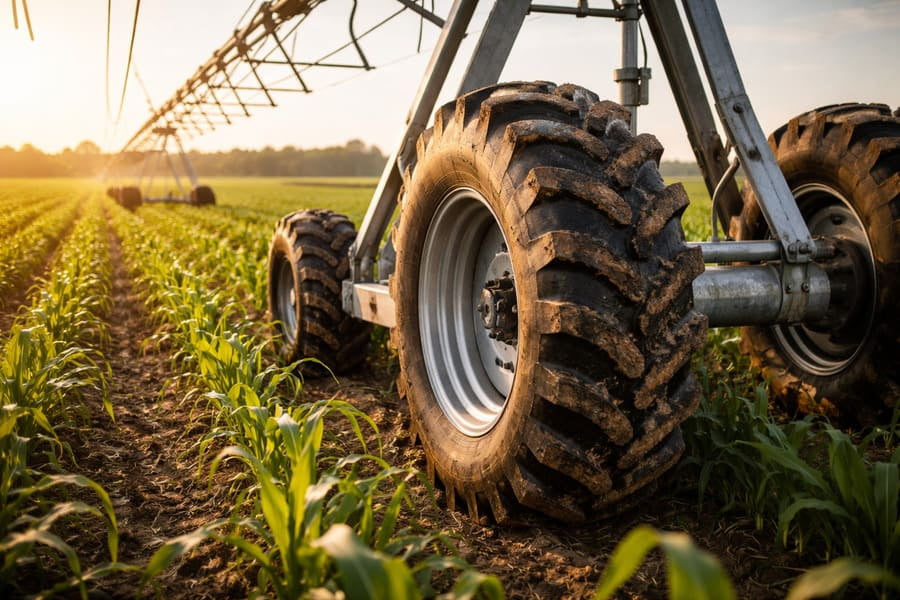
I remember talking to a dealer in Alberta a while back. I started my usual pitch about our irrigation tire's superior compound and advanced tread design. He stopped me mid-sentence and said, "I don't care about that. I care about not getting a call in July when the canola is high." That conversation changed how I understood this market completely. He wasn't selling a product; he was selling his customers a promise of a quiet, uninterrupted growing season. My job wasn't to sell him a better tire, but to give him a tool to reduce his business risk.
Isn't a Irrigation Tire's Job to Perform, Not Just Survive?
You’re looking at spec sheets, comparing load ratings and tread depth, thinking that's what sells. But for irrigation tires, the most important feature isn't even listed: the ability to become invisible.
In irrigation, a tire’s primary job is to be a risk buffer. Its value is not in its performance specifications but in its ability to quietly carry risk and prevent any hesitation for the farmer mid-season.
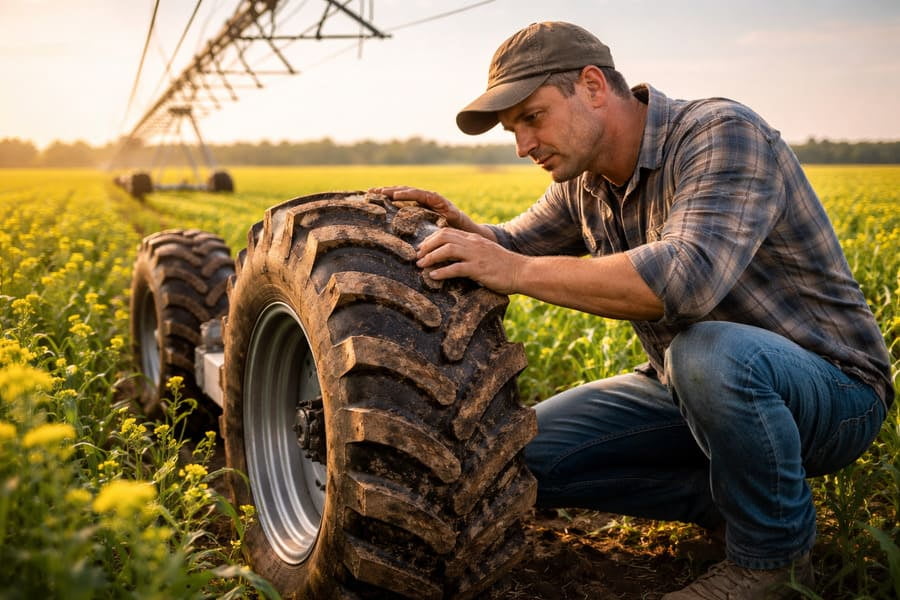
Let’s be honest, an irrigation tire's life isn't about high performance. It moves slowly under a constant load, baked by the sun for months. It's not about speed or traction in the same way a tractor tire is. I've seen dealers in Western Canada completely ignore performance data. Why? Because their customers, the farmers, define success differently. For them, a "good" tire is one they install in the spring and completely forget about until the fall. The moment a farmer feels he has to walk out into a mature crop just to check on a tire he’s worried about, that tire has already failed. It has introduced doubt and risk into the operation. It doesn't matter what the spec sheet claims at that point; the tire has broken its real promise of being utterly dependable.
What Are the Failures That Don't Count as Failures?
You might think your tires are reliable because you get very few blowout claims. But the most dangerous failures are the ones that never show up in your warranty reports.
The most damaging irrigation tire failures are not blowouts but silent, trust-eroding issues like flat spotting, premature weather checking, and bead seating anxiety. The tire isn't failed enough to claim, but it's failed enough to replace.
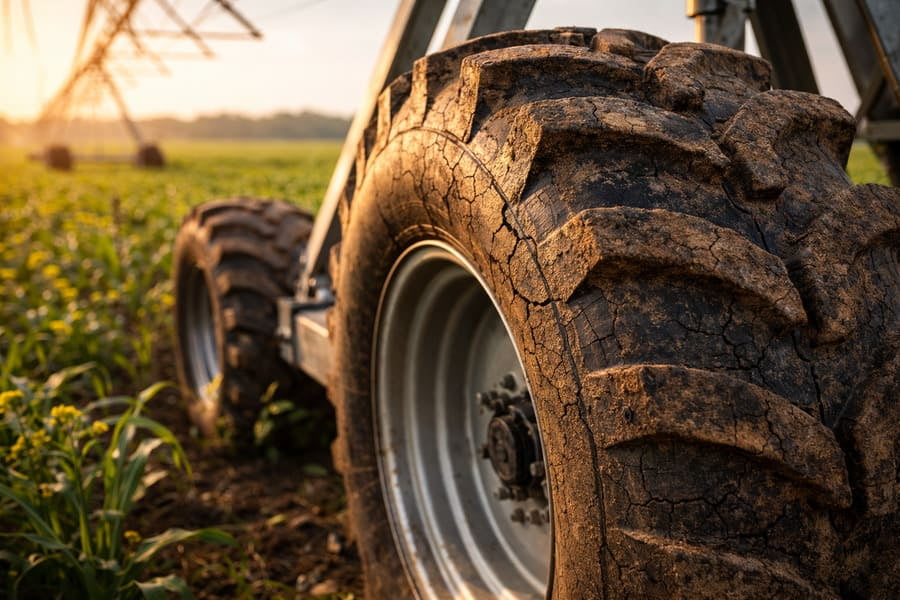
Think about this scenario. A tire develops a flat spot over the winter. When the season starts, it causes the whole pivot tower to vibrate as it rolls. It's not a blowout. It's not a manufacturing defect you can easily prove. But the farmer sees that shudder and loses all faith in the irrigation tire. He's not going to risk that tower going down in the middle of a dry spell. So, he calls his dealer and says, "Get this thing off of here." The tire is now in the scrap pile. It wasn't bad enough for a warranty claim, but it was too risky to keep using. This is the "soft failure" that quietly kills a brand's reputation. The dealer is caught in the middle, often having to eat the cost to keep the customer happy. These incidents destroy profitability and trust far more than a clean, simple blowout ever could.
| Failure Type | Description | Impact on Farmer | Impact on Dealer |
|---|---|---|---|
| Hard Failure | A clear blowout or major defect. | Downtime, but it's a known problem. | Simple warranty claim process. |
| Soft Failure | Flat spotting, vibration, weather cracking. | Creates anxiety and loss of trust. | Difficult conversations, no warranty coverage. |
Do Dealers Really Care More About Risk Than Quality?
It seems counterintuitive to stop talking about quality and features. But dealers aren't selling tread patterns; they are selling peace of mind, both for their customers and for themselves.
Dealers don't ask "how good is this tire?" They ask "how risky is it?" The best irrigation tire for them is the one that is least likely to become a problem and generate a phone call during peak season.

I learned that a dealer's busiest and most profitable time is the growing season. The last thing they want is to pull a technician off a high-value tractor repair to go fix a pivot tire in the middle of a field. Every one of those calls is a loss. It's a loss of time, a loss of profit on that service call, and a potential loss of the customer's confidence. So, when they choose an irrigation tire brand, they aren't just buying a piece of rubber. They are buying fewer phone calls. They are buying a smoother, more profitable summer for their own business. A tire that costs 10% less but generates two extra service calls per season is a terrible deal for them. A tire that is utterly reliable, even if it costs a bit more, is an investment in their own operational efficiency. That's the real value proposition.
Why Is This the Perfect Time to Switch Irrigation Tire Brands?
Brand loyalty in the tire world has always been strong. But right now, the ground is shifting, and dealers are quietly looking for better, more reliable partners.
Brand loyalty is loosening as dealers grow tired of the same old problems. They are actively testing alternatives, but an irrigation tire only gets one season to prove itself. If it fails, you're out.
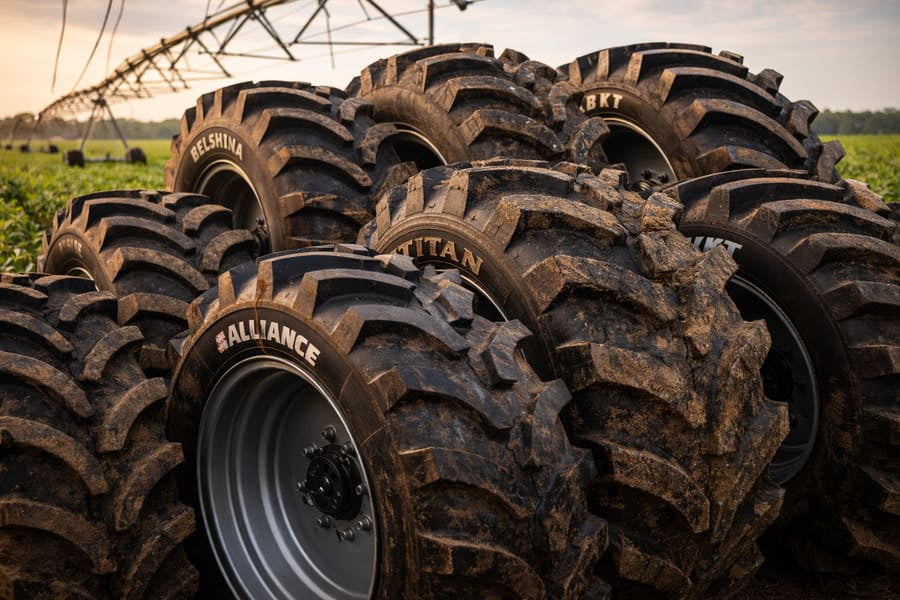
Over the past few years, I've heard the same story from dealers across the country. They feel stuck with legacy brands that aren't solving the "soft failure" problems. The frustration is building up. This has created a "trust-reset window." Dealers are more open than ever to trying a new brand, hoping to find a supplier who understands that reliability is the real product. But this opportunity comes with a big challenge. You only get one shot. You can't just send a few test tires; you have to be ready to supply a full pivot's worth. The farmer will put them on, and the clock starts. If those tires make it through one whole season without causing a single moment of doubt, you have a chance. You've earned their trust. But if even one tire causes a problem, you've not only lost that sale, you've likely lost that dealer for good.
Conclusion
Winning in the irrigation tire market isn't about having the best specs. It's about providing the lowest risk, ensuring a season of quiet reliability for both the farmer and the dealer.