
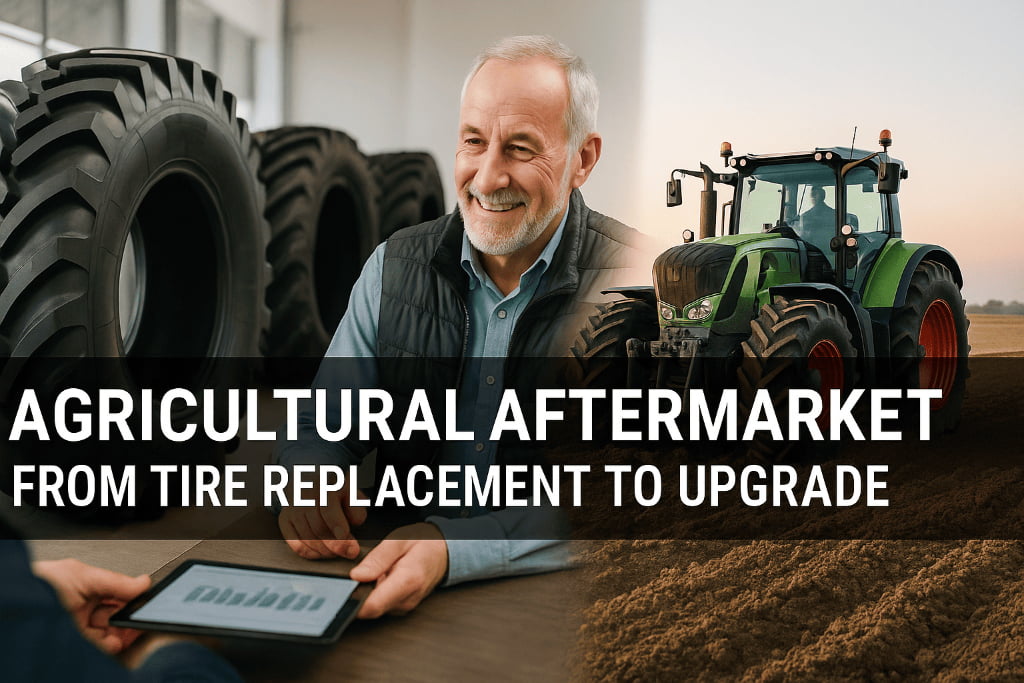
You're focused on securing large OEM contracts for agricultural tires, seeing it as the ultimate prize. But you notice the replacement market is booming, and your sales strategy feels increasingly outdated.
The agricultural tire aftermarket1 is outpacing OEM because the rapidly growing global fleet of farm machinery2 is aging. End-users are now prioritizing long-term value3, like lower cost-per-hour and fuel efficiency4, over the basic tires supplied from the factory.
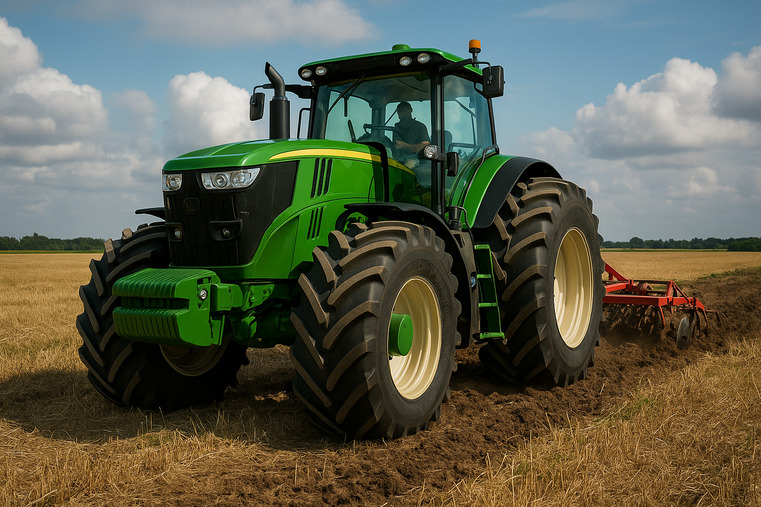
This isn't just a minor trend; it's a fundamental change in how your biggest customers think. I remember talking to a large equipment dealer a few years ago. He told me farmers used to come in and just ask for "a new set of tires for a John Deere 8R." Now, they walk in with specific questions about soil compaction ratings5, fuel economy tests, and tread life warranties6. They're not just replacing parts anymore; they're upgrading their equipment. This shift from passive replacement to active investment is where the real opportunity lies for suppliers like us.
What's driving farmers to look beyond OEM tires?
You might think a farmer's loyalty is to the tractor brand, including its original tires. But rising fuel and operating costs are forcing them to scrutinize every expense, revealing the shortcomings of standard-issue tires.
Modern farmers are sophisticated business managers who focus on Total Cost of Ownership7. They realize that a cheaper OEM tire can cost more in the long run through poor fuel economy and shorter life, making a premium aftermarket tire a smarter investment.
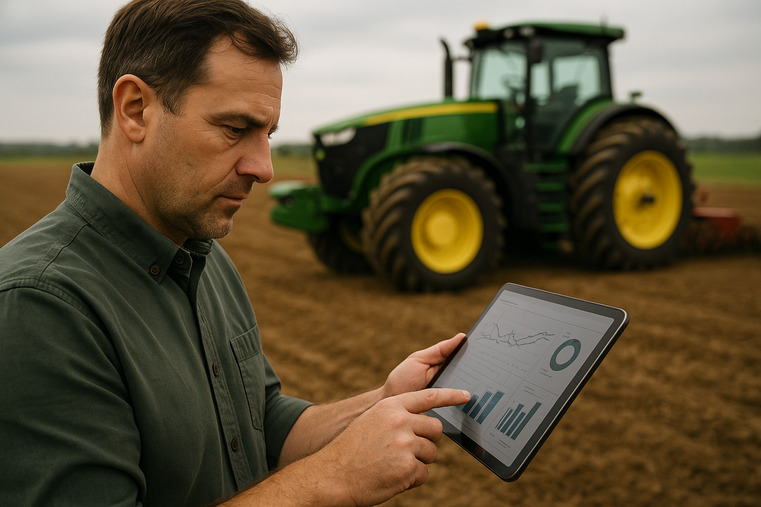
The farmers I work with today are a world away from the stereotype. They run their farms like complex businesses, tracking data on everything from seed performance to equipment uptime. They've learned that tires are not just a maintenance item; they are a performance part8 that directly impacts their profitability. A tire that reduces wheel slip by just a few percent can save thousands of dollars in fuel over its lifetime. One that minimizes soil compaction can increase crop yields. These aren't small details; they are major factors in a farm's annual budget. This is why they are actively looking for better options.
The Farmer as a CFO
The decision-making process for buying tires has completely changed. It's no longer about simply getting the machine running again. It's about optimizing the machine's financial performance. This means the conversation has shifted from price to value.
Here's a breakdown of the old thinking versus the new reality:
| Metric | OEM Focus (Initial Tractor Sale) | End-User Focus (Aftermarket Purchase) |
|---|---|---|
| Primary Goal | Meet basic specs for the vehicle sale | Maximize operational efficiency9 & ROI |
| Cost Metric | Low initial unit price for the manufacturer | Low cost per hour/hectare for the owner |
| Key Features | General traction, meets load index | Fuel efficiency, soil compaction, tread life, durability |
| Decision Maker | Tractor Manufacturer's Procurement Dept | Farmer or Fleet Manager |
This table shows a clear divergence. The OEM supplier serves the machine manufacturer, who needs a compliant, cost-effective tire. As an aftermarket supplier, you serve the end-user, who needs a high-performance, profitable business asset.
How does the massive growth in farm machinery change the tire market?
You see new tractors and combines rolling out of factories, thinking the main tire sale has already happened. But you're looking at the start of the race, not the end.
Every new machine sold creates a future demand for multiple sets of replacement tires. As the global agricultural fleet expands and ages, the aftermarket's potential customer base grows exponentially, dwarfing the one-time OEM opportunity.
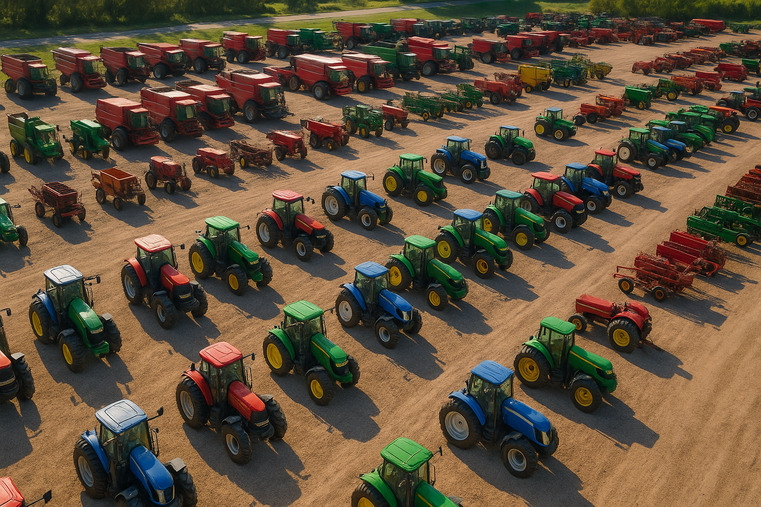
I work with suppliers who have built their business on long-term relationships with dealers and farmers, and this is why. A single tractor, over its 20-year lifespan, might go through five or six sets of tires. That's five or six sales opportunities for the aftermarket, compared to the single opportunity for the OEM supplier. Now, multiply that by the millions of machines being added to the global fleet. The scale of the aftermarket is simply on another level. This growing "parc"—the total population of machines in use—is a predictable and ever-expanding river of demand for quality replacement parts, especially wear items like tires.
Servicing the Aging Fleet
The real money isn't in the first tire; it's in the second, third, and fourth. An OEM tire is a starting point. An aftermarket tire is a choice. As a supplier, your goal is to be the brand farmers choose when they have a choice.
This requires a different strategy.
- OEM Strategy: Focus on high-volume, low-margin contracts with a few large manufacturers. The key is engineering a tire that meets a price point and a basic spec sheet. Your customer is the procurement manager at the factory.
- Aftermarket Strategy: Focus on performance, durability, and demonstrating value to thousands of individual end-users and dealers. The key is engineering a tire that solves a problem—like saving fuel, increasing traction, or reducing soil damage. Your customer is the farmer trying to make a living.
As the global parc of agricultural machinery grows, so does the pool of machinery entering its prime replacement years (years 3-10). These owners are your target audience. They've experienced the limitations of the original tires and are now actively seeking an upgrade.
You've been selling tires the same way for years, relying on specs and price. But farmers are now asking about performance and value, and if you can't answer, your competitors will.
Suppliers must shift from selling a product to providing a solution. This means offering customized options10, focusing on performance data11 like cost-per-hour, and building a brand that farmers trust to improve their operational efficiency9 and profitability.
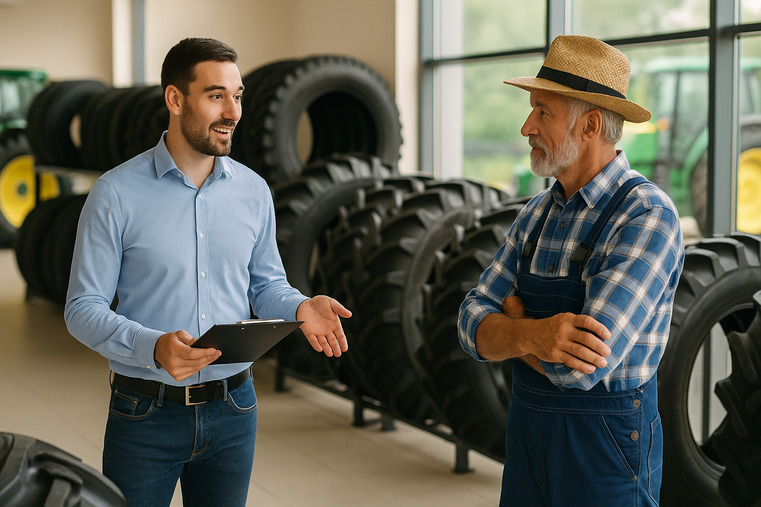
For over a decade, I've seen the most successful suppliers win by becoming partners to their clients. They don't just ship tires; they provide expertise. They help dealers understand which tire is best for wet soil versus dry, or for heavy tillage versus planting. At Gescomaxy, we facilitate this by offering flexible solutions12. We can mix different types of tires in a single container, offer low minimum order quantities, and even help clients invest in their own molds for custom solutions. This allows dealers and distributors to cater precisely to the new demands of their farmer clients without taking on massive inventory risk. It's about being nimble and responsive.
A New Value Proposition
To win in the modern agricultural aftermarket, your focus must be on the end-user's business needs.
- Educate on Value: Stop leading with the price tag. Start conversations about fuel savings, reduced soil compaction, and longer tread life. Use case studies and performance data11 to prove that a higher initial cost leads to a lower total cost of ownership.
- Offer a Portfolio of Solutions: One size no longer fits all. Farmers need different tires for different applications, soils, and machines. As a supplier, you need to provide a range of options, from budget-friendly replacements to high-performance VF (Very High Flexion) technology tires.
- Enable Your Distribution Channel: Your dealers are on the front lines. Give them the training, marketing materials, and flexible supply chain they need to be consultants, not just order-takers. Make it easy for them to get the right tire to the right farmer at the right time.
The farmer who once bought a commodity is now investing in technology. Your role as a supplier is to prove that your product is the best investment they can make.
Conclusion
The agricultural tire market has changed. To succeed, stop chasing one-time OEM sales and start building long-term value3 for the growing aftermarket by focusing on performance and total cost of ownership.
Explore insights on the booming aftermarket and how it impacts suppliers and farmers. ↩
Learn how the expanding global fleet influences tire demand and aftermarket opportunities. ↩
Discover why farmers prioritize long-term value over initial costs in tire purchases. ↩
Find out why fuel efficiency is a critical factor in tire selection for farmers. ↩
Explore the significance of soil compaction ratings in tire performance and farming. ↩
Learn about tread life warranties and their importance in the tire aftermarket. ↩
Discover how Total Cost of Ownership affects farmers' tire purchasing decisions. ↩
Explore the role of tires as performance parts and their impact on farm profitability. ↩
Understand how tire choices can enhance operational efficiency for farmers. ↩
Learn about the importance of customized tire options in meeting farmers' needs. ↩
Discover how performance data influences farmers' tire selection and purchasing. ↩
Explore how flexible solutions can benefit suppliers and farmers in tire procurement. ↩