
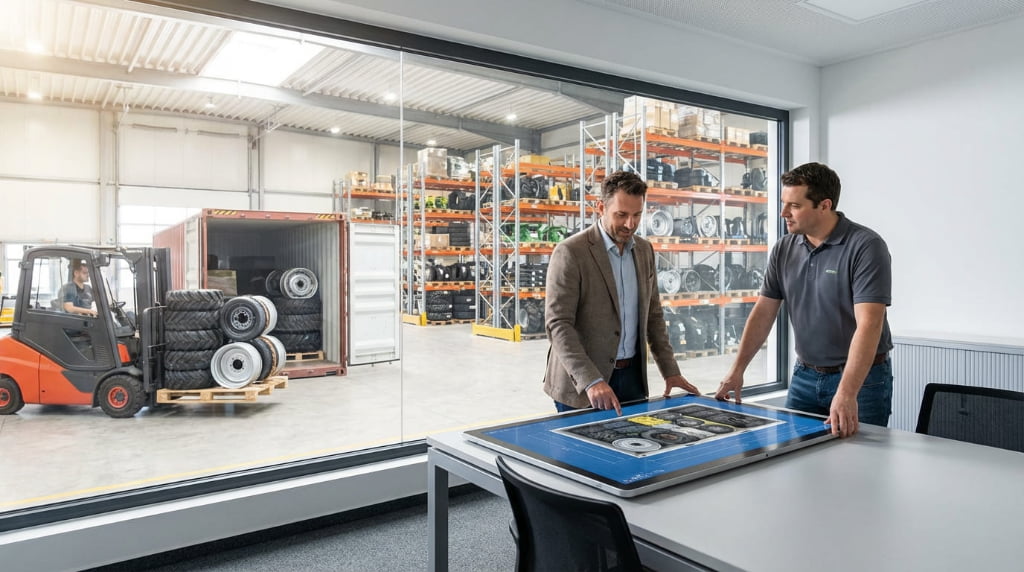
Your warehouse is full of slow-moving inventory1, and your cash is tied up in it. This old way of buying forces you to make risky bets, making it impossible to adapt.
Mixed loading2 is the smartest strategy because it allows you to combine dozens of different tire and wheel SKUs into a single container. This minimizes financial risk3, eliminates overstocking4, and lets you build a perfect inventory mix5 that matches your market's real-time demand.
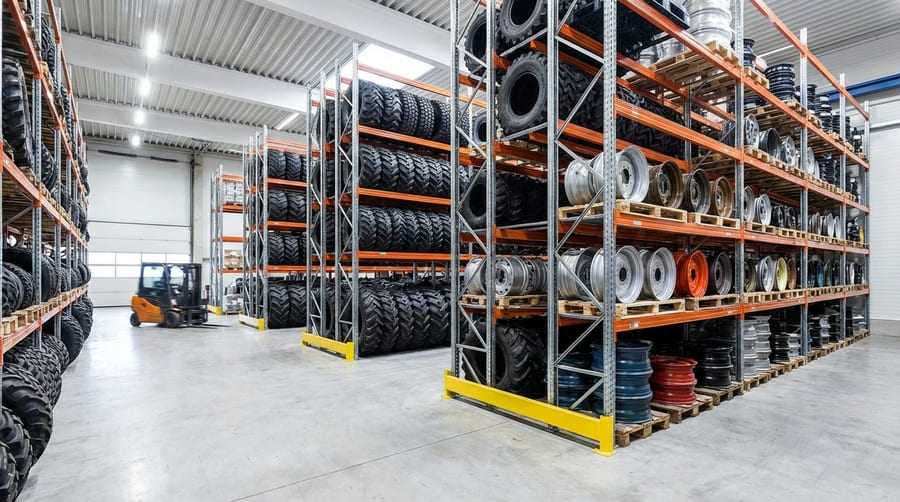
I've been in the agricultural tire export6 business for 13 years, and I’ve seen the same struggle over and over. Dealers like you are experts in your local markets, but you're held back by rigid supply chains7. The old "full container of one size" model was designed for a different era. Today, you need to serve customers with combines, sprayers, and multiple tractors, all requiring different tires. You're forced to gamble with your capital, and it's a game that's hard to win. Let’s break down exactly how this old model fails and how a new approach, mixed loading, is changing everything for dealers.
How Does the Traditional ‘Full Container’ Model Hurt Your Business?
You're forced to order hundreds of a single tire size to fill a container. Much of that inventory sits for months, or even years, collecting dust while tying up your cash.
The traditional full-container model is incredibly risky. It locks up huge amounts of working capital8 in slow-moving inventory1, makes you vulnerable to market shifts, and prevents you from stocking the wide variety of products your customers actually want.
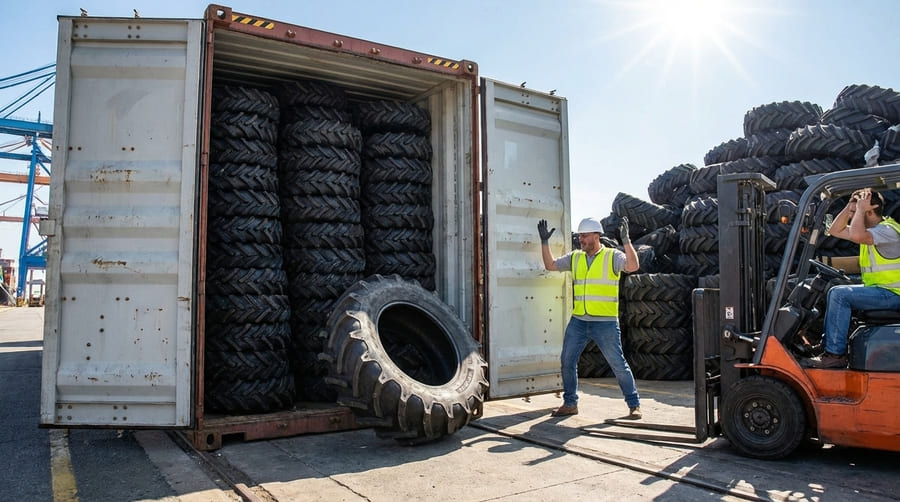
The core issue with the old model is its inflexibility. It treats every tire and wheel SKU as if it has the same high-volume demand, which we know isn't true. For every fast-selling tractor tire, there are a dozen other niche sizes for implements, sprayers, or older machines that you only sell a few of each year. A dealer I work with in Brazil told me he once ordered a full container of a specific flotation tire, convinced it would be a bestseller. A change in government subsidies shifted local farming practices, and demand vanished overnight. He was stuck with over $30,000 in dead stock, a financial blow that took him two years to recover from. This isn't just bad luck; it's a predictable outcome of a broken, high-risk system.
How Does Mixed Loading Fit Your Market Reality?
You lose sales because you can't justify stocking every specialty tire or wheel. Your customers end up going to a larger competitor who has a wider selection, and you risk losing them forever.
Mixed loading2 allows you to combine dozens of different SKUs—tires, wheels, or complete assemblies—into one container. Instead of 200 pieces of one size, you can order 20 of Size A, 30 of Size B, and 15 of Size C, creating a "customized inventory pack9."
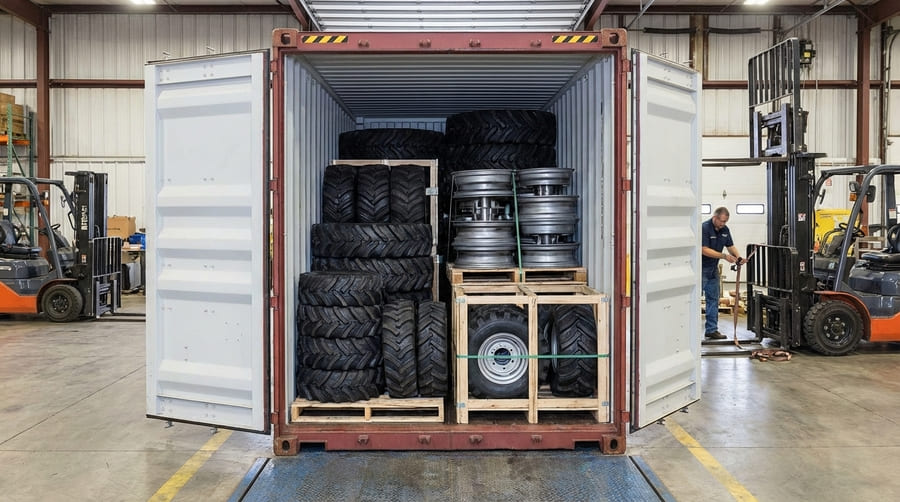
This model puts you back in control. It allows your purchasing to reflect the true diversity of your market. Imagine a single order where you can get the exact number of combine tires you need for harvest season, a few sets of specialty orchard wheels for a new customer, and restock on your most popular tractor fronts—all in one shipment. This is possible when your supplier, like us at Gescomaxy, has flexible production lines10 designed for small batches. You stop being a gambler and start being a strategist. You can finally stock the exact mix your market demands, reduce slow-moving inventory1 to almost zero, and add new SKUs without the massive financial risk3. Your container is no longer a liability; it's a precision tool for meeting customer needs.
How Does a Low MOQ Strategy Protect Your Cash Flow?
You want to test a new product line, like flotation tires, but the risk of ordering a full container is too high. You miss the opportunity, and your business stagnates.
Low Minimum Order Quantity (MOQ)11 is a powerful strategy that lets you test new products, adapt to seasonal demand, and protect your working capital8. You can order just 10–20 pieces to evaluate the market before committing to a larger purchase.

Low MOQ isn't just a feature; it's a fundamental shift in how you manage risk and growth. Instead of spending $20,000 to try a new irrigation tire size, you can invest a fraction of that to bring in a small batch. This is how smart dealers expand their businesses today. You can confidently enter new segments like dual wheel systems or custom-painted wheels for specific brands. When a local farmer asks for something unique, you can say "yes" without betting the farm. This approach lets you respond to seasonal cycles—planting, harvest, irrigation—with precision, ordering what you need just in time. It keeps your cash flow healthy and makes your business incredibly agile and resilient.
Why Should You Partner With a Supplier Built for Flexibility?
You're sold on the idea, but your current suppliers are stuck in the past. They can't or won't support mixed orders, low MOQs, or custom requests, leaving you trapped in the old model.
You need a partner who built their entire supply chain for flexibility. We act as your extended warehouse in China, offering mixed loading of 50+ SKUs, low MOQs, fast production, and full assembly services to support your growth.
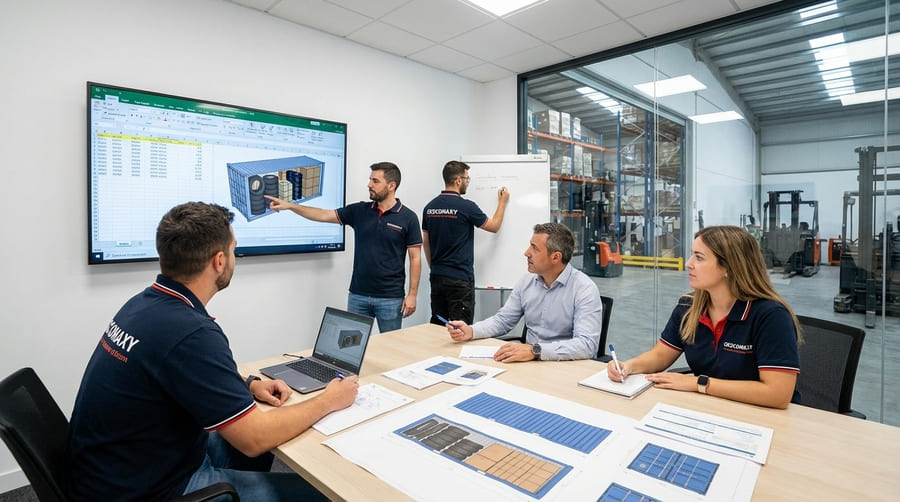
This inventory strategy only works if your supplier is a true partner. At Gescomaxy, we designed our business around this model from day one. Our 10 automated production lines are built for fast changeovers, not just long runs. We offer mixed loading of 30-50+ SKUs per container, low MOQs on both tires and wheels, and a fast 20-30 day production window. Need a private label brand12? Our OEM/ODM support and engineering team are ready. We even offer a complete tire and wheel assembly13 service, so your products arrive ready to sell. With full ISO, DOT, and INMETRO certifications14, you get a stable, reliable supply chain without the rigid rules. You don't have to hold costly inventory anymore—we produce and assemble exactly what you need, when you need it.
Conclusion
Mixed loading2 is no longer just an option; it's the smartest way to run your business. It lowers risk, protects cash flow, and gives you the agility to win.
Learn strategies to handle slow-moving inventory and free up cash flow for your business. ↩
Explore how mixed loading can optimize your inventory strategy and reduce financial risks. ↩
Understand the financial implications of outdated inventory practices and how to mitigate them. ↩
Discover effective techniques to prevent overstocking and improve your inventory turnover. ↩
Find out how a well-balanced inventory mix can enhance customer satisfaction and sales. ↩
Discover the unique challenges faced in the agricultural tire export industry and solutions. ↩
Understand the role of supply chains in inventory management and how to enhance flexibility. ↩
Gain insights into optimizing working capital to support business growth and stability. ↩
Explore the advantages of customized inventory packs for meeting diverse market demands. ↩
Learn how flexible production lines can improve efficiency and responsiveness in manufacturing. ↩
Learn about the significance of MOQ in inventory management and its impact on cash flow. ↩
Explore strategies for developing a private label brand that stands out in the market. ↩
Find out how tire and wheel assembly services can streamline your operations and save time. ↩
Understand the significance of these certifications in ensuring product quality and safety. ↩