
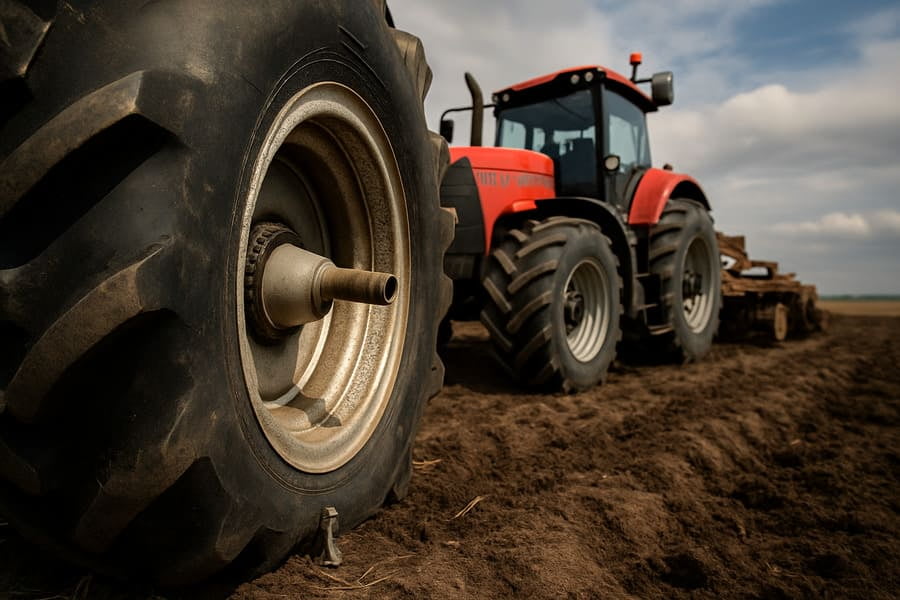
Your powerful tractor is pulling a heavy load, but you're not getting the traction you expect. Suddenly, a tire goes flat, and you find the valve stem has been ripped clean off.
High-horsepower tractors need bead knurling1 to stop the wheel from spinning inside the tire under high torque. This machined, rough texture on the wheel's bead seat creates a powerful grip, preventing power loss and catastrophic valve stem failures2.
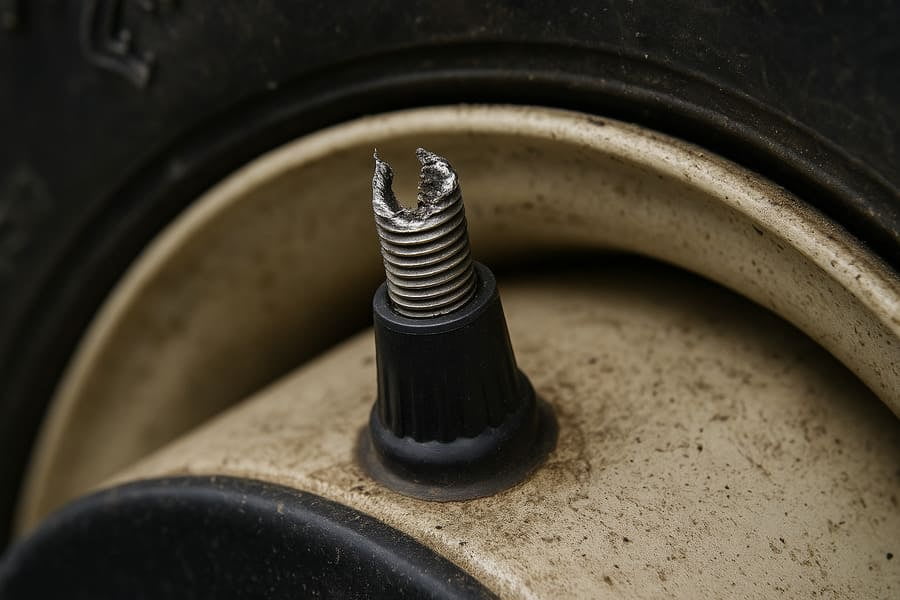
I once got a call from a customer who runs a large farming operation. He was frustrated. His new, very powerful tractor kept getting flat tires, and the cause wasn't punctures. On inspection, we found the valve stems were being sheared off. The tractor's engine was delivering so much torque that the wheel was literally spinning inside the tire. The tire gripped the ground, but the force was too much for the bead to handle, causing the wheel to slip. This slipping action dragged the valve hole against the fixed valve stem, eventually tearing it. It was a clear case where engine power outmatched the wheel's design, and it highlighted a problem many don't think about until it brings their fieldwork to a grinding halt.
What Exactly Is Agricultural Wheel Slip and How Does It Hurt Your Performance?
You think your tractor is working at its peak, but a hidden slip is silently stealing your power. This invisible inefficiency costs you fuel and time with every pass.
Agricultural wheel slip3 is when the wheel rim rotates inside the tire bead4, which is supposed to be a fixed connection. This phenomenon wastes engine power, reduces fuel efficiency5, and can lead to sudden tire deflation6 by shearing off the valve stem.
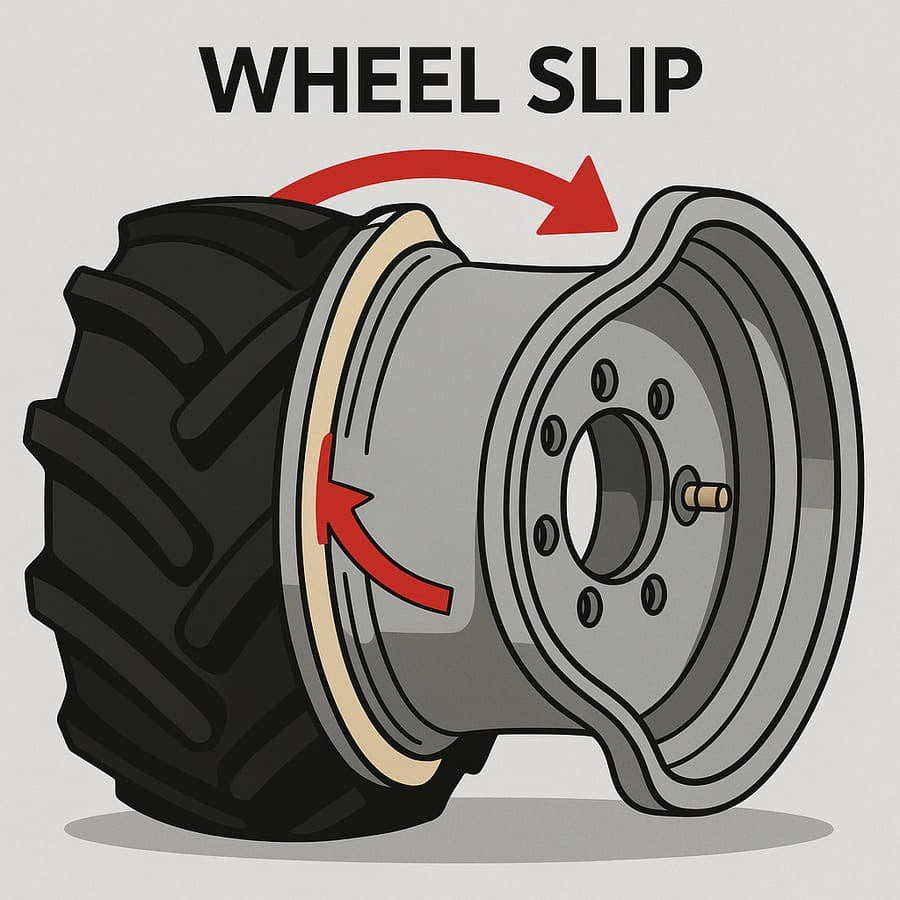
When we talk about "slip," most people think of the tire spinning on wet ground. But this is different. This slip happens between the metal wheel and the rubber tire. Imagine your tractor's engine and drivetrain delivering immense rotational force to the axle. That force is transferred to the wheel hub, and then to the rim. The final step is the rim transferring that force to the tire, which then grips the ground. On high-horsepower machines under heavy draft loads, the force can be so great that it overcomes the static friction between the tire's bead and the wheel's bead seat. The wheel starts to spin, but the tire, gripping the earth, momentarily stays put. This disconnect means a significant portion of your tractor's expensive horsepower is lost as heat and friction, instead of becoming productive work.
The Impact of Wheel Slip on Your Operation
| Performance Metric | Without Wheel Slip | With Wheel Slip |
|---|---|---|
| Power Transfer | ~100% from wheel to tire | Reduced by 5-15% or more |
| Fuel Efficiency | Optimal | Decreased; fuel is wasted on slip |
| Tire/Valve Safety | Valve stem is secure | High risk of sheared valve stem |
| Field Time | Productive and predictable | Unpredictable downtime from failures |
How Does Our Knurling Process Stop This Damaging Slip?
You know wheel slip3 is a problem, but how do you stop a steel wheel from spinning inside a rubber tire? A "heavy-duty" label isn't always enough.
We use a specialized machining process called bead knurling1. We machine a precise, roughened pattern onto the wheel's bead seat area. This texture acts like thousands of tiny teeth, creating a mechanical lock7 that dramatically increases friction.
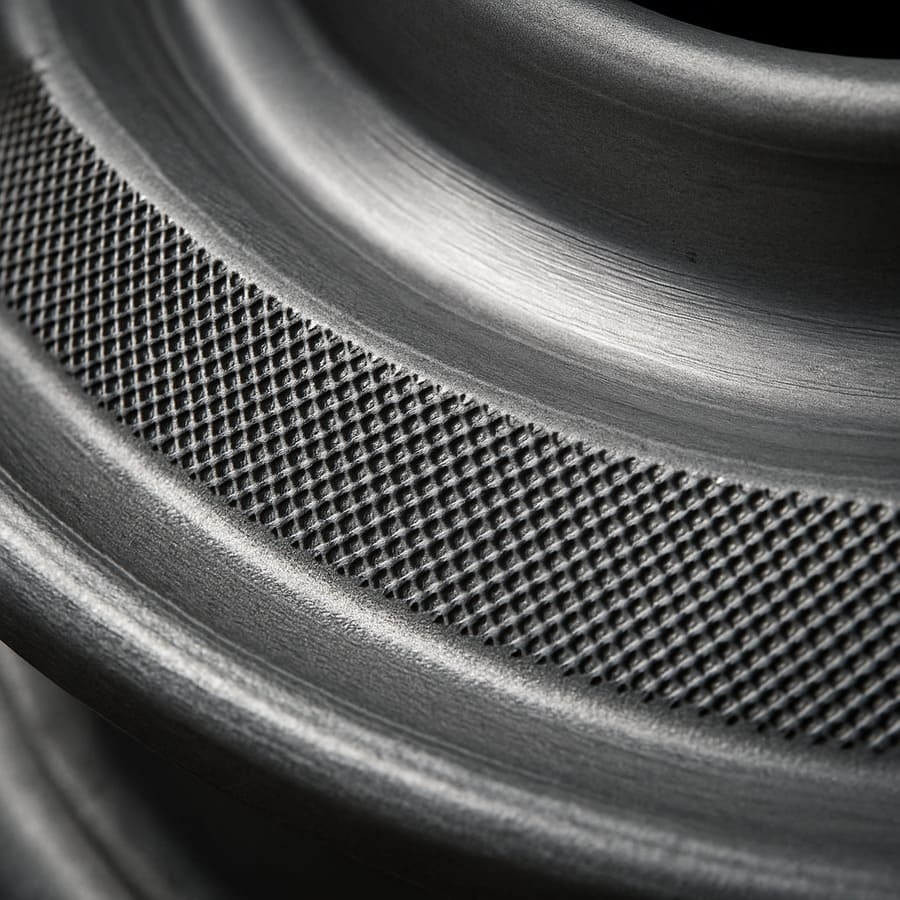
The solution to wheel slip3 is to increase the friction in the one place it matters most: where the wheel and tire meet. Our bead knurling1 process does exactly that. After the main wheel disc is formed, we use a specialized lathe to machine a cross-hatched or roughened texture directly onto the bead seat surfaces. This isn't just a cosmetic feature; it's a critical performance enhancement8. This knurled pattern fundamentally changes the surface, turning a smooth metal seat into a high-friction gripping zone9. When the tire is inflated, the bead presses down into this texture, creating a mechanical interlock. This lock is strong enough to withstand the massive torque from high-horsepower tractors10, ensuring that every bit of power from the engine is transferred through the wheel, to the tire, and finally to the ground. It’s a simple concept, but it requires precision machinery11 that not all factories have.
How Do We Mount Tires Without Ruining the Knurling's Grip?
You have a wheel with a special anti-slip surface, but you need to mount a tire. How do you do it without a lubricant that will just make it slippery again?
We use a specific, high-quality mounting lubricant12 when assembling wheel-tire sets. This compound provides temporary lubrication for safe and easy installation but dries quickly into a non-slippery film, preserving the full gripping power of the bead knurling1.
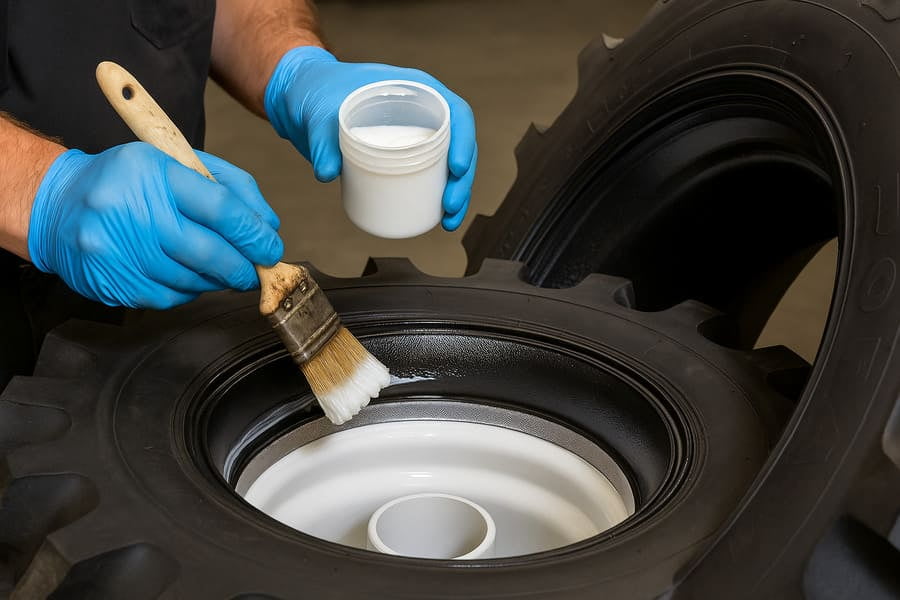
This is a great question we get from our partners. It seems counterintuitive to add a lubricant to a surface designed for grip. The key is using the right type of lubricant. Using soap, grease, or other generic lubricants is a huge mistake. They can get trapped between the tire bead4 and the knurling, reducing friction and completely defeating the purpose of the anti-slip surface. To solve this, we exclusively use a professional-grade tire mounting paste. This paste is designed to be slippery only when wet. It allows our technicians to slide the tire bead4 over the rim flange and into the bead seat without damaging the tire. Once the tire is in place and inflated, the water base of the paste evaporates, and the compound dries into a inert, slightly tacky film that does not compromise the mechanical lock7 between the rubber and the knurled steel. This ensures both easy assembly and maximum performance in the field.
Why Does This Specialized Process Matter for Your Business?
You need wheels that work, not wheels that create more problems. Is this extra manufacturing step really necessary for the products you sell to your customers?
Yes, because offering wheels with bead knurling1 shows you understand and solve real-world farming challenges. It sets you apart as a premium supplier13, reduces your customers' downtime, and prevents costly warranty claims related to slip-induced failures.
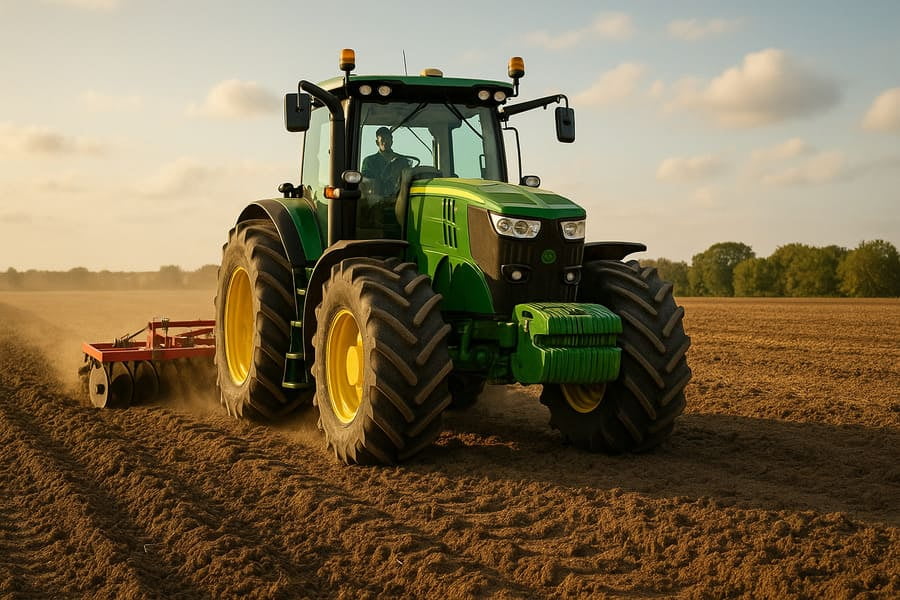
As tractors become more powerful, the demands on every component, including the wheels, increase. Selling a standard wheel for a high-demand application is a risk. When that wheel fails by slipping and shearing a valve, the problem comes back to you, the dealer. It hurts your reputation and can lead to costly returns or angry customers. By choosing to stock and sell wheels with advanced features like bead knurling1, you are proactively solving a problem for your customers before it even happens. You are moving from being just a parts seller to a solutions provider. This detail demonstrates a commitment to quality and performance that farmers respect. It’s a feature that helps justify a premium product, builds trust in your brand, and ultimately protects your business from the headaches of component failure in the field.
Conclusion
Don't let wheel slip3 steal your power and cause expensive downtime. Our wheels with bead knurling1 provide the mechanical grip needed to handle modern tractors, ensuring reliability and peak performance.
Explore how bead knurling enhances grip and prevents wheel slip, ensuring your tractor operates efficiently. ↩
Find out how to prevent valve stem failures and ensure the reliability of your agricultural equipment. ↩
Understand the causes of wheel slip and discover effective solutions to maintain tractor efficiency. ↩
Understand the role of tire beads in ensuring a secure fit and preventing slip in agricultural tires. ↩
Discover the impact of wheel slip on fuel efficiency and learn ways to optimize your tractor's performance. ↩
Learn about the causes of tire deflation and how to prevent it for uninterrupted fieldwork. ↩
Understand the concept of mechanical locks in tractor wheels and their role in preventing slip. ↩
Stay updated on the latest performance enhancements that can improve the efficiency of agricultural machinery. ↩
Learn about high-friction gripping zones and their critical role in enhancing tractor wheel performance. ↩
Learn about the unique challenges faced by high-horsepower tractors and how to overcome them for better performance. ↩
Explore the importance of precision machinery in producing high-quality agricultural wheels. ↩
Discover the best mounting lubricants to use for tractor tires to ensure optimal performance. ↩
Explore the characteristics of premium suppliers and how they can differentiate themselves in the market. ↩