
Steel and rubber prices are on a wild ride, making you hesitate on large orders. But waiting could mean facing even higher costs tomorrow, putting your budget in a tight spot.
Blanket orders1, or annual framework agreements2, are the best defense against price volatility3. They allow you to lock in today's prices for a full year's supply, with shipments delivered in smaller, manageable batches. This gives you predictable costs4 and supply security.
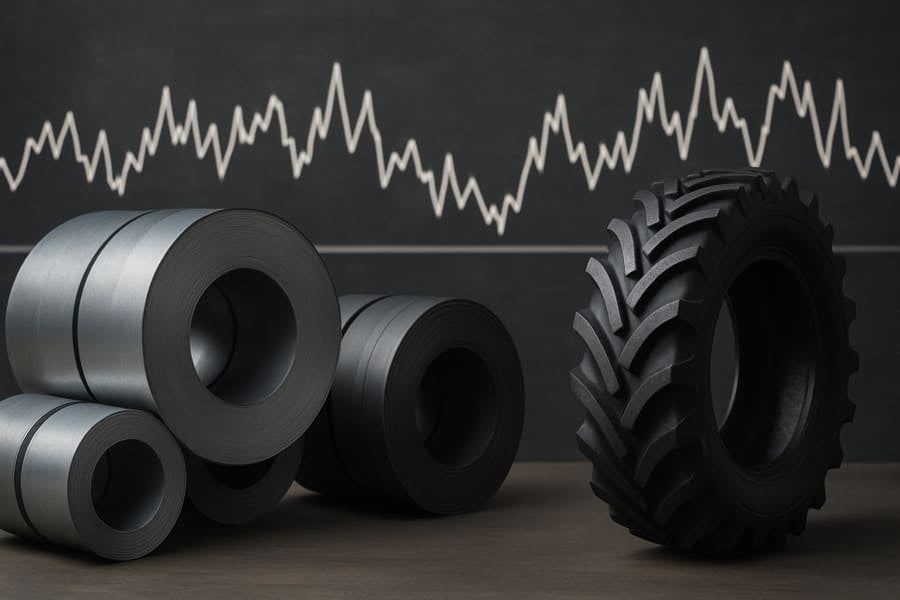
I've been in this business for over a decade, and I've seen procurement managers get burned too many times. I remember one client, a sharp guy, who tried to play the market. He held off on a big order, hoping rubber prices would dip. Instead, a supply chain issue caused prices to spike 15% in a month. His entire budget for the quarter was blown. It wasn't his fault; the market is just too unpredictable. That experience taught both of us that trying to time the market is a losing game. The winning strategy is to get off the roller coaster entirely.
How Can You Escape the Raw Material Price Roller Coaster?
You watch steel and rubber prices go up and down, making it impossible to create a stable budget. You either buy high today or risk paying even more tomorrow. It feels like a gamble.
You can escape the price roller coaster with an annual framework agreement. This model lets you commit to a volume and lock in a fixed price5 for the entire year, completely insulating your budget from unpredictable market swings.

The markets for key raw materials like steel and natural rubber are incredibly volatile. Geopolitical events, shipping crises, and even weather patterns can cause prices to surge without warning. When you buy on the spot market6, you are completely exposed to this chaos. A blanket order, or what we call a framework agreement, is your shield. It's a commitment between you and us. You agree on a total volume for the year, and we agree on a fixed price5 for that entire volume. This way, it doesn't matter if steel prices double overnight; your cost is locked in and secure. You're no longer a gambler in the raw materials casino; you're a strategic planner.
Spot Buying vs. Framework Agreement
| Feature | Spot Buying (Standard Model) | Framework Agreement (Blanket Order) |
|---|---|---|
| Price | Fluctuates with the market daily/weekly. | Fixed for the entire agreement term (e.g., 12 months). |
| Budgeting | Extremely difficult; high uncertainty. | Simple and predictable; cost is a known variable. |
| Supply Risk | Subject to market availability7 and lead times. | Guaranteed supply and reserved production capacity8. |
| Flexibility | High, but comes with high price risk. | Lower per-order flexibility, but high strategic security. |
What Is an Annual Framework Agreement with Split Delivery?
You need to secure a large volume of tire wheels for the year, but you don't have the warehouse space or cash flow to take a massive delivery all at once.
It is a master purchase order for a large, annual quantity (e.g., 12 containers) at a locked-in price. The key is that we don't ship it all at once. Instead, we deliver it in smaller, scheduled shipments (e.g., one container per month) throughout the year.
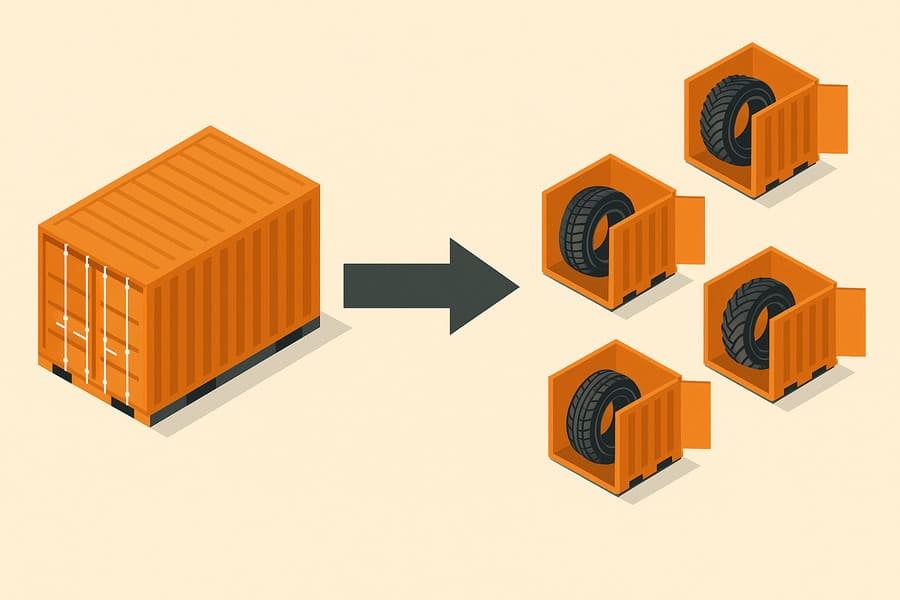
Think of it as the best of both worlds. You get the price advantage of a bulk purchase9 without the logistical headache10. Here’s how it works: We sit down and forecast your needs for the next 12 months. Let's say you need 12 containers total. We sign an agreement that locks in the price for all 12 containers right now. Then, we create a delivery schedule. You might need one container delivered every month, or maybe two containers every other month. You get your inventory just-in-time, which frees up your capital and warehouse space. Meanwhile, we have a clear production plan and can purchase our raw materials more efficiently, which is how we can offer you that stable price in the first place.
How Does This Model Create a Win-Win for Both Buyer and Supplier?
You need stable costs to protect your margins. Your supplier needs predictable orders to run an efficient factory. These competing needs can often cause friction and uncertainty in the supply chain.
This model aligns both goals perfectly. The buyer gets a guaranteed, stable cost, which makes budgeting simple and secure. The supplier gets guaranteed production volume, allowing for efficient planning and better resource management. It turns a transactional relationship into a strategic partnership11.

This is truly where everyone benefits. When you commit to a blanket order, you are no longer just another customer in the queue. You become a predictable partner. For you, the buyer, this means no more surprise price increases that destroy your profit margins. You can quote your customers with confidence, knowing your own costs won't change. For us, the supplier, your commitment allows us to plan our factory schedules months in advance. We can secure raw materials in bulk at better prices and dedicate production lines to your orders. This efficiency reduces our costs and risks, a saving we pass on to you in the form of a stable, locked-in price. It smooths out the peaks and valleys for both of us.
Mutual Benefits of a Framework Agreement
| Benefits for the Buyer (You) | Benefits for the Supplier (Us) |
|---|---|
| Cost Certainty | Predictable Revenue |
| Supply Chain Security | Efficient Capacity Planning |
| Reduced Administrative Work | Optimized Raw Material Purchasing |
| Protection from Market Volatility | Stronger Client Relationships |
Is This Model Built on a Foundation of Trust?
Committing to a full year's worth of orders with one supplier feels like a big leap of faith. What if they don't deliver? What if the quality slips? This is a valid concern.
Yes, this model absolutely requires a high level of trust and a strong partnership. It's not for everyone. It's for businesses looking for long-term stability over short-term gains. Many of our most successful, long-term partners operate exclusively this way.

I'll be honest, a blanket order is a significant commitment. It's a relationship, not just a transaction. You need to trust that we will honor the locked-in price, even if raw material costs soar. You need to trust that our quality will be consistent in every single shipment, from the first container to the last. And we need to trust that you will honor the delivery schedule you committed to. This is precisely why we cherish our long-term partners. We have clients we've worked with for over a decade using this exact model. They've weathered multiple economic storms12 with their costs completely shielded. They don't worry about price spikes because they're not exposed to them. They see us as an extension of their own operation.
Conclusion
Stop gambling with market volatility. A blanket order framework agreement is the smartest way to secure your costs, guarantee your supply, and build a truly resilient and predictable supply chain.
Explore how blanket orders can stabilize your procurement process and protect against price fluctuations. ↩
Learn about the advantages of annual framework agreements for securing stable prices and supply. ↩
Understand the factors behind price volatility to better navigate your purchasing decisions. ↩
Understand the significance of predictable costs in budgeting and financial planning. ↩
Find out how fixed price contracts can provide financial predictability and stability for your business. ↩
Gain insights into the spot market dynamics and their impact on raw material pricing. ↩
Understand how market availability influences purchasing strategies and supply chain management. ↩
Learn about production capacity and its role in meeting demand and ensuring supply chain efficiency. ↩
Learn how bulk purchasing can lead to cost savings and better inventory management. ↩
Explore solutions to streamline logistics and improve efficiency in your supply chain. ↩
Discover the key elements of forming strategic partnerships that benefit both buyers and suppliers. ↩
Learn strategies to build resilience in your supply chain against economic fluctuations. ↩