
You're a purchasing manager trying to plan, but the signals are confusing. Headlines say China's exports are slowing, yet Chinese brands1 are expanding globally. This uncertainty makes planning risky.
The 2025-2026 shift means that while direct tire exports2 from China will level off, access to tariff-safe markets3 will increase. This is happening because Chinese companies are ramping up production in their new overseas factories4.
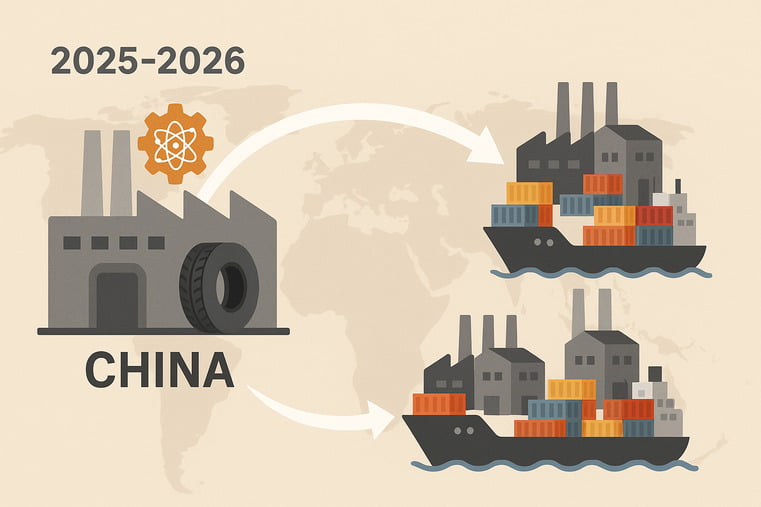
Just last week, a long-term client from Europe called me. He was worried. He read an analyst report predicting that direct tire shipments from China would see slow growth over the next two years. "Does this mean I need to find new suppliers?" he asked. "Are my costs going to go up?" His concern is one I'm hearing more and more. The old model of simply buying container loads from Qingdao is changing. But it’s not disappearing. It’s evolving into something much more sophisticated, and for savvy buyers, it's actually creating new opportunities.
Will Direct Tire Exports from China Disappear?
You see that major Chinese tire companies are building huge factories in places like Mexico and Morocco. You naturally worry that they will stop exporting directly from China, disrupting your established supply chain5.
No, direct exports won't disappear. Instead, a strategic split will occur. High-volume, tariff-sensitive tires will ship from overseas plants, while specialized, high-tech, and custom-engineered tires will continue to come directly from China.
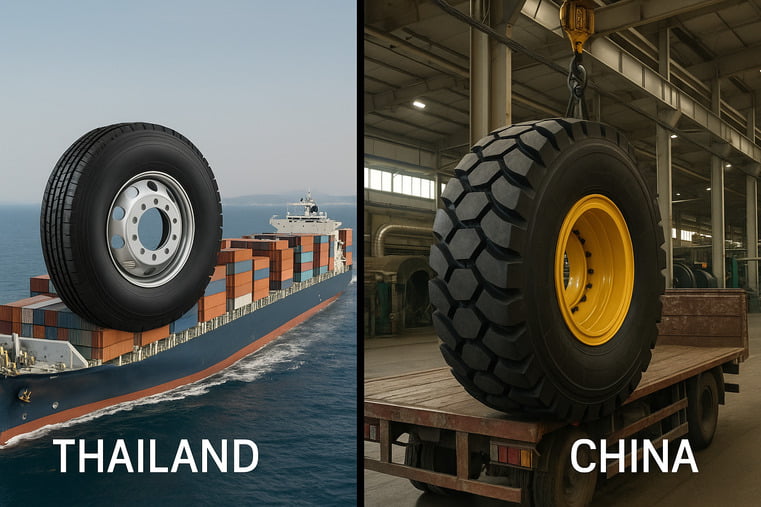
Let me be clear: the production capacity in China is still immense. What's changing is the logic of how that capacity is used. For the last few years, I've helped my clients navigate this. If a customer in the U.S. needs a large volume of standard truck tires, sourcing from a Chinese-owned factory in Thailand or Vietnam is now the default strategy to avoid tariffs. However, if another client needs a highly specialized OTR tire for a unique mining application, the design, engineering, and production for that will happen in China. The core R&D centers6, the advanced compound mixing facilities, and the most experienced engineering teams are still there. The growth of overseas plants isn't about replacing China; it's about complementing it.
The New Export Logic: A Two-Track System
This new model allows companies to be flexible. They can use the best location for the job, balancing cost, speed, and market access7.
| Product Category | Primary Production Location (2025-2026) | Key Reason for Location |
|---|---|---|
| Standard TBR (Truck & Bus) Tires | Overseas Plants (Thailand, Vietnam, Mexico) | Tariff avoidance, lower logistics costs8 to regional markets. |
| Custom-Engineered OTR Tires | China (Shandong, etc.) | Proximity to R&D centers6 and advanced manufacturing lines. |
| Next-Generation EV Tires | China (Shanghai, Jiangsu) | Requires deep integration with high-tech innovation hubs. |
| Specialized Agricultural Tires | China or Overseas (Hybrid) | Depends on the complexity and target market's trade rules. |
How Can You Secure Your Supply Chain in This New Era?
The old sourcing strategy of just finding the cheapest factory in China is broken. Relying on it now means you risk getting hit with sudden tariffs or finding your supplier can't ship to your region.
The winning strategy is to partner with suppliers who master the hybrid model9: blending world-class Chinese R&D with strategic overseas production. This gives you tariff-safe access, advanced technology, and competitive costs.
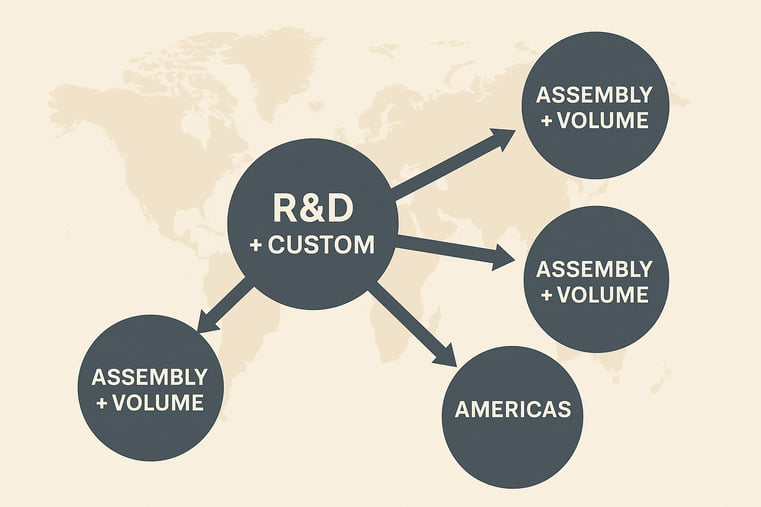
The smartest buyers I work with no longer ask "How cheap can you get it?" They ask, "What is your global footprint?" A supplier with only Chinese factories is a risk. A supplier with only an overseas factory lacks deep R&D capabilities. The ideal partner, like us, operates a network. We can have a new tread compound developed and tested in our Chinese R&D center, then have the tire produced in a Thai factory for tariff-free entry into the US, or in a Moroccan factory for the EU. This "China R&D + Overseas Assembly" model is the future. It's how we balance the three critical factors: access to the market, cost-effectiveness10, and the speed of delivery. It lets us choose the most efficient path for every single order, protecting our clients from geopolitical shocks and keeping their supply chain5 resilient.
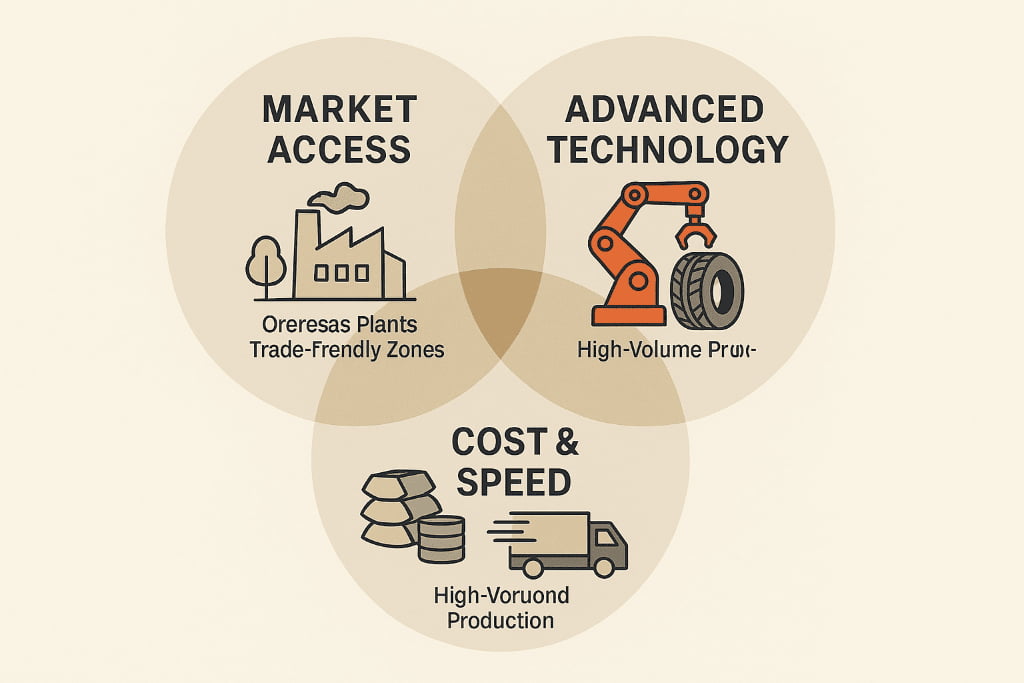
Balancing the Supply Chain Triangle
This hybrid approach allows us to optimize for what matters most to you, whether it's getting the latest technology, the best price, or the fastest delivery.
| Factor | How the Hybrid Model Delivers | Your Benefit |
|---|---|---|
| Market Access | Overseas plants are located in trade-friendly zones, bypassing tariffs for the US, EU, and other key markets. | Reduced Risk & Stable Pricing: You are protected from sudden tariff hikes and trade disputes. |
| Advanced Technology | Core R&D, complex mold design, and next-gen compound development remain in China's innovation centers. | Superior Performance: You get access to the latest tire technology, like EV-specific or custom OTR solutions. |
| Cost & Speed | High-volume production is closer to raw materials (rubber in SEA) and end markets, reducing logistics costs8 and time. | Competitive Costs & Faster Delivery: Your total landed cost is lower, and your inventory arrives sooner. |
Conclusion
The 2025-2026 shift is not a threat but an evolution. Winning means partnering with exporters who blend Chinese innovation with a global production network for secure, tariff-safe access.
Explore how Chinese brands are successfully expanding globally, adapting to market changes. ↩
Understand the evolving landscape of tire exports and what it means for your supply chain. ↩
Learn about tariff-safe markets and how they can benefit your sourcing strategy. ↩
Discover how overseas factories are reshaping supply chains and creating new opportunities. ↩
Get insights on securing your supply chain amidst evolving market dynamics. ↩
Learn about the importance of R&D centers in developing advanced tire technologies. ↩
Explore the significance of market access in shaping tire export strategies. ↩
Discover strategies to minimize logistics costs and improve supply chain efficiency. ↩
Explore the hybrid model and how it optimizes production and supply chain efficiency. ↩
Learn best practices for ensuring cost-effectiveness in your tire sourcing strategy. ↩