
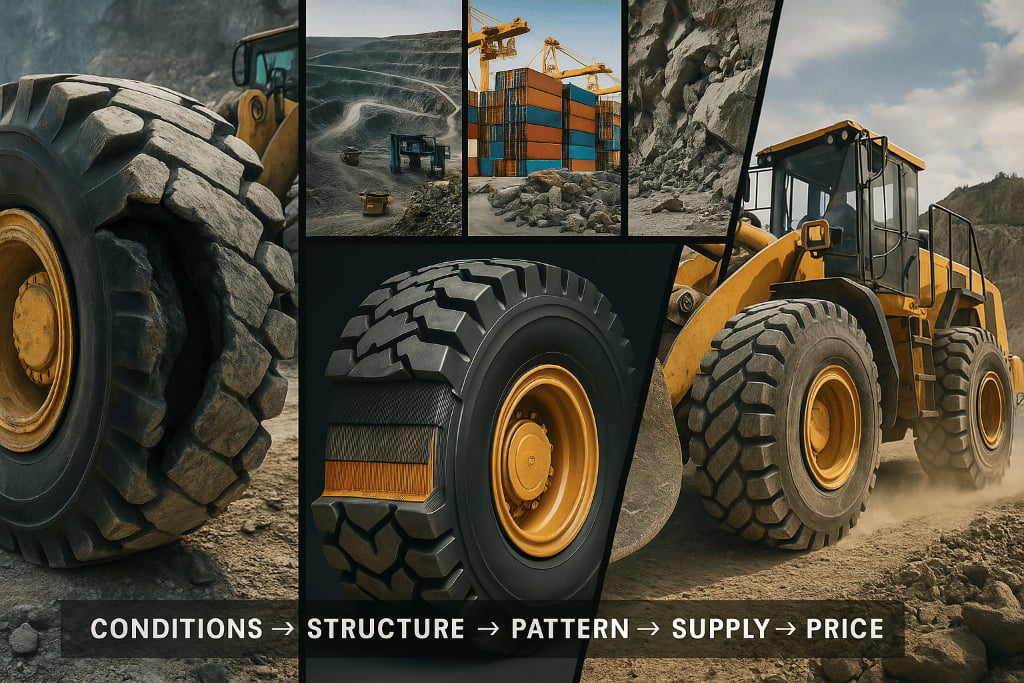
You buy a heavy-duty OTR tire1 for a tough job, expecting it to last. But it fails suddenly, causing catastrophic downtime and blowing a hole in your budget and project timeline.
To choose the right OTR tire, you must first analyze the specific damage risks of your terrain2—like cuts, impacts, or heat. Then, match these working conditions to the tire's internal structure3 and compound, not just its size or tread pattern4.
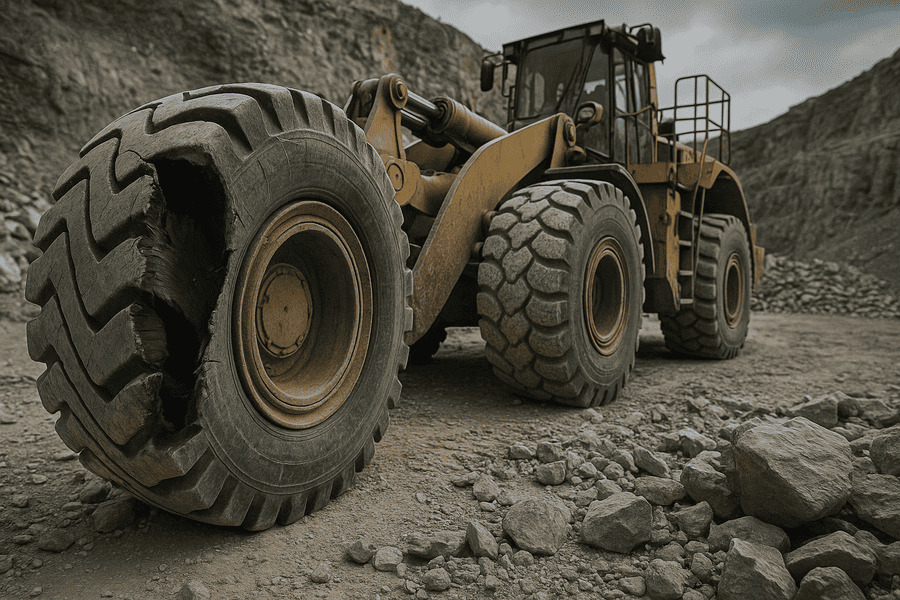
I've seen it happen more times than I can count. A quarry manager calls me, furious that a brand-new set of tires on his loader got shredded in less than a month. He blames the tire's quality, but the real culprit is a mismatch between the tire's design5 and the job site's reality. The term "harsh terrain6" is too simple. A mine is not a port, and a quarry is not a landfill. Each environment attacks a tire in a unique way. Understanding this is the first and most critical step to avoiding costly failures. Let's break down how to make the right choice from the start.
Are All 'Harsh' Terrains the Same for Your Tires?
You buy "heavy-duty" tires assuming they are tough enough for any difficult job. But they fail prematurely on your specific site, leaving you frustrated with the tire's performance and your supplier.
No. Different sites like mines, ports, and quarries attack tires in completely different ways. Mines cause cuts and impacts, ports generate extreme heat from long cycles, and quarries tear at sidewalls. A one-size-fits-all approach guarantees early failure.
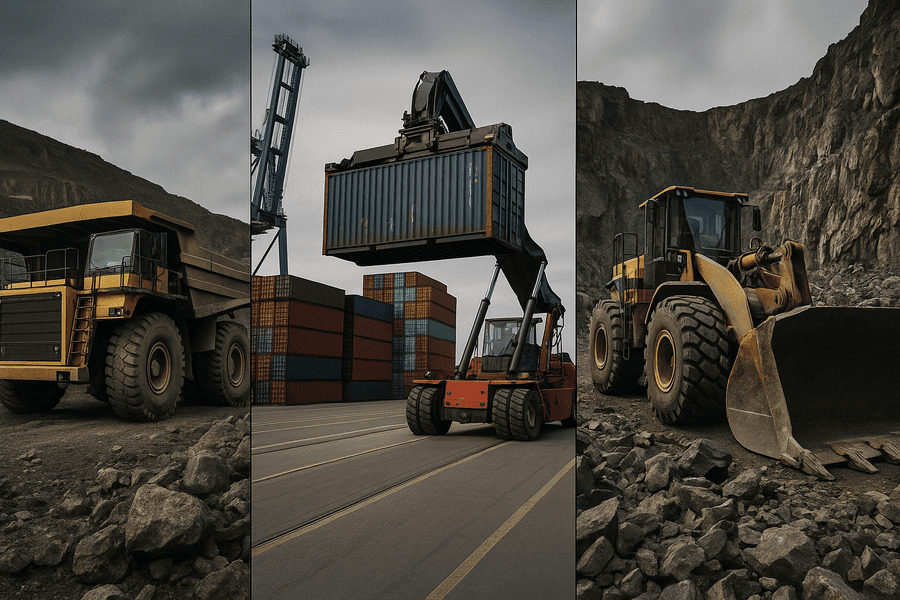
The most common mistake I see is grouping all demanding jobs under one "heavy-duty" umbrella. This is a recipe for disaster. I once had a client who moved his loaders from a port terminal to a new quarry project without changing the tires. The tires, which were designed for heat resistance and long wear on flat concrete, were destroyed by the sharp rocks in the quarry within weeks. He thought the tires were defective. The reality was that they were the wrong tool for the job. Each environment has a primary "damage mechanism." A tire that excels at resisting heat will be vulnerable to cuts. A tire built to resist punctures might wear out too quickly in a high-speed application. You must diagnose your site's specific challenges before you can choose the right protection.
Damage Mechanisms by Terrain
| Environment | Primary Challenge(s) | Consequence of Wrong Tire |
|---|---|---|
| Mining | Extreme loads, high impact, sharp rock punctures. | Catastrophic blowouts, deep cuts. |
| Ports | Heavy loads, long-distance high-speed cycles. | Internal heat buildup, belt separation. |
| Quarries | Severe cutting, tearing, and sidewall damage. | Sidewall failure, rapid tread wear. |
| Landfills | Foreign object punctures, high torque, sidewall scrapes. | Frequent punctures, casing damage. |
Why Is a Mining Tire More Than Just a Big OTR Tire?
You need tires for your mining operation and focus on size and ply rating. Yet, the tires you select keep failing from impacts and cuts, halting production and costing you a fortune.
A true mining tire has a fundamentally different internal structure. It requires thicker sidewalls for cut protection, heavier steel belt packages for impact resistance, and reinforced beads to handle extreme loads. Standard OTR tires simply lack this critical reinforcement.

When you look at a mining tire, the real engineering is on the inside. It's not just about making a standard tire bigger. It's about building a fortress. The rubber on the sidewalls is significantly thicker and uses a special compound designed to resist being sliced open by sharp rocks. The steel belts under the tread are not only more numerous but are also constructed with heavier, stronger cords to absorb the shock from dropping massive loads or hitting a boulder. Even the bead, the part that holds the tire to the wheel, is massively reinforced to prevent slipping under immense torque and weight. I've seen customers try to save money by using a general construction OTR tire in a small mine. The result is always the same: impact breaks, sidewall cuts, and premature failure. You're not just buying rubber; you're buying a structural solution designed to survive a uniquely brutal environment.
Do Small Operational Details Really Impact Tire Life That Much?
You think as long as the tire is the right size and inflated, you are set. You ignore minor overloading7 or the way operators turn, thinking these details are insignificant compared to the tire's quality.
Yes, absolutely. Small operational details like overloading7, side-slipping, and surface sharpness have a massive impact. Running a tire just slightly overloaded can cause internal heat damage, dramatically reducing its lifespan long before the tread is worn.
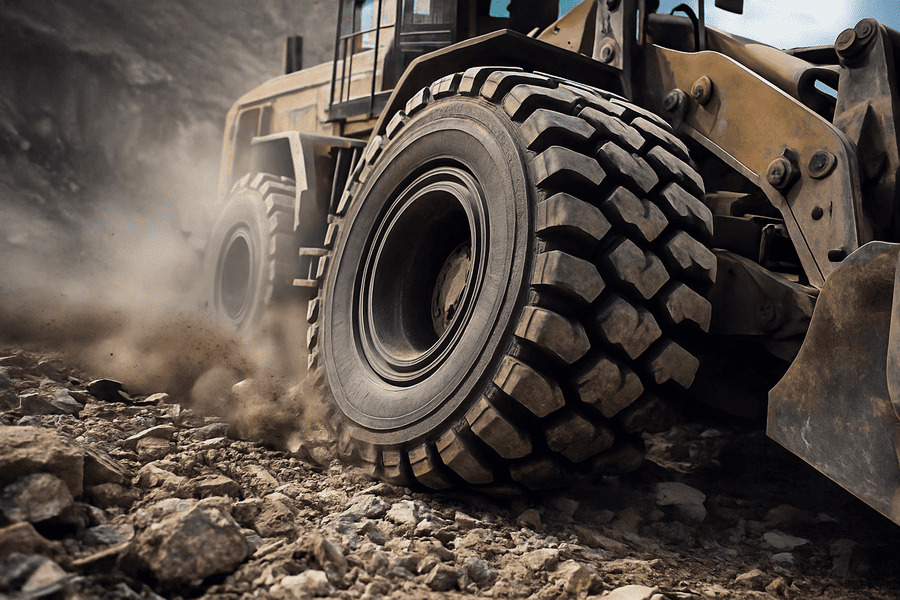
This is where theory meets reality. A perfectly engineered tire can be destroyed by poor operational habits. For instance, when a loader is consistently overloaded on one side, that side's tire shoulder overheats. This leads to an invisible structural imbalance that causes the tire to fail early. Another example is side-slip. When operators make sharp, dragging turns instead of proper three-point turns, it generates abnormal wear on the tire's shoulder and can tear the sidewall. In environments with sharp rocks, the need for a tire with higher casing strength and a thicker undertread becomes paramount. These "small" details often matter more in determining a tire's lifespan than the brand name on the sidewall. Good operational discipline and the right tire structure for those operations are an unbeatable combination for extending service life.
What Is the Correct Way to Select a Tire?
You start your tire search by asking for prices on a specific size. This price-first approach forces you to choose from limited options, often resulting in a tire that is not right for your job.
The correct selection process starts with your working conditions, not the price. Analyze the load, speed, surface, and temperature of your site first. Then, match that to the tire's structure, pattern, and finally, the supplier and price.

For over a decade, I've guided clients to change their buying process, and it always yields better results. Stop sending out quote requests for a "23.5-25 tire." Instead, start the conversation by describing your work. Tell your supplier: "I am running a loader in a limestone quarry, carrying 5-ton loads, with a 500-meter cycle, and the ground is covered in sharp rock." This information allows a knowledgeable supplier to recommend a tire with the right structure—a cut-resistant compound, reinforced sidewalls, and a strong casing. Only after the structure is determined should you discuss the tread pattern4. Then you can consider the supplier's reliability and lead time. The price should be the very last thing you discuss. Why? Because the cost of downtime from one failed tire due to a structural mismatch will always be far greater than any savings you get on the initial unit price.
The Professional Selection Sequence
- Analyze Working Conditions: Define the load, speed, distance, surface material, and ambient temperature.
- Specify Required Structure: Choose a casing, compound, and construction that matches the conditions.
- Select Tread Pattern: Pick a pattern that optimizes traction and wear for your surface.
- Verify Supply Chain: Ensure the supplier has reliable stock and can deliver on time.
- Compare Price: With all other factors being equal, now you can compare the unit cost.
Conclusion
Choosing the right OTR tire is a process, not a price-point decision. Match the tire's structure to your site's specific challenges to ensure safety, maximize uptime, and lower total costs8.
Explore the advantages of heavy-duty OTR tires for tough jobs and how they can enhance performance. ↩
Learn how to assess terrain damage risks to select the right tires for your specific conditions. ↩
Understand how a tire's internal structure affects its performance and durability in harsh environments. ↩
Explore the importance of tread patterns in optimizing tire performance for different surfaces. ↩
Discover the consequences of mismatched tire designs and how to avoid costly failures. ↩
Find out what constitutes harsh terrain and how it impacts tire selection and performance. ↩
Learn about the detrimental effects of overloading tires and how to avoid them. ↩
Discover strategies to lower total costs associated with tire management and maintenance. ↩