
Your workshop handles tire repairs daily, but a hidden danger lurks in some older equipment. A routine task could turn catastrophic in an instant, posing a lethal threat to your technicians.
Multi-piece rims, especially older lock ring1 designs, are dangerous because the ring can explosively separate during inflation. If not perfectly seated, the immense air pressure launches the steel ring with enough force to cause fatal injuries, making it a well-documented hazard.
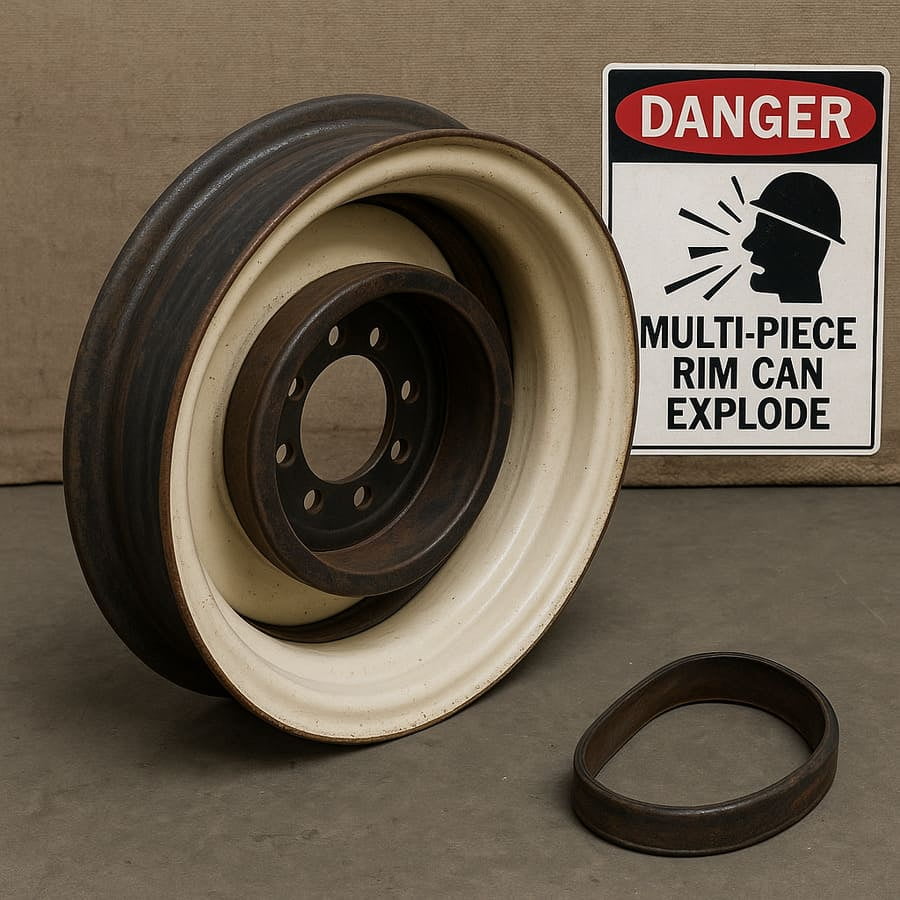
I'll never forget a safety bulletin that came across my desk years ago. It was from a client, and it detailed a workshop accident involving a multi-piece rim. A technician was inflating a large tractor tire when the lock ring1 failed to seat correctly. The ring shot off, striking him with incredible force. He was lucky to survive. That incident wasn't an isolated case; it's a known risk that the industry has been trying to engineer its way out of for decades. It's a stark reminder that even the most seemingly basic components can carry the biggest risks, especially when cost-cutting leads to using outdated, dangerous designs.
What Makes the Lock Ring Design So Unpredictably Deadly?
You've seen these rims for years, and they seem simple enough. But this familiarity breeds complacency, hiding the fact that a tiny, unseen misalignment can turn a tire into a bomb.
The danger lies in the physics. If the lock ring1 is not perfectly seated in its groove, the air pressure inside the tire creates a massive force that pushes it outward. Even a small gap can allow the ring to dislodge and become a lethal projectile.
It's all about force, pressure, and area. Let's say a large agricultural tire is inflated to 80 PSI. That pressure is exerted over every square inch of the tire's interior, pushing outwards. If the lock ring1 assembly has an area of just 50 square inches, you're looking at 4,000 pounds of force trying to escape. That's the weight of a pickup truck concentrated on a single steel ring. If there's any rust, damage, or improper seating preventing a perfect fit, that force will find the weak spot. This is why safety organizations worldwide compare these explosive separation2 events to grenades. The release of energy is instantaneous, violent, and often fatal for anyone standing in the trajectory.
The Anatomy of a Failure
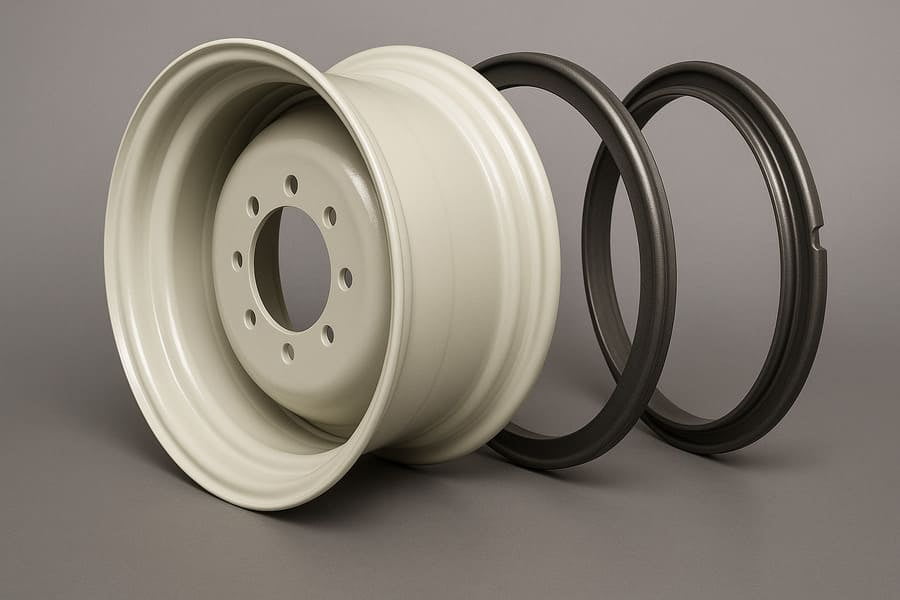
| Component | Function | Failure Point |
|---|---|---|
| Rim Base | Main body of the wheel. | Can become warped or rusted, preventing a good seal. |
| Side Ring / Flange | Holds the tire bead on one side. | Mismatched or damaged parts can create gaps. |
| Lock Ring | A split ring that snaps into a groove. | CRITICAL FAILURE POINT: If not 100% seated, it will eject under pressure. |
Is There a Truly Safe Alternative to Multi-Piece Rims?
You have a duty to protect your staff and customers, but you still need to service equipment, including older machines. You can't just ignore the problem, so what is the real, reliable solution?
Yes, the modern single-piece drop center rim3 is the inherently safe alternative. Its one-piece construction completely eliminates any separate components like lock ring1s that could eject. The design makes an explosive separation2 during inflation physically impossible.
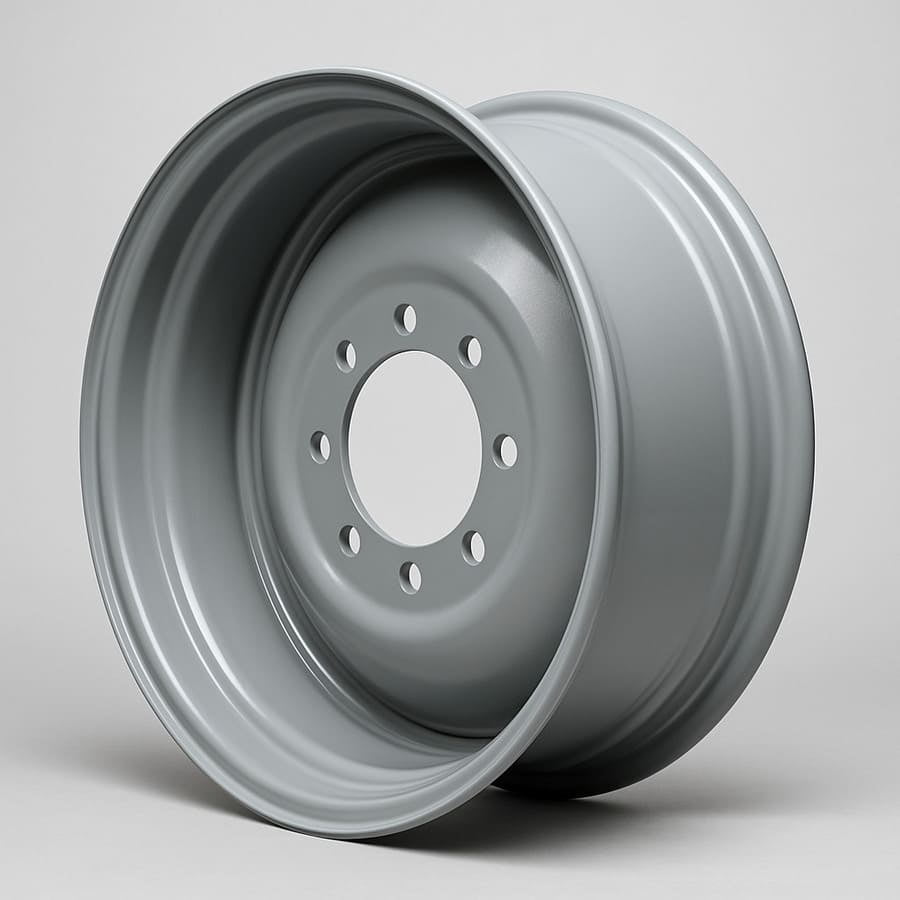
The genius of the drop center rim is its simplicity. The rim has a deep "well" or "drop center" in the middle. To mount a tire, you use the slack provided by this well to stretch and lever the tire bead over the solid, integrated rim flange. There are no separate rings, no grooves to align, and no possibility of a component launching under pressure. It transforms a high-risk procedure into a standard, safe mechanical task. For businesses dealing with older machinery still equipped with dangerous lock ring1 rims, the answer is a safety upgrade. We provide "safety upgrade kits4" that allow for the direct replacement of old multi-piece designs with modern, safe single-piece rims. While it represents an upfront investment, it's a small price to pay to remove a lethal hazard from your workshop permanently. Safety is priceless.
How Can We Minimize Risk During Tire Mounting, Regardless of Rim Type?
Even with safer technology available, you still have to handle tires under pressure. Complacency is always a risk, and you need a clear, non-negotiable safety policy to protect everyone.
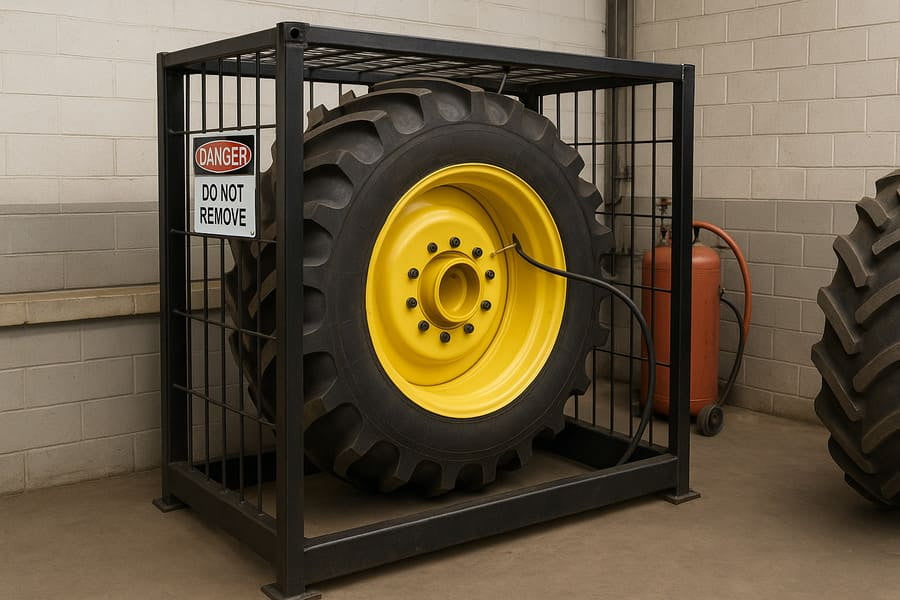
Always inflate any multi-piece rim assembly inside a certified safety cage. Furthermore, the safest possible method is professional factory mounting5, which uses automated, controlled processes that remove the high-risk human element6 present in manual workshop assembly.
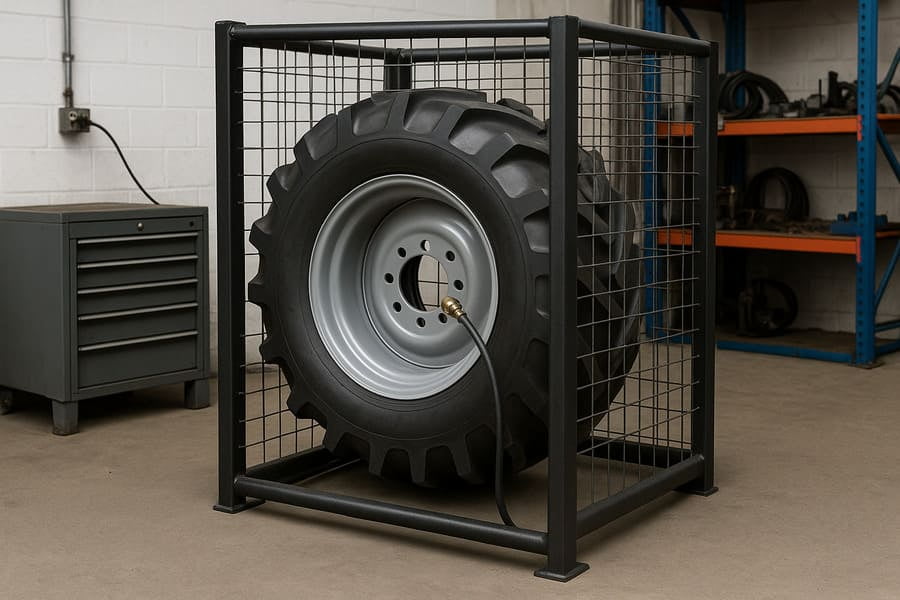
Let's be perfectly clear: inflating a lock ring1 rim without a safety cage is taking an unacceptable risk with someone's life. The cage is designed to contain the explosive force and any projectiles if the assembly fails. It is the absolute last line of defense and should be mandatory. However, an even better strategy is to prevent the possibility of error in the first place. This is where factory mounting5 provides a huge safety advantage. At our facility, we use specialized machinery that applies steady, even pressure to mount tires and seat beads. Inflation is automated and takes place in reinforced enclosures. This controlled environment eliminates the common workshop errors—like using a hammer on a stubborn ring or failing to spot a tiny piece of debris—that can lead to disaster.
Conclusion
The risk from multi-piece rims7 is real and deadly. By upgrading to single-piece designs and enforcing strict safety protocols8 like cage inflation and factory mounting5, you can eliminate this preventable hazard from your operations.
Learn about the mechanics of lock rings to better understand their potential hazards and how to mitigate them. ↩
This resource will explain the physics behind explosive separation, crucial for ensuring safety during tire repairs. ↩
Discover why single-piece rims are considered safer and how they can reduce risks in tire servicing. ↩
Explore how safety upgrade kits can transform your workshop's safety standards and protect your technicians. ↩
Learn about factory mounting processes that enhance safety and efficiency in tire assembly. ↩
Learn strategies to minimize human error in tire repairs, enhancing overall safety in your workshop. ↩
Understanding the risks associated with multi-piece rims can help you implement better safety measures in your workshop. ↩
Implementing effective safety protocols is essential for protecting your team and ensuring a safe working environment. ↩