
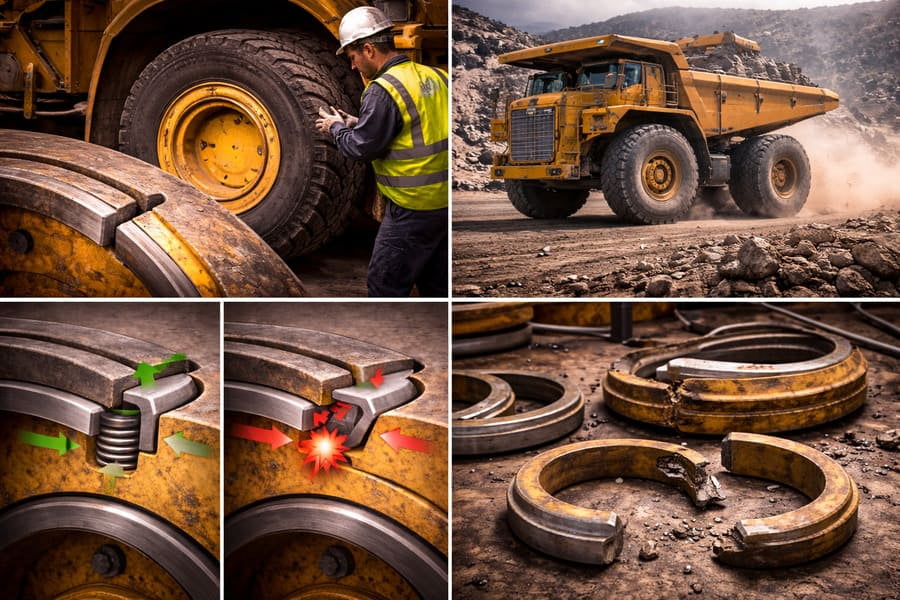
You found a lock ring1 that looks identical, a perfect substitute, right? Using it could silently set up a catastrophic wheel failure2, creating an invisible but deadly risk.
Mixing lock ring1s introduces invisible failure points. Even if dimensions seem to match, their unique geometric designs3 and locking mechanisms4 are not interchangeable. This mismatch breaks the engineered load path5, leading to catastrophic failure under operational stress.
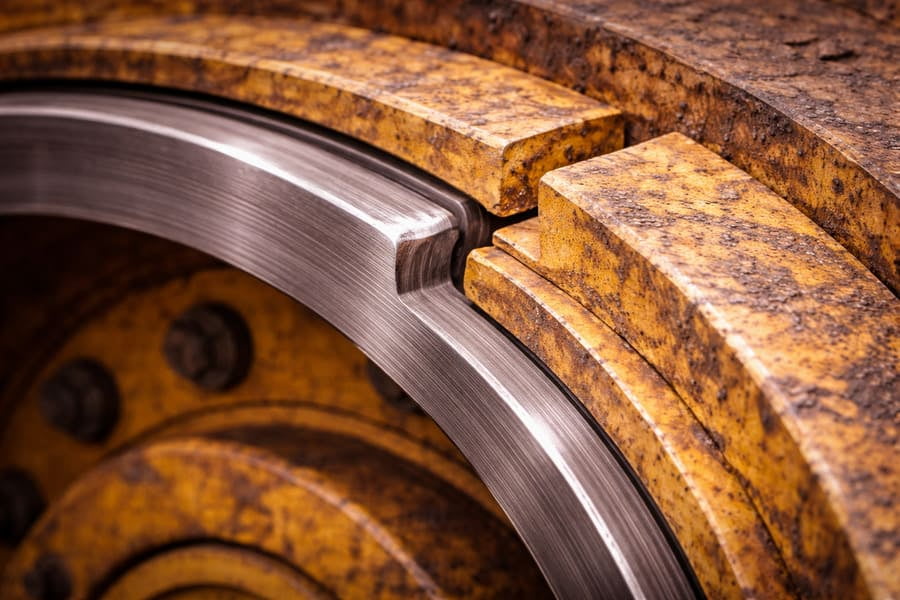
I'll never forget a call I got from a site supervisor. A wheel assembly had failed explosively during a routine operation, thankfully with no injuries. The investigation was baffling at first. The components were all relatively new and from reputable brands. But when we laid out the pieces, I spotted it immediately. The lock ring1 was the wrong series for the rest of the wheel components. It looked right, and it fit into the groove, but it wasn't the correct part. The maintenance team had simply matched it by size from their stock. That seemingly small mistake created a structural time bomb6 that could have had a tragic outcome.
Why Can't I Substitute a Lock Ring That Looks Identical?
You’re in the workshop, and a lock ring1 is damaged. You find another in the parts bin with the same diameter and thickness. It seems logical to use it, but this is a dangerous assumption.
Two lock ring1s that appear identical can have completely different design geometries. Their seating angles, contact surfaces, and profiles are engineered for a specific set of mating wheel components.
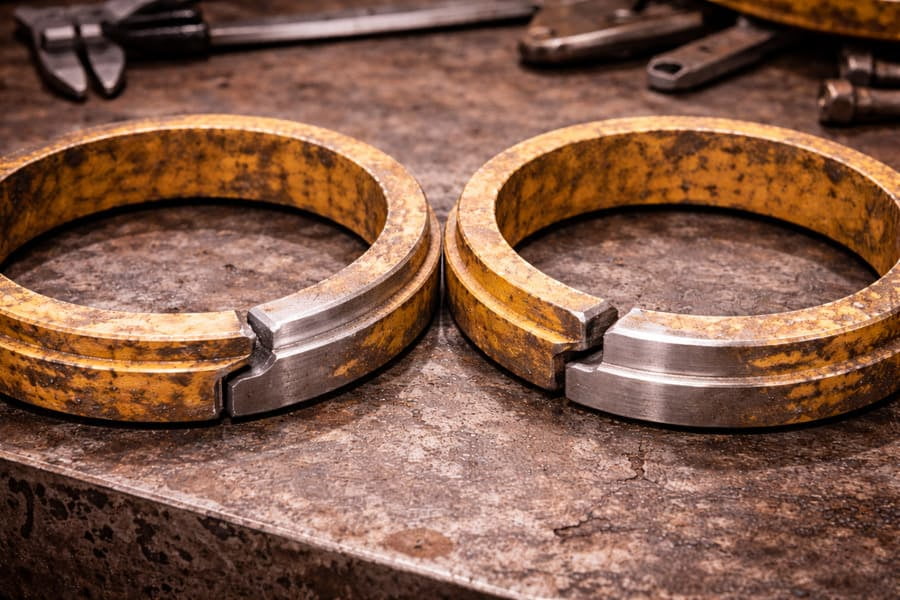
A wheel assembly is a system where every part is designed to fit together with precision. Think of it like a key and a lock. Two keys might have the same length and thickness, but if the cuts in the blade are different, the lock won't open. Similarly, lock ring1s have specific profiles. One might be designed to seat in a perfectly square gutter, while another is made for a gutter with a 5-degree taper. When you install the wrong one, it might seem to fit, but it won't be fully seated. The contact points are all wrong, meaning it isn't truly locking the assembly together. This small geometric mismatch creates a fundamental weakness in the entire wheel structure, even if it looks secure to the naked eye.
Don't All Lock Rings of the Same Size Work the Same Way?
It's a common belief that if a part has the same size designation, it functions the same way. In safety-critical components7 like lock ring1s, this assumption can have disastrous consequences.
No. Identical dimensions do not guarantee identical locking logic. Different designs rely on completely different physical principles to secure the wheel, such as elastic tension, axial preload, or precise interference positioning.
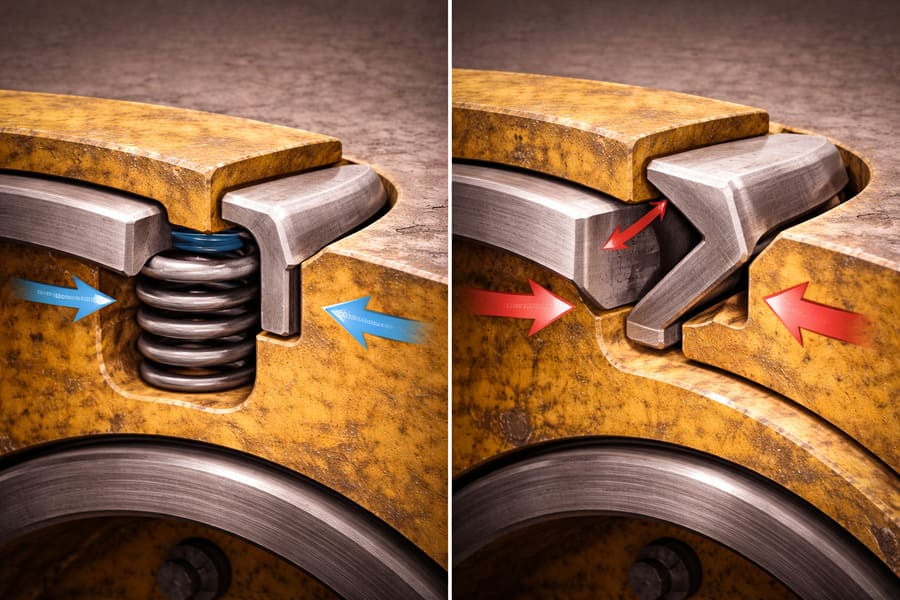
One lock ring1 might be designed like a giant spring. Its effectiveness comes from being slightly compressed during installation, creating constant outward pressure that holds it in the groove. Another might be designed to act as a wedge, locking itself tighter as the tire pressure increases and forces the flange outward. These are two completely different engineering philosophies. If you substitute the "spring" type for the "wedge" type, the system loses its designed locking mechanism. The ring is just a placeholder; it isn't actively working to secure the components. This is why you can have a ring with the right diameter that provides almost no real retention force, making a failure almost inevitable once the machine is put to work.
How Does a Mismatched Lock Ring Actually Cause a Failure?
The mismatched ring is in place, and the wheel seems fine. What is the specific chain of events that leads from this small error to a massive structural failure?
A mismatched lock ring8g](https://arxiv.org/pdf/2503.07423)%%%FOOTNOTE_REF_1%%% breaks the intended load transfer path9. The forces from the tire and vehicle are then pushed onto parts of the wheel not designed to handle them, causing extreme localized stress.
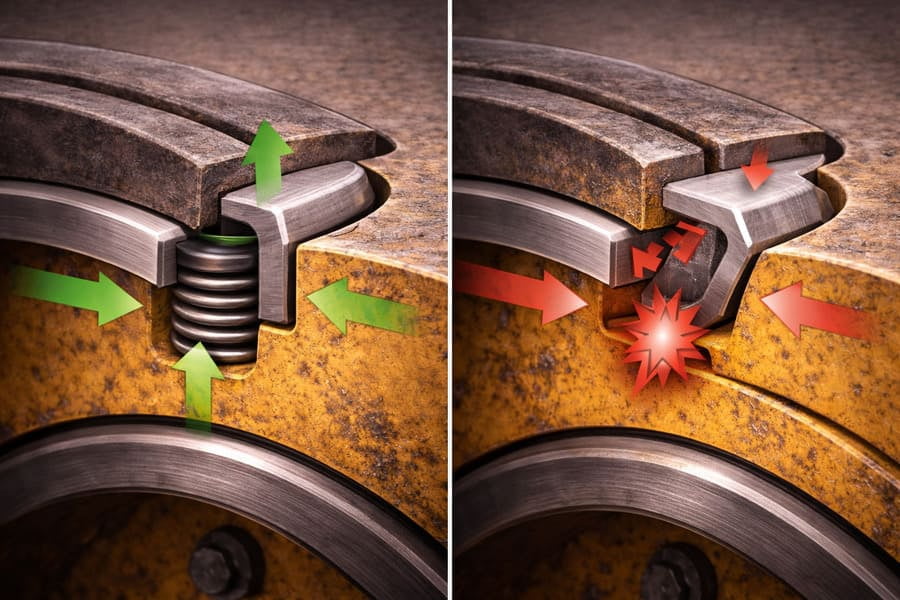
An OTR wheel assembly is designed to transfer immense forces in a very specific way—from the tire, through the flange, through the lock ring1, and into the wheel base. Each component is a link in a chain. When you use the wrong lock ring1, you break that chain. For example, instead of the force being distributed evenly across the entire surface of the lock ring1 groove, it might become concentrated on a single sharp edge of the flange or wheel base. This creates a stress concentration point. Under the constant vibration and pounding of normal operation, a microscopic crack can form at that point. With every rotation of the wheel, that crack grows slightly larger, until the metal's integrity is so compromised that it fails suddenly and catastrophically.
If It Passes Inspection, How Can It Still Be Dangerous?
The assembly passed a pressure test10 and a visual inspection11. Everything looks secure. This creates a false sense of security12, which is exactly what makes this problem so dangerous.
Structural mismatch is more dangerous than a material defect13. A flaw in the steel can often be found with testing, but a geometric incompatibility can pass all inspections and fail explosively under real-world operating loads.
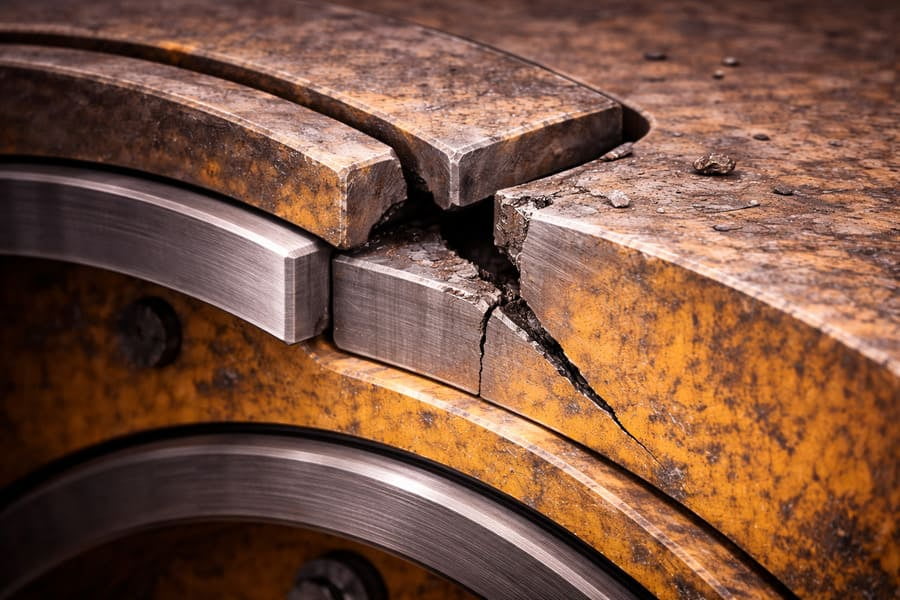
When a component has a material defect13, like a bad batch of steel, it might fail a quality control test at the factory. It's often detectable. But a geometric mismatch is a system-level problem, not a component-level one. Both the lock ring1 and the wheel base can be perfectly manufactured to their own specifications. They will pass every individual inspection. The danger is only created when they are assembled together. A static pressure test10 in the workshop might not reveal the problem, because the dynamic forces14 of a multi-ton machine accelerating, braking, and turning are not present. The incompatibility only reveals itself as a catastrophic failure when the system is under real operational stress.
| Risk Factor | Material Defect | Structural Mismatch | Why Mismatch is More Dangerous |
|---|---|---|---|
| Detectability | Often caught by QC (e.g., ultrasonic test) | Passes individual component inspection | The danger is invisible until parts are mixed |
| Failure Mode | Usually a progressive crack | Sudden, explosive failure is common | Provides no warning signs before catastrophe |
| Root Cause | Bad raw material or manufacturing process | Incorrect part selection or assembly | Human error based on a false assumption |
| Inspection Result | Fails the component test | Passes the component test; may even pass static assembly test | Creates a false sense of security12 |
Conclusion
Never mix lock ring1s, even if they look identical. Sourcing the correct, system-matched components is not an option—it is the only way to ensure structural integrity and prevent catastrophic failure.
Understanding the role of a lock ring is crucial for ensuring safety in wheel assemblies. ↩
Learn about the risks and prevention strategies for catastrophic wheel failures. ↩
Explore how geometric designs play a critical role in the functionality of mechanical parts. ↩
Learn about various locking mechanisms and their applications in engineering. ↩
Discover the importance of engineered load paths in ensuring structural integrity. ↩
Understand the concept of a structural time bomb and its implications for safety. ↩
Learn about the importance of safety-critical components in engineering design. ↩
Find out why using a mismatched lock ring can lead to severe safety hazards. ↩
Gain insights into how load transfer paths function and their importance in design. ↩
Find out how pressure tests are conducted and their significance in safety assessments. ↩
Discover the limitations of visual inspection in ensuring component safety. ↩
Explore how a false sense of security can lead to dangerous engineering oversights. ↩
Understand the types of material defects and their potential impact on safety. ↩
Learn about dynamic forces and their impact on the performance of mechanical systems. ↩