
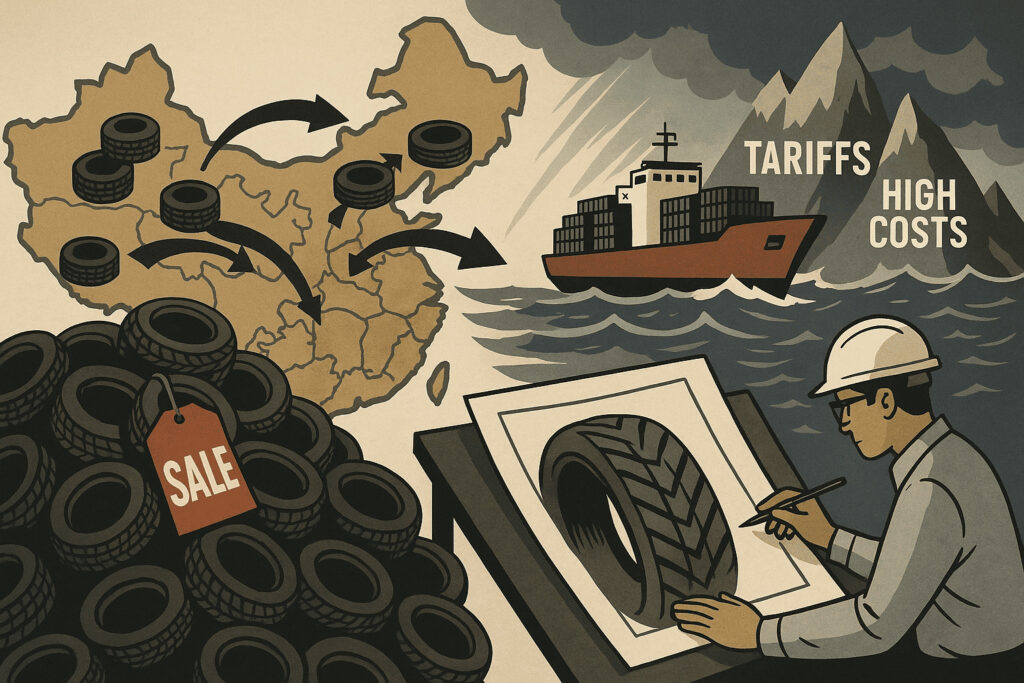
You're constantly being pushed to find cheaper tires, but you know that chasing the lowest price feels like a race to the bottom. You suspect the real cost is hidden somewhere in risks to your business and reputation.
Because the price war1 isn't a sign of healthy competition. It’s a symptom of deep industrial disorder2, where collapsing channel controls and a lack of real innovation have forced manufacturers into a vicious cycle of sacrificing profit, quality, and trust just to move inventory.

For over a decade, I've watched this unfold from the inside. I’ve spoken with countless distributors who feel trapped. They are pressured by factories to take on more inventory, only to see the same factory sell the same tires to a competitor in the next region at a lower price. This isn't a strategy; it's chaos. The slogans of "zero profit3 sales" aren't a boast about efficiency. They are a desperate cry from an industry that is collectively burning its own future to stay warm for one more night. The price war1 isn't being won by anyone; everyone in the supply chain is losing.
Why Are 'Zero Profit' Slogans Actually a Sign of Industry Collapse?
You see suppliers advertising "zero profit3" deals and wonder how they can survive. You're tempted by the price, but you're also worried about what corners are being cut to make that price possible.
Because "zero profit3" is funded by overdrafting the entire supply chain. Factories are destroying dealer confidence by allowing cross-regional dumping4, which erodes brand loyalty5 and makes it impossible for anyone to maintain a stable, profitable business.

In the past, a distributor had regional protection. They could invest in marketing a brand, knowing they would reap the rewards. Today, that system is broken. To clear massive inventories, many manufacturers have abandoned these protections. I've seen it happen time and again. A distributor in one province works hard to build a brand's reputation, only to have a container of the exact same tires show up in their market, sold by an online discounter from 1,000 kilometers away. This practice, known as cross-regional dumping4, has become the norm. It demolishes the dealer's profit margin and their motivation to support the brand. When a factory shows it doesn't respect its own sales channels, it signals to everyone that the brand itself has no real value beyond its price tag.
The Breakdown of Market Order
| Old System (Channel Control) | New System (Industrial Disorder) | |
|---|---|---|
| Dealer Role | Brand partner, local investor | Inventory liquidator |
| Pricing | Stable, protected margins | Unstable, constant undercutting |
| Brand Loyalty | High; dealers invest in the brand | Low; dealers look for the next deal |
| Market Focus | Building long-term local value | Short-term national volume |
Is an Obsession with Capacity Destroying Brand Trust?
You examine spec sheets from ten different Chinese tire brands, and they all look virtually the same. This makes you question whether there's any real difference in quality or if it's all just marketing.
Yes, because the industry is obsessed with production volume, not technological innovation6. With over 90% of companies just making minor "tread pattern tweaks," price becomes the only differentiator, forcing buyers to ignore the critical element of trust.
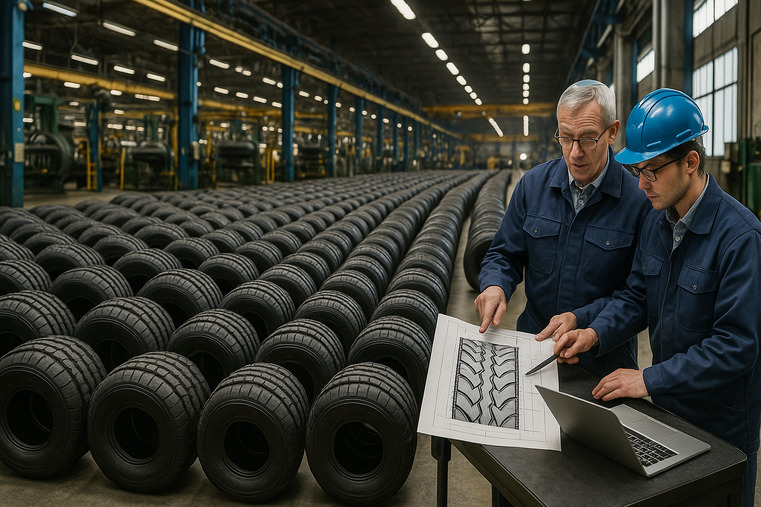
The real tragedy of the Chinese tire industry7 is the hollowing-out of its technology. Building a new factory wing is easier and gets more government praise than spending five years in a lab developing a new rubber compound. As a result, most companies are stuck competing on superficial features. They'll talk about a "new aggressive tread pattern," but it's often a cosmetic change on an old casing with a standard compound. This leaves end-users with no meaningful way to judge quality. They can't see the difference in heat resistance or wear life on a spec sheet. So, what do they do? They choose based on price. I’ve seen studies showing that drivers are willing to pay up to 30% more for a foreign brand, not because of specs, but because they feel "it's safer to drive." This trust gap is the Achilles' heel of the industry, and it can't be filled by simply producing more of the same.
Why Is Global Expansion No Longer a Safe Bet for Chinese Tire Makers?
You used to see Chinese tire brands as a stable, low-cost sourcing option. Now, with news of anti-dumping tariffs8 and rising overseas costs, you're concerned about supply chain stability9 and unpredictable price hikes.
Because the old strategy of "scaling domestically and profiting overseas" is failing. A surge in Southeast Asian production, repeated EU anti-dumping actions, and soaring logistical costs10 are squeezing the profit margins out of China's export business.
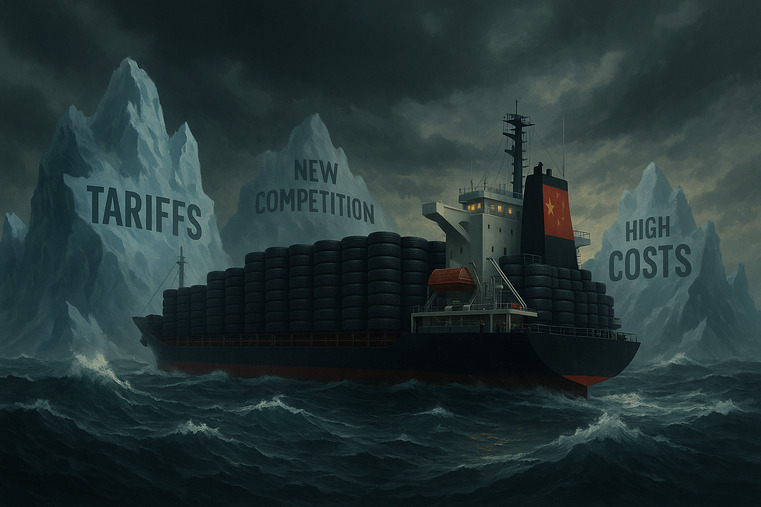
For years, exporting was the escape valve. When the domestic market was mired in a price war1, factories could sell overseas for better margins. That escape route is now closing. Firstly, new tire factories in places like Thailand and Vietnam, often built with Chinese capital, are creating intense competition. They are fighting for the same international customers. Secondly, protectionism is on the rise. The European Union and the United States have repeatedly imposed anti-dumping and anti-subsidy tariffs, making Chinese tires more expensive overnight. Finally, global logistics are no longer cheap or predictable. The cost of shipping a container has become a major, volatile expense. This triple threat means that exporting is no longer a safe haven for profits. The pressure is being forced back into the domestic market, making the price war1 even worse.
Conclusion
The price war1 is a dead end. The only way forward for China's tire industry7 is to abandon the race to the bottom and begin a "value war11"—focusing on trust, quality, and innovation.
Understanding the implications of price wars can help you navigate market challenges and make informed decisions. ↩
Understanding industrial disorder can help you identify risks and opportunities in your supply chain management. ↩
Exploring the concept of 'zero profit' can reveal the hidden costs and risks associated with such pricing strategies. ↩
Learning about cross-regional dumping can help you understand its impact on market stability and brand loyalty. ↩
Discovering strategies to enhance brand loyalty can provide insights into maintaining a competitive edge. ↩
Exploring the role of innovation can highlight its significance in maintaining quality and competitiveness. ↩
Exploring trends in the tire industry can provide valuable insights for making informed business decisions. ↩
Understanding anti-dumping tariffs can provide clarity on international trade dynamics and their effects on pricing. ↩
Gaining insights into supply chain stability can help you mitigate risks and enhance operational efficiency. ↩
Exploring logistical costs can help you identify ways to optimize your supply chain and reduce expenses. ↩
Understanding the concept of a value war can inspire new approaches to enhance quality and customer trust. ↩